Avikam Singer Trade and Marketing Ltd. recalls Natural Peanut (1 kg; Best before 30.06.22) due to aflatoxin contamination.
KSWFoodWorld

Avikam Singer Trade and Marketing Ltd. recalls Natural Peanut (1 kg; Best before 30.06.22) due to aflatoxin contamination.
Posted in Aflatoxin, food contamination, food handler, Food Hazard, Food Hygiene, Food Inspections, Food Micro Blog, Food Microbiology, Food Microbiology Blog, Food Microbiology Testing, Food Poisoning, food recall, Food Safety, Food Safety Alert, Food Testing, Food Toxin, mold, Mold Toxin, Mould Toxin, Mould/Mold, Mycotoxin
Itzik HaGadol Ltd./Mitt Boutique recalls Itzik the Great Mitt Boutique brand Meatballs for cooking (~950g; Expiry date 7.2.2022) due to Salmonella contamination.
More than three-quarters of Irish people don’t know the correct temperature to cook their turkey, according to a survey.
Among respondents in the Republic of Ireland, 27 percent were concerned about undercooking the turkey and being sure it was safe to eat while 7 percent were worried about overcooking and serving it dry.
The survey was commissioned by safefood with Empathy Research. It was done online in November across a nationally representative sample of 1,036 adults over the age of 18.
Past safefood research has found people are unsure when asked what temperature turkey should be cooked to, with responses ranging from 30 to 260 degrees C (86 to 500 degrees F). The safe cooking temperature for all poultry products is 165 degrees F, according to the U.S. Department of Agriculture.
Whether thawing frozen turkey or storing thawed turkey, it should be kept on the bottom shelf of the refrigerator so any drips won’t land on other food and spread germs. Rinsing turkey or chicken should not be done as it only spreads bacteria around the kitchen. Proper cooking will destroy bacteria and other pathogens.

The Centre for Food Safety (CFS) of the Food and Environmental Hygiene Department today (December 20) urged the public not to consume three kinds of cheese imported from France due to possible contamination with Shiga toxin-producing Escherichia coli (STEC). The trade should stop using or selling the affected batches of products immediately if they possess them.
Details of the products are as follows:
Product name: (1) FRERES MARCHAND – CANTAL ENTRE DEUX AOP
(2) TRADITIONAL SELECTION 1KG – 4 CHEESES
(3) TRADITIONAL SELECTION 2KG – 6 CHEESES
Brand: Les Frères Marchand
Place of origin: France
Importer: Classic Fine Foods (Hong Kong) Limited
Lot: LOT 21-45
A spokesman for the CFS said, “The CFS received a notification from the Rapid Alert System for Food and Feed (RASFF) of the European Commission that the above-mentioned products might have been contaminated with STEC and are being recalled. According to the information provided by the RASFF, the affected batches of products have been imported into Hong Kong. Upon learning of the incident, the CFS immediately contacted the local importer concerned for follow-up.”
A preliminary investigation found that the importer, Classic Fine Foods (Hong Kong) Limited, had imported some of the affected batches of products into Hong Kong. The importer concerned has initiated a recall according to the CFS’ instructions. Enquiries about the recall can be made to the hotlines at 2612 2066 during office hours.
“People will contract STEC-causing gastro-intestinal disease through consumption of contaminated water or undercooked and contaminated foods. Intestinal bleeding and serious complications such as hemolytic uraemic syndrome may also develop in some people,” the spokesman said.
The spokesman urged consumers not to consume the affected batches of the products if they have bought any. The trade should also stop using or selling the affected batches of products concerned immediately if they possess them.
The CFS will alert the trade to the incident, continue to follow up and take appropriate action. An investigation is ongoing.
Ends/Monday, December 20, 2021
The use of antimicrobials in formulations of ready-to-eat meat and poultry products has been identified as a major strategy to control Listeria monocytogenes . The USDA-FSIS recommends no more than 2-logs of Listeria outgrowth over the stated shelf life if antimicrobials are used as a control measure for a product with post-lethality environmental exposure. This study was designed to understand the efficacy of a clean label antimicrobial against the growth of L. monocytogenes as affected by the product attributes. A response surface method-central composite design was used to investigate the effects of product pH, moisture, salt content, and a commercial “clean-label” antimicrobial on the growth of L. monocytogenes in a model turkey deli meat formulation. Thirty treatment combinations of pH (6.3, 6.5, and 6.7), moisture (72, 75, and 78%), salt (1.0, 1.5, and 2.0%), and antimicrobial (0.75, 1.375, and 2.0%) with six replicated center points and eight design star points were evaluated. Treatments were surface inoculated with a 3 log 10 CFU/g target of a five-strain L. monocytogenes cocktail, vacuum packaged, and stored at 5°C for up to 16 weeks. Populations of L. monocytogenes were enumerated from triplicate samples every week until the stationary growth phase was reached. The enumeration data was fitted to a Baranyi and Roberts growth curve to calculate the lag time and maximum growth rate for each treatment. Linear least-squares regression of the lag-time and growth-rate against the full quadratic, including the second order interaction terms, design matrix was performed. Both lag time and maximum growth rate were significantly affected ( p <0.01) by the antimicrobial concentration and product pH. Product moisture and salt content affected ( p <0.05) lag phase and maximum growth rate, respectively. The availability of a validated growth model assists meat scientists and processors with faster product development and commercialization.
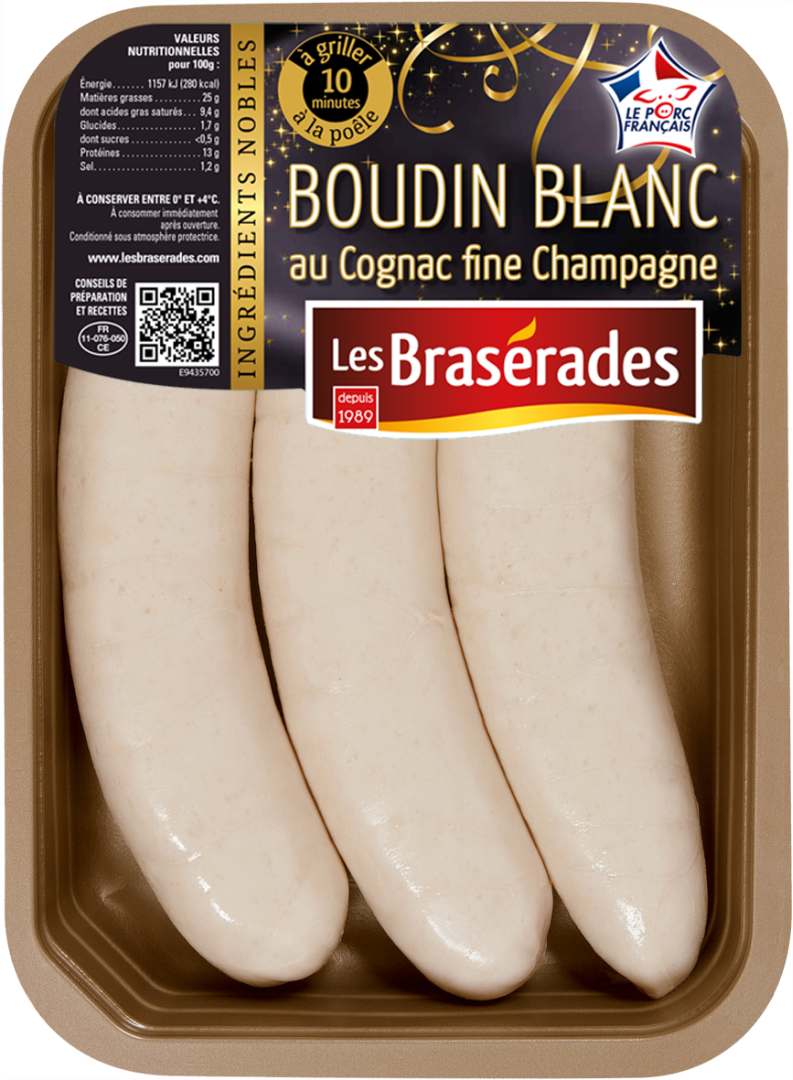
| GTIN | Lot | Dated |
|---|---|---|
| 3387620061565 | 321340213 | Use-by date 12/17/2021 |
| 3387620061565 | 321340213 | Use-by date 12/18/2021 |
| 3387620061565 | 321340213 | Use-by date 12/19/2021 |
| 3387620061565 | 321340213 | Use-by date 12/20/2021 |
| 3387620061565 | 321340213 | Use-by date 12/21/2021 |
| 3387620061572 | 321340159 | Use-by date 12/18/2021 |
| 3387620061572 | 321340159 | Use-by date 12/20/2021 |
| 3387620061572 | 321340159 | Use-by date 12/21/2021 |
| 3387620061572 | 321340159 | Use-by date 12/22/2021 |
Posted in Bacterial Toxin, Clostridium, Clostridium perfringens, Enterotoxin, Exotoxin, food contamination, Food Hazard, Food Hygiene, Food Inspections, Food Micro Blog, Food Microbiology, Food Microbiology Blog, Food Pathogen, Food Poisoning, food recall, Food Safety, Food Safety Alert, Food Testing, Food Toxin, Toxin, Uncategorized

The Food Safety Information Council and the Australian Chicken Meat Federation today released a consumer survey that found 49% of Australian cooks were still taking a food poisoning risk by washing raw whole chicken before cooking.
Cathy Moir, Council Chair, said washing any raw poultry is very risky as it can spread bacteria to your hands, surfaces and other foods that may not be cooked. Washing is also unnecessary as cooking poultry to 75°C in the centre of a fillet or the thickest part of the thigh will kill any bacteria.
‘We are pleased that rates of washing raw whole chicken has reduced from 60% to 49% since we last asked this question in 2011. Cooks who wash raw chicken pieces with skin on has also reduced from 52% to 43% and washing skinless pieces from 41% to 40%.
‘The survey found that chicken is a popular dish with 78% of respondents cooking whole chicken, 83% cooking chicken pieces with skin on and 88% cooking skinless pieces. But the message is that washing any raw poultry, whether it is chicken, duck, goose or the Christmas turkey, is both unsafe and unnecessary.
“As we gather this Summer with multi-generations of family and friends, here are some of our key Christmas and Summer entertaining food safety tips:
‘We would like to thank our partner Tonic Media Network who will be showing our handwashing and food safety community service announcements in GP, Pharmacy and hospital waiting rooms around Australia this Summer. Also, thanks to our member First for Training, the Australian Chicken Meat Federation and Accord for their charitable donations to fund our Summer campaign.\,” Ms Mir concluded.
Media contact: Lydia Buchtmann, Food Safety Information Council, 0407 626 688 or info@foodsafety.asn.au
Survey details:
The chicken washing survey was conducted nationally by Omnipoll amongst 1219 people aged 18+ over the period 7-12 October 2021. Respondents were drawn from the online consumer panel managed by Lightspeed Research, OmniPoll’s online partner and to help reflect the overall population distribution. Results were post-weighted to Australian Bureau of Statistics (2016 Census) data on education, age, sex and area.
Noroviruses are the major viral pathogens causing epidemic and endemic acute gastroenteritis with significant morbidity and mortality. While vaccines against norovirus diseases have been shown to be of high significance, the development of a broadly effective norovirus vaccine remains difficult, owing to the wide genetic and antigenic diversity of noroviruses with multiple co-circulated variants of various genotypes. In addition, the absence of a robust cell culture system, an efficient animal model, and reliable immune markers of norovirus protection for vaccine evaluation further hinders the developmental process. Among the vaccine candidates that are currently under clinical studies, recombinant VP1-based virus-like particles (VLPs) that mimic major antigenic features of noroviruses are the common ones, with proven safety, immunogenicity, and protective efficacy, supporting a high success likelihood of a useful norovirus vaccine. This short article reviews the recent progress in norovirus vaccine development, focusing on those from recent clinical studies, as well as summarizes the barriers that are being encountered in this developmental process and discusses issues of future perspective. View Full-Text
Posted in Decontamination Microbial, Food Micro Blog, Food Microbiology, Food Microbiology Blog, Food Microbiology Research, Food Microbiology Testing, Food Virus, microbial contamination, Microbiological Risk Assessment, Microbiology, Microbiology Investigations, Norovirus, Research, Virus, Virus Vaccination
“Super bugs” and “food safety.” You can say the two in one breath simply because they are so closely connected.
“Super bugs” is a popularized term for “antibiotic resistance,” or “antimicrobial resistance.” They don’t go by that name for nothing. According to the federal Centers for Disease Control and Prevention, each year in the United States, at least 2.8 million people are infected with antibiotic-resistant bacteria or fungi. More than 35,000 people die as a result. Antibiotic resistant bacteria frequently show up in outbreak strains of pathogens such as E. Coli, Salmonella and Listeria monocytogenes.
When looking ahead, the picture only gets more daunting. Some medical experts predict that worldwide by 2050 the number of deaths attributed to antibiotic resistance could reach 10 million and cost trillions of dollars — unless collective action is taken on a global scale.
No wonder then that some human and animal health experts are referring to this as a “slow moving pandemic.”

| GTIN | Dated | |
|---|---|---|
| 3443704408197 | Use-by date 12/13/2021 | |


