CPS – Research Project Funding 2022 – Bulb Onions

CPS

Assessing the potential for production practices to impact dry bulb onion safety

In 2020, the dry bulb onion industry faced their first significant outbreak of foodborne illness when red onions grown in California were epidemiologically linked to >1,000 cases of salmonellosis. Since then, industry and food safety experts have been scratching their heads to figure out how this could have happened. After review of outbreak data and consultation with various stakeholders, we have identified a small number of practices with the potential to contribute to a large-scale contamination event, through water or agricultural input contamination. We have designed field trials to determine the risks of using contaminated water source or other agricultural input when 1) applying crop protection sprays (pesticides and/or clay) and 2) during irrigation (overhead vs. drip). Our primary goal is to collect evidence demonstrating risks of these practices and to communicate our findings to relevant stakeholders to reduce the potential for outbreak like this from recurring in the future. We will share our findings via a broad outreach strategy that communicates with industry throughout the two-year study. Outreach activities culminate with the development and delivery of a workshop and best practices guide that enables growers to better understand risks and implement changes to minimize the likelihood of crop contamination.

CPS

Strategic approaches to mitigate Salmonella contamination of bulb onions

The proposal aims to address the recent multi-state Salmonella outbreak associated with red onion, resulting in nationwide recalls of onions and associated products. The outbreak highlights the pathogen’s ability to persist and survive on bulb onions during production, handling, or storage, causing significant concern to the onion produce industry. Although Salmonella’s persistence on other farm produce is documented, there is a general lack of knowledge on Salmonella’s behavior on bulb onions. We propose developing an onion-specific risk reduction plan by investigating Salmonella’s survival and growth on onion bulbs using different genetic backgrounds, nutritional compositions influenced by agronomic practices, seasons, and managed stress environments. Additionally, to understand the potential to serve as a transient host for transmission, we will investigate the effects of genetic, nutritional, and physiochemical characters on Salmonella survival and growth. This project will provide the industry with tools (1) to identify factors in the onion production and supply chain that may allow a Salmonella to persist, (2) identify varieties and agronomic practices that would minimize or eliminate its persistence, and (3) to help the produce industry in developing guidelines to manage risks of Salmonella in onions effectively.

Czech Republic – Dried Meat – Mould/Mold

Potravinynapranyri

Illustration photo no. 1

Place of inspection:
Luže ( náměstí Plk. Josefa Koukala 48, 53854 Luže )
ID: 05771773
Unsatisfactory parameter:

mold visible to the eye

Mold colonies visible to the naked eye were found on the surface of the food under intact packaging. Food is not considered safe if it shows signs of spoilage.

During the inspection, unsatisfactory storage temperatures of this product were not found. The product has not expired.

Date of minimum durability: 12/01/2021
Packaging: Plastic packaging
Quantity of product in package: 0.695 kg
Producer: Kostelecké Uzenina as, Kostelec 60, 58861 Kostelec
Sampling date: Nov 25, 2021
Reference number: 21-000591-CAFIA-CZ
The sample was found by an official inspection of the State Agricultural and Food Inspection Authority.

Research – USA – Hepatitis A

Food Safety News

As of Nov. 9, 2021, health officials in Roanoke, Virginia, confirmed a total of 50 primary cases and two secondary cases of hepatitis A linked to a hepatitis A positive food service employee who worked at three Famous Anthony’s restaurants. Of those 52 cases, there have been at least 31 hospitalizations with one liver transplant, and unfortunately, three deaths. 

Hepatitis A is a highly contagious disease that attacks the liver. It is also the only vaccine-preventable foodborne illness. Hepatitis A vaccines are available and given out nationwide for free by local health departments, or at a cost of less than $100. 

So why aren’t all food workers vaccinated against hepatitis A? Your guess is as good as mine. According to the Centers for Disease Control and Prevention (CDC), hepatitis A vaccines are safe and effective at preventing hepatitis A infections. Severe allergic reactions following vaccination are rare, and the common side effects are usually mild and last 1-2 days. 

Had the food service employee who exposed patrons of three Famous Anthony’s restaurants been vaccinated, the Seattle law firm Marler Clark would not be representing 27 individuals in this outbreak and the families of two who died.  The cost to this restaurant will be in the tens of millions of dollars and will likely result in bankruptcy.

In the link above is what employers of food service employees and the CDC can do to prevent future illnesses, hospitalizations, and deaths.

Research – Best Practice for the Control of Human Pathogenic Microorganisms in Plant Production Systems

Teagasc

There is an increased emphasis on and observance of food-borne diseases associated with fresh produce, due in part to changes in the processing, agronomy and distribution of fresh produce but also in the increasing trend for the consumption of minimally processed and raw, ready-to-eat crops. A recent meeting of European experts and commercial growers, assembled under the HuPlant Cost Action assessed the current European situation in relation to the safety of horticultural produce under the themes of
(1) protecting fresh produce from microbial pathogens,
(2) control strategies and sampling and
(3) risk assessment and risk based sampling.
The following report details the discussions and observations which emanated from that meeting, including a list of recommendations, aimed at
(1) Growers,
(2) Regulators and Advisors and
(3) Scientists.
For growers recommendations include reinforcement through clear communication on the need to prevent initial contamination of produce through the adoption of good microbiological safety practice, utilising on farm risk assessments and a focus on avoidance of initial contamination rather than a reliance on decontamination efforts.
This can be achieved through approaches such as the adoption and incorporation of good agricultural practice and good hygiene into standard operating procedures on farm. Recommendations to regulators and advisors include balancing communication messages to growers, indicating what is required of them, but also equally, clearly explaining why it is necessary.
Additionally it was felt that additional supports and materials could be made available to growers, particularly to smaller growers, to assist in the training of staff on the importance of biological safety practice, particularly in sectors where staff turnover may be high and differences in the native languages spoken.
Finally recommendations to scientists include a greater emphasis on knowledge transfer and also to, where possible focus knowledge transfer efforts into developing clear recommendations which growers can implement. The interaction between the plant microbiome, potential pathogens, environmental conditions and agricultural practices requires a greater level of attention and research to aid in predict the risk of human pathogen establishment.
Overall it was recognised that through increased interaction and information exchange between stakeholders will enable better understanding of the issues and opportunities faced by the horticultural sector and the co-creation of advice through participation of all stakeholders can assist in reducing the risk of contamination of horticultural produce.

Belgium – “Sankhal” (millet couscous) from the La Vivière brand- Aflatoxin

AFSCA

01/04/2022 (update 12/16/2021)
AFSCA recall
Product: “Sankhal” (millet couscous) from the La Vivière brand.
Problem: too high aflatoxin content.

Following a notification via the RASFF system (European Food and Feed rapid alert system), the AFSCA is withdrawing from sale the product “Sankhal” (millet couscous) of the La Vivière brand and is recalling it to consumers because too high aflatoxin content.

The AFSCA asks not to consume this product and to bring it back to the point of sale where it was purchased.

Product Description

• Product name: “Sankhal” (millet couscous)
• Brand: La Vivière
• Lots and expiry dates:
            L21-08067 – DDM:
06/30/2023 L21-08078 – DDM: 07/30/2023
• Weight: 400g

This product was sold in Belgium via various general food stores including:
– Bilal and Laiba Sprl., Boulevard Paul Janson 10, 6000 CHARLEROI
– Fezan Voeding, leemput str. 14, 8000 BRUGGE
– Best Pilorijnstraat 4 9000 GHENT
– Oriental Exotic Langestr. 21 1730 ASSE

For any further information , you can contact the AFSCA contact point for consumers: 0800 / 13.550 or pointdecontact@afsca.be .

Belgium – Italian tiramisu & “avocado” – Listeria monocytogenes

01/03/2022 (update
12/27/202 ) Recall of Crelem Bakeries
Product: Italian tiramisu & “avocado”
Problem: possible presence of Listeria monocytogenes.

In consultation with the AFSCA, Crelem Bakeries withdraws the Tiramisu product to Italian & lawyer from the sale and reminds consumers of it due to the possible presence of Listeria monocytogenes.

Crelem Bakeries asks its customers not to consume this product and to bring it back to the point of sale.

Product Description

Product Name: Italian Tiramisu
Brand Name: Crelem Bakeries Best before
date (DLC): from 12/28/2021 to 01/03/2022
Sales period: from 12/21/2021 to 12/27/2021
Packaging type: Plastic
jar Weight: 100 g

Product
name: Avocado verrine Brand name: Crelem Bakeries Best before
date (DLC): 04/01/2022 & 05/01/2022
Sales period: from 12/28/21 to 12/31/21 inclusive
Type of ‘packing: Plastic
jar Weight: 100 g

The product has been sold in several supermarkets and retail stores including Spar, Alvo, etc.

For more information , please contact:

Crelem Bakeries Quality Service
E-mail: Quality@crelembakeries.be

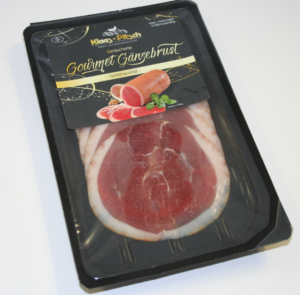
Luxembourg – GERÄUCHERTE GOURMET GÄNSEBRUST OF THE KLAAS + PITSCH BRAND – Salmonella

SAP

Last name Geräucherte Gourmet Gänsebrust
Brand Klaas + Pitsch Fleisch-und Wurstwaren
Unity 60 g
Date of Minimum Durability (DDM) 04/01/2022; 05/01/2022; 07/01/2022;

01/10/2022; 01/11/2022;

01/13/2022; 01/14/2022; 01/18/2022

Lot L457; L428; L429; L520
Last name Geräucherte Gourmet Gänsebrust
Brand Klaas + Pitsch Fleisch-und Wurstwaren
Unity 200 g
Date of Minimum Durability (DDM) 04/01/2022; 05/01/2022; 07/01/2022;

01/10/2022; 01/11/2022; 01/13/2022;

01/14/2022; 01/18/2022

Lot L447; L428; L448; L459; L510

Last name Gourmet Gänsebrust geräuchert ganze Stücke
Brand Klaas + Pitsch Fleisch-und Wurstwaren
Date of Minimum Durability (DDM) 04/01/2022; 05/01/2022;

07/01/2022; 01/10/2022;

01/11/2022; 01/13/2022;

01/14/2022; 01/18/2022

Lot L447; L520
Last name Gourmet Gänsebrust geräuchert halbe Stücke
Brand Klaas + Pitsch Fleisch-und Wurstwaren
Date of Minimum Durability (DDM) 04/01/2022; 05/01/2022;

07/01/2022; 01/10/2022;

01/11/2022; 01/13/2022;

01/14/2022; 01/18/2022

Lot L417; L447; L459

Thailand – Norovirus outbreak reported in Chanthaburi

Outbreak News Today

Norovirus Food Safety kswfoodworld

According to the Head of the Clinical Emerging Disease Center Chulalongkorn Hospital, Asst. Prof. Dr. Opas Putcharoen said test results of 6 out of 8 people patients were Norovirus Genogroup II.

Earlier this week, reporters reported that their were a number of people on social media posting messages about the phenomenon of people in Chanthaburi province who had diarrhea, food poisoning and abdominal pain at the same time.

Reports are in residents and tourists. A specific location or food source has not been reported.

Officials recommend careful handwashing with soap and water.

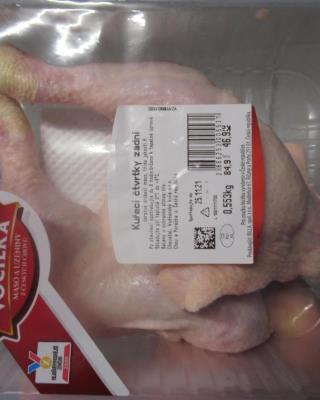
Czech Republic- Chicken quarters – Salmonella

Potravinynapranyri

Illustration photo no. 1

Place of inspection:
Prague 5 – Stodulky ( Jeremiasova 1239 / 7a, 155 00 Prague 5 – Stodulky )
ID: 00685976
Food group: Meat and meat products / Packaged meat

Chicken quarters back
Category: Dangerous food
Unsatisfactory parameter:

Salmonella enteritidis

The product has detected the presence of the pathogenic bacterium  Salmonella enteritidis, which causes a disease called salmonellosis.

Lots: L 1001111700
Expiration date: 11/25/21
Packaging: Plastic tray with foil
Country of origin:  Czechia
Sampling date: Nov 23, 2021
Reference number: 21-000605-CAFIA-CZ
The sample was found by an official inspection of the State Agricultural and Food Inspection Authority.

Canada – Certain Save on Foods brand combo meals recalled due to Salmonella

CFIA

Summary

Product
Certain combo meals
Issue
Food » Microbial Contamination » Salmonella
What to do

Do not consume the recalled products

Affected products
Brand Product Size UPC Codes
Save on Foods Lemon chicken combo meal 450 g 0 056364 901057 Packed on 2021.DE.29
Best Before 2022.JA.02

Packed on 2021.DE.28
Best Before 2022.JA.01

Packed on 2021.DE.27
Best Before 2021.DE.31

Save on Foods Sweet & sour pork meal 450 g 0 056364 901064 Packed on 2021.DE.29
Best Before 2022.JA.02

Packed on 2021.DE.28
Best Before 2022.JA.01

Packed on 2021.DE.27
Best Before 2021.DE.31

Save on Foods Ginger beef combo meal 450 g 0 056364 901071 Packed on 2021.DE.29
Best Before 2022.JA.02

Packed on 2021.DE.28
Best Before 2022.JA.01

Packed on 2021.DE.27
Best Before 2021.DE.31

Save on Foods Honey garlic chicken combo meal 450 g 0 280155 908998 Packed on 2021.DE.29
Best Before 2022.JA.02

Packed on 2021.DE.28
Best Before 2022.JA.01

Packed on 2021.DE.27
Best Before 2021.DE.31

Issue

Save-on-Foods is recalling certain Save on Foods brand combo meals from the marketplace due to possible Salmonella contamination.

The recalled products have been sold in British Columbia, Alberta, Saskatchewan, Manitoba and Yukon.

What you should do

  • If you think you became sick from consuming a recalled product, call your doctor
  • Check to see if you have the recalled products in your home
  • Do not consume the recalled products
  • Recalled products should be thrown out or returned to the location where they were purchased