Research – Control of Bacillus weihenstephanensis in Pasteurized Liquid Whole Eggs Formulated with Nisin

Journal of Food Protection

Bacillus weihenstephanensis can grow at refrigeration temperature and cause food poisoning. It has been isolated from liquid whole egg products. The moderate heat used for pasteurization of liquid egg products is ineffective for killing spore-forming bacteria including Bacillus. Available predictive models and a pretrial study in broth suggested the potential for growth of Bacillus spp. under the tested conditions. Hence, hurdles such as storage of product below 4°C or use of preservatives would be needed to ensure the food safety of pasteurized egg products. This study evaluated the growth inhibition of B. weihenstephanensis in pasteurized liquid whole egg product formulated with 6.25 ppm nisin during storage at refrigerated and abuse refrigerated temperatures for a total 13 weeks, in three replicate trials. At day 0, the product had a pH of 7.52±0.29, while background microflora such as aerobic plate counts, presumptive B. cereus, and yeast and molds were <10 CFU/g. Product inoculated with target 2.5 log10 CFU/g of B. weihenstephanensis, stored at 4°C for 4 weeks and subsequently at 7 or 10°C for 9 weeks exhibited no growth in all three replicate trials.  Average counts reduced (p<0.05) by at least one-log10 in six weeks in all samples stored at either 7 or 10°C. Similarly, growth of total plate counts, presumptive Bacillus spp., yeast and mold counts was not observed in uninoculated controls stored at 4°C for 4 weeks and subsequently at 7 or 10°C for 9 weeks. Visual and odor evaluation performed at each sampling time point showed no abnormalities. This study assessed the efficacy of maximum allowed level of nisin for use in pasteurized liquid whole eggs and validated the inhibition of B. weihenstephanensis in the product for an extended shelf life of up to 13 weeks.

Research – Prevalence and patterns of fecal shedding of Shiga toxin–producing Escherichia coli by cattle at a commercial feedlot in South Africa

Wiley Online

Healthy colonized cattle are the major reservoir of Shiga toxin–producing Escherichia coli (STEC) and play a key role in the entry point of the pathogen into the beef chain. Excretion rates and the concentration of the pathogen in feces influence the epidemiology and transmission of the pathogen within herds and to humans. This study evaluated the prevalence and dynamics of fecal shedding of STEC by cattle in a commercial feedlot in Gauteng, South Africa. An initial cross-sectional survey was conducted; fecal samples were obtained from 106 randomly selected weaned beef calves on arrival at the feedlot using polymerase chain reaction (PCR) to screen by detecting stx1 and stx2 genes. Subsequently, a longitudinal study was conducted, and 15 STEC-positive and 11 STEC-negative cattle were sampled monthly and followed to slaughter. STEC O157 and non-O157 were enumerated in samples using commercial chromogenic agar. Initial prevalence of STEC shedding was 27% (29/106; 95% CI [19, 37%]). All 26 cattle shed STEC intermittently or continuously during the study period, all except one were super-shedders (≥4 log10 CFU/g) at one or more samplings, and 19 (73%) were persistent or intermittent super-shedders. Of the 38 STEC isolates recovered, 15 (39%) were serotypeable, representing 11 non-O157 serogroups, including O101, O168, O178, and O68. The most frequent virulence combination profile was stx1 + eaeA + ehxA (n = 12; 32%). This study confirms the occurrence and variability of STEC super-shedding in feedlot cattle and highlights that super-shedding is not limited to STEC O157. It also shows their public health significance.

Research – Evaluation of Salmonella Biofilm Cell Transfer from Common Food Contact Surfaces to Beef Products

Journal of Food Protection

Meat contamination by Salmonella enterica is a serious public health concern. Available studies have suggested that biofilm formation at processing plants and the contaminated contact surfaces might contribute to meat contamination. Since bacteria transfer from contact surfaces to food products via direct contact has been deemed as the most common transmission route that could lead to contamination, we evaluated the effect of Salmonella biofilm forming ability, contact surface materials, and beef surface tissue types on Salmonella biofilm transfer from hard surfaces to beef products. Salmonella biofilms developed on common contact surface stainless steel (S.S) and polyvinylchloride (P.V.C) were transferred consecutively via direct contacts of 30 sec each to either lean muscle or adipose tissue surfaces of 15 pieces of beef trim. Our results showed that Salmonella biofilm cells could be effectively transferred multiple times from contact surface to beef trim as enumerable Salmonella cells could be detected on most of the meat samples. Bacterial biofilm forming ability had the most significant impact (p<0.05) on transfer efficiency as the strong biofilm forming strains not only transferred higher amounts of bacteria after each contact, but also contaminated more meat samples with enumerable Salmonella cells compared to the weak biofilm formers. Contact surface materials could affect transferability as Salmonella biofilms on S.S surface appeared to transfer more efficiently compared to those on P.V.C surface. Conversely, the two types of meat surface tissues showed no significant difference (p>0.05) on biofilm transfer efficiency. Furthermore, biofilm – contacted beef trim without enumerable Salmonella cells all exhibited positive Salmonella prevalence after enrichment. Our study demonstrated the high potential of Salmonella biofilms on common contact surfaces to cause product cross contamination in meat processing plants.

Research – Survival of Salmonella Typhimurium and Escherichia coli O157:H7 on blueberries and impacts on berry quality during 12 weeks of frozen storage after washing with combinations of sodium dodecyl sulfate and organic acids or hydrogen peroxide

Wiley Online

Salmonella spp. and Escherichia coli are well tolerant of freezing. This study was to investigate survival of the foodborne pathogens during storage at −18 ± 2°C for 12 weeks on blueberries after washing with: 500 ppm acetic acid plus 5,000 ppm sodium dodecyl sulfate (SDS) (AA/SDS), 20 ppm peroxyacetic acid plus 5,000 ppm SDS (PPA/SDS), or 200 ppm hydrogen peroxide plus 5,000 ppm SDS (H2O2/SDS), when compared with findings from no wash, or wash with water, 80 ppm PPA or 200 ppm chlorinated water. Following a 60 s contact with one of the three new solutions, the treatments showed 3.3–3.9 log10 CFU/g reductions in Salmonella Typhimurium and E. coli O157:H7 counts. After 2 weeks of frozen storage, 3.9–4.2 log10 CFU/g reductions of Salmonella and E. coli were observed. After 12 weeks of frozen storage, Salmonella and E. coli survivors were below detection limits (0.39 log10 CFU/g) in berries washed with new solutions. The frozen storage had a significant impact (p < .05) on microbial counts of both treated and nontreated blueberries. Although none of these washings decreased the total phenolic and anthocyanins contents and apparent quality at time 0, frozen storage caused significant damage on the texture of both treated and nontreated blueberries. Interestingly, no significant decrease in the total phenolic, anthocyanins content, and apparent quality was observed during the 12-week frozen storage. The counts of total bacteria, yeasts, and molds decreased throughout storage for treated and untreated berries. This demonstrates that the three wash solutions enhance the safety of frozen berries.

Research – Effect of domestic freezing on the viability of Toxoplasma gondii in raw and dry-cured ham from experimentally infected pigs

Journal of Food Protection

Toxoplasma gondii is the causative agent of the parasitic disease toxoplasmosis, which is an important food borne zoonosis. Eating undercooked meat of infected animals has been considered the major transmission route of T. gondii to humans. The present study evaluates the efficacy of domestic freezing on the inactivation of T. gondii bradyzoites in raw and dry-cured ham. Meat (raw and dry-cured ham) of a pig experimentally orally inoculated with 4,000 oocysts of T. gondii VEG strain was subjected to domestic freezing of -20 ºC at different days. The effect was evaluated by bioassay in mice followed by qPCR. In raw ham and dry-cured ham, temperature of -20 ºC for 7 and 14 days respectively did not inactivate T. gondii . More studies are needed to find the right temperature and time needed to render the bradyzoites non-infectious for human. Meanwhile, the recommendations of freezing to inactivate T. gondii in raw or dry-cured meats must be revisited considered that it does not reduce the risk of infection.

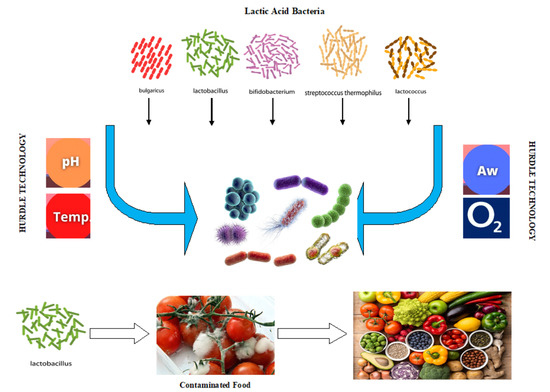
Research – Lactic Acid Bacteria as Antimicrobial Agents: Food Safety and Microbial Food Spoilage Prevention

MDPI

In the wake of continual foodborne disease outbreaks in recent years, it is critical to focus on strategies that protect public health and reduce the incidence of foodborne pathogens and spoilage microorganisms. Currently, there are limitations associated with conventional microbial control methods, such as the use of chemical preservatives and heat treatments. For example, such conventional treatments adversely impact the sensorial properties of food, resulting in undesirable organoleptic characteristics. Moreover, the growing consumer advocacy for safe and healthy food products, and the resultant paradigm shift toward clean labels, have caused an increased interest in natural and effective antimicrobial alternatives. For instance, natural antimicrobial elements synthesized by lactic acid bacteria (LAB) are generally inhibitory to pathogens and significantly impede the action of food spoilage organisms. Bacteriocins and other LAB metabolites have been commercially exploited for their antimicrobial properties and used in many applications in the dairy industry to prevent the growth of undesirable microorganisms. In this review, we summarized the natural antimicrobial compounds produced by LAB, with a specific focus on the mechanisms of action and applications for microbial food spoilage prevention and disease control. In addition, we provide support in the review for our recommendation for the application of LAB as a potential alternative antimicrobial strategy for addressing the challenges posed by antibiotic resistance among pathogens. View Full-Text

Image

Happy New Year 2022 from Food Microbiology World

New Year

USA – Alaska hit with 2 E. coli illnesses linked to Simple Truth Organic Power Greens and Nature’s Basket Organic Power Greens – E.coli O157

Food Poison Journal

As of December 29, 2021, 13 people infected with the outbreak strain of E. coli O157:H7 have been reported from six states. Illnesses started on dates ranging from November 27, 2021, to December 9, 2021.

Sick people range in age from 4 to 79 years, with a median age of 54, and 92% are female. Of 12 people with information available, four have been hospitalized and one person developed a type of kidney failure called hemolytic uremic syndrome (HUS). No deaths have been reported.

State and local public health officials are interviewing people about the foods they ate in the week before they got sick. Of 12 people interviewed, all reported eating packaged salads. Of 10 people who provided brand information, 6 ate or bought Simple Truth Organic Power Greens and 1 ate Nature’s Basket Organic Power Greens. Both Organic Power Greens salads have the same mix of leafy greens: organic spinach, mizuna, kale, and chard. Several sick people reported using these salads in smoothies.

France- REBLOCHON DE SAVOIE FERMIER AOP – Listeria monocytogenes

Gov france

Identifying information for the recalled product

  • Product category Food
  • Product sub-category Milk and dairy products
  • Product brand name MONOPRIX GOURMET
  • Names of models or references REBLOCHON DE SAVOIE FERMIER AOP 450G HALF REBLOCHON DE SAVOIE FERMIER AOP
  • Product identification
    GTIN Lot Dated
    3350030207922 17061221 Use-by date 02/01/2022
    02000150 17061221348 Use-by date 04/01/2022
  • Packaging450 G Half reblochon
  • Start date / End of marketing From 12/14/2021 to 12/30/2021
  • Storage temperature Product to be stored in the refrigerator
  • Health mark FR 74 211 060 CE
  • Geographical sales area Whole France
  • Distributors MONOPRIX

Practical information regarding the recall

  • Reason for recall Presence of Listeria monocytogenes
  • Risks incurred by the consumer Listeria monocytogenes (causative agent of listeriosis)

Germany – Vogtland beef crackers – Listeria monocytogenes

LMW

Warning type: Food
Date of first publication: 12/30/2021
Product name:

Vogtland beef crackers

Product pictures:

Figure Rindsknacker.jpg

Manufacturer

Manufacturer (distributor):

Meat salad and mayonnaise production Wolfgang Schmidt OHG Plauen

Reason for warning: Proof of listeria
Packaging Unit: 250 g
Durability: 01/02/2022 and 01/16/2022
Production date: December 2nd, 2021 and December 15th, 2021
Further information:

The product was sold in retail stores in Bavaria, Saxony and Thuringia.