Sweden – Report on food poisoning in Sweden during 2020. 

Livsmedelsverket

The report describes how many people become ill from the food, which are the most common infectious agents and foods that cause the disease cases, where in the food chain the designated foods are contaminated, which countries of origin were indicated for the designated foods, what contributing factors were identified, seasonal variation and changes in recent years. The results from the report provide information to those who have an interest or need for this type of knowledge in their profession and not least to show and give feedback on the valuable work performed by those who investigate, report and otherwise study food poisoning.

Summary Reported Foodborne Illness in Sweden 2020
This Report compiles food poisonings reported to the Swedish Food Agency in 2020. A new online form for submitting reports to the Swedish Food Agency was launched in January 2020, aiming to raise the quality of reported data. In 2020, the Covid-19 pandemic was ongoing also, which affected the number of food poisoning outbreaks during the year.
By food poisoning is meant here an illness caused by eating food containing harmful bacteria, parasites, viruses or toxins. The main purpose of the compilation is to support food poisoning investigations in several ways:
by giving the present position of the most recent food poisonings;
by presenting data that can be used to connect different pathogens to different kinds of foods.by making it possible to follow the development of different combinations;
by making it possible to implement risk management measures as effectively as possible.
The Swedish Food Agency regulation LIVSFS 2005:7 instructs municipal control authorities, in co-operation with health professionals, the County Administrative Board and the Public Health Agency of Sweden, to conduct epidemiological investigations of foodborne outbreaks.
The results must be reported to the Swedish Food Agency without delay. Health Agency and Swedish Food Agency in consultation supplement the control authorities’ reports with reports on local and national outbreaks.
The Report is based on 173 reported events of suspected or confirmed food poisoning with a total of 1,314 cases of illness. In 160 of the reports it was stated that two or more persons were infected from the same source. When compared to the 2019 compilation, we can note that both the number of reports and cases of illness were almost halved in 2020.
This reduction may be due to the restrictions and recommendations introduced in connection to Covid-19 pandemic. For example, there were fewer people using restaurant services, better hand hygiene among people handling food and the cancellation of major public events where food may have been served.
Most reports indicated that the cause was unknown (71%), however for 44% of the reported cases virus was cited as the cause. This is due to 23 outbreaks with 571 cases of illness where the cause was virus. Norovirus continues to cause major outbreaks (22 food poisoning outbreaks with a total of 513 cases), followed by campylobacter which was reported in 4 outbreaks with 158 cases, Vibrio parahaemolyticus, an unusual foodborne pathogen in Sweden, was associated with one outbreak of 50 cases of illness.
The food categories that had the most reported cases of illness were bakery products (210 cases), chicken (155 cases) and foods from the sea (164 cases).Bakery products were a source of infection in outbreaks where norovirus and STEC (Shigatoxin-producing E. coli) were the cause -200 cases and 10 cases, respectively.

Chicken was a source of infection in outbreaks where Campylobacter was the cause -155 cases.
When the source of infection was food from the sea, norovirus in oysters was the cause most cases of illness (124 cases), followed by Vibrio parahaemolyticus in seagrass (50 cases) and histamine in fish (34 cases).
The number of food poisoning reports was highest during the first quarter: between January to March there were 63 reports in, with a total of 634 cases of illness. This is due to both a number of oyster-related outbreaks early in the year and fewer outbreaks occurred during the rest of the year due to restrictions and hygiene recommendations during the covid-19 pandemic. For almost 65% of the disease cases, the source of contamination was food contaminated early in the production chain, e.g. industrial facilities, from which the food was then widely distributed (industry 30 %, primary production 3% and other 31.5%). In order to reduce the number of food poisonings, it is therefore important to have good systems for food safety in primary production and such facilities.
The most commonly mentioned contributing factor was incorrect storage with respect to time and temperature. This factor was listed in 21 reports. For example, this may refer to inappropriate temperature when keeping food heated, or not low enough temperature in cold storage. The second most common factor was “a contaminated ingredient”, as stated in 11 reports.
There is often no information about the country of origin of the implicated food products. This may be due to the fact that this information is optional in the reporting form. It can be also difficult to know in which country viruses or bacteria contaminated a food product.
The reporting authority usually does not have access to information about whether patients have received hospital care. However in 5 reports, it was stated that a total of 7 people received hospital care. No deaths were reported.

Click to access l-2021-nr-23-rapporterade-misstankta-matforgiftningar-2020.pdf

USA – 11 Hepatitis A cases linked to Gino’s Ristorante & Pizzeria

Food Poison Journal

The Montgomery County Office of Public Health (OPH) announced today the temporary closure of Gino’s Ristorante & Pizzeria in West Norriton in relation to a Hepatitis A Virus (HAV) outbreak in the county. The restaurant will be closed until further notice while the investigation continues.

At this time, 11 total cases are under investigation, with 9 confirmed cases of Hepatitis A and 2 potential cases of Hepatitis A. Of the 9 confirmed cases, 7 people were hospitalized. To date, one death is confirmed and one additional death is under investigation.

Netherlands – Safety warning for various beef products Dirk van den Broek – Listeria monocytogenes

NVWA

Safety warning various beef products Dirk van den Broek

Dirk van den Broek is immediately removing several beef products from the shelves as a precaution. An inspection in our own central butcher’s shop revealed that listeria had been found on one of the raw materials received. This raw material has been further processed into several meat products.

See Dirk van den Broek’s website

Which products are involved?

  • the Best Beefsteak natural 2BLK 2 pieces
    Barcode (first 7 digits): 2373287 Best before
    date: 17-1-2022
  • the Best Peppersteak 2BLK 2 pieces
    Barcode (first 7 digits): 2337225 Best before
    date: 17-1-2022
  • the Best Quarter Pounder Royal 2 pieces 2BLK
    Barcode (first 7 digits): 2379411 Best before
    date: 19-1-2022
  • the Best Ground Beef 300GR
    Barcode (first 7 digits): 2336493 Best before
    : 15-01-2022 to 18-01-2022

Ireland – Heavy presence of Mycotoxins confirmed in some Irish silage

Agriland

Surveys carried out by Alltech have confirmed the heavy presence of mycotoxins in silages across Northern Ireland (NI), Munster and south Leinster.

To date, forage samples across the rest of the country seem to be relatively free of the problem — for now, at least.

As a consequence, farmers may not know that they are offering their dairy and beef herds diets that can seriously impact both animal health and overall performance.

France – Ravioli made in Drôme, with Emmental – Salmonella

Gov france

Identifying information for the recalled product

  • Product category Food
  • Product sub-category Cereals and baked goods
  • Product brand name REFLECTS OF FRANCE
  • Names of models or references240g Emmental ravioli, packed in a tray
  • Product identification
    GTIN Lot Dated
    3560071195700 2136201 Use-by date 01/17/2022
  • Packaging240g transparent container
  • Start date / End of marketing From 12/31/2021 to 01/11/2022
  • Storage temperature Product to be stored in the refrigerator
  • Health mark FR 26 218 032 CE
  • Geographical sales area Whole France
  • Distributors CROSSROADS

Practical information regarding the recall

  • Reason for recall Suspicion of bacteriological contamination by Salmonella
  • Risks incurred by the consumer Salmonella spp (causative agent of salmonellosis)

Netherlands – Safety warning Quarter Pounder Royaal Skinny DekaMarkt – Listeria monocytogenes

NVWA

Safety warning Quarter Pounder Royal Skinny DekaMarkt

DekaMarkt immediately removes Quarter Ponder Royaal Skinny with best before date 19-01-2022 from the shelves. Checks have shown that this product may contain Listeria. Customers are urged not to consume the product.

Which product is it?

  • Quarter pounder generous lean 2x
  • Barcode: 2373410 (first 7 digits)
  • Can be used until 19-01-2022

Recall Notice

Argentina – Botulism behind at least two deaths; others sick in Argentina

Food Safety News

kswfoodworld

Foodborne botulism has been linked to two deaths in an Argentinian province.

The Ministry of Public Health in Misiones reported the two fatalities and at least four other cases occurred this past week in the village of Andresito.

The four ill people, including three adults and one child, are being treated in the intensive care unit of a local hospital. According to media reports, a third person, a child, has since died and up to 10 people have been affected.

Agency officials said that products suspected to be linked to the food poisoning have been seized. Local media reported homemade sausages are believed to be the source of infection.

Botulism antitoxin has been brought from Buenos Aires and Corrientes to reinforce local stock.

Officials reminded people about how food that is not approved by the relevant authorities should not be consumed.

Ireland – BakeAway Recalls Various Raw Pastry and Dough Products due to Presence of Salmonella

FSAI

Galberts

Tesco pastry

Summary
Category 1: For Action
Alert Notification: 2022.03
Product: Please see table below.
Batch Code: Please refer to use by dates in the table below.
Country Of Origin: United Kingdom

Message:

BakeAway is recalling specific batches of various raw pastry and dough products due to the presence of Salmonella. Point-of-sale recall notices will be displayed in stores supplied with the implicated batches.

Nature Of Danger:

People infected with Salmonella typically develop symptoms between 12 and 36 hours after infection, but this can range between 6 and 72 hours.  The most common symptom is diarrhoea, which can sometimes be bloody.  Other symptoms may include fever, headache and abdominal cramps.  The illness usually lasts 4 to 7 days. Diarrhoea can occasionally be severe enough to require hospital admission. The elderly, infants, and those with impaired immune systems are more likely to have a severe illness.

Action Required:

Inspectors:

Distribution information will be emailed to PEHOs. Please notify the FSAI of any concerns.

Manufacturers, wholesalers, distributors, caterers & retailers:

Retailers are requested to remove the implicated batches from sale and inform their customers by a prominent point-of-sale recall notice in stores where the affected batches were sold and by any other suitable communication routes.

Wholesalers/distributors are requested to contact their affected customers to recall the implicated batches and provide a point-of-sale recall notice to their retailer customers.

Consumers:

Consumers are advised not to use the implicated batches.

BakeAway Products

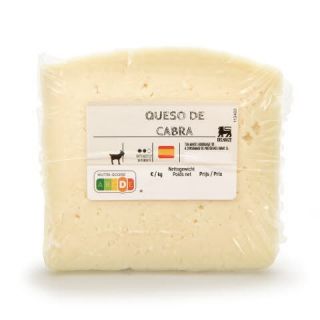
Luxembourg – UPDATE: RECALL: QUESO DE CABRA FROM THE DELHAIZE BRAND – Listeria monocytogenes

SAP

Last name Queso de cabra
Brand Delhaize
Bar code 2205473000000
Date of Minimum Durability (DDM) 01/03/2022
Sale period from 23/12/2021 to 24/12/2021 included
Lots * PBN-478565; PBN-478566; PBN-479108; PBN-479114

Danger  : Presence of Listeria monocytogenes

Listeria monocytogenes can cause fever, headache, and gastroenteritis. Vulnerable people such as the immunocompromised and the elderly and young children may experience neurological symptoms due to meningitis. Pregnant women should also pay special attention to these symptoms. Gastroenteritis can appear between a few hours and 3 days after consumption, while neurological symptoms may not appear until after 3 months. People who have consumed these products and who have these symptoms are advised to consult a doctor, notifying him of this consumption.

Click to access 2021-12-27-QUESO-DE-CABRA-Delhaize-Lux.pdf

France – Roast pork stuffed 800g – Salmonella

Gov france

Identifying information for the recalled product

  • Product categoryFood
  • Product sub-categoryMeats
  • Product brand nameunbranded
  • Names of models or referencesRoast pork stuffed 800g
  • Product identification
    GTIN Lot Dated
    3700502720006 22003-1938 Use-by date 01/11/2022
  • Packagingvacuum packaging
  • Start date / End of marketingFrom 01/04/2022 to 01/11/2022
  • Storage temperatureProduct to be stored in the refrigerator
  • Health markFR 13.097.003 CE
  • Geographical sales areaWhole France
  • DistributorsFRESH

Practical information regarding the recall

  • Reason for recallsalmonella detection
  • Risks incurred by the consumerSalmonella spp (causative agent of salmonellosis)