Research – Joint FAO/WHO Expert Meeting on Microbiological Risk Assessment (JEMRA) on Shiga toxin-producing Escherichia coli (STEC) associated with meat and dairy products

FAO

Shiga toxin-producing Escherichia coli (STEC) are an important cause of food-borne disease. Infections can result in a wide range of disease symptoms from mild intestinal discomfort and hemorrhagic diarrhea to severe conditions including haemolytic uremic syndrome (HUS), end-stage renal disease and death. In its report on the global burden of food-borne disease, WHO estimated that in 2010 food-borne STEC caused more than 1.2 million illnesses, 128 deaths, and nearly 13 000 Disability Adjusted Life Years (DALYs) (WHO, 2015). The Codex Committee on Food Hygiene (CCFH) has highlighted the importance of STEC in foods since its 32nd Session in 1999, when it prioritized their presence in beef and sprouts as significant public health problems in Member countries (FAO and WHO, 2000). Following a request from the 47th Session in November 2015 (FAO and WHO, 2016), the FAO and WHO published the report Shiga toxin-producing Escherichia coli (STEC) and food: attribution, characterization and monitoring in 2018 (FAO and WHO, 2018). As part of the 50th session of CCFH in November 2018, the FAO/WHO further updated the committee with additional information on STEC that was subsequently published in the report Attributing illness caused by Shiga toxin-producing Escherichia coli (STEC) to specific foods (FAO and WHO, 2019a). The Codex Alimentarius Commission (CAC) at the 42nd Session, July 2019, approved new work on the development of guidelines for the control of STEC in beef, raw milk and cheese produced from raw milk, leafy greens and sprouts (FAO and WHO, 2019b). To support this work, the Joint FAO/WHO Expert Meeting on Shiga toxin-producing Escherichia coli(STEC) associated with Meat and Dairy Products was convened virtually from 1 to 26 June 2020 to review relevant measures for pre- and post-harvest control of STEC in animals and foods of animal origins. The scientific literature describing physical, chemical and biological control measures (and their combinations) against STEC during primary production, processing and post-processing of raw meat, raw milk and raw milk cheeses was reviewed. The efficacy and utility of reported control measures were scored as high, medium or low, based on expert opinion informed by systematic reviews and/or meta-analyses, when available.

ECDC – Legionnaires’ disease – Annual Epidemiological Report for 2020

ECDC

ECDC’s annual surveillance reports provide a wealth of epidemiological data to support decision-making at the national level. They are mainly intended for public health professionals and policymakers involved in disease prevention and control programmes.

Executive summary

  • Legionnaires’ disease remains an uncommon and mainly sporadic respiratory infection with an overall notification rate of 1.9 cases per 100 000 population for the EU/EEA in 2020.
  • A small decrease in the annual notification rate was observed, down from the 2.2 cases per 100 000 population reported in 2019.
  • Notification rates remained heterogenous across the EU/EEA, varying from fewer than 0.5 cases per 100 000 population to 5.7 cases per 100 000 population, with the highest rate reported by Slovenia.
  • Four countries (France, Germany, Italy and Spain) accounted for 72% of all notified cases.
  • Males aged 65 years and older were most affected (7.1 cases per 100 000 population).
  • The number of reported cases to the travel-associated surveillance scheme decreased by 67% in 2020 compared with 2019.
  • Only 10% of cases were culture confirmed (10%), likely leading to underestimation of disease caused by Legionella species other than Legionella pneumophila.

Belgium – Abbey cheese 230g from the Carrefour brand – Listeria monocytogenes

AFSCA

Recall from Carrefour
Product: Abbey cheese 230g from the Carrefour brand.
Problem: suspicion of the presence of listeria monocytogenes.

Brussels, 09/05/2022 – Following an inspection and as a precautionary measure to guarantee consumer safety, the MILCOBEL company is requesting that the 230g Carrefour brand Abbey cheese sold in the CATERER section of certain stores be withdrawn from the market Carrefour and Mestdagh in Belgium and remind consumers of this following the possible presence of listeria.

Name: Fromage d’Abbaye 230g
EAN code: 3060921462469
Date of minimum durability: All DDM between 05/12/2022 and 05/14/2022
Batch numbers: 5404454I, 5500955I, 5903159I and 5A0735AI.

This product was marketed in the packaged fresh section of your Carrefour or Mestdagh store

from 04/15/2022 to 05/04/2022.

Carrefour has decided, in collaboration with the AFSCA (Federal Agency for the Safety of the Food Chain), to recall these products from consumers.

All products have been withdrawn from sale. Some of these products were, however, marketed on the Belgian market before the withdrawal measure. It is therefore recommended that people who hold the products described above do not consume them and destroy them or bring them back to the point of sale where they will be refunded to you.

People who have consumed the products mentioned above and who have a fever, isolated or accompanied by headaches, are invited to consult their doctor and report this consumption. These symptoms may be aggravated in young children, immunocompromised subjects and the elderly. These symptoms may suggest listeriosis, a disease with an incubation period of up to eight weeks.

For any additional information , you can contact the Carrefour Belgium consumer service by dialing the free number 0800.9.10.11, from 8.30 a.m. to 8 p.m. on working days and from 9 a.m. to 5 p.m. on Saturdays. The MILCOBEL Company apologizes to the customers of Carrefour and Mestdagh for the inconvenience caused.

Belgium – Chocolate products (chocolate, chewing gum, sweets, cookies, waffles) of the STRAUSS ELITE brand – Salmonella

AFSCA

Recall of Amandex
Products: Chocolate products (chocolate, chewing gum, sweets, cookies, waffles) of the STRAUSS ELITE brand
Problem: Possible presence of Salmonella.


In collaboration with the FASFC, AMANDEX is withdrawing chocolate products (chocolate, chewing gum, sweets, biscuits, waffles) from the STRAUSS ELITE company from sale and recalling them from consumers due to the possible presence of Salmonella.

AMANDEX asks its customers not to consume these products and to return them to the point of sale where they were purchased.

Description of products

– Chocolate products: chocolate, chewing gum, candies, cookies, waffles
– Brand: Elite Strauss
– Regardless of expiry date, batch number and nature of packaging

Complete list of recalled products (PDF) – UPDATE

The products were distributed in different points of sale:

Point of sale name /

Distribution chain name

Street + number Postal code Commune (city)
GROSZ CENTER BV J.JORDANSTRAAT 64 2018 ANTWERPEN
BAK. GOTTESFELD BV MERCATORSTRAAT 20 2018 ANTWERPEN
KATZ-HERSHKOVITZ ISABELLALEI 47 2018 ANTWERPEN
MANDL LAMORINIERESTRAAT 136 2018 ANTWERPEN
Super shop BV BELGIËLEI 151 2018 ANTWERPEN
BRAUN-HERSTIK DEVORA VAN DIEPENBEECKSTRAAT 63 2018 ANTWERPEN
CONVENIENCE LAMORINIÈRESTRAAT 199 2018 ANTWERPEN
Klein’s Voeding MERCATORSTRAAT 22 2018 ANTWERPEN
HOFFMAN ELIEZER LANGE KIEVITSTRAAT 58 2018 ANTWERPEN
PEREL SIMONSTRAAT 22 2018 ANTWERPEN
KING FOOD MANDEL LAMORINIERESTRAAT 25 2018 ANTWERPEN
HUIS VOOR DE JEUGD VZW. BRIALMONTLEI 48 2018 ANTWERPEN
FRESH FOOD (GROSZ). CHARLOTTELEI 25 2018 ANTWERPEN
FREEZE TOV VANDERKINDEREN STREET 381 1180 BRUSSELS
HAMAKOM SRL HENRI WAFELAERTS STREET 12 1060 BRUSSELS
HERCZL&GOLD BV Provincestraat 216 2018 ANTWERPEN
BE.H PRINS BOUDEWIJENLAAN 9/4A 2550 KONTICH

For any additional information , please contact:
Madame MANDEL via GSM: 0476 447259 or via e-mail: AMANDEX.77@GMAIL.COM

Research – Study Highlights Importance of Cooking Non-Ready-to-Eat Frozen Vegetables, Fruits and Herbs Prior to Eating

FSAI

The Food Safety Authority of Ireland (FSAI) and safefood today released findings from a comprehensive study which shows a potential low-level risk of illness for consumers who eat non-ready-to-eat* frozen vegetables, fruits or herbs without prior cooking. The microbiological study analysed almost 1,000 samples of frozen vegetables, fruits and herbs for the presence of Listeria monocytogenes,Salmonella, Listeria spp. and E. coli. Listeria monocytogenes was found in 27 of the samples tested (3%), the majority of which were non-ready-to-eat frozen vegetables (21 samples).

The FSAI and safefood stress that whilst the figures were low for the presence of Listeria monocytogenes – it is a potential health risk for people who may eat these non-ready-to-eat frozen foods uncooked frequently, and/or if consumer preparation and handling practices allow Listeria monocytogenes, if present, to grow to levels high enough to cause listeriosis. The consumer research part of the study surveyed 815 people across the island of Ireland and found that 80% said they regularly eat frozen vegetables, 40% eat frozen fruits, and 13% eat frozen herbs. While most (68%) said they would cook the product before eating, others (32%) said they regularly eat one or more types of frozen vegetables, fruits or herbs without cooking them. Strawberries, blueberries, raspberries, and mixed berries were the frozen fruits most likely to be eaten uncooked in a dessert or in a smoothie. A smaller number of consumers said they would regularly eat uncooked non-ready-to-eat frozen vegetables such as sweetcorn, carrots, peas, peppers, and spinach in a salad or as a garnish.

The FSAI and safefood advise that all non-ready-to-eat frozen vegetables, fruits and herbs should be cooked prior to eating and in accordance with the cooking instructions on the label. If these products are eaten uncooked by people who are immunocompromised, pregnant, the elderly or young children, there is risk of serious illness. Symptoms of Listeria monocytogenes infection can include mild flu-like symptoms, or gastrointestinal symptoms such as nausea, vomiting and diarrhoea.

Commenting at the release of the study, Dr Pamela Byrne, Chief Executive, FSAI, emphasised the importance of correct labelling and that caterers and food service businesses must ensure they are following the manufacturers’ instructions when they are preparing food for their customers.

“It is vital that food manufacturers follow best practice guidelines and ensure frozen products that are not ready-to-eat are clearly labelled as such, with clear cooking instructions. They also need to ensure there are no serving suggestions presented on the packaging which could suggest that the products can be eaten thawed without prior cooking – whether they be frozen vegetables, fruit or herbs. Caterers and food service businesses must check the food labels and cook the frozen products, if instructed, so as to ensure that the food they are serving to their customers is safe to eat.”

Commenting, Dr Gary A Kearney, interim Chief Executive safefood said: “We know from social media that there’s a growing trend for people to eat frozen fruit and vegetables raw in things like smoothies and salads. While the risk of contracting a Listeria infection is low, it’s still a risk you can avoid by reading the manufacturer’s instructions and cooking these frozen foods before you eat them. Those most at risk from a Listeria infection include young children, pregnant women and people with an underlying medical condition or weakened immunity, If the product says, ‘cook before eating’, we would remind people to always follow that advice.”

National microbiological survey and consumer habits in relation to frozen vegetables, fruits and herbs.

Italy – Veal in Sauce – VITEL TONNE – Listeria monocytogenes

Salute

Brand : GASTRONOMIA SOMASCA

Name : VITEL TONNE ‘200g

Reason for reporting : Recall due to microbiological risk

Publication date : 9 May 2022

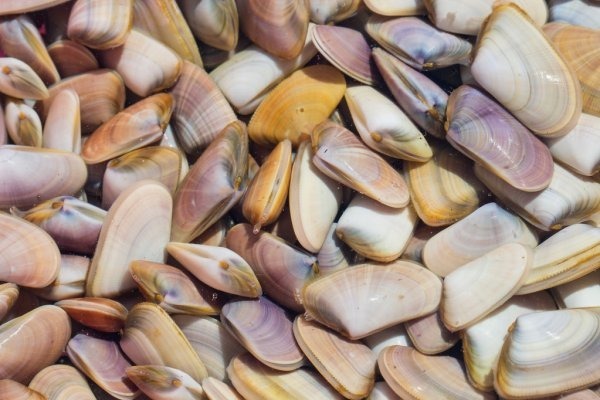
France – Tellines – DSP marine biotoxins – Diarrhoeic Shellfish Poisoning

Gov france

Identification information of the recalled product

  • Product category Food
  • Product subcategory Fishery and aquaculture products
  • Product brand name Unbranded
  • Model names or references Tellines shipped between 03 and 05 May 2022
  • Identification of products
    Batch
    All lots
  • Storage temperature Product to be stored at room temperature
  • Health markFR.29.158.500.CE
  • Geographic area of ​​sale Whole France
  • Distributors Wholesalers / Independents

Practical information regarding the recall

  • Reason for recall Prefectural decree – Closure of fishing area
  • Risks incurred by the consumer DSP marine biotoxins (diarrheal toxins)

India – Food poisoning: Salmonella, Shigella found in shawarma samples

New Indian Express

THIRUVANANTHAPURAM: The food samples collected from the shawarma outlet at Cheruvathur had the presence of salmonella and shigella bacteria, Health Minister Veena George has said. The chicken shawarma samples had salmonella and shigella while the pepper powder had salmonella. These samples have been confirmed ‘unsafe’ as per the Food Safety Act. A 16-year-old schoolgirl died and 52 persons fell sick after having shawarma from a snacks bar at Cheruvathur recently.

The special drive of the Food Safety Department saw inspections on 349 premises across the state on Saturday. Action was taken against 32 outlets which did not have licence or registration. Notices were served on 119 institutions. Twenty-two kilograms of stale meat was seized. Thirty-two samples were sent for lab test.

Since May 2, 1,132 raids were conducted across the state. Action was taken against 142 outlets which lacked licence or registration. Notice was served on 466 establishments. One hundred and sixty-two kilograms of stale meat was seized and 125 samples were sent for lab test. A total of 6,035 kg of fish, either adulterated or stale, was destroyed. Four hundred and fifty eight outlets were raided as part of ‘Operation Jaggery’ drive, the minister said.

USA – Over 7,300 Lucky Charms Cereal Illness Complaints On Iwaspoisoned.com, FDA Investigating

forbes

You could say that there have been cereal complaints about Lucky Charms. On May 6, 2022, the website iwaspoisoned.com posted the following message: “Starting in late 2021 Lucky Charms food poisoning reports started to trend on iwaspoisoned.com. Now there are reports of over 7,300 sick.”

Yeah, there probably aren’t too many people saying, “gee, I really hope to trend on iwaspoisoned.com.” This website allows people to submit reports of feeling ill after eating a food item that was served at or sold by a business. According to the website, “This real time information is shared by consumers, food authorities, restaurants, and industry with one aim – to make eating a safer experience.” Their stated goal is to prevent “food poisoning outbreaks, reduces risks, and creates better outcomes for restaurants, shareholders, and the public.” Therefore, it’s probably not the place to complain about your significant other’s cooking, unless your significant other happens to be a restaurant or a food manufacturing company.

Australia – Nutricia comments on Australian Cronobacter test result

Food Safety News

The Nutricia company has spoken out after Cronobacter was found during Australian testing of infant formula made in Europe.

A batch of KetoCal 3:1 was positive for Cronobacter spp. after being sampled at the border by Australian customs officials as part of random routine testing. There have been no known related illnesses. Nutricia said the batch was negative before leaving the production plant and additional testing also did not find Cronobacter.

The implicated formula is a specialized medical nutrition product intended for the dietary management of drug resistant epilepsy, or where a ketogenic diet is indicated by a healthcare professional. It is manufactured in Europe and not sold to the general public but is available by prescription.

Affected tins are batch number 101101598 with best before July 8, 2023.

In a letter to healthcare professionals in Australia dated April 29, Nutricia, which is owned by Danone, said there were 600 tins of the affected batch available in Australia and the next shipment of 800 tins from this batch was scheduled to arrive around May 23. A new batch from Europe has been ordered with an expected arrival of May 7.

A Nutricia spokesperson told Food Safety News it was committed to providing customers with the highest quality products.