USA – Wayne Farms, LLC Recalls Ready-To-Eat Chicken Breast Fillet Products That May Be Undercooked

FSIS USDA

EDITOR’S NOTE:  May 7, 2022: This release is being reissued to include an expansion of the recall to a new product that was distributed to retail locations. Additionally, the recall has been expanded from 30,285 pounds to 585,030 pounds. There are five new production codes (23618, 24357, 24512, 24583, and 24957) and 66 different “use by” dates (ranging from 5-10-22 through 4-29-23). This release has been updated to include the new product, the expanded weight, additional labels, and additional distribution information.

WASHINGTON, April 29, 2022 – Wayne Farms, LLC., a Decatur, Ala. establishment, is recalling approximately 585,030 pounds of a ready-to-eat (RTE) chicken breast fillet product that may be undercooked, the U.S. Department of Agriculture’s Food Safety and Inspection Service (FSIS) announced today.

UK – Update 3: Ferrero recalls in the UK products intended for European market

FSA

Ferrero is extending its precautionary recall of a selection of European labelled Kinder products manufactured at the Arlon factory in Belgium, which might be contaminated with Salmonella. Investigations have found that some products, intended for the European market only and which have already been recalled by Ferrero in Europe, have been imported into the UK by UK importers not linked to Ferrero. This update does not replace earlier update 2. Both updates are valid.

Product details

Kinder Maxi Mix Peluche
Pack size 133g
Best before 21 August 2022
Kinder Niespodzianka Maxi Lei
Pack size 100g
Best before 21 August 2022
Ferrero Kinder Mix Geschenktüte
Pack size 193g
Best before 21 August 2022
Ferrero Kinder Mix Bunte Mischung
Pack size 132g
Best before 21 August 2022
Kinder Niespodzianka Maxi Uni BN
Pack size 100g
Best before 21 August 2022
Kinder Surprise Geant Gar
Pack size 100g
Best before 20 August 2022
Kinder Surprise Fille
Pack size 100g
Best before 20 April 2022
Kinder Schokobons Sachet
Pack size 125g and 200g
Best before 26 October 2022
Kinder Happy Moments
Pack size 242g
Best before 21 August 2022
Kinder Happy Moment Ballotin 1
Pack size All
Best before 21 August 2022
Swieta Kinder Jajko Z Niespodzianka Maxi Uni Wn
Pack size 100g
Best before 21 August 2022
Swieta Kinder Maxi Mix Peluche Bn
Pack size 133g
Best before 21 August 2022

Risk statement

The possible presence of Salmonella in the products listed above.

Symptoms caused by Salmonella usually include fever, diarrhoea and abdominal cramps.

Action taken by the company

Ferrero is recalling the above products. Point of sale notices will be displayed in retail stores that are selling these products. These notices explain to customers why the products are being recalled and tell them what to do if they have bought the products.

Our advice to consumers

If you have bought the above products do not eat them. Instead, please take them back to the store where you purchased the products and request a refund.

Research – Prevalence and antimicrobial resistance of non-typhoidal Salmonella enterica from head meat and trim for ground product at pork processing facilities

Journal of Food Protection

Pork head meat may harbor Salmonella and contaminate other carcass byproducts during harvest and fabrication. A large pork processing plant in the United States was sampled bimonthly for 11 months to determine the concentration, prevalence, seasonality, serotype diversity, and antimicrobial susceptibility of Salmonella enterica isolated from cheek meat and head trim of swine carcasses. Each collection consisted of 25 samples on 2 consecutive days in the morning and afternoon shifts, for a total of 100 cheek meat and 100 head trim samples each month. Tissues were cultured for Salmonella using restrictive media and enrichment techniques, and a subset of isolates was serotyped, analyzed for antimicrobial susceptibility, and genome sequenced. Salmonella post-enrichment prevalence did not differ ( P = 0.20) between cheek meat (63%) and head trim (66%). Post-enrichment prevalence differed ( P < 0.05) by month (January 94%; March 80%; May 54%; July 59%; September 47%; and November 55%), and by processing shift (morning 68%; afternoon 62%). The subset (n = 618) of isolates selected for serotyping yielded 21 distinct serotypes: Typhimurium (49%), Infantis (10%), Heidelberg (8%), I 4,[5],12:i- (8%), and 17 other types (≤ 5%). A total of 407 multidrug-resistant (MDR; resistance to 3 or more antibiotic classes) isolates were identified. There were 120 isolates that exhibited the penta-resistant ACSSuT phenotype. In addition, 113 isolates exhibited decreased susceptibility to ciprofloxacin (DSC; MIC ≥ 0.12 µg/mL). Resistance genes bla CARB , bla SHV , bla TEM , aac(6′)-Ib-cr , qnrB , sul2 , and dfrA were expressed in numerous MDR Salmonella isolates. The data from the present study suggest that pork products from the head, as compared to data reported for carcasses, may have a relatively high prevalence of Salmonella with diverse serotypes and MDR.

Research – The effectiveness and safety of high pressure food treatment

asca

Definition and applicable regulations

Type of food treated and processing conditions

Intrinsic and extrinsic factors of food that influence the effectiveness of high pressure treatment

Possible chemical and microbiological hazards associated with high pressure treatment

High pressure treatment as an alternative to pasteurization of milk

Efficacy of high pressure treatment for the control of Listeria monocytogenes in ready-to-eat foods

Research – Possible explanation for limited reduction of pathogens on radish microgreens after spray application of chlorinated water during growth with disperse contamination spread of abiotic surrogate on leaves

Wiley Online

The purpose of this study was to determine the efficacy of spray application of chlorinated water before harvest on the population of Salmonella enterica Typhimurium and Escherichia coli O157:H7 on radish microgreens. The transfer of abiotic surrogate to radish microgreens was also evaluated to track possible pathogen contamination spread by inoculating seed and growth media. During growth, microgreens inoculated with strains of pathogens were sprayed with chlorinated water at three different concentrations (0.50, 1.00, and 2.00 ± 0.05 ppm free chlorine). Spray application of chlorinated water was performed on microgreens once (day 9), twice (day 8 and 9), three (day 7, 8, and 9), and four times (day 6, 7, 8, and 9). Microgreens were harvested 12 hr after the last application of chlorinated water. Salmonella and E. coli O157:H7 populations were reduced with the increase in chlorine concentration. Chlorinated water reduced Salmonella and E. coli O157:H7 populations up to 1.1 log CFU/g (p < .05) and 0.9 log CFU/g (p > .05), respectively. Images taken under UV illumination provided the visualization of abiotic surrogate spread on cotyledon and upper hypocotyl (all edible parts) of radish microgreen plants regardless of seed or growth media inoculation. Scanning Electron Microscopy showed the presence of abiotic surrogate and generic E. coli on microgreen leaves. Spray application of chlorinated water during microgreen growth may help to reduce microbial load but cannot be used as the only control measure.

Research – Microbiologists get grant to study biofilms guarding foodborne pathogen Listeria

Mirage News

Microbiologists in Penn State’s College of Agricultural Sciences have received a $605,000 grant from the U.S. Department of Agriculture to study how microbial biofilms protect Listeria monocytogenes, the bacterium that causes the deadly foodborne illness listeriosis.

Jasna Kovac, Lester Earl and Veronica Casida Career Development Professor of Food Safety, along with Luke LaBorde, professor of food science, will use the funding from USDA’s National Institute of Food and Agriculture to conduct research on the interactions between microorganisms found in fruit-packing environments and Listeria monocytogenes.

“We will study the ability of environmental microorganisms to form robust biofilms together with L. monocytogenes and how these biofilms may protect L. monocytogenes from the antimicrobial activity of sanitizers,” said Kovac, assistant professor of food science. “The data generated in this project will help improve the cleaning and sanitizing used in the fresh produce industry to better control L. monocytogenes and support the production of safe food.”

Listeria and other microorganisms found in the natural environment, such as soil, can be introduced unintentionally into food-processing facilities with raw foods such as fruit. The research is needed, Kovac explained, because once introduced into the food-processing environment, Listeria and many other environmental microorganisms can grow on surfaces into microbial layers called biofilms.

“Microorganisms enclosed in a biofilm produce slimy substances that protect them from the antimicrobial activity of sanitizing chemicals by slowing down their penetration into the core of a biofilm,” Kovac said. “Biofilm formation can therefore result in reduced efficacy of antimicrobial sanitizers used to inactivate Listeria. This project will investigate the interactions between microorganisms found in fruit-packing environments and L. monocytogenes.”

Research – Determination of Listeria monocytogenes, competitive microflora, microbial hygiene indicators and physico-chemical parameters during the shelf-life of the typical Mediterranean style fermented sausage “Salsiccia Sarda”

Journal of Food Protection

The aim of the present study was the determination of Listeria monocytogenes , competitive microbiota, microbial hygiene indicators and physico-chemical parameters in the typical Mediterranean Style fermented sausages “Salsiccia Sarda” . A batch of “Salsiccia Sarda” (25 samples) naturally contaminated by L. monocytogenes and vacuum packaged after 24 days of ripening was included in the study. Fifteen samples stored at 8° C were analysed after 13, 90 and lastly at the end of shelf-life, after 180 days from vacuum packaging. Ten vacuum packaged samples were stored at 12°C in a domestic fridge simulating temperature abuse and were evaluated at the end of the shelf-life. Samples were subjected to physico-chemical analysis (pH and aw) and investigated for the presence and enumeration of L. monocytogenes . Competitive microbiota, Lactic Acid Bacteria (LAB) and Coagulase negative Staphylococci (CNS), and microbial hygiene indicators (Total mesophilic bacterial counts, Enterobacteriaceae, Enterococcuss spp. and Staphylococcus aureus ) were determined in all the samples. Although a decreasing trend in L. monocytogenes prevalence was observed through the shelf-life, the detection of the pathogen in fermented sausages confirms the ability of L. monocytogenes to overcome the hurdles of the manufacturing process. The results of the present study highlight the importance to carefully evaluate the “Salsiccia Sarda” production process by Food Business Operators (FBOs) in order to maintain unfavourable conditions for the growth of L. monocytogenes .

Research – Prevalence and levels of Campylobacter in broiler chicken batches and carcasses in Ireland in 2017–2018

Science Direct

Highlights

•

Provides valuable qualitative and quantitative data on Campylobacter in Irish Broilers.

•

Study demonstrates improvements and progress made in the Irish poultry industry.

•

Study provides indications of several factors on Campylobacter contamination rates.

Abstract

In 2008, an EU wide baseline survey of broilers revealed a high Campylobacter prevalence. To assist with industry-wide controls, updated data were required. The primary objective of this study was to establish up-to-date data on Campylobacter carriage and carcass contamination in Irish broilers. Monthly samples were collected from the three largest broiler processing plants in Ireland over a twelve-month period. Samples were taken from both first and final thin birds (partial and full depopulation) from 358 batches of broilers. From each batch, a composite sample of 10 caecal contents (n = 358) and 5 neck skins (n = 1790) were collected and numbers of Campylobacter in each sample were determined. Of the 1790 neck skin samples tested, 53% were Campylobacter positive. Campylobacter was detected in the caecal contents of 66% of all batches tested. Depopulation and/or age had a significant effect on Campylobacter prevalence with 67% of final thin broilers yielding Campylobacter-positive neck skin samples in contrast to 38% of first thin broilers that yielded positive neck skin samples (P ≤ 0.002). A significant seasonal variation was observed in the rate of Campylobacter-positive caecal samples with higher prevalence seen in July (85%) than the colder months of November (61%), December (50%), January (61%) March (57%) and April (59%). Neck skin samples were 7 times more likely to be Campylobacter positive if the caecal contents from the same batch were positive (odds ratio = 7.1; P ≤ 0.0001). The decrease in Campylobacter prevalence observed in neck skin and caecal contents demonstrates the improvements and progress made in reducing prevalences of this important enteropathogen in the Irish poultry industry since the 2008 EU baseline survey. It also provides further supporting data on the impact of thinning, the processing environment and season on Campylobacter prevalence.

Czech Republic – Scamorza bianca – Italian cheese with smoked flavor – Mould/Mold

Potravinynapranyri

Place of inspection:
Moravska Trebova ( Brnenska 1587/65, 57101 Moravska Trebova )
ID: 26178541
Food group: Milk and milk products / Cheese

Scamorza bianca – Italian cheese with smoked flavor
Category: Dangerous food
Unsatisfactory parameter:

mold visible to the eye

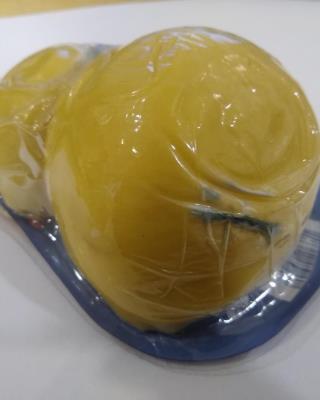
In all inspected packages, the presence of mold visible to the naked eye was found under the intact packaging. Food is not considered safe if it shows signs of spoilage.

During the inspection, unsatisfactory storage temperatures of this product were not found. The product has not expired.

Lots: L22034
Date of minimum durability: 04/04/2022
Packaging: PP foil
Quantity of product in package: 300 g
Producer: Diano Casearia SpA, Via Cavarelli, 5, Sassano, Italy
Country of origin:  Italy
Sampling date: March 30, 2022
Reference number: 22-000133-CAFIA-CZ
The sample was found by an official inspection of the State Agricultural and Food Inspection Authority.

Czech Republic – Scamorza bianca – Italian cheese with smoked flavor – Mold/Mould

Potravinynapranyri

Illustration photo no. 1 Illustration photo no. 2

Place of inspection:
Moravska Trebova ( Brnenska 1587/65, 57101 Moravska Trebova )
ID: 26178541
Food group: Milk and milk products / Cheese

Scamorza bianca – Italian cheese with smoked flavor
Category: Dangerous food
Unsatisfactory parameter:

mold visible to the eye

In some of the inspected packages, the presence of mold visible to the naked eye was found under the intact packaging. Food is not considered safe if it shows signs of spoilage.

During the inspection, unsatisfactory storage temperatures of this product were not found. The product has not expired.

Lots: L22028
Date of minimum durability: 31/03/2022
Packaging: PP foil
Quantity of product in package: 300 g
Producer: Diano Casearia SpA, Via Cavarelli, 5, Sassano, Italy
Country of origin:  Italy
Sampling date: March 30, 2022
Reference number: 22-000135-CAFIA-CZ
The sample was found by an official inspection of the State Agricultural and Food Inspection Authority.