Category Archives: Toxin

Research – Foodborne Botulism in Ukraine from 1955 to 2018

Mary Anne Liebert

kswfoodworld

We aim to identify possible biological, social, and economic factors that could influence the prevalence of foodborne botulism (FB). The objective of this article is to assess epidemiological peculiarities of FB in Ukraine from 1955 to 2018 using national epidemiological surveillance data. This article presents an epidemiological descriptive population-based study of the epidemiology of FB using correlation analysis. From 1955 to 2018, 8614 cases of botulism were recorded in Ukraine causing 659 deaths. The distribution of types of botulism toxins is represented by type A (7.97%), B (59.64%), suspected as C (0.56%), E (25.47%), others (5.33%), and unidentified (1.04%). From 1990 to 2015, the rate correlation between Human Development Index (HDI) and incidence of botulism was −0.75 ± 0.20. Homemade canned meat and fish continue to be the leading causes of botulism in Ukraine. Cases related to commercial food were rare or absent, but in recent years (2017–2018), their percentage has increased to 32.56%. The HDI and botulism have an inverse mathematical correlation and predictable logical relationship: with an HDI increase, the incidence of FB decreased. In general, food botulism in Ukraine is related to traditional socioeconomic factors related to cultural food habits. In the face of declining living standards and uncertainty that food products will be physically or economically available, homemade preservation increases. Home food preservation is a major cause of botulism in Ukraine. The elimination of FB is possible in Ukraine only with the complete cessation of home canning and state control over the manufacture and sale of commercial canned products.
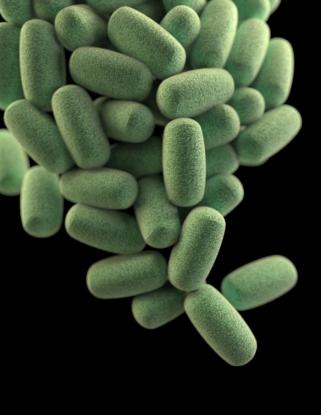
USA – Clostridium perfringens is bug that hit South Peninsula Hospital in Anchorage Alaska

Food Poison Journal

CDC Clost perf

Image CDC

Morgan Krakow of the Anchorage Daily News reported that Health officials have traced the source of a foodborne illness outbreak that sickened dozens of hospital workers in Homer to a single item, the Department of Health and Social Services said in a release Monday.

It was a Cubano sandwich, experts who investigated the incident think. In fact, it was probably the pulled pork inside of it, said Jeremy Ayers, section manager with the Food Safety and Sanitation Program within the Division of Environmental Health.

When investigating an outbreak, epidemiologists look at people’s symptoms and when they began. They start to form an idea of what dish was the likely offender. In this case a lot of signs pointed to the Cubano, Ayers said.

“[The] statistics that they came up with were pretty compelling that that sandwich was the implicated food item,” Ayers said.

Experts determined that the Homer incident likely involved a pathogen associated with cooked meat and poultry called Clostridium perfringens.

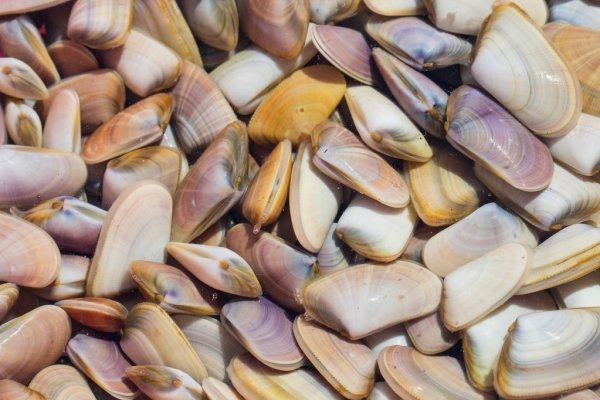
France – Tellines – DSP marine biotoxins (diarrheal toxins)

Gov france

Identifying information for the recalled product

  • Product category Food
  • Product sub-category Fishery and aquaculture products
  • Product brand name Unbranded
  • Names of models or references Tellines shipped from 07/20/21 to 07/22/21
  •  Product identification
    Lot
    All lots
  • Start date / End of marketing From 07/20/2021 to 07/22/2021
  • Storage temperature Product to be stored in the refrigerator
  • Health markFR.29.158.500.CE
  • Geographical sales area Whole France
  • Distributors Wholesalers

Practical information regarding the recall

  • Reason for recall Closure of fishing areas
  • Risks incurred by the consumer DSP marine biotoxins (diarrheal toxins)
  • Consumer behaviour Stop consuming
  • Sanitary recommendation Food poisoning caused by these toxins results in gastrointestinal disorders (diarrhoea, vomiting, abdominal pain), headaches  moderate fever appearing between 2 hours and 18 hours after consumption.
  • Compensation modalities Other (see additional information)
  • End date of the recall procedure Tuesday, August 10, 2021

RASFF Alert – LIPOPHILIC BIOTOXINS – LIVE SLIPPER CLAM (VENERUPIS CORRUGATA)

RASFF

HIGH LEVELS OF LIPOPHILIC BIOTOXINS IN LIVE SLIPPER CLAM (VENERUPIS CORRUGATA) FROM PORTUGAL in Spain

RASFF Alerts – Histamine – Yellow Fin Tuna

RASFF

Histamine and E 300 – ascorbic acid unauthorised in frozen yellowfin tuna (Thunnus albacares) from India in Italy

RASFF Alert – Diarrhoeic Shellfish Poisoning (DSP) – Live Scallops

RASFF

Withdrawal of live scallops (Aequipecten operculatis) harvested in France because of possible contamination with Diarrhoeic Shellfish Poisoning (DSP) toxins from Spain in France

RASFF Alert – Marine Biotoxin – Live Slipper Clams

RASFF

HIGH LEVELS OF LIPOPHILIC BIOTOXINS IN LIVE SLIPPER CLAM (VENERUPIS CORRUGATA) FROM PORTUGAL in Spain

Lipophilic marine biotoxins include okadaic acid, pectenotoxin, yessotoxin and azaspiracid groups.

Belgium – Whole wheat pasta made from spelled flour – Spirelli of the Dinkel brand – Mycotoxin – Ergot Alkaloids

AFSCA

AFSCA recall
Product: Whole wheat pasta made from spelled flour – Spirelli of the Dinkel brand.
Problem: presence of ergot alkaloids.


The AFSCA is today recalling consumers of whole pasta made from spelled flour – Spirelli of the Dinkel brand.

This recall follows a notification via the RASFF system (European Food and Feed Rapid Alert System) concerning the presence of ergot alkaloids in this product.

It was therefore decided to withdraw this product from sale and to recall it to consumers.
The AFSCA asks not to consume it and to bring it back to the point of sale where it was purchased.

Product description Product

category: wholemeal pasta made from spelled flour
Product name: Spirelli
Brand: Dinkel Best before
date (DDM): 28/10/2022
Content: 500g

This product has been sold in Belgium via

– Yadoki Organics (Alexianenweg 16 – 2530 Boechout (Antwerpen))
– Bioshop Gent BV (Charles de Kerchovelaan 423 – 9000 Gent)
– Bioshop “De Zonnebloem” (Parkstraat 25 – 9700 Oudenaarde)

For any further information, you can contact the AFSCA contact point for consumers: 0800 / 13.550 or pointdecontact@afsca.be

Ukraine- Botulism case reported in Melitopol, Ukraine, Linked to smoked mackerel

Outbreak News Today

kswfoodworld

On June 21, 2021, a case of botulism – food poisoning was registered in Melitopol- a city in Zaporizhzhia Oblast of southeastern Ukraine, according to the city health department.

The patient is a 65-year-old man who bought cold-smoked mackerel in a retail chain and consumed it himself on June 18-19, 2021.

USA – How to Report Seafood-Related Natural Toxin Illness

FDA

To help FDA effectively investigate, remove unsafe seafood products from the market, and develop new prevention strategies, the FDA relies on illness reporting from public health officials and healthcare providers. While most foodborne outbreaks are tracked through the FDA’s Coordinated Outbreak Response and Evaluation (CORE) network, seafood-related illnesses caused by natural toxins have a unique reporting mechanism. This web page provides information on commonly occurring seafood-related illnesses and how to report them to the FDA.  To report an illness from raw bivalve molluscan shellfish, email the FDA at shellfishepi@fda.hhs.gov.

The FDA receives reports of illnesses associated with the consumption of specific types of fish. These illnesses may originate from the activity of certain bacteria, toxins produced by marine algae, or hazards inherent in the fish.

Commonly occurring illness:

Illness and reporting information for the commonly occurring illnesses are provided in each section. Contact the FDA with any questions or need for clarification of the illness or reporting.

In addition to the illnesses listed above, reporting of other less frequently occurring illnesses from natural toxins may be accomplished by emailing the FDA at Seafood.Illness@fda.hhs.gov.  Refer to Chapter 6 of the “Fish and Fishery Products Hazards and Controls Guidance” for a comprehensive list of natural toxin illnesses. To report illnesses related to miscellaneous natural toxin illnesses, please email FDA at Seafood.Illness@fda.hhs.gov.

The FDA works with first responders, physicians, and state and local health departments to investigate illnesses and outbreaks, manage them, and learn how to lessen future occurrences.