Category Archives: STEC

France -Pediatric haemolytic uremic syndrome: preventive measures in the face of summer risks

Sante Publique

Each year, during the summer period, an increase in foodborne infections, including paediatric haemolytic uremic syndrome (HUS), is observed. HUS is a serious infectious disease most often food-borne. In children, this syndrome is most often caused by an infection due to a bacterium belonging to the family of Escherichia coli ( E. coli ) producing toxins, called Shiga-toxins. Public Health France recalls the preventive measures.

In the kitchen

  • Hand washing should be systematic before meal preparation;
  • Meat, and especially minced beef, but also minced meat preparations, must be well cooked through (and not pink or rare);
  • Raw milk, cheeses made from raw milk and dairy products made from raw milk should not be consumed by children under 5 years of age (prefer cooked pressed cheeses (such as Emmental, Comté, Gruyère, Beaufort), processed cheese spreads and pasteurized milk cheeses);
  • Flour-based preparations (pizza/cookie dough/cake/pie/pancake, etc.) should not be eaten raw or undercooked;
  • Vegetables, salads, fruits and aromatic herbs, in particular those which are going to be eaten raw, must be carefully washed before consumption, after peeling if necessary;
  • Raw foods should be kept separate from cooked or ready-to-eat foods;
  • Cooked meals and leftover food must be quickly put in the refrigerator and sufficiently reheated before consumption;
  • Kitchen utensils (especially when they have previously been in contact with raw foods such as meat or cheese), as well as work surfaces, must be thoroughly washed to avoid the risk of cross-contamination.

During activities and leisure

  • Children should not drink untreated water (well water, river, torrent, etc.) and avoid swallowing it when swimming (lake, river, pond, etc.);
  • Avoid contact of very young children (under 5 years old) with cows, calves, sheep, goats, etc., and their environment; in the event of contact with these animals, hand washing (water and soap) must be systematic before the child puts his fingers to his mouth.

Belgium – Equinox brand Extra Origin EU Steak horse meat – STEC E.coli

AFSCA

Recall by Equinox NV
Product: Equinox brand Extra Origin EU Steak horse meat
Nature of the problem: possible presence of STEC

In agreement with the FASFC, Equinox NV is withdrawing Equinox brand Steak Extra Origine EU horse meat from sale and recalling it from consumers due to the possible presence of STEC.

Equinox NV asks its customers not to consume this product and to return it to the point of sale where it was purchased.

Product description

– Product name: Horse meat Steak Extra Origin EU
– Brand: Equinox
– Use-by date (DLC) (“Use by”): 21/07/2022
– Sale period: from 04/ 07/2022 to 19/07/2022
– Batch numbers: 220704001; 220705001; 220706001; 220711001
– Type of packaging: transparent vacuum-packed tray
– Weight: +/- 300g

The product was distributed by Carrefour Belgium stores.

For any additional information , contact:

Sarah Schotte
03 324 38 48 (7u – 16u)
sarah@equinox.be
0475 94 89 93

Switzerland – Swiss outbreaks triple in 2021; illnesses also rise

Food Safety News

The number of foodborne outbreaks almost tripled in Switzerland in 2021 compared to the year before.

This past year, 37 outbreaks were reported with 540 people sick and 40 hospitalized versus 13 outbreaks in 2020.

Officials at the Federal Food Safety and Veterinary Office said the increase could be random, it could be due to better reporting and data collection or it could show the food safety situation has gotten worse, possibly because of the COVID-19 pandemic and other challenges facing businesses.

The agent was unknown in 17 outbreaks but Salmonella caused seven, norovirus four, Campylobacter three, two were due to Bacillus cereus and one each because of Shiga toxin-producing E. coli, Clostridium perfringens and hepatitis E.

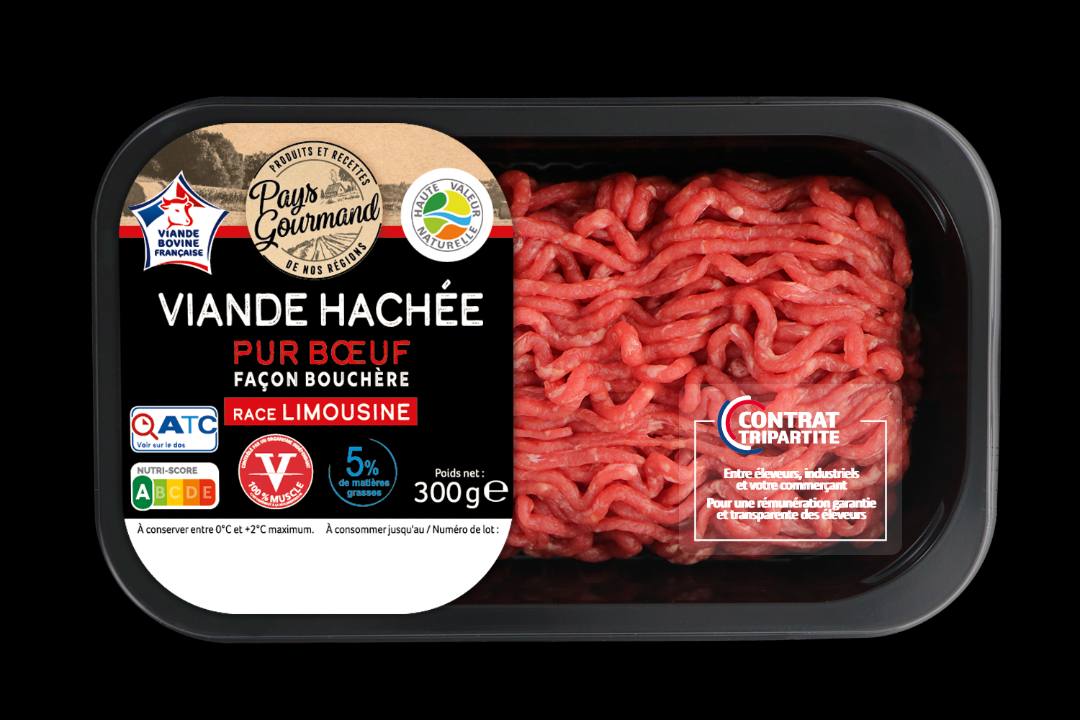
France – PURE MINCED BEEF LIMOUSINE BREED 5% 300G – STEC E.coli

Gov france

Identification information of the recalled product

  • Product category Feed
  • Product subcategory Meats
  • Product brand name GOURMET COUNTRY
  • Model names or references PURE MINCED BEEF LIMOUSINE BREED 5% 300G
  • Identification of products
    GTIN Batch Date
    26067599 22333351 Use-by date 06/21/2022
    26067599 22333366 Use-by date 06/21/2022
  • Packaging PLASTIC TRAYS AND FILM
  • Marketing start/end date From 06/15/2022 to 06/15/2022
  • Storage temperature Product to be stored in the refrigerator
  • Health mark EN 87.085.006 CE
  • Geographic area of ​​sale Whole France
  • Distributors ALDI

Practical information regarding the recall

  • Reason for recall Suspicion of the presence of microorganisms (E. coli STEC)
  • Risks incurred by the consumer Toxigenic Shiga Escherichia coli (STEC)

Research – Collective food poisoning (TIAC) ​​with E. coli O157 producing Shiga toxins, associated with the consumption of raw cucumbers

Sante Publique

On September 9, 2021, the Regional Health Agency (ARS) of Hauts-de-France was informed of a suspicion of collective food poisoning (TIAC) ​​affecting half-board students, educated in several schools in a municipality. of the Lille metropolis. 

On September 13, 2021, two cases of haemolytic and uremic syndrome (HUS) were diagnosed in two hospitalized children attending school in this town. Public Health France Hauts-de-France was asked by the Hauts-de-France ARS to provide support for the investigations and management of this TIAC. A total of 35 cases of gastroenteritis, with bloody diarrhea and fever (>38°C) in half of the cases, were identified. Ten cases were hospitalized and two children developed HUS. 

The cases identified were half-board students in four school groups (29 cases), a parent of a student and elderly people benefiting from the municipality’s home meal delivery service (5 cases). The case canteens were all supplied by the central municipal kitchen. 

The shape of the epidemic curve was in favour of a common and point source of contamination during meals on September 2 or 3, 2021. The case-control survey, carried out in schools, concluded that only the consumption of cucumbers in salad, served with the meal on September 2, was statistically and significantly associated with the occurrence of the disease.

A strain of E. highly pathogenic Shiga toxin-producing (STEC) O157 coli was isolated from the stool cultures of eight cases, including the two children who developed HUS and in the offending cucumber salad. Genomic analysis of the strains confirmed the genetic clustering of clinical and food strains that belonged to the same genomic cluster. The veterinary investigation revealed that a failure in the decontamination process, associated with incomplete peeling of the contaminated cucumbers, contributed to the occurrence of this TIAC. 

The cucumbers in question came from Belgium and the Belgian health authorities were informed via the dedicated European alert circuits. No other episodes of clusters of STEC infection related to this TIAC have been reported to the ARS over the period while cucumbers from the same batch had been widely distributed in communities and commercial catering services in the Hauts-de-France region. The food vehicle, incriminated in this TIAC, is part of the plants at risk because of its raw mode of consumption. It is important to remind vulnerable populations and collective catering services that preventing the risk of STEC infection, linked to the consumption of raw vegetables, requires washing, disinfection and peeling.

Report

Research – Effect of citral on the thermal inactivation of Escherichia coli O104:H4 in ground beef

Journal of Food Protection

The objective of the present study was to analyze the combined effect of heat treatment (55 to 62.5 °C) and citral (0 to 3%) on the heat resistance of Escherichia coli O104:H4 inoculated in ground beef. Inoculated meat packages were immersed in a circulating water bath stabilized at 55, 57.5, 60 and 62.5 °C for different times. The surviving microbial cells were counted in tryptic soy agar. A factorial design (4 x 4) was used to analyze the effect and interaction of heat treatment and citral. The results showed that heat and citral promoted E. coli O104:H4 thermal inactivation, suggesting a synergistic effect. At 55 °C, the incorporation of citral at 1, 2 and 3%, decreased D values (control: 42.75 min) by 85, 89, and 91%, respectively ( p < 0.05). Similarly, other evaluated temperatures exhibited a citral concentration-dependent effect ( P < 0.05). In conclusion, the findings could be a valuable tool for the food industry in designing a safe thermal process for inactivating E. coli O104:H4 in ground beef under similar thermal inactivation conditions.

Research – Microbiological quality of ready-to-eat salad products collected from retail and catering settings in England during 2020-21 

Journal of Food Protection

Salad and other fresh produce were collected in England from retail and catering during 2020-21 and  were tested for Salmonella, Shiga-toxin producing Escherichia coli (STEC), Listeria , Bacillus cereus , and generic E. coli. Of the 604 samples collected , 57% were from retail and 43% from catering: 61% were either salad leaves or salad leaves mixed with other products. Equal numbers of samples were prepacked or loose and 50% were refrigerated at the time of sampling. Combining results for all microbiological parameters, 84% were interpreted as satisfactory, 12% as borderline and 4% as unsatisfactory. One sample (prepacked  leaves, cucumber and tomato from a caterer) was categorised as unacceptable/potentially injurious due to detection of STEC O76, no STEC from human infections in the UK matched this isolate. No Salmonella enterica were detected but L. monocytogenes was recovered from 11 samples, one at 20 CFU/g the remainder at <20 CFU/g. B. cereus was detected at borderline levels (10 3 – <10 5 CFU/g) in 9% of samples and at an unsatisfactory level (>10 5 CFU/g) in one. E. coli were detected in 3% of samples at borderline (20 – <10 2 CFU/g) and in 4% at unsatisfactory (>10 2 CFU/g) levels. There was a significant association between the detection of L. monocytogenes and borderline/unsatisfactory levels of E. coli . There were no generic risks detected in association with the higher levels of B. cereus, STEC or Listeria but elevated levels of E. coli were predominantly confined to loose products from the UK and collected from caterers in the summer or autumn of 2021. Amongst the L. monocytogenes isolates, only one matched that from human cases and was recovered from a prepacked mixed salad from a catering business in 2021. This isolate was the same strain as that responsible for a multi country outbreak (2015-18) associated with Hungarian-produced frozen sweetcorn: no link to the outbreak food-chain was established.

RASFF Alert – STEC E.coli – Beef

RASFF

STEC in beef from Brazil in Belgium and the Netherlands

Research – Risk factors of Shiga toxin-producing Escherichia coli in livestock raised on diversified small-scale farms in California

Cambridge Org

Abstract

The increasing number of diversified small-scale farms (DSSF) that raise outdoor-based livestock in the US reflects growing consumer demand for sustainably-produced food. Diversified farms are small-scale and raise a combination of multiple livestock species and numerous produce varieties.

This 2015-2016 cross-sectional study aimed to describe the unique characteristics of DSSF in California, estimate the prevalence of STEC in livestock and evaluate the association between risk factors and the presence of STEC in livestock, using generalized linear mixed models. STEC prevalence was 13.62% (76/558). Significant variables in the mixed effect logistic regression model included daily maximum temperature (OR = 0.95; CI95%: 0.91-0.98), livestock sample source (cattle (OR = 4.61; CI95%: 1.64-12.96) and sheep (OR = 5.29; CI95%: 1.80-15.51)), multiple species sharing the same barn (OR = 6.23; CI95%: 1.84-21.15) and livestock having contact with wild areas (OR = 3.63; CI95%: 1.37-9.62).

Identification of STEC serogroups of public health concern (e.g., O157:H7, O26, O103) in this study indicated the need for mitigation strategies to ensure food safety by evaluating risk factors and management practices that contribute to the spread and prevalence of foodborne pathogens in a pre-harvest environment on DSSF.

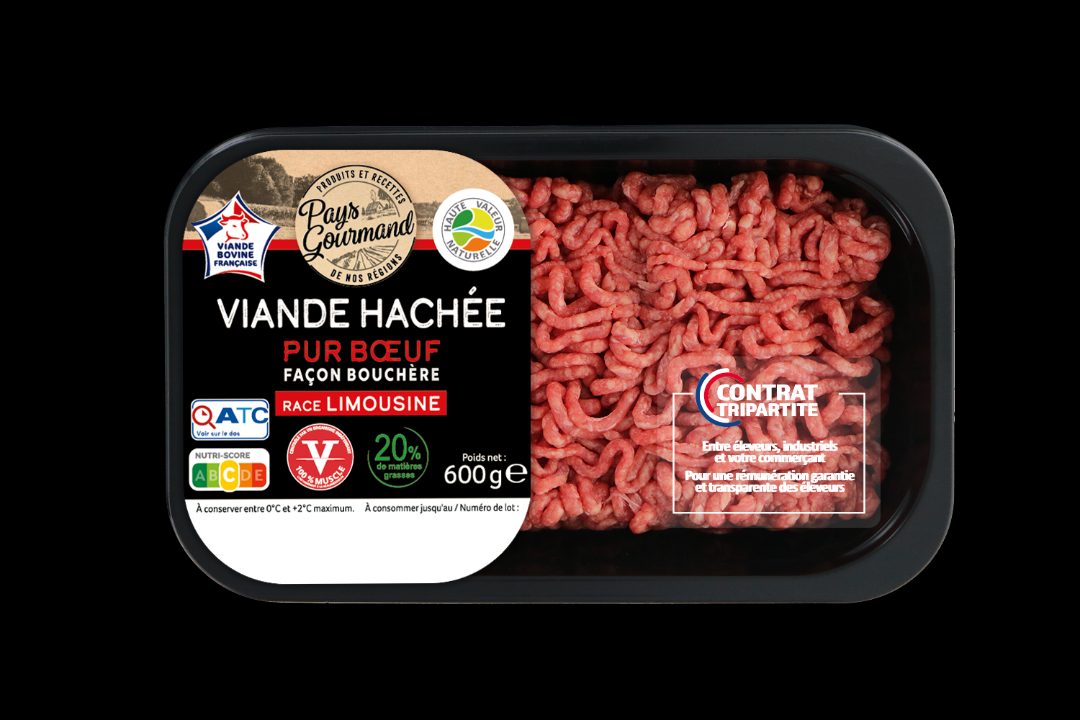
France – Pure beef minced meat, Limousin breed butcher style 20% – 600G

Gov france

Identification information of the recalled product

  • Product category Feed
  • Product subcategory Meats
  • Product brand name Greedy country
  • Model names or references Pure beef minced meat, Limousin breed butcher style 20% – 600G
  • Identification of products
    GTIN Lot Date
    2006050052554 22130813 Use-by date 02/06/2022
  • Marketing start/end date From 25/05/2022 to 02/06/2022
  • Storage temperature Product to be stored in the refrigerator
  • Health mark FR 87.085.006 CE
  • Geographic area of ​​sale Whole France
  • Distributors Aldi

Practical information regarding the recall

  • Reason for recall Possible presence of microorganisms (E. coli STEC)
  • Risks incurred by the consumer Toxigenic Shiga Escherichia coli (STEC)
  • Additional description of the risk Escherichia coli O26:H11