Category Archives: STEC E.coli

Canada – Updated and Corrected Food Recall Warning – Provigo brand and Metro brand ground beef products recalled due to E. coli O157

CFIA

Advisory details

Ottawa, September 28, 2020 – The food recall warning issued on September 27, 2020 has been updated to include additional product information. The food recall warning issued on September 27, 2020 has also been amended to correctly identify the affected products. The corrections for these products are marked by an asterisk (*). This additional information was identified during the Canadian Food Inspection Agency’s (CFIA) food safety investigation.

JBS Food Canada ULC is recalling raw, fresh, lean ground beef due to possible E. coli O157 contamination. This product was further processed by other companies into raw ground beef products. Consumers should not consume the recalled products described below.

The following products have been sold exclusively at Provigo Hull, 1 du Plateau, Gatineau, Quebec and Metro (Marché Kelly), 910 Maloney boulevard east, Gatineau, Quebec.

Recalled product

Brand Product Size UPC Codes
Provigo Medium ground beef club pack Variable Starts with
0 213026
All Best Before dates from 23.SE2020 up to and including 28.SE 2020 *
Provigo Medium ground beef Variable Starts with
0 214117
All Best Before dates from 23.SE2020 up to and including 28.SE 2020
Provigo Lean ground beef club pack Variable Starts with
0 217334
All Best Before dates from 23.SE2020 up to and including 28.SE 2020 *
Provigo Lean ground beef Variable Starts with
0 217331
All Best Before dates from 23.SE2020 up to and including 28.SE 2020
Metro Lean ground beef Variable Starts with
0 201020
All  « pkgd on » dates from 24.SE 2020 up to and including 26.SE 2020
Metro Lean ground beef fam. pack Variable Starts with
0 201710
All  « pkgd on » dates from 24.SE 2020 up to and including 26.SE 2020

What you should do

If you think you became sick from consuming a recalled product, call your doctor.

Check to see if you have the recalled products in your home. Recalled products should be thrown out or returned to the store where they were purchased.

Food contaminated with E. coli O157 may not look or smell spoiled but can still make you sick. Symptoms can include nausea, vomiting, mild to severe abdominal cramps and watery to bloody diarrhea. In severe cases of illness, some people may have seizures or strokes, need blood transfusions and kidney dialysis or live with permanent kidney damage. In severe cases of illness, people may die.

Background

This recall was triggered by the company. The CFIA is conducting a food safety investigation, which may lead to the recall of other products. If other high-risk products are recalled, the CFIA will notify the public through updated Food Recall Warnings.

The CFIA is verifying that industry is removing the recalled products from the marketplace.

Illnesses

There have been no reported illnesses associated with the consumption of these products.

Product photos

Printer ready version of photos

  • Provigo - Medium ground beef club pack
  • Provigo - Medium ground beef
  • Provigo - Lean ground beef club pack
  • Provigo - Lean ground beef
  • Provigo - Lean ground beef - Nutrition facts
  • Provigo - Medium ground beef - Nutrition facts
  • Metro - Lean ground beef
  • Metro - Lean ground beef fam. pack

Public enquiries and media

Public enquiries
Toll-free: 1-800-442-2342 (Canada and U.S.)
Telephone: 1-613-773-2342 (local or international)
Email: cfia.enquiries-demandederenseignements.acia@canada.ca
Media relations
Telephone: 613-773-6600
Email: cfia.media.acia@canada.ca

Canada – Provigo brand ground beef products recalled due to E. coli O157

CFIA

Recall details

Ottawa, September 27, 2020 – JBS Food Canada is recalling Provigo brand ground beef products from the marketplace due to possible E. coli O157 contamination. Consumers should not consume the recalled products described below.

The following products have been sold at Provigo Hull, 1 du Plateau, Gatineau, Quebec.

Recalled product

Brand Product Size UPC Codes
Provigo Medium ground beef club pack Variable Starts with 0 213026 All packages bearing Best Before 16.SE2020 or 17.SE2020 or 18.SE2020
Provigo Lean ground beef fresh club pack Variable Starts with 0 217334 All packages bearing Best Before 16.SE2020 or 17.SE2020 or 18.SE2020

What you should do

If you think you became sick from consuming a recalled product, call your doctor.

Check to see if you have the recalled products in your home. Recalled products should be thrown out or returned to the store where they were purchased.

Food contaminated with E. coli O157 may not look or smell spoiled but can still make you sick. Symptoms can include nausea, vomiting, mild to severe abdominal cramps and watery to bloody diarrhea. In severe cases of illness, some people may have seizures or strokes, need blood transfusions and kidney dialysis or live with permanent kidney damage. In severe cases of illness, people may die.

Background

This recall was triggered by the company. The Canadian Food Inspection Agency (CFIA) is conducting a food safety investigation, which may lead to the recall of other products. If other high-risk products are recalled, the CFIA will notify the public through updated Food Recall Warnings.

The CFIA is verifying that industry is removing the recalled products from the marketplace.

Illnesses

There have been no reported illnesses associated with the consumption of these products.

Product photos

Printer ready version of photos

  • Provigo – Lean ground beef fresh club pack
  • Provigo – Medium ground beef club pack

Research – Association between Shiga Toxin–Producing Escherichia coli O157:H7 stx Gene Subtype and Disease Severity, England, 2009–2019

CDC

Abstract

Signs and symptoms of Shiga toxin–producing Escherichia coli (STEC) serogroup O157:H7 infection range from mild gastrointestinal to bloody diarrhea and hemolytic uremic syndrome (HUS). We assessed the association between Shiga toxin gene (stx) subtype and disease severity for »3,000 patients with STEC O157:H7 in England during 2009–2019. Odds of bloody diarrhea, HUS, or both, were significantly higher for patients infected with STEC O157:H7 possessing stx2a only or stx2a combined with other stx subtypes. Odds of severe signs/symptoms were significantly higher for isolates encoding stx2a only and belonging to sublineage Ic and lineage I/II than for those encoding stx2a only and belonging to sublineage IIb, indicating that stx2a is not the only driver causing HUS. Strains of STEC O157:H7 that had stx1a were also significantly more associated with severe disease than strains with stx2c only. This finding confounds public health risk assessment algorithms based on detection of stx2 as a predictor of severe disease.

Research – Netherlands – Surveillance zoonoses in broilers 2018-2019

RIVM

Animals can carry pathogens that can cause disease in humans. The diseases which they cause are known as zoonoses. In 2018 and 2019 the National Institute for Public Health and the Environment (RIVM) and the Netherlands Food and Consumer Product Safety Authority [Netherlands Food and Consumer Product Safety Authority] (NVWA) investigated how often some of these pathogens occurred in broilers. This study involved broilers at 198 farms as well as 132 livestock farmers, family members and employees. RIVM assessed whether the same pathogens also occurred in these persons. Most of these pathogens usually cause diarrhoea, but the infections can sometimes be more severe. ESBL-producing bacteria were also assessed, as they are resistant to an important group of antibiotics.

A number of pathogens occur frequently in the investigated broilers. They are present in the animals’ intestines and therefore in the manure as well. Meat can become contaminated in the slaughterhouse if it comes into direct contact with the manure. People can prevent an infection by only eating chicken that has been thoroughly cooked. It is also important to prevent other food from coming into contact with raw meat.

Of the pathogens investigated, ESBL-producing bacteria were found most often, namely in the broilers on 36% of the farms. Among livestock farmers and family members, these bacteria were found in 7% of participants. This is comparable to the percentage in the general Dutch population.

Campylobacter was found on 32% of broiler farms. This is comparable to the numbers from Campylobacter surveillance conducted between 1999 and 2002. Campylobacter was also found in two of the human participants.

Salmonella surveillance is carried out on all broiler farms according to European legislation. Salmonella was reported in broilers from 11% of the farms. The types of Salmonella bacteria identified are those that can cause diarrhoea in people. Salmonella was also found in one human participant.

STEC and Listeria were found on very few broiler farms. These bacteria were detected on 1% (Listeria) or less (STEC) of the investigated farms.

RASFF Alert – STEC E.coli – Chilled Steak Sausage

European Food Alerts

RASFF

shigatoxin-producing Escherichia coli (stx1, stx2, eae, v. 14 /25g) in chilled steak sausage from the Netherlands in the Netherlands

Netherlands – AH steak sausage 200 grams – E.coli

NVWA

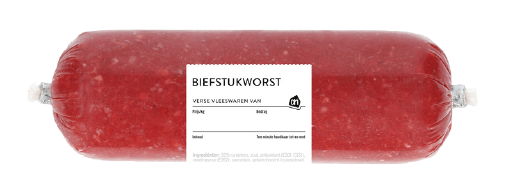
Important safety warning AH steak sausage 200 grams

Albert Heijn has decided on the AH Steak sausage st. 200 grams from the stores. With the AH Steak sausage st. 200 grams with an expiry date of 21 September 2020, the bacterium e.coli was found.

Albert Heijn urges customers not to eat AH steak sausage and to bring it back to an Albert Heijn store, where they will be reimbursed for the purchase price upon return of the product.

See also the Albert Heijn website

E.coli

Eating a product with an E. coli bacteria (faeces bacteria, STEC, EHEC) can, if not thoroughly cooked, result in nausea, vomiting and (bloody) diarrhea within a week. Especially for young children, the elderly, people with low immunity and pregnant women. Consult your doctor or general practitioner for more information if you have health complaints after eating the said product.

Download ‘Important safety warning AH steak sausage 200 grams’

PDF document | 1 page | 97 KB

Warning | 19-09-2020

Steak sausage AH

RASFF Alerts – STEC E.coli – VP Beef Meat – Raw Goats Milk Cheese – Minced Beef

European Food Alerts

RASFF

shigatoxin-producing Escherichia coli (O104, stx1- stx2+ eae- /25g) in chilled vacuum-packed beef meat from France in Italy

RASFF

shigatoxin-producing Escherichia coli in raw goat’s milk cheese from France in Germany

RASFF

shigatoxin-producing Escherichia coli (O 103; stx +, eae + /25g) in minced beef from Belgium in Belgium

Research – Switzerland – Do changes in STEC diagnostics mislead interpretation of disease surveillance data in Switzerland? Time trends in positivity, 2007 to 2016

Eurosurveillance

Infections caused by Shiga toxin (Stx)-producing  (STEC) are generally mild and self-limiting or even asymptomatic. However, particularly in children and elderly people, STEC infections can lead to severe gastroenteritis with haemorrhagic diarrhoea and life-threatening conditions, e.g. haemolytic uraemic syndrome (HUS) [1,2].

STEC transmission can occur through the consumption of contaminated food and drinks, or by direct contact with infected individuals or animals shedding the bacterium* [1,35]. STEC infections are endemic in Europe, including Switzerland [6,7]. Cases occur sporadically or in outbreaks; a large outbreak attributed to contaminated sprouts occurred in Germany in 2011 [8]. Smaller outbreaks have also been reported, e.g. there was an outbreak in Italy in 2013 and in Romania in 2016, both were suspected to be caused by contaminated dairy products [9,10]. Considering 22 years of population-based data up to 2012, Majowicz et al. estimated in 2014 that STEC leads to an estimated 2.8 million illness cases per year, including 3,800 cases of HUS, globally [11].

The National Notification System for Infectious Diseases (NNSID) of the Swiss Federal Office of Public Health (FOPH) has been receiving all notifications of laboratory-confirmed STEC infections since 1999. Case numbers were generally constant until 2010, with only a few laboratories reporting STEC cases in Switzerland. An increase in cases was observed in 2011 following the outbreak in Germany, before returning to expected yearly fluctuations, and then markedly increasing since 2015 [12]. Given that this increase was observed around the same time as the introduction of syndromic multiplex PCR panels for stool analyses in standard laboratory practice in Switzerland [12], it was hypothesised that these panels were the cause of the increase in notified STEC cases. Traditionally, routine testing of stool samples for bacterial pathogens involved only  spp.,  spp. and  spp. using culture-based techniques. With syndromic multiplex PCR panels, stool samples can be tested for up to 22 pathogens, including STEC, in one single run [12,13].

Prior to the gradual introduction of multiplex PCR to the routine diagnostics between 2014 and 2015, STEC was only specifically tested for in Switzerland upon physician request, and this rarely happened. Current testing practice includes the use of small syndromic enteric bacterial panels for testing in patients without a travel history or a larger gastrointestinal panel if travel history is reported on the test order form [7].

A qualitative assessment found that Swiss laboratory experts uniformly agreed that the increase in STEC case numbers was due to the introduction and increasing use of multiplex PCR panels [7]. We set out to conduct a quantitative investigation as to whether an increase in the STEC testing rate associated with the use of the panels is what led to the increased notification of cases.

Our study assesses the development of the STEC positivity in the Swiss population between 2007 and 2016 using routine laboratory data, and gives insight into the epidemiology and notification numbers of STEC infections in Switzerland.

France – Mon chevalin à moi brand Hippotonic and hippovrac – E.coli O157

https://www.oulah.fr/rappel-produit-hippotonic-et-hippovrac-de-marque-mon-chevalin-a-moi/

ENCOUNTERED PROBLEM

Presence of Escherichia coli O157: H7

PROPOSED SOLUTION

People who hold the product in question are asked not to consume them – and more particularly young children, pregnant women, immunocompromised people and the elderly – and to return them to the point of sale where they were purchased.

People who have consumed it and who present symptoms such as diarrhea, abdominal pain or vomiting should consult their doctor as soon as possible, mentioning this consumption and the possible link with the bacterium Escherichia coli.

In the absence of symptoms within 10 days after consuming the affected products, there is no need to worry and consult a doctor.

The E. coli bacterium is naturally present in the digestive microflora of humans and warm-blooded animals. Some strains of E. coli are pathogenic, and can be responsible in humans for various disorders ranging from mild diarrhea to more serious forms such as hemorrhagic diarrhea or severe kidney damage such as HUS, mainly in young children.

FURTHER INFORMATION

▸ Type of packaging
container under skin gingham red white

▸ Lot
102240010

▸ Barcode
• hippovrac: 0264205000000
• hippotonic: 3427240001029

▸ DLC / DLUO
• hippovrac: from 08/24 to 08/25
• hippotonic: from 08/29 to 08/31

▸ Veterinary identification number
FR 27 656 001 CE

▸ Marketing period
from 08/20 to 08/31

▸ Consumer service contact
SNVC is available to answer their questions on the telephone number 02.32.41.13.48 (8 am-12.30pm 1.30pm-5.30pm).

▸ Source
https://www.auchan.fr/

Research – Investigation into a national outbreak of STEC O157:H7 associated with frozen beef burgers, UK, 2017

Cambridge org

kswfoodworld E.coli O157

Image CDC

In November 2017, Public Health England (PHE) identified an outbreak of Shiga toxinproducing Escherichia coli O157 in England where whole genome sequencing results indicated cases were likely to be linked to a common source and began investigations. Hypothesis generation included a review of enhanced surveillance data, a case-case study and trawling interviews. The hypothesis of interest was tested through the administration of focussed questionnaires and review of shopping history using loyalty card data. Twelve outbreak cases were detected, eight were hospitalised, and four developed Haemolytic Uraemic Syndrome. Frozen beef burgers supplied by a national retailer were identified as
the vehicle of the outbreak. Testing of two left-over burger samples obtained from freezers of two separate (unlinked) cases and a retained sample from the production premises were tested and found positive for the STEC outbreak strain. A voluntary recall of the burgers was implemented by the retailer. Investigations at the production premises identified no contraventions of food safety legislation. Cooking guidance on the product packaging was deemed to be adequate and interviews with the cases/carers who prepared the burgers
revealed no deficiencies in cooking practices at home. Given the long-shelf life of frozen burgers, the product recall likely prevented more cases.