Category Archives: STEC E.coli

Research – The effects of environmental factors on the prevalence and diversity of bacteriophages lytic against the top six non‐O157 Shiga toxin‐producing Escherichia coli on an organic farm

Wiley Online

Bacteriophages (or phages) specific to Shiga toxin‐producing Escherichia coli (STEC) strains are frequently isolated from animal‐associated environments primarily because ruminant animals are the natural reservoir of STEC. However, little is known about these phages in produce‐growing environments. The objective of this study was to determine the effects of environmental factors on the prevalence of the phages lytic against O157 and the top six non‐O157 STEC on an organic farm. A total of 370 samples were collected from an organic farm, containing animal‐active and produce‐growing areas, for 1 year. A bacterial cocktail, including nonpathogenic and pathogenic Ecoli strains, was used for phage isolation. Meanwhile, culture methods and PCR were used to isolate STEC strains. Weather information was also collected for each sampling trip. Twenty‐eight samples contained phages lytic against STEC (or STEC‐infecting phages), of which 26 were collected from the animal‐active area. Moreover, the winter season had a higher phage prevalence than other seasons, likely due to high rain precipitation. The phages belonging to the Myoviridae family and those lytic against STEC O103 were the most prevalent. One Ecoli O103:H2 was isolated from a water sample where no STEC O103‐infecting phages were found. Additionally, no STEC O103 was present in the samples containing STEC O103‐infecting phages. The findings indicate that animal is the primary factor contributing to the prevalence of the STEC‐infecting phages in the surrounding environment of the organic farm, and the presence of these phages contributes to a negative correlation with their STEC hosts.


France – Product recall: Picodon aop x2, x5 – Guinguette x6 – Goat cheese x3 from Les Fromagers Fermiers du Peytot

Oulah

Product recall: Picodon aop x2, x5 - Guinguette x6 - Goat cheese x3 from Les Fromagers Fermiers du Peytot

ENCOUNTERED PROBLEM

Presence of Escherichia coli O157: H7

PROPOSED SOLUTION

People who hold the product in question are asked not to consume them – and more particularly young children, pregnant women, immunocompromised people and the elderly – and to return them to the point of sale where they were purchased.

People who have consumed it and who present symptoms such as diarrhea, abdominal pain or vomiting should consult their doctor as soon as possible, mentioning this consumption and the possible link with the bacterium Escherichia coli.

If there are no symptoms within 10 days of consuming the affected products, there is no need to worry and consult a doctor.

The E. coli bacterium is naturally present in the digestive microflora of humans and warm-blooded animals. Some strains of E. coli are pathogenic, and can be responsible in humans for various disorders ranging from mild diarrhea to more serious forms such as hemorrhagic diarrhea or severe kidney damage such as HUS, mainly in young children.

FURTHER INFORMATION

▸ Type of packaging
Rolls x6, x5, x3, x2, tray x2 or bare

▸ Lots
• 23110
• 23810
• 24510
• 25210
• 25910
• 26610
• 27310

▸ Health
stamp FR 07.176.001 CE

▸ Marketing period
from August 17, 2020 to October 14, 2020

▸ Consumer service contact
La Sarl Les Fromagers Fermiers du Peytot is available to consumers to answer their questions by email at peytotsarl@gmail.com

▸ Source
https://www.supercasino.fr/

USA – Dungeness Valley Raw Milk and Cream Recalled For E. coli

Food Poisoning Bulletin

According to the Washington State Department of Health, Dungeness Valley raw milk and cream is being recalled because it may be contaminated with toxin-producing E. coli bacteria. The dairy, which is located in Sequim, Washington, is telling consumers to discontinue consumption of the retail Dungeness Valley raw milk and cream products with best by dates of 9/29/20 and 9/30/20 and dispose of them, or return them to the place of purchase for a refund. No other best by dates are affected at this time.

RASFF Alerts – STEC E.coli – Chilled Hamburgers – Dried Fenugreek

European Food Alerts

RASFF

shigatoxin-producing Escherichia coli (O26 stx2+ eae+ /25g) in chilled hamburgers from the Netherlands in the Netherlands

RASFF

shigatoxin-producing Escherichia coli (VTEC /25g) and Salmonella (presence /25g) in dried fenugreek leaves from India in Germany

Netherlands – Important safety warning AH burgers, bratwurst and beef finches – STEC E.coli

NVWA

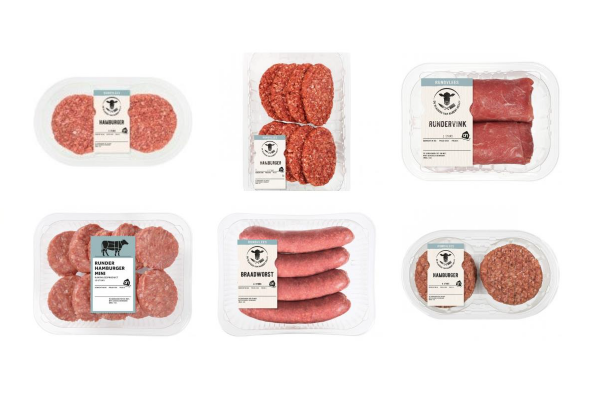
Albert Heijn warns against a number of beef products with an expiry date of 24 or 25 September 2020. The E.coli bacteria was found in the products.

It concerns the following products:

  • AH mini hamburger 10 pieces, TGT 24-09-2020
  • AH hamburger 8 pieces, use-by-date 9/24/2020 and 9/25/2020
  • AH beef bratwurst 4 pieces, TGT 24-09-2020
  • AH hamburger 2 pieces, TGT 25-09-2020
  • AH hamburger 4 pieces, TGT 25-09-2020
  • AH beef finch 2 pieces, TGT 25-09-2020

The beef products are no longer in Albert Heijn stores, but customers can have these products in the freezer. Albert Heijn asks customers not to eat the beef products and to return them to an Albert Heijn store where they will be reimbursed for the purchase price upon return.

See also the Albert Heijn website

Download ‘Important safety warning for AH burgers, bratwurst and beef finches’

PDF document | 1 page | 166 KB

Warning | 05-10-2020

E.coli

Eating a product with an E.coli bacteria (faeces bacteria, STEC, EHEC) can, if not thoroughly cooked, cause nausea, vomiting and (bloody) diarrhea within a week. Especially for young children, the elderly, people with low immunity and pregnant women. Consult your doctor or general practitioner for more information if you have health complaints after eating the said product.

6 packs of Albert Heijn beef products

Research – Recovery Rate of Cells of the Seven Regulated Serogroups of Shiga Toxin-Producing Escherichia coli from Raw Veal Cutlets, Ground Veal, and Ground Beef from Retail Stores in the Mid-Atlantic Region of the United States

Journal of Food Protection

A total of 482 veal cutlet, 555 ground veal, and 540 ground beef samples were purchased from retail establishments in the Mid-Atlantic region of the U.S. over a non-contiguous, two-year period between 2014 and 2017. Samples (325 g each) were individually enriched and screened via real-time PCR for all seven regulated serogroups of Shiga toxin-producing Escherichia coli (STEC). Presumptive STEC positive samples were subjected to serogroup-specific immunomagnetic separation and plated onto selective media. Up to five isolates typical for STEC from each sample were analyzed via multiplex PCR for both the virulence genes (i.e., eae , stx 1 and/or stx 2 , and ehxA ) and serogroup-specific gene(s) for the seven regulated STEC serogroups. The recovery rates of non-O157 STEC from veal cutlets (3.94%, 19 of 482 samples) and ground veal (7.03%, 39 of 555 samples) were significantly higher (P < 0.05) than that from ground beef (0.93%, 5 of 540 samples). In contrast, only a single isolate of STEC O157:H7 was recovered; this isolate originated from one (0.18%) of 555 samples of ground veal. Recovery rates for STEC were not associated with state, season, packaging type, or store type (P > 0.05), but were associated with brand and fat content (P < 0.05). Pulsed-field subtyping of the 270 viable/confirmed STEC isolates from the 64 total samples testing positive revealed 78 pulsotypes (50 to 80% similarity) belonging to 39 pulsogroups, with ≥90% similarity among pulsotypes within pulsogroups. Also, multiple isolates from the same sample displayed an indistinguishable pulsotype for 43 of 64 (67.7%) samples testing positive.  These findings support related data from regulatory sampling exercises over the past decade and confirm that recovery rates for the regulated STEC serogroups are appreciably higher for raw veal compared to raw beef samples as was also observed herein for meat purchased at food retailers in the Mid-Atlantic region of the U.S.

Research – Thermal Resistance of Single Strains of Shiga Toxin-Producing Escherichia coli O121:H19 and O157:H7 Based on Culture Preparation Method and Osmolyte-Reduced Water Activity

Journal of Food Protection

Pathogen thermal resistance studies on low-water activity foods (LWAF) use a variety of methods to inoculate food, as well as strategies to reduce water activity, which can influence thermal resistance observations. This study investigated effects of culture preparation method and osmolyte-induced water activity on thermal resistance of two Shiga toxin-producing Escherichia coli (STEC; O121:H19, O157:H7) challenged with isothermal conditions, determining D – and z -values for each isolate (56, 59, and 62 ° C). Tryptic Soy Broth (TSB) and Agar (lawn cultures) were compared. D -values of broth cultures were significantly and consistently larger than those of lawn cultures, and O121 was significantly more resistant than O157, but only at 56 ° C ( p < 0.05). To compare potential effects of water activity on STEC thermal resistance, cells were suspended in osmolyte solutions with varying water activity: high (TSB, a w 0.99), intermediate (61% glycerol or 26% NaCl, a w 0.75), and low (82% glycerol, a w 0.5). In most instances, STEC in high-water activity broth exhibited greater heat resistance compared to reduced-water activity solutions, except the glycerol intermediate-water activity solution (a w 0.75). Magnitudes varied with strain and temperature. The z -values of lawn cultures were significantly lower than those of broth cultures ( p < 0.05), but there were only some differences between high-a w and reduced-a w samples. There were no significant differences of z -values based on strain type. These results highlight that thermal resistance can be affected by culture preparation and that osmolyte-induced changes to water activity influence thermal inactivation of STEC by varying magnitudes. These results emphasize the challenges between extrapolating results from lab inactivation kinetic experiments to determine the inactivation of low water activity foods, especially those considered dry in nature.

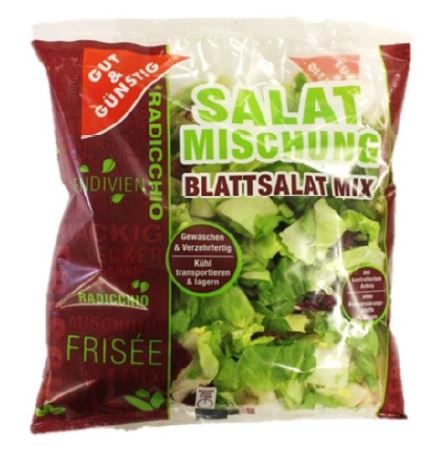
Germany – Good & cheap salad mix leaf salad mix – STEC E.coli

Warning type:

Food

Date of first publication:

02.10.2020

Product name:

Good & cheap salad mix leaf salad mix

Product pictures:

Product photo.jpg
Manufacturer (distributor):

GARTENFRISCH Jung GmbH

Reason for warning:

E. Coli producing shiga toxin

Packaging Unit:

150 g pack

Durability:

05/10/2020

Additional Information:

Reference is made to the attached press release from the food business operator.

Contact to the responsible authorities:

Baden-Württemberg:

poststelle@mlr.bwl.de

Bavaria:

poststelle@lgl.bayern.de

Hesse:

Schnellwarnung@rpda.hessen.de

Lower Saxony:

poststelle@ml.niedersachsen.de

Saxony:

poststelle@sms.sachsen.de

Thuringia:

LM-Ueberektiven@tlv.thueringen.de

Press releases and information
title Attachment or web link
Press release

Italy – AZ. AGR. ARMANNI ANGELO – TREVIOLO (BG) – Raw Milk Cheese – Stracchino – STEC E.coli -eae

MDS

Brand : AZ. AGR. ARMANNI ANGELO – TREVIOLO (BG)

Name : raw milk cheese – stracchino

Reason for reporting : Recall due to microbiological risk

Publication date : 30 September 2020

Documentation

Documentation

Research – Lessons Learned from a Decade of Investigations of Shiga Toxin–Producing Escherichia coli Outbreaks Linked to Leafy Greens, United States and Canada

CDC

Abstract

Shiga toxin–producing Escherichia coli (STEC) cause substantial and costly illnesses. Leafy greens are the second most common source of foodborne STEC O157 outbreaks. We examined STEC outbreaks linked to leafy greens during 2009–2018 in the United States and Canada. We identified 40 outbreaks, 1,212 illnesses, 77 cases of hemolytic uremic syndrome, and 8 deaths. More outbreaks were linked to romaine lettuce (54%) than to any other type of leafy green. More outbreaks occurred in the fall (45%) and spring (28%) than in other seasons. Barriers in epidemiologic and traceback investigations complicated identification of the ultimate outbreak source. Research on the seasonality of leafy green outbreaks and vulnerability to STEC contamination and bacterial survival dynamics by leafy green type are warranted. Improvements in traceability of leafy greens are also needed. Federal and state health partners, researchers, the leafy green industry, and retailers can work together on interventions to reduce STEC contamination.