Category Archives: STEC E.coli

Sweden – Report on food poisoning in Sweden during 2020. 

Livsmedelsverket

The report describes how many people become ill from the food, which are the most common infectious agents and foods that cause the disease cases, where in the food chain the designated foods are contaminated, which countries of origin were indicated for the designated foods, what contributing factors were identified, seasonal variation and changes in recent years. The results from the report provide information to those who have an interest or need for this type of knowledge in their profession and not least to show and give feedback on the valuable work performed by those who investigate, report and otherwise study food poisoning.

Summary Reported Foodborne Illness in Sweden 2020
This Report compiles food poisonings reported to the Swedish Food Agency in 2020. A new online form for submitting reports to the Swedish Food Agency was launched in January 2020, aiming to raise the quality of reported data. In 2020, the Covid-19 pandemic was ongoing also, which affected the number of food poisoning outbreaks during the year.
By food poisoning is meant here an illness caused by eating food containing harmful bacteria, parasites, viruses or toxins. The main purpose of the compilation is to support food poisoning investigations in several ways:
by giving the present position of the most recent food poisonings;
by presenting data that can be used to connect different pathogens to different kinds of foods.by making it possible to follow the development of different combinations;
by making it possible to implement risk management measures as effectively as possible.
The Swedish Food Agency regulation LIVSFS 2005:7 instructs municipal control authorities, in co-operation with health professionals, the County Administrative Board and the Public Health Agency of Sweden, to conduct epidemiological investigations of foodborne outbreaks.
The results must be reported to the Swedish Food Agency without delay. Health Agency and Swedish Food Agency in consultation supplement the control authorities’ reports with reports on local and national outbreaks.
The Report is based on 173 reported events of suspected or confirmed food poisoning with a total of 1,314 cases of illness. In 160 of the reports it was stated that two or more persons were infected from the same source. When compared to the 2019 compilation, we can note that both the number of reports and cases of illness were almost halved in 2020.
This reduction may be due to the restrictions and recommendations introduced in connection to Covid-19 pandemic. For example, there were fewer people using restaurant services, better hand hygiene among people handling food and the cancellation of major public events where food may have been served.
Most reports indicated that the cause was unknown (71%), however for 44% of the reported cases virus was cited as the cause. This is due to 23 outbreaks with 571 cases of illness where the cause was virus. Norovirus continues to cause major outbreaks (22 food poisoning outbreaks with a total of 513 cases), followed by campylobacter which was reported in 4 outbreaks with 158 cases, Vibrio parahaemolyticus, an unusual foodborne pathogen in Sweden, was associated with one outbreak of 50 cases of illness.
The food categories that had the most reported cases of illness were bakery products (210 cases), chicken (155 cases) and foods from the sea (164 cases).Bakery products were a source of infection in outbreaks where norovirus and STEC (Shigatoxin-producing E. coli) were the cause -200 cases and 10 cases, respectively.

Chicken was a source of infection in outbreaks where Campylobacter was the cause -155 cases.
When the source of infection was food from the sea, norovirus in oysters was the cause most cases of illness (124 cases), followed by Vibrio parahaemolyticus in seagrass (50 cases) and histamine in fish (34 cases).
The number of food poisoning reports was highest during the first quarter: between January to March there were 63 reports in, with a total of 634 cases of illness. This is due to both a number of oyster-related outbreaks early in the year and fewer outbreaks occurred during the rest of the year due to restrictions and hygiene recommendations during the covid-19 pandemic. For almost 65% of the disease cases, the source of contamination was food contaminated early in the production chain, e.g. industrial facilities, from which the food was then widely distributed (industry 30 %, primary production 3% and other 31.5%). In order to reduce the number of food poisonings, it is therefore important to have good systems for food safety in primary production and such facilities.
The most commonly mentioned contributing factor was incorrect storage with respect to time and temperature. This factor was listed in 21 reports. For example, this may refer to inappropriate temperature when keeping food heated, or not low enough temperature in cold storage. The second most common factor was “a contaminated ingredient”, as stated in 11 reports.
There is often no information about the country of origin of the implicated food products. This may be due to the fact that this information is optional in the reporting form. It can be also difficult to know in which country viruses or bacteria contaminated a food product.
The reporting authority usually does not have access to information about whether patients have received hospital care. However in 5 reports, it was stated that a total of 7 people received hospital care. No deaths were reported.

Click to access l-2021-nr-23-rapporterade-misstankta-matforgiftningar-2020.pdf

Denmark – Deadly E. coli O157 outbreak sickens 13 in Denmark

Food Safety News

Officials in Denmark are investigating a deadly outbreak of Shiga toxin-producing E. coli (STEC) O157 that has affected more than a dozen people.

The outbreak began in December 2021 and includes 13 patients with a possible common source of infection, said the Statens Serum Institut (SSI). Nine people have been hospitalized and an elderly patient has died.

Since early December, 13 patients have been detected and samples from nine of those sick are closely related after an analysis by whole genome sequencing at the Statens Serum Institut. This means they were likely infected by a common source.

Norway – The Norwegian Zoonoses Report 2020

Summary

The occurrence of most zoonotic pathogens in animals was stable in 2020 compared to previous years. The occurrence in humans, however, decreased in 2020 due to the COVID-19 situation. The decrease was highest in campylobacteriosis, salmonellosis and E. coli (EHEC/VTEC) infections, mainly due to less travel associated cases. Introduction The Zoonosis Report is published annually in Norway in accordance with the requirements of the EU Council Directive 2003/99/EC. In addition, data on specified zoonoses in feed, animals and food are reported to the European Food Safety Authority (EFSA). Corresponding data from humans are reported to the European Center for Disease Control (ECDC).

These two European institutions compile an annual European zoonosis report based on the received data: https://www.efsa.europa.eu/en/efsajournal/pub/6971The Norwegian Veterinary Institute (NVI) is responsible for reporting of Norwegian data to EFSA, while the Norwegian Institute of Public Health (NIPH) reports Norwegian data to ECDC. The Zoonosis Report is written by the NVI in collaboration with the Norwegian Food Safety Authority (NFSA) and NIPH.

Click to access 2021_63%20Zoonoserapporten%202020.pdf

CPS – Research project Funding 2022 – Salads

CPS

Assessing Romaine lettuce “Forward Processing” for potential impacts on EHEC growth, antimicrobial susceptibility, and infectivity

Consumption of Romaine lettuce has been linked to multiple foodborne illness outbreaks due to contamination of pathogenic Escherichia coli strains. Recently, these outbreaks have occurred in the United States every year since 2016, causing great damage to consumer health and economic wellbeing of the fresh produce industry. The pathogen strains isolated from these outbreaks showed great similarity by genomic analyses. These outbreaks showed a pattern of heavy concentration especially in northeastern USA, prompting questions from the leafy green industry that the practice of “forward processing” could be linked to the outbreaks. “Forward processing” is a practice that the raw lettuce commodity is transported in trucks to facilities far away from the production area for washing and packaging, and regional marketing. We propose to work closely with the leafy green industry to comprehensively assess the forward processing for its effects on the integrity and safety of the raw commodity and the packaged products. In addition, the forward processing conditions will be simulated in the laboratory with the pathogenic E. coli strains. Emphases will be on how these conditions would affect the physiology of the pathogenic strains as well as other microorganisms on the raw commodity and packaged products. The findings in the research could provide important information that can be used by the leafy green industry for improving the forward processing practice and reducing the risks of fresh produce such as Romaine lettuce.

CPS

Quantifying risk associated with changes in EHEC physiology during post-harvest pre-processing stages of leafy green production

The goal of this project is to determine if the time between harvest and end use of romaine lettuce impacts E. coli O157:H7 pathogenicity and detectability resulting in increased health risk. Laboratory scale experiments with inoculated lettuce undergoing simulated harvest and cooling will be used to measure changes in E. coli O157:H7 stress tolerance and virulence. Input from industry partners including temperature data from commercial romaine harvesting and cooling, and details on supply chain logistics, will be combined with the laboratory scale experimental data and used to model risk associated with specific harvest and handling practices. The resulting quantitative tool will be publicly available and allow for growers and producers to determine any practices that should be implemented to reduce the potential for O157 transmission on romaine lettuce.

Belgium – QUESO IBERICO of the ALBERT HEIJN brand – Listeria monocytogenes and STEC E.coli

AFSCA

Recall of Albert Heijn
Product: QUESO IBERICO of the ALBERT HEIJN brand (with DDM 5-01-2022, 6-01-2022, 7-01-2022, 8-01-2022, 12-01-2022 ).
Problem: possible presence of Listeria monocytogenes and E.coli

In agreement with the AFSCA, Albert Heijn withdraws from sale the product ‘AH queso iberico’ (with DDM 5-01-2022, 6-01-2022, 7-01-2022, 8-01-2022, 12-01 -2022) and reminds consumers.

A presence of Listeria monocytogenes and E.coli is possible in this product. Its consumption can therefore present a health risk, in particular for young children, the elderly, people with weakened immune systems and pregnant women.

Albert Heijn asks his customers not to consume this product and to return it to the point of sale where it was purchased. The product will be refunded or exchanged there. Please contact a doctor if you have any health problem.

Product description

– Product category: cheese
– Product name: AH QUESO IBERICO
– Brand: ALBERT HEIJN
– Dates of minimum durability (DDM): 5-01-2022, 6-01-2022, 7-01-2022, 8 -01-2022, 12-01-2022
– Type of packaging: plastic packaging
– Sales period: until 06-01-2022 (included)
– Weight: 118 g

For any further information , please contact Albert Heijn on 0800 777 05.

Netherlands – Safety warning Queso Iberico from Albert Heijn – STEC E.coli – Listeria monocytogenes

NVWA

Albert Heijn is removing Queso Iberico cheese from the stores. The product contains increased numbers of E. coli which may belong to the pathogenic STEC bacteria. Listeria monocytogenes may be present in some products. Eating the cheese can be a health hazard, especially for young children, the elderly, people with weakened immune systems and pregnant women.

Albert Heijn Website

USA – Interstate Meat Dist. Inc., Recalls Ground Beef Products Due To Possible E. Coli O157:H7 Contamination

FSIS USDA

WASHINGTON, Jan. 6, 2022 – Interstate Meat Dist. Inc., a Clackamas, Ore., establishment, is recalling approximately 28,356 pounds of ground beef products that may be contaminated with E. coli O157:H7, the U.S. Department of Agriculture’s Food Safety and Inspection Service (FSIS) announced today.

The raw, ground beef items were produced on Dec. 20, 2021. The products subject to recall and the labels can be viewed here.

The products subject to recall bear establishment number “EST. 965” inside the USDA mark of inspection or printed next to the time stamp and use or freeze by date. These items were shipped to retail locations in Arizona, California, Nevada, Oregon, Utah, Washington and Wyoming.

The issue was reported to FSIS after a retail package of ground beef was purchased and submitted to a third-party laboratory for microbiological analysis and the sample tested positive for E. coli O157:H7.  FSIS conducted an assessment of the third-party laboratory’s accreditation and methodologies and determined the results were actionable.

Anyone concerned about an illness should contact a healthcare provider. E. coli O157:H7 is a potentially deadly bacterium that can cause dehydration, bloody diarrhea and abdominal cramps 2–8 days (3–4 days, on average) after exposure the organism. While most people recover within a week, some develop a type of kidney failure called hemolytic uremic syndrome (HUS). This condition can occur among persons of any age but is most common in children under 5-years old and older adults. It is marked by easy bruising, pallor, and decreased urine output. Persons who experience these symptoms should seek emergency medical care immediately.

FSIS is concerned that some product may be in consumers’ refrigerators or freezers. Consumers who have purchased these products are urged not to consume them. These products should be thrown away or returned to the place of purchase.

FSIS routinely conducts recall effectiveness checks to verify recalling firms notify their customers of the recall and that steps are taken to make certain that the product is no longer available to consumers. When available, the retail distribution list(s) will be posted on the FSIS website at www.fsis.usda.gov/recalls.

FSIS advises all consumers to safely prepare their raw meat products, including fresh and frozen, and only consume ground beef that has been cooked to a temperature of 160 °F. The only way to confirm that ground beef is cooked to a temperature high enough to kill harmful bacteria is to use a food thermometer that measures internal temperature, https://www.fsis.usda.gov/safetempchart.

Consumers and members of the media with questions about the recall can contact Sales Manager Mike Sinner and Quality Assurance Manager Rodolfo Mendoza, Interstate Meat Dist., Inc., at (503) 656-6168.

Click to access recall-001-2022-labels.pdf

USA – Outbreak Investigation of E. coli O157:H7: Power Greens Packaged Salad (January 2022)

FDA

The FDA and CDC, in collaboration with state and local partners, are investigating illnesses in a multistate outbreak of E. coli O157:H7. According to the CDC, as of January 6, 2022, 10 people infected with the outbreak strain of E. coli O157:H7 have been reported from four states. Consumer purchase data indicate that seven people purchased Nature’s Basket Power Greens or Simple Truth Organic Power Greens at grocery stores before becoming sick. Based on those purchase dates, the latest “best if used by” date is estimated to be December 20, 2021. These two salad blends consist of organic spinach, mizuna, kale, and chard; both brands were manufactured by the same processor.

FDA has initiated a traceback investigation on the products of interest. To date, no single production code has been identified by the traceback. For the estimated production code range that may have been available for purchase to ill consumers, records collected indicate that leafy greens used in these products were sourced from Salinas and Imperial Valley, CA, and Yuma, AZ. FDA continues to evaluate the available information to determine if a single source, such as a farm or ranch, can be identified. Some challenges encountered in this traceback are those often seen in tracing back leafy greens. These include multiple consumer purchases of the same product on different days, lack of product lot codes tracked to retail stores from distribution centers, and the inability to directly link product lot codes to consumer purchase data. Additionally, the range of possible production dates falls into the harvest transition period from central and northern CA to southern CA and AZ growing regions, and as this product has multiple components, some production days of the product include ingredients co-mingled from multiple growing regions.

At this time, the available evidence does not indicate that there are implicated products currently on the market. FDA and state partners are continuing to work with firms of interest to determine if there are additional or unexpired products that could potentially be affected. This is an ongoing investigation and additional information will be provided as it becomes available.

Recommendation

Although this product is past expiration and should no longer be available for purchase, if consumers froze Nature’s Basket or Simple Truth Power Greens salad blend with a “Best if Used By” date through December 20, 2021, they should discard it.


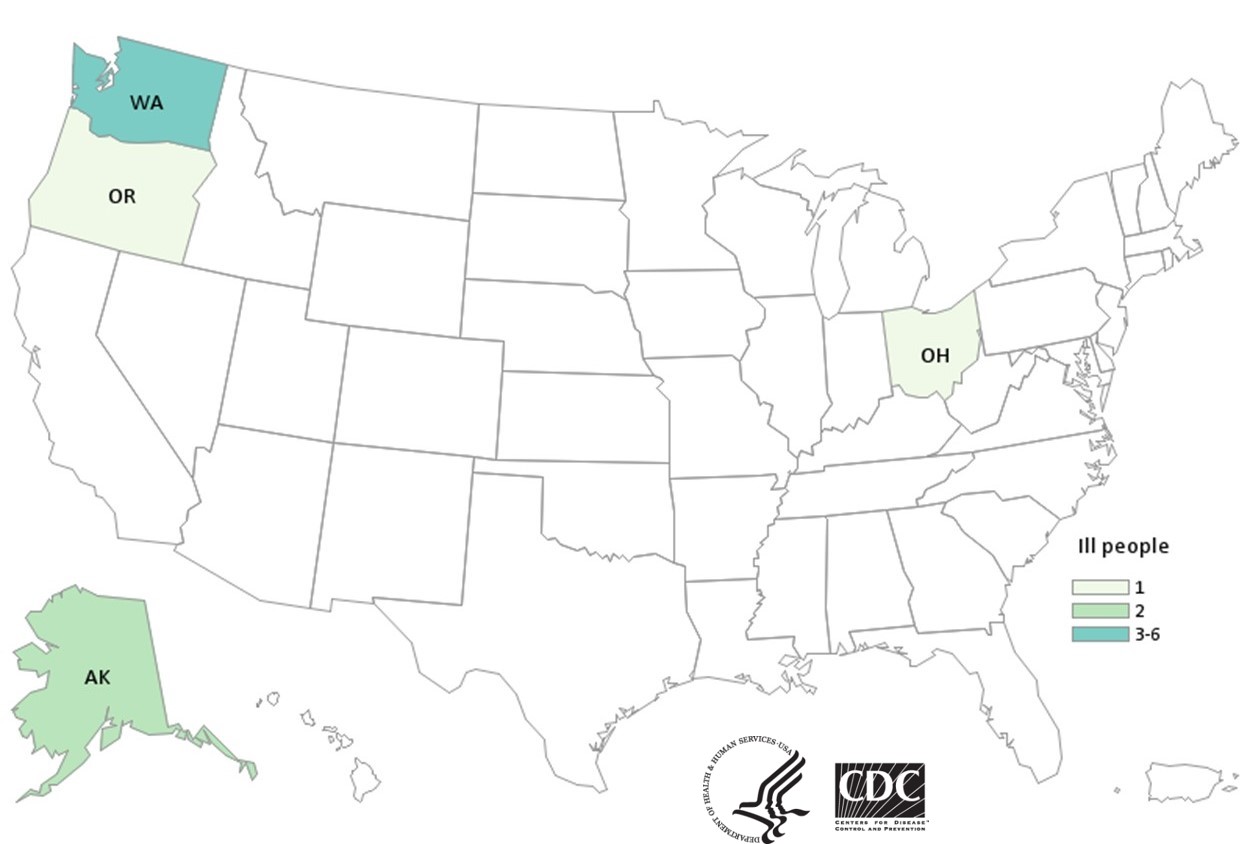
Case Count Map Provided by CDC

Outbreak Investigation of E. coli O157:H7: Packaged Salad - CDC Case Count Map (January 6, 2022)

Case Counts

Total Illnesses: 10
Hospitalizations: 4
Deaths: 0
Last Illness Onset: December 19, 2021
States with Cases: AK (2), OH (1), OR (1), WA (6)

Research – Evaluation of microbial contamination in cold dishes and Prevalence of food-borne pathogens in the Jilin Province

Journal of Food Protection

In this study, we evaluated the microbial contamination status of cold dishes consumed by residents of Jilin Province and investigated to determine the incidence of four pathogenic bacteria in cold dishes. A total of 300 samples of cold dishes including meat, vegetable and mixed products, were collected from three different purchasing places: supermarkets, farmers’ markets and mobile vendors. Live bacteria were isolated using conventional culture methods. After separation, a quick and easy polymerase chain reaction (PCR) was used to detect Listeria monocytogenes , Staphylococcus aureus , Enterotoxic Escherichia coli and Salmonella . The results showed that the total number of microbial colonies in the vegetable samples exceeded the standard rate of 8%, and the total number of microbial colonies in the meat and mixed samples did not exceed the standard. The total microbial colony count exceeded the standard in all three different procurement sites, with the highest exceedance of 7.4% in the mobile vendor sites. The detection rates of Enterotoxigenic Escherichia coli , Staphylococcus aureus , L. monocytogenes and Salmonella among the four pathogenic bacteria detected in all samples were 4.3%, 3.3%; 3.0%; and 1.0%, respectively. This study can be used to qualitatively assess the microbiological quality associated with cold dishes. It provides data to support the detection of possible food safety problems.

Research -A trait-based framework for predicting foodborne pathogen risk from wild birds

Wiley Online

Recent foodborne illness outbreaks have heightened pressures on growers to deter wildlife from farms, jeopardizing conservation efforts. However, it remains unclear which species, particularly birds, pose the greatest risk to food safety. Using >11,000 pathogen tests and 1,565 bird surveys covering 139 bird species from across the western U.S.A., we examined the importance of 11 traits in mediating wild bird risk to food safety. We tested whether traits associated with pathogen exposure (e.g., habitat associations, movement, and foraging strategy) and pace-of-life (clutch size and generation length) mediated foodborne pathogen prevalence and proclivities to enter farm fields and defecate on crops. Campylobacter spp. were the most prevalent enteric pathogen (8.0%), while Salmonella and Shiga-toxin producing E. coli (STEC) were rare (0.46% and 0.22% prevalence, respectively). We found that several traits related to pathogen exposure predicted pathogen prevalence. Specifically, Campylobacter and STEC-associated virulence genes were more often detected in species associated with cattle feedlots and bird feeders, respectively. Campylobacter was also more prevalent in species that consumed plants and had longer generation lengths. We found that species associated with feedlots were more likely to enter fields and defecate on crops. Our results indicated that canopy-foraging insectivores were less likely to deposit foodborne pathogens on crops, suggesting growers may be able to promote pest-eating birds and birds of conservation concern (e.g., via nest boxes) without necessarily compromising food safety. As such, promoting insectivorous birds may represent a win-win-win for bird conservation, crop production, and food safety. Collectively, our results suggest that separating crop production from livestock farming may be the best way to lower food safety risks from birds. More broadly, our trait-based framework suggests a path forward for co-managing wildlife conservation and food safety risks in farmland by providing a strategy for holistically evaluating the food safety risks of wild animals, including under-studied species.