Category Archives: STEC E.coli

Research – The Effect of High-Pressure Processing on the Survival of Non-O157 Shiga Toxin-Producing Escherichia coli in Steak Tartare: The Good- or Best-Case Scenario?

MDPI

Abstract

Samples of steak tartare were artificially contaminated with a cocktail of Shiga toxin-producing Escherichia coli (STEC) O91, O146, O153, and O156 to the level of 3 log and 6 log CFU/g. Immediately after vacuum packing, high-pressure processing (HPP) was performed at 400 or 600 MPa/5 min. Some of the samples not treated with HPP were cooked under conditions of 55 °C for 1, 3, or 6 h. HPP of 400 MPa/5 min resulted in a 1–2 log reduction in the STEC count. In contrast, HPP of 600 MPa/5 min led to the elimination of STEC even when inoculated to 6 log CFU/g. Nevertheless, sub-lethally damaged cells were resuscitated after enrichment, and STEC was observed in all samples regardless of the pressure used. STEC was not detected in the samples cooked in a 55 °C water bath for 6 h, even after enrichment. Unfortunately, the temperature of 55 °C negatively affected the texture of the steak tartare. Further experiments are necessary to find an optimal treatment for steak tartare to assure its food safety while preserving the character and quality of this attractive product.

RASFF Alert – STEC E.coli – Frozen Organic Herb mix

RASFF

Verotoxin-producing Escherichia coli (VTEC/STEC) in frozen organic herb mix from France

Research – Use of a phage cocktail to reduce the numbers of seven Escherichia coli strains belonging to different STEC serogroups applied to fresh produce and seeds

Wiley Online

Abstract

The aims of this research were to evaluate the effectiveness of a phage cocktail at reducing seven Shiga toxigenic Escherichia coli (STEC) serogroups on different food matrixes: mung bean sprouts (MBP), lettuce, and mung bean seeds (MBS) and to test the phage cocktail effectiveness to reduce E. coli O157 on Romaine and iceberg lettuce. To study the effect of the type of food matrix on the STEC phage cocktail effectiveness, a mixture of seven highly sensitive STEC strains designated as phage propagation strains (PPS) were used to adulterate Romaine lettuce, MBP, and MBS matrixes at a concentration of 105 logs CFU/g. A subsample of the treated MBS was germinated to assess STEC survival. Recovered STEC strains were confirmed using latex agglutination and PCR. To test the phage cocktail effectiveness to reduce E. coli O157:H7 on Romaine and iceberg lettuce, a mixture of four STEC strains (different than phage propagation strains, non-PPS) at both low (103 CFU/g) and high (105 CFU/g) concentrations were used to spike the samples in scaled up trials for the purpose of potential commercialization. Phage treatments including a combination of STEC phage cocktail and chlorinated water treatment were then applied to lettuce in a simulated scaled-up trial. STEC was assessed on the treated samples at different storage time and temperatures (0, 24, 48, and 72 hr at 2, 10 and 25°C). In the food matrix trial, the combination of STEC phage cocktail and chlorinated water-reduced PPS (p < 0.001) STEC on lettuce by 2.1 log10 CFU/g and on MBP by 2.2 log10 CFU/g. However, isolates from all 7 STEC serogroups remained viable after phage treatment in both lettuce and MBP; particularly those associated with serogroup O111, O121, O103, and O145, while only a few colonies of serogroup O26, O45, and O157 were detected. Lettuce adulterated with low levels of 4 non-PPS E. coli O157:H7 (103 CFU/g) achieved a reduction of 2.6–3.2 logs. While a reduction 1.7–2.3 logs was achieved by the phage cocktail when lettuce was inoculated with 105 CFU/g. Overall phage performance was more effective at 2 and 10°C and improved over storage time up to 72 hr. However, for MBS, the phage cocktail was not able to kill any of the STEC populations as all of them recovered during germination.

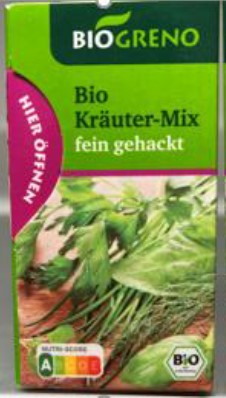
Germany – BIOGRENO Organic Herb Mix, deep-frozen – SeBIOGRENO Organic Herb Mix, deep-frozen -STEC E.coli

LMW

Alert type: Food
Date of first publication: 02/01/2023
Product name:

BIOGRENO Organic Herb Mix, deep-frozen

Product images:

Image BIOGRENO herbal mix.jpg

Photo from the Dresden consumer market by employees

Image batch +BID BIOGRENO herb mix.jpg

Photo from the Dresden consumer market by employees

Manufacturer (distributor):

Manufacturer: Distributor: Darégal SAS Darégal Gourmet Deutschland GmbH 6 boulevard Joffre Gewerbepark 5a F- 91490 Milly-la-Forêt D – 49143 Bissendorf

Reason for warning:

Detection of verotoxin-producing Escherichia coli (VTEC/STEC)

Packaging Unit: Cardboard box – 50g
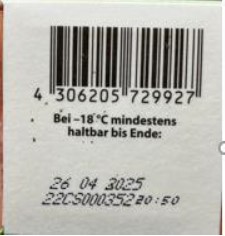
Durability: 04/26/2025
Production date: 04/26/2022
Lot identification: 22CS000352
Further information:

Escherichia coli (E.coli)

Enterohemorrhagic Escherichia coli (EHEC) An EHEC (synonyms: STEC, VTEC) disease usually manifests itself within a week after infection with diarrhea and abdominal cramps. Babies, small children, the elderly and people with a weakened immune system in particular can develop more severe illnesses with bloody diarrhea. Rarely, especially in small children, acute kidney failure can occur in a second flare-up a few days after the onset of diarrhea. Anyone who has eaten this food and develops severe or persistent symptoms should seek medical attention and report possible EHEC infection. It makes no sense to seek preventive medical treatment without symptoms.

Click to access 2023_01_31+Produktr%FCckruf+BIOGRENO.pdf

Further information on the pathogen can be found here: http://www.infectionsschutz.de/erregersteckbriefe/ehec/

Research – Microbiological safety of aged meat

EFSA

Abstract

The impact of dry‐ageing of beef and wet‐ageing of beef, pork and lamb on microbiological hazards and spoilage bacteria was examined and current practices are described. As ‘standard fresh’ and wet‐aged meat use similar processes these were differentiated based on duration. In addition to a description of the different stages, data were collated on key parameters (time, temperature, pH and aw) using a literature survey and questionnaires. The microbiological hazards that may be present in all aged meats included Shiga toxin‐producing Escherichia coli (STEC), Salmonella spp., Staphylococcus aureus, Listeria monocytogenes, enterotoxigenic Yersinia spp., Campylobacter spp. and Clostridium spp. Moulds, such as Aspergillus spp. and Penicillium spp., may produce mycotoxins when conditions are favourable but may be prevented by ensuring a meat surface temperature of −0.5 to 3.0°C, with a relative humidity (RH) of 75–85% and an airflow of 0.2–0.5 m/s for up to 35 days. The main meat spoilage bacteria include Pseudomonas spp., Lactobacillus spp. Enterococcus spp., Weissella spp., Brochothrix spp., Leuconostoc spp., Lactobacillus spp., Shewanella spp. and Clostridium spp. Under current practices, the ageing of meat may have an impact on the load of microbiological hazards and spoilage bacteria as compared to standard fresh meat preparation. Ageing under defined and controlled conditions can achieve the same or lower loads of microbiological hazards and spoilage bacteria than the variable log10 increases predicted during standard fresh meat preparation. An approach was used to establish the conditions of time and temperature that would achieve similar or lower levels of L. monocytogenes and Yersinia enterocolitica (pork only) and lactic acid bacteria (representing spoilage bacteria) as compared to standard fresh meat. Finally, additional control activities were identified that would further assure the microbial safety of dry‐aged beef, based on recommended best practice and the outputs of the equivalence assessment.

PDF

Research – Microbiological safety of aged meat

EFSA

Abstract

The impact of dry-ageing of beef and wet-ageing of beef, pork and lamb on microbiological hazards and spoilage bacteria was examined and current practices are described. As ‘standard fresh’ and wet-aged meat use similar processes these were differentiated based on duration. In addition to a description of the different stages, data were collated on key parameters (time, temperature, pH and aw) using a literature survey and questionnaires.

The microbiological hazards that may be present in all aged meats included Shiga toxin-producing Escherichia coli(STEC),Salmonella spp., Staphylococcus aureus, Listeria monocytogenes, enterotoxigenic Yersinia spp., Campylobacter spp. and Clostridium spp. Moulds, such as Aspergillus spp. and Penicillium spp., may produce mycotoxins when conditions are favourable but may be prevented by ensuring a meat surface temperature of−0.5 to 3.0°C, with a relative humidity (RH) of 75–85% and an airflow of 0.2–0.5 m/s for up to 35 days.

The main meat spoilage bacteria include Pseudomonas spp., Lactobacillus spp. Enterococcus spp., Weissella spp., Brochothrix spp., Leuconostoc spp. Lactobacillus spp., Shewanella spp. and Clostridium spp. Undercurrent practices, the ageing of meat may have an impact on the load of microbiological hazards and spoilage bacteria as compared to standard fresh meat preparation. Ageing under defined and controlled conditions can achieve the same or lower loads of microbiological hazards and spoilage bacteria than the variable log10increases predicted during standard fresh meat preparation. An approach was used to establish the conditions of time and temperature that would achieve similar or lower levels of L. monocytogenes and Yersinia enterocolitica (pork only) and lactic acid bacteria(representing spoilage bacteria) as compared to standard fresh meat. Finally, additional control activities were identified that would further assure the microbial safety of dry-aged beef, based on recommended best practice and the outputs of the equivalence assessment.

USA – Fullei Fresh Issues Correction on Alfalfa Sprout Recall Because of Possible Health Risk STEC E.coli

FDA

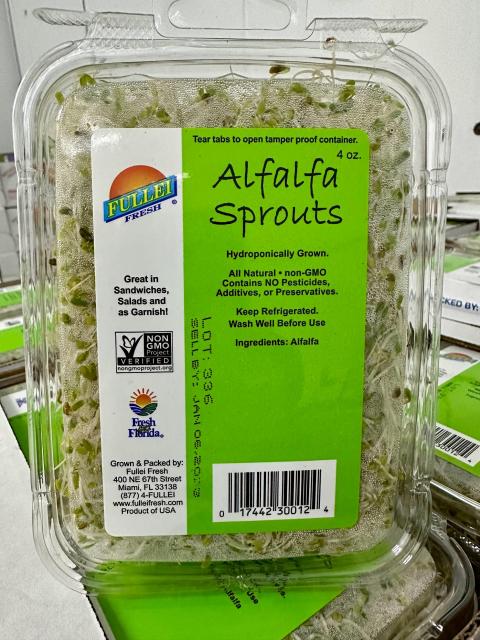
Alfalfa Sprouts Clamshell with Label

MIAMI, FL – Fullei Fresh is voluntarily recalling Alfalfa Sprouts due to the detection of Shiga toxin producing E.coli (STEC.) Shiga toxin producing E.coli is an organism that can cause foodborne illness in a person who eats a food item contaminated with it. Symptoms of infection may include stomach cramps, diarrhea, and vomiting. The illness primarily impacts elderly individuals, children, and people with weakened immune systems. Most healthy adults and children rarely become seriously ill.

STEC is a bacterial strain that is not part of our routine microbial testing conducted in compliance with the FDA’s Produce Safety Rule Subpart M on every lot we produce. It was detected upon sampling of finished product by the FDA.

There have been no known illnesses reported to date in connection with this product.

The affected Fullei Fresh brand alfalfa sprout lot number is 336. They were shipped to distributors and retailers in Florida between December 9-23, 2022. No other lots or products are affected.

The lot numbers are printed on the 8 ounce retail packs and on 5 lb. bulk cardboard boxes in the barcode (the last 3 digits being 336.) Pictures are attached.

Should you be in possession of these products, please discard.

This recall is being made with the knowledge of the Food and Drug Administration and the Florida Department of Agriculture.

If you require further information, please contact sales@fulleifresh.com or (305) 758-3880 Monday through Friday between 8:00 AM and 4:00PM EST.


Company Contact Information

Consumers:
 305-758-3880
 sales@fulleifresh.com

USA – Fullei Fresh Recalls Alfalfa Sprouts Because of Possible Health Risk – STEC E.coli –

FDA

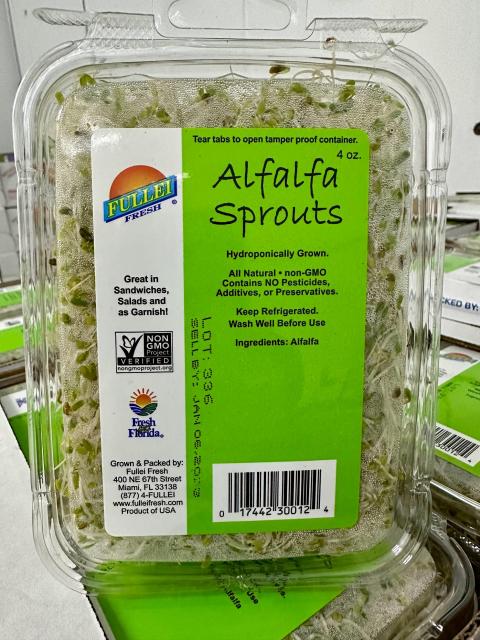
Alfalfa Sprouts Clamshell with Label

MIAMI, FL – Fullei Fresh is voluntarily recalling Alfalfa Sprouts due to the detection of Shiga toxin producing E.coli (STEC.) It is a strain of e.coli which is not part of their routine e.coli O157:H7 and salmonella testing which is normally conducted on every lot produced. There have been no known illnesses reported to date in connection with this product.

The affected Fullei Fresh brand alfalfa sprout lot number is 336. They were shipped to distributors and retailers in Florida between December 9-23, 2022. No other lots or products are affected.

The lot numbers are printed on the 8 ounce retail packs and on 5 lb. bulk cardboard boxes in the barcode (the last 3 digits being 336.) Pictures are attached.

Should you be in possession of these products, please discard.

Research – Bioprotective Lactic Acid Bacteria and Lactic Acid as a Sustainable Strategy to Combat Escherichia coli O157:H7 in Meat

MDPI

Abstract

Human infection by Enterohemorrhagic Escherichia coli (EHEC) constitutes a serious threat to public health and a major concern for the meat industry. Presently, consumers require safer/healthier foods with minimal chemical additives, highlighting the need for sustainable solutions to limit and prevent risks. This work evaluated the ability of two antagonistic lactic acid bacteria (LAB) strains, Lactiplantibacillus plantarum CRL681 and Enterococcus mundtii CRL35, and their combination in order to inhibit EHEC in beef (ground and vacuum sealed meat discs) at 8 °C during 72 h. The effect of lower lactic acid (LA) concentrations was evaluated. Meat color was studied along with how LAB strains interfere with the adhesion of Escherichia coli to meat. The results indicated a bacteriostatic effect on EHEC cells when mixed LAB strains were inoculated. However, a bactericidal action due to a synergism between 0.6% LA and LAB occurred, producing undetectable pathogenic cells at 72 h. Color parameters (a*, b* and L*) did not vary in bioprotected meat discs, but they were significantly modified in ground meat after 24 h. In addition, LAB strains hindered EHEC adhesion to meat. The use of both LAB strains plus 0.6% LA, represents a novel, effective and ecofriendly strategy to inactivate EHEC in meat.

Research – Two Outbreaks of Foodborne Gastrointestinal Infection Linked to Consumption of Imported Melons, United Kingdom, March to August 2021 – Salmonella – STEC E.coli

Science Direct

Abstract

The aim of this study was to describe two foodborne outbreaks caused by contaminated imported melon and make recommendations for future practice. Between March and July 2021, there was an outbreak of 113 cases of Salmonella Braenderup in the UK (62% female, median age 61 years, 33% hospitalized). Analytical epidemiological studies identified Galia melons as the vehicle of infection (OR 671.9, 95% CI 39.0–58,074.0, p < 0.001). Subsequently, the outbreak strain was isolated from two samples of Galia melon imported from Latin America. In July and August 2021, there was an outbreak of 17 cases of Shiga toxin-producing Escherichia coli (STEC) O157:H7 in the UK (53% female, median age 21 years, 35% were hospitalized). Review of the STEC surveillance questionnaire data, followed by the analysis of responses from a modified hypothesis-generating questionnaire, implicated eating precut watermelon from retailer B sourced from Europe as the vehicle of infection. Outbreaks of gastrointestinal pathogens caused by contaminated food of nonanimal origin are a global public health concern. Given the difficulty in removing pathogens from the flesh of ready-to-eat fruit and vegetables, public health interventions should target all steps of the food chain prior to consumption, from cultivation on the farm to processing/packing and distribution.