Category Archives: Salmonella

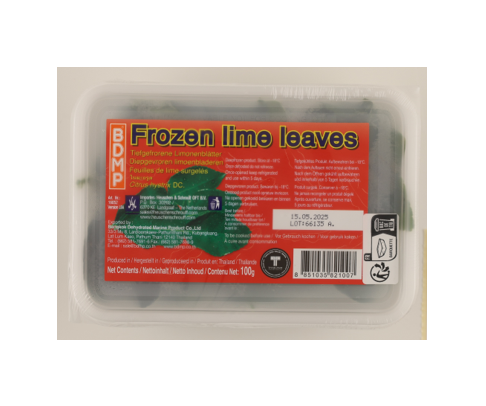
Belgium – Frozen lime leaves (Frozen lime leaves) from the BDMP brand – Salmonella

SAP

The following product is recalled in Luxembourg:
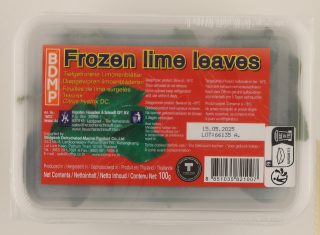
Name Frozen lime leaves
Brand BDMP
Unit 100g
Barcode 8851035821007
Minimum Durability Date (MBD) 05/15/2025
Batch 66135A

Danger  : Possible presence of Salmonella

Salmonella can cause symptoms such as nausea, vomiting, abdominal cramps, diarrhea, fever and headache within 6 to 72 hours after consumption. These symptoms may be aggravated in young children, immunocompromised individuals and the elderly. People who have consumed these products and present these symptoms are invited to consult a doctor and report this consumption.

The product can be distributed by different points of sale in Luxembourg.
Research – Survival of Foodborne Pathogens in Low and Nonalcoholic Craft Beer

Science Direct

Abstract

Breweries and beverage companies have recently been interested in creating innovative beer varieties that deviate from traditional beer styles, with either low-alcohol content <2.5% alcohol by volume (ABV) or the absence of alcohol altogether (<0.5% ABV). Traditional beers (up to 10% ABV) contain numerous intrinsic and extrinsic factors preventing pathogens from proliferation or propagation. Physiochemical properties such as a low pH, presence of ethanol and hop acids, limited oxygen, and specific processing techniques, including wort boiling, pasteurization, filtration, cold storage, and handling, all contribute to microbial stability and safety. The potential change or absence in one or more of these antimicrobial hurdles can render the final product susceptible to pathogen survival and growth. In this study, the effect of pH, storage temperature, and ethanol concentration on the growth or die-off of foodborne pathogens in low and nonalcoholic beers was evaluated. pH and ethanol concentrations were adjusted from their initial values of 3.65 and <0.50% ABV to pHs 4.20, 4.60, and 4.80; and 3.20 ABV, respectively. The samples were inoculated with individual five-strain cocktails of E. coli O157:H7, S. enterica, and L. monocytogenes, then stored at two different temperatures (4 and 14°C) for 63 days. Microbial enumeration was performed using selective agar with incubation at 35°C. Results showed that nonalcoholic beers allowed for pathogen growth and survival, as opposed to the low-alcoholic ones. E. coli O157:H7 and S. enterica grew approximately 2.00 log  at 14°C, but no growth was observed at 4°C. L. monocytogenes was more susceptible and fell at, or below, the detection limit rapidly in all the conditions tested. The results show that storage temperature is critical in preventing the growth of pathogens. pH did not appear to have a significant effect on the survival of pathogens (p < 0.05). This challenge study demonstrates the need for beverage manufacturers to prioritize and maintain food safety plans along with practices specific to low- and nonalcoholic beer manufacturers.

Research – Unveiling Fresh-Cut Lettuce Processing in Argentine Industries: Evaluating Salmonella Levels Using Predictive Microbiology Models

MDPI

Abstract

A survey was performed to gather information on the processing steps, conditions, and practices employed by industries processing ready-to-eat (RTE) leafy vegetables in Argentina. A total of seven industries participated in the survey. A cluster analysis of the data obtained was performed to identify homogeneous groups among the participating industries. The data collected were used as inputs of two predictive microbiology models to estimate Salmonella concentrations after chlorine washing, during storage and distribution of final products, and to rank the different practices according to the final estimated Salmonella levels. Six different clusters were identified by evaluating the parameters, methods, and controls applied in each processing step, evidencing a great variability among industries. The disinfectant agent applied by all participating industries was sodium hypochlorite, though concentrations and application times differed among industries from 50 to 200 ppm for 30 to 110 s. Simulations using predictive models indicated that the reductions in Salmonella in RTE leafy vegetables would vary in the range of 1.70–2.95 log CFU/g during chlorine-washing depending on chlorine concentrations applied, washing times, and vegetable cutting size, which varied from 9 to 16 cm2 among industries. Moreover, Salmonella would be able to grow in RTE leafy vegetables during storage and distribution, achieving levels of up to 2 log CFU/g, considering the storage and transportation temperatures and times reported by the industries, which vary from 4 to 14 °C and from 18 to 30 h. These results could be used to prioritize risk-based sampling programs by Food Official Control or determine more adequate process parameters to mitigate Salmonella in RTE leafy vegetables. Additionally, the information gathered in this study is useful for microbiological risk assessments.

France – Veal paupiette – Salmonella

Gov france

  • Product category Food
  • Product subcategoryMeats
  • Product brand name 100% Aussonne
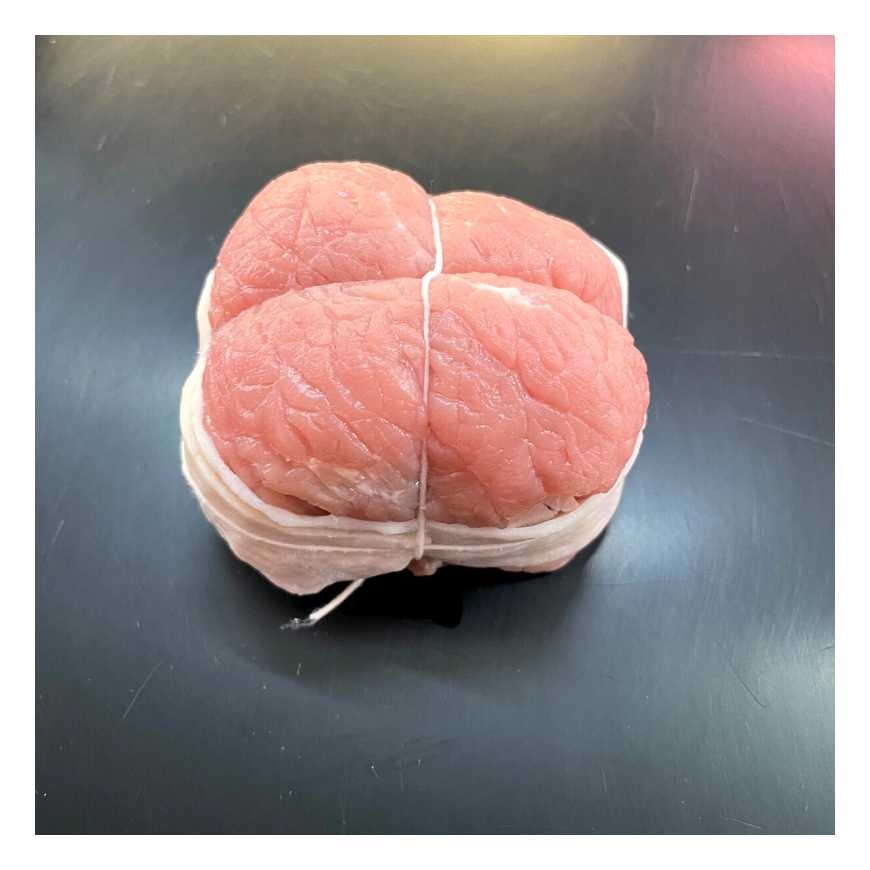
  • Model names or references Veal paupiette
  • Product identification
    GTIN Batch Date
    0209069000000 / Use-by date between 10/23/2023 and 10/26/2023
  • Packaging Sale by piece
  • Start/end date of marketing From 10/23/2023 to 10/26/2023
  • Storage temperature Product to keep in the refrigerator
  • Further information Sold in the traditional butcher section
  • Geographical sales area E.Leclerc Aussonne Montauban
  • Distributors E.Leclerc Aussonne Montauban

Research – Three clusters of Salmonella Enteritidis ST11 infections linked to chicken meat and chicken meat products

EFSA

Abstract

From 1 January–24 October 2023, 335 laboratory‐confirmed Salmonella Enteritidis ST11 cases belonging to three distinct microbiological clusters have been reported in 14 EU/EEA countries, the United Kingdom and the United States, affecting all age groups. Most interviewed cases reported consumption of chicken meat, including chicken kebabs. Nine cases in three countries were hospitalised and one case in Austria died, highlighting the potential for severe and fatal infections from this outbreak.

Following the food exposure information and the national investigations in 2023, the food safety authorities in Austria, Denmark and Italy investigated 10 food products (six contaminated by Salmonella Enteritidis ST11 cluster 1 and/or cluster 2), seven final producers in Poland and one in Austria. Traceability information revealed that three Salmonella‐contaminated kebabs shared a number of Polish food business operators. The trading link of the suspected kebab suggests one or more common source(s)/point(s) of contamination in Austria, Denmark, and Italy.

Following the collection of genomic information, the cluster analysis revealed the presence of the outbreak strains in the food chain in multiple European countries. Most positive foods sampled in 2022–2023 with shared epidemiological data originated from Poland.

Given the information collected, contaminated chicken kebab and chicken meat are the plausible vehicles of the human infections reported in these three clusters. In the absence of conclusive microbiological evidence and comprehensive traceability, the role of the identified final producers, their meat suppliers, and the possible involvement of other food business operators as sources of the infections could not be confirmed or excluded.

Further investigations are needed to identify the root cause of the contamination and the source of infections, which is crucial for prompt implementation of targeted effective control and corrective measures. As the source(s) have not been identified, new cases are likely to occur in this prolonged multi‐country outbreak.

RASFF Alerts – Salmonella – Polish Poultry Products- Betel Leaves – Brazil Chicken Products – Pistachio Nuts- Lime Leaves – Live Clams – Chicken Meat –

RASFF

Salmonella Bardo in frozen chicken thigh from Poland in Finland

RASFF

Salmonella in chicken liver from Poland in France and North Macedonia

RASFF

Salmonella Minnesota in frozen chicken breast, boneless, skinless, from Brazil in the Czech Republic, Denmark, Netherlands and Slovakia

RASFF

Salmonella anatum in pistachio nuts from Germany in Finland. Germany and the USA

RASFF

Salmonella virchow in frozen lime leaves from Thailand via Netherlands in Austria, Belgium, Croatia, Cyprus, Czech Republic, Denmark, Faeroe Islands, Finland, France, Germany, Greece, Hungary, Ireland, Luxembourg, Netherlands, Poland, Serbia, Slovakia, Slovenia, Spain, Switzerland, Thailand, United Kingdom

RASFF

Salmonella Derby in fresh chicken quarters from Poland in the Czech Republic

RASFF

Salmonella enterica ser. enteritidis in live clams (Chamelea gallina) from Italy in Spain

RASFF

Salmonella Infantis in chilled chicken meat from Ukraine in the Netherlands and Hungary

RASFF

Salmonella in betel leaves from India in France

RASFF

Presence of Salmonella Infantis and Campylobacter jejuni in chicken leg meat boneless skin on vacuum from Poland in Slovakia

RASFF Alerts – Animal Feed -Salmonella – Processed Animal Protein – Soybean Meal – Dog Chews

RASFF

Salmonella Spp in processed animal protein for petfood from Spain in Italy.

RASFF

Salmonella Agona in soybean meal from the Netherlands in France and Belgium

RASFF

Salmonella spp. in dog chews from Poland in Germany

Ireland – Recall of BDMP Frozen Lime Leaves due to the presence of Salmonella

FSAI

Frozen lime leaves front picture

Alert Summary
Category 1: For Action
Alert Notification: 2023.27
Product Identification: BDMP Frozen Lime Leaves; pack size: 100g
Batch Code LOT66135 A; best before: 15/05/2025
Country Of Origin: Thailand

Message:

The above batch of BDMP Frozen Lime Leaves is being recalled due to the presence of Salmonella Virchow. Recall notices will be displayed at point-of-sale.

Nature Of Danger:

People infected with Salmonella typically develop symptoms between 12 and 36 hours after infection, but this can range between 6 and 72 hours.  The most common symptom is diarrhoea, which can sometimes be bloody.  Other symptoms may include fever, headache and abdominal cramps.  The illness usually lasts 4 to 7 days. Diarrhoea can occasionally be severe enough to require hospital admission. The elderly, infants, and those with impaired immune systems are more likely to have a severe illness.

Action Required:

Manufacturers, wholesalers, distributors, caterers & retailers:

Retailers are requested to remove the implicated batch from sale and display recall notices at point-of-sale.

Consumers:

Consumers are advised not to eat the implicated batch.

USA – FDA – Investigations of Foodborne Illness Outbreaks

FDA

What’s New

  • A new outbreak of E. coli O121:H19 (ref # 1195) in a not yet identified product has been added to the table. FDA has initiated traceback.
  • For the outbreak of Listeria monocytogenes (ref # 1172) linked to Ice cream, the advisory was updated on October 26, 2023. The outbreak has ended, and FDA’s investigation is closed.
Date
Posted
Ref Pathogen
or
Cause of
Illness
Product(s)
Linked to
Illnesses

(if any)
Total
Case
Count

Status
11/01/

2023

1195 E.Coli
O121:H19
Not
Yet
Identified
37 Active
10/4/

2023

1190 Salmonella
Thompson
Onions See Advisory Active

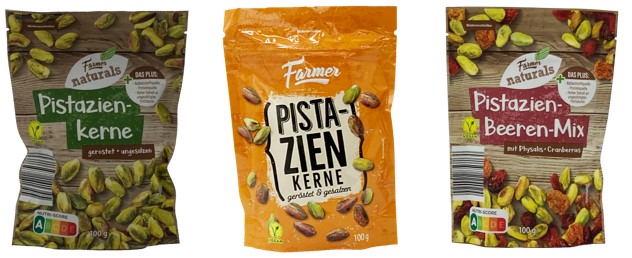
Germany -Pistachio nuts and berries mix + Pistachio nuts roasted & without salt + Pistachio nuts roasted & salted

LMW

Alert type: Groceries
Date of first publication: November 1, 2023
Product name:

Pistachio nuts and berries mix + Pistachio nuts roasted & without salt + Pistachio nuts roasted & salted

Product images:

Pistachios Photo Aldi Süd.jpg
Manufacturer (distributor):

PL Food GmbH Kesselflickerstr. 10 21493 Lanken / Elmenhorst

Reason for warning:

Salmonella

Packaging Unit: 100 g each
Additional Information: