Category Archives: Salmonella

Research – Repeated cross-sectional study identifies differing risk factors associated with microbial contamination in common food products in the United Kingdom

Science Direct

Abstract

All foods carry microbes, many of which are harmless, but foods can also carry pathogens and/or microbial indicators of contamination. Limited information exists on the co-occurrence of microbes of food safety concern and the factors associated with their presence. Here, a population-based repeated cross-sectional design was used to determine the prevalence and co-occurrence of Escherichia coli, Klebsiella spp., Salmonella spp. and Vibrio spp. in key food commodities – chicken, pork, prawns, salmon and leafy greens. Prevalence in 1,369 food samples for these four target bacterial genera/species varied, while 25.6% of all samples had at least two of the target bacteria and eight different combinations of bacteria were observed as co-occurrence profiles in raw prawns. Imported frozen chicken was 6.4 times more likely to contain Salmonella than domestic chicken, and imported salmon was 5.5 times more likely to be contaminated with E. coli. Seasonality was significantly associated with E. coli and Klebsiella spp. contamination in leafy greens, with higher detection in summer and autumn. Moreover, the odds of Klebsiella spp. contamination were higher in summer in chicken and pork samples. These results provide insight on the bacterial species present on foods at retail, and identify factors associated with the presence of individual bacteria, which are highly relevant for food safety risk assessments and the design of surveillance programmes.

Lithuania – Three pathogens found in chicken linked to illnesses

Food Safety News

Three people have fallen sick in Lithuania after eating chicken contaminated with Salmonella, Listeria and Campylobacter.

The Kaunas Department of the State Food and Veterinary Service (VMVT Kaunas) received information from the National Public Health Center (NVSC) about three illnesses from chicken wings sold at a café.

Officials from VMVT Kaunas inspected the outlet and found several non-compliances including instances of cross-contamination, hygiene violations at the premises and by employees as well as improper waste management. Operations at the establishment were suspended.

As part of an investigation into the source of infection, VMVT inspectors took samples of surfaces, drinking water and chicken wings for microbiological analysis. Lab testing found Salmonella, Listeria monocytogenes and Campylobacter in the chicken.

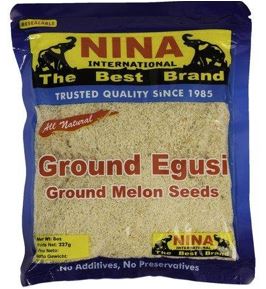
Belgium – Ground Melon Seeds – Egusi Ground (227g) – Salmonella and Aflatoxin

AFSCA

Ahmed Exotic BV recall
Product: Ground Melon Seeds – Egusi Ground (227g).
Problem: Presence of Aflatoxins and Salmonella.

In agreement with the FASFC, Ahmed Exotic BV is withdrawing ground melon seeds – Egusi Ground (227g) from sale and recalling them from consumers due to the presence of Aflatoxins and Salmonella.

Ahmed Exotic BV asks its customers not to consume this product and to return it to the point of sale in which it was purchased, where they will be reimbursed.


Product Description

– Product Name: Ground Melon Seeds – Ground Egusi
– Brand: Nina
– Date of Minimum Durability (BDD): 01/01/2024
– Article Number: 4455-50
– Period of Sale: from 13 /03/2022 to 07/12/2022
– Type of packaging: plastic bag
– Weight: 227 g

The product has been distributed by Ahmed Exotic BC – Wondelgemstraat at 9000 Ghent

For further information , contact Ahmed Exotic BV, ahmedexotic@hotmail.com

USA – Kerry Inc. Pleads Guilty and Agrees to Pay $19.228 Million in Connection with Insanitary Plant Conditions Linked to 2018 Salmonella Poisoning Outbreak

Justice

Food and ingredient manufacturing company Kerry Inc. pleaded guilty today to a charge that it manufactured breakfast cereal under insanitary conditions at a facility in Gridley, Illinois, that was linked to a 2018 salmonellosis outbreak.

Pursuant to a plea agreement filed with a criminal information in federal court in Peoria, Illinois, Kerry pleaded guilty to a misdemeanor count of distributing adulterated cereal marketed as Kellogg’s Honey Smacks. The company also agreed to pay a criminal fine and forfeiture amount totaling $19.228 million. If the guilty plea is accepted by the court, the $19.228 million fine and forfeiture will constitute the largest-ever criminal penalty following a criminal conviction in a food safety case.

“Consumers depend on food manufacturers to take appropriate steps to ensure food safety,” said Principal Deputy Assistant Attorney General Brian Boynton, head of the Justice Department’s Civil Division. “The Department is committed to holding accountable those who fail to meet this obligation.”

“Today’s announcement should serve as a reminder that food manufacturers have a critical responsibility to produce and sell food that is safe for American consumers to eat,” said Assistant Commissioner Justin D. Green for the Food and Drug Administration’s (FDA) Office of Criminal Investigations. “We will continue to pursue and bring to justice those who put the public health at risk by allowing contaminated foods to enter the U.S. marketplace.”

The criminal information unsealed today alleges that Kerry manufactured Kellogg’s Honey Smacks cereal under insanitary conditions and distributed it in violation of the Food, Drug, and Cosmetic Act. According to the plea agreement, tests performed as part of Kerry’s environmental monitoring program found numerous instances of Salmonella in the environment at the Gridley facility. During the time period June 2016 to June 2018, routine environmental tests detected Salmonella in the plant approximately 81 times, including at least one positive Salmonella sample each month. According to the plea agreement, employees at the Gridley facility routinely failed to implement corrective and preventative actions (CAPAs) to address positive Salmonella tests.

Israel – The manufacturer Shefa Gal Marketing Meat Ltd. calls for the return of the “hamburger” product – Salmonella

GovIL

An inspection conducted by the food service of the Tel Aviv Health Bureau for the “hamburger” product found salmonella bacteria in the product.

Ireland – Precautionary Extended Recall of Some Western Brand Raw Chicken Products Due to Possible Presence of Salmonella

FSAI

The Food Safety Authority of Ireland (FSAI) today advises that a precautionary extended food recall is underway by Western Brand of a number of specific raw chicken products due to the possible presence of Salmonella. This recall is linked to the ongoing investigation by the Department of Agriculture, Food and the Marine into incidences of Salmonella infection in a number of broiler flocks. To date, there have been no confirmed cases of human illness linked to this investigation. The FSAI is warning consumers who may have the affected chicken products at home not to eat them.

The products being recalled are listed in the food alert.

Dr Pamela Byrne, Chief Executive, FSAI has warned consumers not to eat the affected chicken products.

“If anyone has any of the affected chicken product at home, we are advising them not to eat it. To date, there have been no confirmed cases of human illness linked to this investigation. Just as a reminder to consumers, raw chicken should always be handled hygienically to prevent cross contamination with ready-to-eat food and raw chicken should never be washed. Always wash your hands after handling it and always wash any utensils you’ve used to prepare it. Raw chicken should always be cooked thoroughly before eating it.”

The FSAI is liaising with the Department of Agriculture, Food and the Marine in its ongoing investigation into broiler flocks and additional testing continues.

Germany – NINA International Egusi Ground – Ground Melon Seeds ground melon seeds – Salmonella and Aflatoxin

LMW

Alert type: Groceries
Date of first publication: 02/03/2023
Product name:

NINA International Egusi Ground – Ground Melon Seeds ground melon seeds

Product images:

Ground Egusi.JPG

Letter from the company AsiaExpressFood

Manufacturer (distributor):

Sahara Pioneer Ltd. 14 Labor Street Accra Ghana

Reason for warning:

salmonella, aflatoxins

Packaging Unit: 227g
Durability: 01/01/2024

Research – Lysine-Derived Maillard Reaction Products Inhibit the Growth of Salmonella enterica Serotype Typhimurium

MDPI

Abstract

An emerging consumer trend to purchase minimally heated and ready-to-eat food products may result in processing methods that do not effectively reduce pathogenic populations. Crude Maillard reaction products (MRPs) are naturally generated compounds that have been shown to display antimicrobial effects against pathogens. Crude MRPs were generated from reducing sugars (fructose (Fru), glucose (Glc), ribose (Rib) or xylose (Xyl)) with lysine and the melanoidin equivalence was measured using an absorbance of 420 nm (Ab420). The relative antimicrobial activity of each MRP was measured by examining both the length of lag phase and maximum growth rate. MRPs were found to significantly shorten the lag phase and decrease the maximum growth rate of S. Typhimurium (p < 0.05). Glucose-lysine MRP (GL MRP) was determined to have the highest relative melanoidin (1.690 ± 0.048 at Ab420) and its efficacy against S. Typhimurium populations was measured at 37 °C and at pH 7.0 and estimated on xylose lysine deoxycholate (XLD) agar. GL MRP significantly reduced S. Typhimurium populations by >1 log CFU/mL at 8 and 24 h after inoculation (p < 0.05). GL MRPs also further decreased S. Typhimurium populations significantly under thermal stress condition (55 °C) compared to optimal (37 °C) by ~1 log CFU/mL (p < 0.05). Overall, GL MRP demonstrated effective antimicrobial activity against S. Typhimurium at 37 °C and 55 °C.

Research- Repeated cross-sectional study identifies differing risk factors associated with microbial contamination in common food products in the United Kingdom

Science Direct

Highlights

E. coli was found in 29–99% of the five food types studied.

Salmonella was higher in imported frozen chicken than domestic chilled chicken.

E. coli and Klebsiella detection were higher in summer and autumn for leafy greens.

Klebsiella detection was higher in summer for chicken and pork.

Vibrio contamination was common in raw prawns at 60.4%.

Abstract

All foods carry microbes, many of which are harmless, but foods can also carry pathogens and/or microbial indicators of contamination. Limited information exists on the co-occurrence of microbes of food safety concern and the factors associated with their presence. Here, a population-based repeated cross-sectional design was used to determine the prevalence and co-occurrence of Escherichia coli, Klebsiella spp., Salmonella spp. and Vibrio spp. in key food commodities – chicken, pork, prawns, salmon and leafy greens. Prevalence in 1,369 food samples for these four target bacterial genera/species varied, while 25.6% of all samples had at least two of the target bacteria and eight different combinations of bacteria were observed as co-occurrence profiles in raw prawns. Imported frozen chicken was 6.4 times more likely to contain Salmonella than domestic chicken, and imported salmon was 5.5 times more likely to be contaminated with E. coli. Seasonality was significantly associated with E. coli and Klebsiella spp. contamination in leafy greens, with higher detection in summer and autumn. Moreover, the odds of Klebsiella spp. contamination were higher in summer in chicken and pork samples. These results provide insight on the bacterial species present on foods at retail, and identify factors associated with the presence of individual bacteria, which are highly relevant for food safety risk assessments and the design of surveillance programmes.

Ireland – Extended recall by Western Brand of some batches of various raw chicken products due to the possible presence of Salmonella

FSAI

Summary
Category 1: For Action
Alert Notification: 2023.02 (Update 1)
Product: Please see table below.
Batch Code: Please see table below.
Country Of Origin: Ireland

Message:

Further to Food Alert 2023.02 Western Brand is undertaking a precautionary recall of further batches of various raw chicken products due to the possible presence of Salmonella. Please see table below for details of the implicated batches. Point-of-sale recall notices will be displayed in stores supplied with the implicated batches.

Nature Of Danger:

People infected with Salmonella typically develop symptoms between 12 and 36 hours after infection, but this can range between 6 and 72 hours. The most common symptom is diarrhoea, which can sometimes be bloody.  Other symptoms may include fever, headache and abdominal cramps. The illness usually lasts 4 to 7 days. Diarrhoea can occasionally be severe enough to require hospital admission. The elderly, infants, and those with impaired immune systems are more likely to have a severe illness.

Action Required:

Manufacturers, wholesalers, distributors, caterers & retailers:

Retailers are requested to remove the implicated batches from sale and to display a point-of-sale recall notice in stores where the affected batches were sold.

Consumers:

Consumers are advised not to eat the implicated batches. If the chicken has already been consumed, cooking should remove the risk. Raw chicken should always be handled hygienically when defrosting and preparing it, and also cooked thoroughly before eating it.

Western brand Chicken Products Table