Category Archives: Research

Research – Research Note Survival of Campylobacter jejuni, Salmonella, and Listeria monocytogenes and Temperature Change in Low-temperature–Long-time-cooked Chicken Meat 

Journal of Food Protection

Low-temperature­–long-time (LT–LT) cooking, also known as sous vide cooking, in which meat is sealed in a bag and cooked in hot water at a relatively low-temperature of around 60°C, increased in popularity; indeed, home-use low-temperature cookers are now commercially available. However, after LT–LT cooking, if even a small number of foodborne bacteria remain, they could cause infection and foodborne illnesses. Therefore, in the present study, the aim was to determine the appropriate LT–LT cooking methods for chicken by assessing temperature changes and studying the bacteria in LT–LT-cooked chicken meat. At set cooking temperatures of 60°C and 65°C, the temperatures were measured at the surface and in the centers of single- and double-layer samples of 300-g chicken breast meat. The time required to reach 50°C were 5–14 min at the surface, 25 min in the center of the single-layer sample, and 33–35 min in the center of the double-layer sample. The time taken to reach 50°C was fastest in SF followed by SG and DB (P < 0.05). When the meat was LT–LT cooked at 60°C and 65°C for 60 min, color changes in the meat and heating of the meat were observed all the way to the interior. Campylobacter jejuni, Salmonella O7 and Listeria monocytogenes were inoculated into chicken breasts, which were then cooked at set temperatures of 60°C and 65°C for 15, 30, 60, 90, and 120 min. Campylobacter jejuni survived for up to 30 min of cooking, Salmonella O7 survived for up to 60 min of cooking at 60°C and 30 min at 65°C, and L. monocytogenes survived for up to 90 min of cooking at 60°C and 60 min at 65°C. Thus, to prevent infection and illness caused by the three tested bacteria species, LT–LT cooking for 120 min at 60°C and 90 min at 65°C is recommended.

Research – Decontamination of Pathogenic and Spoilage Bacteria on Pork and Chicken Meat by Liquid Plasma Immersion

MDPI

In this research, we aimed to reduce the bacterial loads of Salmonella Enteritidis, Salmonella Typhimurium, Escherichia coliCampylobacter jejuniStaphylococcus aureus, and Pseudomonas aeruginosa in pork and chicken meat with skin by applying cold plasma in a liquid state or liquid plasma. The results showed reductions in S. Enteritidis, S. Typhimurium, E. coli, and C. jejuni on the surface of pork and chicken meat after 15 min of liquid plasma treatment on days 0, 3, 7, and 10. However, the efficacy of the reduction in S. aureus was lower after day 3 of the experiment. Moreover, P. aeruginosa could not be inactivated under the same experimental conditions. The microbial decontamination with liquid plasma did not significantly reduce the microbial load, except for C. jejuni, compared with water immersion. When compared with a control group, the pH value and water activity of pork and chicken samples treated with liquid plasma were significantly different (p ≤ 0.05), with a downward trend that was similar to those of the control and water groups. Moreover, the redness (a*) and yellowness (b*) values (CIELAB) of the meat decreased. Although the liquid plasma group resulted in an increase in the lightness (L*) values of the pork samples, these values did not significantly change in the chicken samples. This study demonstrated the efficacy of liquid plasma at reducing S. Enteritidis, S. Typhimurium, E. coliC. jejuni, and S. aureus on the surface of pork and chicken meat during three days of storage at 4–6 °C with minimal undesirable meat characteristics. View Full-Text

Research – Microbiological Profile, Prevalence and Characterization of Salmonella enterica in Peanuts, Pecans, Raisins, Sun-dried Tomatoes, and Chocolate Sprinkles Sold in Bulk in Markets of Queretaro, Mexico 

Journal of Food Protection

In Mexico, the prevalence of Salmonella enterica in low water activity foods and their link to outbreaks is unknown. The aim of this study was to determine the microbiological profile and the prevalence of S. enterica in low water activity foods (peanuts, pecans, raisins, sun-dried tomatoes, and chocolate sprinkles) purchased in retail establishments in Queretaro, Mexico. Seventy samples of each food item sold in bulk were purchased. Aerobic plate count (APC), molds, yeasts, total coliforms, Escherichia coli, and Staphylococcus aureus were quantified in 10-g samples. The prevalence of S. enterica in 25 g samples was determined. From positive samples, S. enterica  isolates (60) were characterized based on their antimicrobial susceptibility to 14 antibiotics, the presence/absence of 13 virulence genes and serotype. The concentration of APC, molds, yeast, total coliforms, and E. coli ranged from 3.1-5.2 Log CFU g-1, 2.0-2.4 Log CFU g-1, 2.0-3.0 Log CFU g-1, 0.6-1.1 Log MPN g -1, and 0.5-0.9 Log MPN g -1, respectively. S. aureus  was not detected in any sample (<10 CFU g -1). The prevalence of  S. enterica in chocolate sprinkles, raisins, peanuts, pecans, and sun-dried tomatoes was 26%, 29%, 31%, 40%, and 52%, respectively. Most isolates (68.3%) were resistant to at least one antibiotic. The chromosome-associated virulence genes were found in all isolates and only one strain had sopE, and 98.3% of the isolates were grouped in the same virulotype. Among the isolates, the most frequent serotype was Tennessee (51/60). According to the characteristics evaluated, the isolates were grouped in 24 clusters. The elevated prevalence of S. enterica highlight the role of low water activity food items sold in bulk at markets as a potential vehicle for pathogens transmission. Regardless of the low variability among S. enterica isolates, their characterization could be helpful to elucidate which strains are circulating in these foods for improving epidemiological surveillance.

Research – PDIA, an Iminosugar Compound with a Wide Biofilm Inhibitory Spectrum Covering Both Gram-Positive and Gram-Negative Human Bacterial Pathogens

MDPI

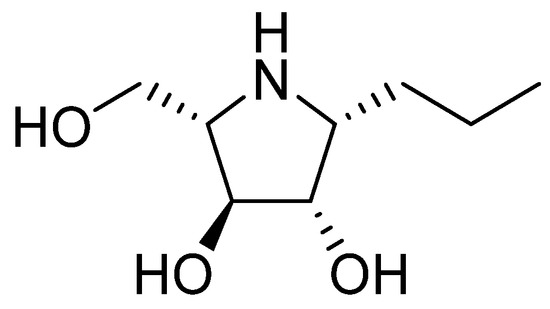
Many difficult-to-treat human infections related to catheters and other indwelling devices are caused by bacteria residing in biofilms. One of the key properties of microorganisms residing in a biofilm is decreased susceptibility towards antimicrobial agents. Therefore, many different approaches have been researched to destroy or inhibit biofilm production by bacteria. Different iminosugars (IS) were reported to inhibit biofilm formation in S. mutansS. aureus, and P. aeruginosa. The aim of this study was to look for a spectrum of the activity in one of these IS. The iminosugar PDIA beta-1-C-propyl-1,4-dideoxy-1,4-imino-L-arabinitol was tested in vitro at the same concentration against 30 different strains of the most important Gram-negative and Gram-positive human pathogens looking for their biofilm production and viability at different time intervals. It appeared that PDIA inhibited biofilm production of Enterobacter spp., P. aeruginosaEnterococcus spp. and S. aureus in 8 h, and Klebsiella spp., Acinetobacter spp. and S.epidermidis in 24 h. PDIA caused no growth inhibition of the tested bacteria at a concentration of 0.9 mM. Our results indicate a broad-spectrum biofilm inhibitory activity of PDIA. which may be the basis for future application studies that will help in control of the associated device and biofilm-related infections caused by a wide spectrum of the causative agents. View Full-Text

Research – Role of Marine Bacterial Contaminants in Histamine Formation in Seafood Products: A Review

MDPI

Histamine is a toxic biogenic amine commonly found in seafood products or their derivatives. This metabolite is produced by histamine-producing bacteria (HPB) such as Proteus vulgarisP. mirabilisEnterobacter aerogenesE. cloacaeSerratia fonticolaS. liquefaciensCitrobacter freundiiC. braakiiClostridium spp., Raoultella planticolaR. ornithinolyticaVibrio alginolyticusV. parahaemolyticusV. olivaceusAcinetobacter lowffiPlesiomonas shigelloidesPseudomonas putidaP. fluorescensAeromonas spp., Photobacterium damselaeP. phosphoreumP. leiognathiP. iliopiscariumP. kishitanii, and P. aquimaris. In this review, the role of these bacteria in histamine production in fish and seafood products with consequences for human food poisoning following consumption are discussed. In addition, methods to control their activity in countering histamine production are proposed. View Full-Text

Research – A Machine Learning Model for Food Source Attribution of Listeria monocytogenes

MDPI

Despite its low morbidity, listeriosis has a high mortality rate due to the severity of its clinical manifestations. The source of human listeriosis is often unclear. In this study, we investigate the ability of machine learning to predict the food source from which clinical Listeria monocytogenes isolates originated. Four machine learning classification algorithms were trained on core genome multilocus sequence typing data of 1212 L. monocytogenes isolates from various food sources. The average accuracies of random forest, support vector machine radial kernel, stochastic gradient boosting, and logit boost were found to be 0.72, 0.61, 0.7, and 0.73, respectively. Logit boost showed the best performance and was used in model testing on 154 L. monocytogenes clinical isolates. The model attributed 17.5 % of human clinical cases to dairy, 32.5% to fruits, 14.3% to leafy greens, 9.7% to meat, 4.6% to poultry, and 18.8% to vegetables. The final model also provided us with genetic features that were predictive of specific sources. Thus, this combination of genomic data and machine learning-based models can greatly enhance our ability to track L. monocytogenes from different food sources. View Full-Text

Research – New Challenges for Detection and Control of Foodborne Pathogens: From Tools to People

MDPI

Contamination of foods by human pathogenic microorganisms is a major concern to both food safety and public health. The changes in consumers’ demand, the globalization of the food trade, and the progress on food production practices and processing technologies all pose new challenges for food industries and regulatory agencies to ensure the safety in food products.
With regard to microbiological safety, bacteria and viruses are the most common foodborne pathogens associated with both sporadic cases and outbreaks.
However, bacterial and viral microorganisms differ in terms of their behaviour in food matrices, their stability in food-related environments (e.g., food-contact surfaces, irrigating and processing waters), and their response to food processing technologies and controlling measures. Current methods do not meet all relevant criteria for effective monitoring plans, the main limitations being their sensitivity, the high workload and time requirement, and the inability to differentiate between viable and non-viable microorganisms. Thus, specific and sensitive methods need to be developed for their detection and quantification in com-plex matrices, such as food, for tracking their occurrence along the food chain to determine the sources of contamination, and for ultimately estimating the risk for consumers.
To fill these gaps, this Special Issue comprises four original research articles and are view paper focusing on the implementation of novel analytical techniques and approaches to foodborne pathogens along the food chain.
Zand and colleagues [1] reviewed the most recent advances of the application of flowcytometry (FCM) and fluorescence in situ hybridization (FISH) for the rapid detection and characterization of microbial contamination. FCM allows for a culture-independent quantification of microbial cells, also providing information on their physiological and structural characteristics which are relevant to assess their viability status. FISH is a nucleic acid-based method mainly applied in the medical and diagnostic fields. While FCM has been successfully used to detect and monitor microorganisms in water, state-of-the-art FCM and FISH protocols for food matrices still show significant limitations. The main pitfalls include complex sample preparation steps; the use of toxic substances; their limits of detection, especially for FISH assays; and the equipment price. Because of all these aspects, FCM and FISH have not yet gained considerable interest in food safety area for the detection of microbial pathogens. Future studies should focus on potential optimisation strategies for FCM and FISH protocols in food samples and their validation, as well as on the development of automated lab-on-chip solutions.
Moving to explore next-generation sequencing (NGS) applications in the produce industry, Truchado et al. [2] contributed to identify potential contamination niches of Listeria monocytogenes in a frozen vegetable processing plant. NGS is a sequencing technology that offers ultra-high throughput, a scalable and fast technique that allows the authors to characterize the isolates by a whole-genome sequencing (WGS) of 3multi locus sequence typing (MLST). The WGS analysis revealed the presence of four different sequence types (ST) contaminating 18% of the samples, including food contact surfaces (FCS), non-food contact surfaces (n-FCS), and final product. These ST were further classified into four different virulence types (VT) according to multi-virulence locus sequence typing (MVLST). Interestingly, an isolate detected in non-food-contact surfaces(n-FCS) also contaminated the final product, highlighting the relevant role of n-FCS as reservoir of L.monocytogenes that reached the final product.
Staphylococcus aureus is a foodborne pathogen considered to be one of the etiological agents of food-related disease outbreaks. Leng et al. [3] supported this Special Issue with a study on its control using the skin mucus extract of Channa argus as a source of antimicrobial compounds. Of interest, untargeted metabolomics were applied to decipherits antibacterial mechanism against S. aureus. Results indicated that the extract had great inhibitory action on its growth by inducing the tricarboxylic acid cycle and amino acid biosynthesis, which are the primary metabolic pathways that affect the normal physiological functions of biofilms.
The present collection includes a second contribution on the control of S. aureus authored by Kim and colleagues [4] who developed a real-time PCR method (qPCR) for the rapid detection and quantification of pathogenic Staphylococcus species.
Four specific molecular targets were identified based on pan-genome analysis, and results showed 100% specificity for 100 non-target reference strains with a detection limit as low as 102CFU/mL. Thus, the proposed method allows an accurate and rapid monitoring of Staphylococcus species and may help control staphylococcal contamination of food.
Moving to human viral pathogens, Macaluso et al. [5] reported the results of an investigation aimed to characterize the occurrence of human enteric viruses in shellfish, a food item with relevant risk for consumers. The study included data collected over two years on the prevalence of enteric virus contamination along the shellfish production and distribution chain in Sicily, Italy. The findings based on quantitative reverse transcription polymerase chain reactions (RT-qPCRs), as gold-standard molecular technique, showed that almost 6% of samples were contaminated with at least one enteric virus such as norovirus, hepatitis A virus, and/or hepatitis E virus. The origin of contaminated shellfish was traced back to Spain and several municipalities in Italy. Such contribution highlights the relevance
of routine monitoring programs to prevent foodborne transmission of enteric viruses and
preserve the health of consumers.
In summary, this Special Issue compile several contributions focused on novel technologies, approaches, and strategies demonstrated to be effective in controlling microbial contamination in food. All the articles provide valuable information to monitor and/or reduce contamination in food, food industry settings, and along the food chain. On a final note, the collection emphasizes the relevance of ensuring food safety and limiting the risk of microbiological contamination along the food chain to protect consumers.

Research – Vital Surveillances: Epidemiological Analysis of Foodborne Botulism Outbreaks — China, 2004–2020

China CDC

kswfoodworld

  • Abstract

    IntroductionFoodborne botulism is a rare, potentially fatal illness resulting from the ingestion of foods contaminated with preformed botulinum neurotoxin types A, B, E, or F, produced by Clostridium botulinum. The descriptive epidemiology of foodborne botulism outbreaks in China during 2004−2020 was performed to inform public health response strategies.

    MethodsData from 22 of 31 provincial-level administrative divisions (PLADs) of the National Foodborne Disease Outbreaks Surveillance System during 2004−2020 and Embase, China National Knowledge Infrastructure (CNKI), Wanfang Data, and Chinese Science and Technique Journals (CQVIP) from January 2004 to December 2020 to identify indexed publications in the Chinese literature using the following search terms “botulism,” or “botulinum toxin,” or “Clostridium botulinum.” The number and proportion of outbreaks, illnesses, and deaths by PLAD, food types, and contributing factors were calculated.

    ResultsDuring 2004−2020, a total of 80 foodborne botulism outbreaks occurred in China, involving 386 illnesses and 55 deaths; most outbreaks were reported between June and August, with a sharp peak in January; 22 out of 31 PLADs reported foodborne botulism outbreaks, Xinjiang reported the largest number of outbreaks (20), followed by Qinghai (13); the most commonly implicated food was home-prepared traditional processed stinky tofu and dried beef, accounting for 51.25% events. Improper processing and improper storage in contributing factors accounted for 77.50% outbreaks. Initial misdiagnosis occurred in 27.50% of cases.

    ConclusionsOutbreaks of foodborne botulism had a high case-fatality rate. Targeted food safety and popularization education to farmers and herdsmen in Xinjiang and Qinghai related to botulism prevention should be carried out, and timely outbreak investigation and hospital surge capacity should be improved.

  • Belgian scholars in consumers of sausages first described botulism in 1896 (1). It was confirmed that the growth and germination of toxins occurred only under particular conditions in an anaerobic low salt, low-acid environment. People who ingest food contaminated with botulinum neurotoxin (BoNT) produced by botulinum toxin can have a potentially fatal outcome (2). Outbreaks have been reported worldwide. In Canada, the first Clostridium botulinum type E outbreak in 1944 in Nanaimo, British Columbia was reported in 1947 (3); In China, Wu et al. first reported botulism in Xinjiang in 1958 due to edible semi-finished noodle sauce (4). A better understanding of the epidemiology of botulism outbreaks can help tailor local prevention and public health response strategies. Here, we reviewed surveillance data on outbreaks, illnesses, and deaths of botulism in China from 2004 to 2020.

Hong Kong – Food safety of eggs and eggs products

CFS

Food safety of eggs and eggs products

Consuming raw or undercooked eggs potentially causes Salmonella infection, which can pose severe, sometimes life-threatening, health risks, especially to susceptible populations. During August 2017 to August 2020, the Centre for Food Safety has received referrals of more than 300 food poisoning outbreaks related to food premises, involving nearly 1000 victims, caused by Salmonella species.

Both the outside and the inside of eggs can be contaminated with Salmonella.  Egg shells can be contaminated with faecal matter and germs may enter through pores or cracks on the shell of eggs.  Moreover, Salmonella can be introduced to the egg from infected reproductive tissues of poultry prior to shell formation. Eggs contaminated with Salmonella may look normal.

To assist the food trade in preventing food poisoning due to Salmonella in eggs and egg products, the Centre for Food Safety gives out practical food safety advice about using eggs in food preparation:

Choose safe raw materials

Purchase eggs from reliable sources and only accept eggs that are clean without cracks or leakage.

For dishes that often use lightly cooked or uncooked eggs, choose pasteurised eggs, egg products or dried egg powder. Pasteurisation is the process of applying low heat to kill pathogens and inactivate spoilage enzymes.

Storing and handling of raw eggs

  • Shell eggs should be stored in a cool, dry place, ideally in the refrigerator, and used on a first-in-first-out basis.
  • Wash hands thoroughly before and after using eggs. All utensils and other food contact surfaces such as whisks, bowls and benches should be cleaned and sanitised every time before handling eggs and egg products.
  • Washing shell eggs is unnecessary because this facilitates the entry of bacteria from the outside of the shell to inside the egg through the pores in the shell.
  • When separating the yolk from the white, it is better to use a clean egg separator instead of the egg shell which may contain traces of Salmonella on the surface.

Pooling eggs is a high-risk practice when preparing egg dishes

  • Pooling refers to the practice of breaking a number of eggs into containers and using the combined eggs to make multiple servings of egg dishes or for use in multiple recipes.
  • Pooling is a common practice in some restaurants to save time and control portion size. However, pooling eggs can allow one or more infected eggs to contaminate the whole pool of eggs. If people consume egg dishes prepared from the pool without thorough cooking, they may get food poisoning.
  • Restaurants should only break enough eggs for immediate service in response to a consumer’s order.
  • If choose to break eggs for later use, keep the pooled eggs in covered containers in the refrigerator and only take out the amount as needed.
  • Use all pooled eggs on the same day and do not top up with new eggs.
  • As pooled eggs have a higher chance of harbouring bacteria, they should be cooked thoroughly and not be used for making raw or lightly cooked dishes.

Cook eggs thoroughly and keep them at a safe temperature

  • The best way of eliminating harmful bacteria is to cook the eggs thoroughly until the core temperature reaches 75°C or the yolks are firm.
  • If not consumed immediately after preparation, hot dishes such as soft-scrambled eggs should always be served or kept at above 60°C, and cold dishes such as sandwiches and desserts should be kept at 4°C or below.

The above advice is applicable not only in food businesses but also in domestic settings to reduce risks of food poisoning.

Guideline

Pamphlets

Poster

Periodical and Publication

Food Safety Focus

Short video

Related information

Hong Kong- Food Safety Focus – Histamine in Fish and Fish Products

CFS

 Histamine in Fish and Fish Products

Reported by Mr. Kenneth Yung, Research Officer,
Risk Assessment Section, Centre for Food Safety

Fish is an important part of many types of cuisine that we savour.  However, the consumption of fish and fish products containing high level of histamine may cause scombrotoxin fish poisoning (SFP), also called histamine poisoning.  In Hong Kong, the Centre for Health Protection of the Department of Health recorded a total of 26 local SFP cases, affecting 45 persons from 2009 to 2018.  In this article, we discuss how histamine is formed and the ways to control level of histamine in fish and fish products..

Examples of fish which contain elevated levels of naturally

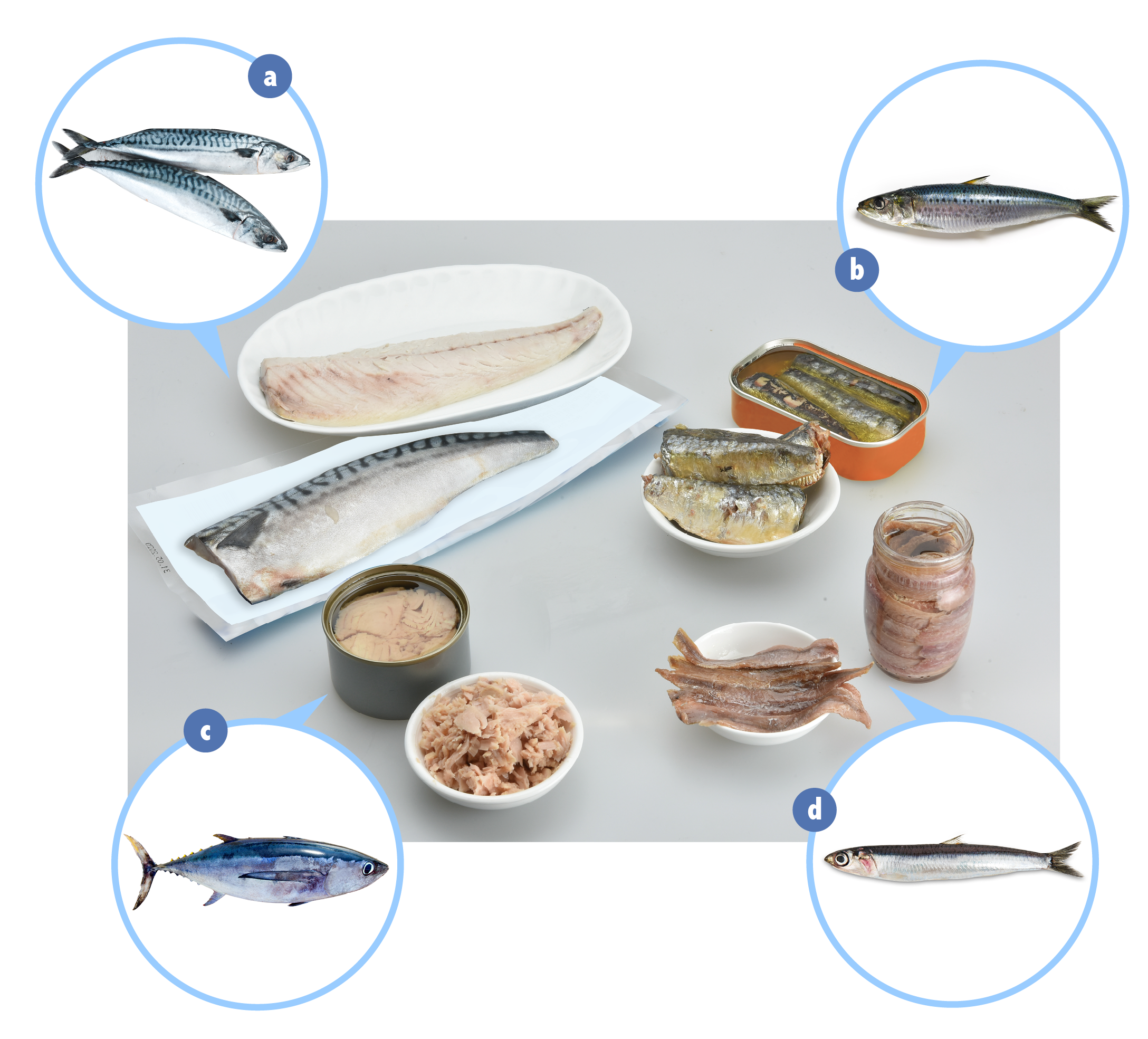
Examples of fish which contain elevated levels of naturally occurring histidine: (a) mackerel, (b) sardine, (c) tuna and (d) anchovy.  Some of their respective products have also been found to contain high levels of histamine.

Formation of Histamine in Fish and Fish Products

Histamine is a toxic metabolite produced by histamine-producing bacteria during spoilage and fermentation of fish and fish products.  Many histamine-producing bacteria are part of the natural microflora of the skin, gills and gut of freshly caught fish.  Histidine decarboxylase (HDC) enzymes, synthesized by histamine-producing bacteria when they multiply, convert the amino acid histidine that are naturally present in fish into histamine.

The level of histamine in fish and fish products mainly depends on species of fish and time-temperature control. Certain fishes like mackerel, sardine, tuna and anchovy naturally contain high amount of histidine and have been associated with SFP cases in Hong Kong and/or other places.

Time and temperature control is the most effective method for ensuring food safety for fish species prone to histamine production.  In the absence of proper time-temperature control such as refrigeration and freezing, formation of histamine may occur at any point throughout the supply chain.  Previous study conducted jointly by the Food and Environmental Hygiene Department and the Consumer Council revealed that high levels of histamine (up to 2600 mg/kg) that can cause SFP were detected in opened canned fish samples that were left at room temperature for 24 hours.  However, histamine was not detected in samples that were kept at 2°C for up to 168 hours.

Health Effects of Histamine

SFP is caused by the ingestion of food containing high levels of histamine i.e. consuming a serving size of 250g fish or fish product with histamine level exceeding 200 mg/kg may cause symptoms in healthy individuals.  Symptoms of SFP include tingling and burning sensation around the mouth, facial flushing and sweating, nausea, vomiting, headache, palpitations, dizziness and rash.  Exacerbation of asthma and more serious cardiac manifestations were reported in more severe cases.  The onset of symptoms is within a few hours after consumption and these symptoms will normally disappear in 12 hours without long term effect.

Control of Histamine in Fish and Fish Products

High levels of histamine can build up in fish and fish products before any signs of spoilage (e.g. bad smell or taste) develop.  Therefore, measures for control of histamine should be taken along the food chain from harvest to consumption.

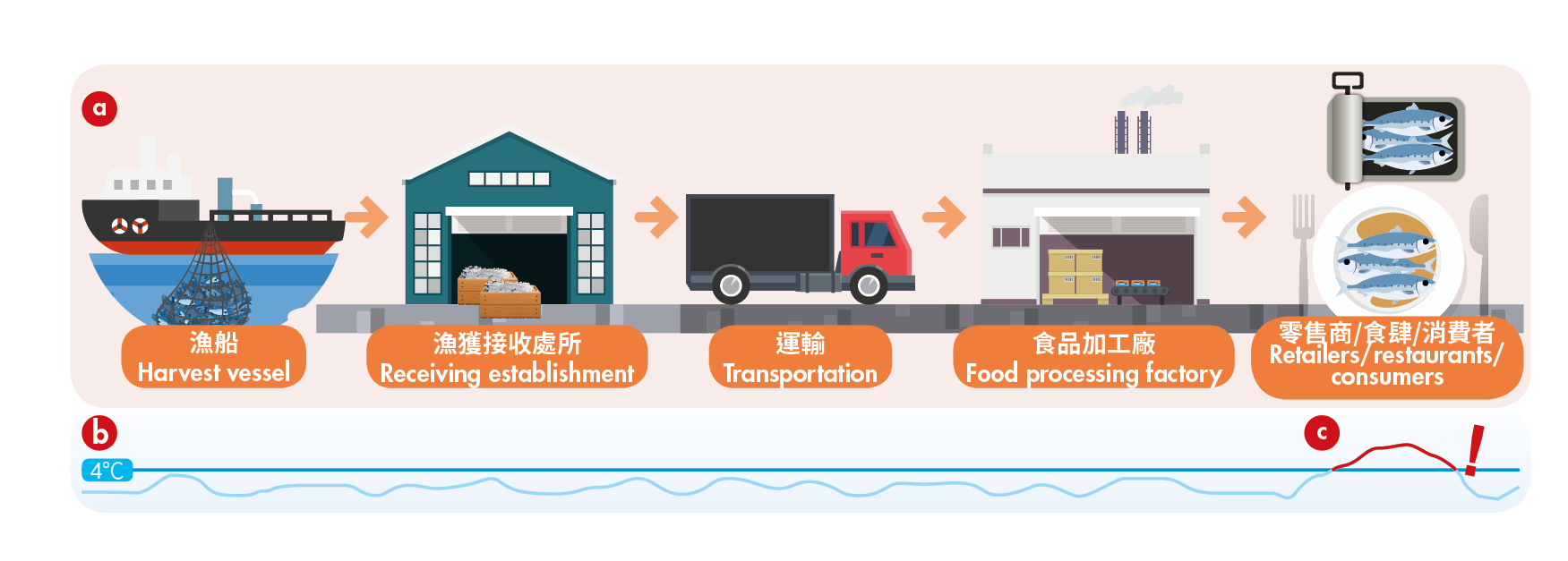
Care should be taken that the cold chain is maintained at or below 4°C along the supply chain, including points of transfer such as offloading of fish from the vessel and processing procedures.  Frozen fish and fish products should be kept at or below -18°C.  Transport vehicles or vessels should be adequately equipped to keep fish cold and pre-chilled before loading fish where applicable.  Adequate heat treatment (e.g. cooking, hot smoking) can kill histamine-producing bacteria and inactivate HDC enzymes, but cannot destroy pre-formed histamine.  Recommendations in the Code of Practice for Fish and Fishery Products (CAC/RCP 52-2003), issued by Codex Alimentarius Commission, should be observed to ensure food safety.

Food chain from harvest to consumption

(a) Cold chain should be maintained throughout the whole supply chain. (b) Refrigerated fish and fish products should be kept at or below 4°C. (c) The time which fish products are kept under ambient temperature should be minimised.

At the consumer level, fish should be chilled rapidly after purchase.  For prepackaged fish and fish products, store according to the instructions of the manufacturer (e.g. keep refrigerated). If cooked fish and ready-to-eat fish products (e.g. tuna fish sandwiches and opened canned fish) are placed at room temperature all day long, they can be re-contaminated and histamine can form.  Therefore, if these foods are not being eaten immediately, they should be kept under refrigeration and be finished as soon as possible.