Category Archives: Research

Research – When the E. coli hits the fan! Evaluating the risks of dust-associated produce cross-contamination

CPS

Dust represents an understudied vehicle for microbial dispersal and produce contamination by pathogens. Dust deposition onto crops during cultivation is inevitable as plant surfaces serve as a major aerosol sink and dust can serve as a vehicle for bacteria. Wind-driven distribution of dust in agricultural environments can also impact food safety when the sources of dust include particles from natural and human-related reservoirs of pathogens. While the populations of enteric pathogens in water is frequently determined and the microbiological quality of soils are monitored, the evaluation of dust and soil-borne particulates is rarely conducted. This study proposes the following: 1). To evaluate the role of dust in transferring foodborne pathogens to produce surfaces grown in eastern and western regions of the US, 2). To determine the role of humidity in the deposition of dust on produce and the survival of pathogens in dust, and 3). To test dust particulates from animal operations in both regions for the presence of biomarkers indicative of fecal contamination and potentially the presence of pathogens. This study will enhance our understanding of pathogen transport from feces into and through produce fields and will quantify the risk associated with contamination from dust under varying environmental/atmospheric conditions.

Technical Abstract

Dust, broadly defined as fine particulate matter resulting from wind erosion on land surfaces and suspended in the air, is an inseparable component of the atmosphere. Dust represents an understudied vehicle for microbial dispersal in agricultural environments and produce contamination by microorganisms pathogenic to humans. Dust not only affects biological processes in plants, such as stomatal gas exchange, but also the plant surface microbiome. Dust deposition onto crops during field cultivation is inevitable as plant surfaces serve as a major aerosol sink. Studies have indicated that dust can serve as a vehicle for bacteria. Wind-driven distribution of dust in agricultural environments could also impact food safety when the sources of dust include particles from natural (soil, decaying vegetation, feral/wild animal droppings) and human-related (manure-amended soils, silage, municipal sewage-based biosolids, composting, and animal production facilities) reservoirs of human pathogens. While the populations of enteric pathogens in water is frequently determined through periodic testing as recommended by the Food Safety Modernization Act (FSMA) and the microbiological quality of soils are monitored, the evaluation of dust and soil borne particulates is rarely carried out. This study proposes the following: 1). To evaluate the role of dust in transferring foodborne pathogens to the surfaces of produce commodities specific to the eastern and western agricultural regions of the United States, 2). To determine the role of humidity in the deposition of dust on produce and the survival of foodborne pathogens in dust particulates, and 3). To test dust particulates from animal operations in Georgia and Arizona for the presence of biomarkers indicative of fecal contamination and the presence of enteric pathogens. This project will enhance our understanding of pathogen transport from feces into and through produce fields and will quantify the risk associated with contamination from dust under varying environmental and atmospheric conditions.

Click to access BRIGHT_FINAL.pdf

Research – Nanotechnology as a Processing and Packaging Tool to Improve Meat Quality and Safety

MDPI

Nanoparticles are gaining momentum as a smart tool towards a safer, more cost-effective and sustainable food chain. This study aimed to provide an overview of the potential uses, preparation, properties, and applications of nanoparticles to process and preserve fresh meat and processed meat products. Nanoparticles can be used to reinforce the packaging material resulting in the improvement of sensory, functional, and nutritional aspects of meat and processed meat products. Further, these particles can be used in smart packaging as biosensors to extend the shelf-life of fresh and processed meat products and also to monitor the final quality of these products during the storage period. Nanoparticles are included in product formulation as carriers of health-beneficial and/or functional ingredients. They showed great efficiency in encapsulating bioactive ingredients and preserving their properties to ensure their functionality (e.g., antioxidant and antimicrobial) in meat products. As a result, nanoparticles can efficiently contribute to ensuring product safety and quality whilst reducing wastage and costs. Nevertheless, a wider implementation of nanotechnology in meat industry is highly related to its economic value, consumers’ acceptance, and the regulatory framework. Being a novel technology, concerns over the toxicity of nanoparticles are still controversial and therefore efficient analytical tools are deemed crucial for the identification and quantification of nanocomponents in meat products. Thus, migration studies about nanoparticles from the packaging into meat and meat products are still a concern as it has implications for human health associated with their toxicity. Moreover, focused economic evaluations for implementing nanoparticles in meat packaging are crucial since the current literature is still scarce and targeted studies are needed before further industrial applications. View Full-Text

Research – Strategies for Nitrite Replacement in Fermented Sausages and Effect of High Pressure Processing against Salmonella spp. and Listeria innocua

MDPI

The development of nitrite-free meat products is a current industrial concern. Many efforts have been attempted to replace the nitrite effect in cured meats colour formation and pathogens control. Our previous work evidenced that lactic acid and a cold ripening were the best hurdle technologies for nitrite-free fermented sausages from metabolomics. In the first part of this work, we investigated the effect of lactic acid compared with both two alternative additives (glucono-D-lactone and a mix of sodium di-acetate/sodium lactate) and with low-nitrite sausages, all of them following either cold or traditional ripening. For this purpose, microbiological analysis, pH, water activity (aw), and a sensory study were performed. All nitrite-free sausages (cold or traditional ripened) showed quality and safety traits similar to low-nitrite traditionally ripened ones used as control. In addition, sensory study revealed that sausages with lactic acid were the most preferred cold ripened samples, supporting that this is an optimal strategy for the production of nitrite-free sausages. We selected this product for further studies. Indeed, in the second part, we evaluated the impact of ripening, and other hurdle technologies as High Pressure Processing (HPP) and under-vacuum storage against Listeria innocua and Salmonella spp. by a challenge test. Maximal declines were obtained for ripening along with HPP (i.e., 4.74 and 3.83 log CFU/g for L. innocua and Salmonella spp., respectively), suggesting that HPP might guarantee nitrite-free sausages safety. Although the quality of raw materials remains essential, these hurdle strategies largely contributed to nitrite-free sausages safety, offering a promising tool for the meat industry.

Research -Detection of Bacillus cereus sensu lato Isolates Posing Potential Health Risks in Mexican Chili Powder 

MDPI

bacillus

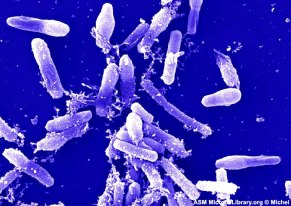
The potential presence of spore-forming bacteria related to the Bacillus cereus group in Mexican chili powder elaborated from Capsicum annuum L. is of commercial and clinical interest, because chili powder is an essential spice in the Mexican diet and in diets around the globe. To facilitate detection and isolation of members of this group of spore-forming bacteria from Mexican chili powder samples, we identified colonies that grew on agar medium selective for Bacillus cereus sensu lato, supplemented with polymyxin B (10 µg/mL) and ampicillin (10 to 100 µg/mL). The presumptive B. cereus (s.l.) isolates were tested using a tRNACys-PCR-based approach and the results identified species related phylogenetically to B. cereusB. thuringiensis, and B. toyonensis. Their toxigenic potential was assessed by serological tests to detect enterotoxins (Nhe and Hbl) and by PCR targeting the hemolysin BL (hbl) component C (hblC) and non-hemolytic enterotoxin component A (nheA). The antibiotic profiles of the isolates showed a high resistance to β-lactams (100% of the isolates), trimethoprim-sulfamethoxazole (100%), tetracycline (90%), erythromycin (77%), clindamycin (74%), and chloramphenicol (42%). Our results indicate the presence of B. cereus s.l. with toxigenic characteristics in Mexican chili powder. Because of the potential for these organisms to cause disease through their production of various toxins, and resistance to antibiotics, we recommend that a microbiological risk assessment must be considered in the Mexican regulatory requirements. View Full-Text

Research – Germany – Infectious Disease Epidemiology Annual Report – 2020

RKI

Compared to the period before the COVID-19 pandemic, the number of cases of almost all notifiable infectious diseases reported in 2020 decreased substantially. The most notable reduction was observed for human to human communicable diseases.

There was also a large reduction in gastrointestinal diseases. This was especially pronounced for rotavirus gastroenteritis, shigellosis and norovirus gastroenteritis

Despite the large decrease in the number of cases the gastrointestinal diseases norovirus, gastroenteritis, Campylobacter enteritis and rotavirus gastroenteritis, these infectious diseases continue to remain among the most frequently notified.

Sequencing helped to identify several listeriosis outbreaks across federal states through foodborne outbreak investigations. By comparing the isolates from the affected individuals and from the contaminated food, the probable vehicle of the outbreak could be identified.

Full Report in German

Research – Clostridial Neurotoxins: Structure, Function and Implications to Other Bacterial Toxins

MDPI

Gram-positive bacteria are ancient organisms. Many bacteria, including Gram-positive bacteria, produce toxins to manipulate the host, leading to various diseases. While the targets of Gram-positive bacterial toxins are diverse, many of those toxins use a similar mechanism to invade host cells and exert their functions. Clostridial neurotoxins produced by Clostridial tetani and Clostridial botulinum provide a classical example to illustrate the structure–function relationship of bacterial toxins. Here, we critically review the recent progress of the structure–function relationship of clostridial neurotoxins, including the diversity of the clostridial neurotoxins, the mode of actions, and the flexible structures required for the activation of toxins. The mechanism clostridial neurotoxins use for triggering their activity is shared with many other Gram-positive bacterial toxins, especially molten globule-type structures. This review also summarizes the implications of the molten globule-type flexible structures to other Gram-positive bacterial toxins. Understanding these highly dynamic flexible structures in solution and their role in the function of bacterial toxins not only fills in the missing link of the high-resolution structures from X-ray crystallography but also provides vital information for better designing antidotes against those toxins. View Full-Text

Research – Occurrence of the seven most common serotypes of Shiga toxin-producing Escherichia coli in beef cuts produced in meat-processing plants in the state of São Paulo, Brazil

JFP

Healthy cattle are considered the main reservoir of Shiga toxin-producing Escherichia coli (STEC) strains, so in some places in the world, products derived from beef are the most common source for disease outbreaks caused by these bacteria. Therefore, in order to guarantee that the beef produced by our slaughterhouses is safe, there is a need for continuous monitoring of these bacteria. In this study, 215 beef cuts were evaluated, including chilled vacuum-packed striploins (151 samples), rib eyes (30 samples), and knuckles (34 samples), from March to June, 2018. These meat samples were collected from the slaughter of unconfined cattle, being arbitrarily collected from eight meat-processing companies in São Paulo state, Brazil. Each sample was examined for the presence of STEC toxin type ( stx 1 and/or stx 2 genes) and also the E. coli attaching-and-effacing ( eae ) gene, which were determined by a multiplex PCR assay. Here we show that the major seven STEC strains (O serogroups O26, O45, O103, O111, O121, O145, and O157) are not detected in any of the analyzed beef cut samples; however, three of them presented the virulence eae gene. Therefore, the absence of STEC strains in the beef samples may be an indication of the low prevalence of this pathogen in the cattle herd on the farm, associated with good hygiene and handling practices adopted by the meat industry.

Research – What You Need to Know About Juice Safety -Microbiological Contamination

FDA

Juices provide many important nutrients, but consuming untreated juices can pose health risks to your family.

CFSAN Food Facts juice safety juicsaf2.jpg

Did You Know?

When fruits and vegetables are fresh-squeezed or used raw, bacteria from the produce can end up in your juice or cider. Unless the produce or the juice has been pasteurized or otherwise treated to destroy any harmful bacteria, the juice could be contaminated.

The U.S. Food and Drug Administration (FDA) has received in the past, reports of outbreaks of foodborne illness, often called “food poisoning,” that have been traced to drinking fruit and vegetable juice and cider that has not been treated to kill harmful bacteria.

While most people’s immune systems can usually fight off the effects of foodborne illness, children, older adults, pregnant women, and people with weakened immune systems (such as transplant patients and individuals with HIV/AIDS, cancer, or diabetes) risk serious illnesses or even death from drinking untreated juices.

Warning Labels

Most of the juice sold in the United States is pasteurized (heat-treated) to kill harmful bacteria. Juice products may also be treated by non-heat processes for the same purpose. However, some grocery stores, health food stores, cider mills, farmers’ markets, and juice bars sell packaged juice that was made on site that has not been pasteurized or otherwise treated to ensure its safety. These untreated products should be kept under refrigeration and are required to carry the following warning on the label:

WARNING: This product has not been pasteurized and therefore may contain harmful bacteria that can cause serious illness in children, the elderly, and persons with weakened immune systems. 

However, FDA does not require warning labels for juice or cider that is sold by the glass – for example, at apple orchards, farmers’ markets, roadside stands, juice bars, and some restaurants.


Follow These Simple Steps to Prevent Illness

When Purchasing Juice

  • Look for the warning label to avoid the purchase of untreated juices. You can find pasteurized or otherwise treated products in your grocers’ refrigerated sections, frozen food cases, or in non-refrigerated containers, such as juice boxes, bottles, or cans. Untreated juice is most likely to be sold in the refrigerated section of a grocery store.
  • Ask if you are unsure if a juice product is treated, especially for juices sold in refrigerated cases in grocery or health food stores, cider mills, or farmers’ markets. Also, don’t hesitate to ask if the labeling is unclear or if the juice or cider is sold by the glass.

When Preparing Juice At Home

  • Wash your hands for at least 20 seconds with soap and warm water before and after preparation.
  • Cut away any damaged or bruised areas on fresh fruits and vegetables. Throw away any produce that looks rotten.
  • Wash all produce thoroughly under running water before cutting or cooking, including produce grown at home or bought from a grocery store or farmers’ market. Washing fruits and vegetables with soap, detergent, or commercial produce wash is not recommended.
  • Scrub firm produce, such as melons and cucumbers, with a clean produce brush. Even if you plan to peel the produce before juicing it, wash it first so dirt and bacteria are not transferred from the surface when peeling or cutting into it.
  • After washing, dry produce with a clean cloth towel or paper towel to further reduce bacteria that may be present on the surface.

About Foodborne Illness

Know the Symptoms

Consuming dangerous foodborne bacteria will usually cause illness within 1 to 3 days of eating the contaminated food. However, sickness can also occur within 20 minutes or up to 6 weeks later. Although most people will recover from a foodborne illness within a short period of time, some can develop chronic, severe, or even life-threatening health problems.

Foodborne illness can sometimes be confused with other illnesses that have similar symptoms. The symptoms of foodborne illness can include:

  • Vomiting, diarrhea, and abdominal pain
  • Flu-like symptoms, such as fever, headache, and body ache

Research – The combined effect of green tea and peppermint oil against pathogenic bacteria to extend the shelf life of eggs at ambient temperature and the mode of action

Wiley Online

This work investigated the antimicrobial activities of green tea (GT) at 5 and 10.0% wt/vol and peppermint oil (PP) at 0.1, 0.15, and 0.2% wt/vol against major pathogen bacteria (Escherichia coliSalmonella enteritidis, and Staphylococcus aureus) found on eggs at room temperature (30°C). The quality factors (weight loss, Haugh unit, albumen pH, egg yolk, and albumen index) of treated eggs were also measured while they were stored at room temperature for 14 days. A 9-point hedonic scale was used for sensory evaluation. Scanning electron microscopy was used to examine the morphology of bacteria cells to understand this study’s mechanism of action. It was found that combining 10% GT and 0.15% PP had complete antibacterial activity against all pathogenic bacteria investigated, and could extend the shelf life of treated eggs from 7 days (control) to at least 14 days. The treated egg’s coliforms (≤3.0 log10 colony-forming unit [CFU] g−1), Ecoli (≤1.8 log10 CFU g−1), TVC (≤4.3 log10 CFU g−1), Salmonella spp., (not detected in 25 g), and Saureus (not detected in 25 g) were better able to meet the microbiological criteria for egg after 14 days of storage, when compared to the control, which exceeded the criteria within 7 days. In addition, consumers rated egg acceptability as favorable by giving a sensory score ranging from like slightly to like moderately (~6.7). Furthermore, when compared to the control (6–7 days), all treated eggs retained their quality during storage for 14 days and met the microbiological criteria for egg in food standard (<4.7–6.0 log10 CFU g−1 for total visible count). Compound leakage from within the bacteria, which was the mode of action when GT and PP were combined, resulted in a wrinkled appearance of bacteria cells and serious defects in bacteria membrane morphology. These findings suggest that a sanitizing spray derived from GT and PP can extend the shelf life of eggs and ensure their safety for human consumption at room temperature without using a refrigerator.

UK – Listeriosis associated with pre-prepared sandwich consumption in hospital in England, 2017

Cambridge Org

A case of listeriosis occurred in a hospitalised patient in England in July 2017. Analysis by whole genome sequencing of the Listeria monocytogenes from the patient’s blood culture was identified as clonal complex (CC) 121. This culture was indistinguishable to isolates from sandwiches, salads and the maufacturing environment of Company X which supplied these products widely to the National Health Service. Whilst an inpatient, the case was served sandwiches produced by this company on 12 occasions. No other cases infected by this type were detected in the UK between 2016 and 2020. Between 2016 and 2020, more than 3000 samples of food, food ingredients and environmental swabs from this company were tested. Listeria monocytogenes contamination rates declined after July 2017 from 31% to 0.3% for salads and 3% to 0% for sandwiches. A monophyletic group of 127 L. monocytogenes CC121 isolates was recovered during 2016–2019 and was used to estimate the time of the most recent common ancestor as 2014 (95% CI of between 2012 and 2016). These results represent persistent contamination of equipment, food contact surfaces and foods at a food manufacturer by a single L. monocytogenes strain. Colonisation and persistent contamination of food and production environments are risks for public health.