Category Archives: Microbiology

Netherlands – Important safety warning AH burgers, bratwurst and beef finches – STEC E.coli

NVWA

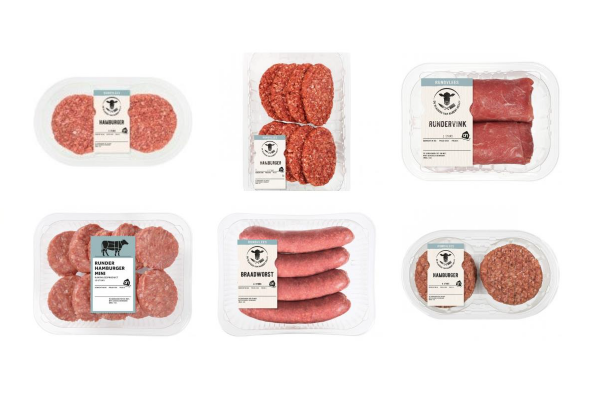
Albert Heijn warns against a number of beef products with an expiry date of 24 or 25 September 2020. The E.coli bacteria was found in the products.

It concerns the following products:

  • AH mini hamburger 10 pieces, TGT 24-09-2020
  • AH hamburger 8 pieces, use-by-date 9/24/2020 and 9/25/2020
  • AH beef bratwurst 4 pieces, TGT 24-09-2020
  • AH hamburger 2 pieces, TGT 25-09-2020
  • AH hamburger 4 pieces, TGT 25-09-2020
  • AH beef finch 2 pieces, TGT 25-09-2020

The beef products are no longer in Albert Heijn stores, but customers can have these products in the freezer. Albert Heijn asks customers not to eat the beef products and to return them to an Albert Heijn store where they will be reimbursed for the purchase price upon return.

See also the Albert Heijn website

Download ‘Important safety warning for AH burgers, bratwurst and beef finches’

PDF document | 1 page | 166 KB

Warning | 05-10-2020

E.coli

Eating a product with an E.coli bacteria (faeces bacteria, STEC, EHEC) can, if not thoroughly cooked, cause nausea, vomiting and (bloody) diarrhea within a week. Especially for young children, the elderly, people with low immunity and pregnant women. Consult your doctor or general practitioner for more information if you have health complaints after eating the said product.

6 packs of Albert Heijn beef products

Research – Recovery Rate of Cells of the Seven Regulated Serogroups of Shiga Toxin-Producing Escherichia coli from Raw Veal Cutlets, Ground Veal, and Ground Beef from Retail Stores in the Mid-Atlantic Region of the United States

Journal of Food Protection

A total of 482 veal cutlet, 555 ground veal, and 540 ground beef samples were purchased from retail establishments in the Mid-Atlantic region of the U.S. over a non-contiguous, two-year period between 2014 and 2017. Samples (325 g each) were individually enriched and screened via real-time PCR for all seven regulated serogroups of Shiga toxin-producing Escherichia coli (STEC). Presumptive STEC positive samples were subjected to serogroup-specific immunomagnetic separation and plated onto selective media. Up to five isolates typical for STEC from each sample were analyzed via multiplex PCR for both the virulence genes (i.e., eae , stx 1 and/or stx 2 , and ehxA ) and serogroup-specific gene(s) for the seven regulated STEC serogroups. The recovery rates of non-O157 STEC from veal cutlets (3.94%, 19 of 482 samples) and ground veal (7.03%, 39 of 555 samples) were significantly higher (P < 0.05) than that from ground beef (0.93%, 5 of 540 samples). In contrast, only a single isolate of STEC O157:H7 was recovered; this isolate originated from one (0.18%) of 555 samples of ground veal. Recovery rates for STEC were not associated with state, season, packaging type, or store type (P > 0.05), but were associated with brand and fat content (P < 0.05). Pulsed-field subtyping of the 270 viable/confirmed STEC isolates from the 64 total samples testing positive revealed 78 pulsotypes (50 to 80% similarity) belonging to 39 pulsogroups, with ≥90% similarity among pulsotypes within pulsogroups. Also, multiple isolates from the same sample displayed an indistinguishable pulsotype for 43 of 64 (67.7%) samples testing positive.  These findings support related data from regulatory sampling exercises over the past decade and confirm that recovery rates for the regulated STEC serogroups are appreciably higher for raw veal compared to raw beef samples as was also observed herein for meat purchased at food retailers in the Mid-Atlantic region of the U.S.

Research – Thermal Resistance of Single Strains of Shiga Toxin-Producing Escherichia coli O121:H19 and O157:H7 Based on Culture Preparation Method and Osmolyte-Reduced Water Activity

Journal of Food Protection

Pathogen thermal resistance studies on low-water activity foods (LWAF) use a variety of methods to inoculate food, as well as strategies to reduce water activity, which can influence thermal resistance observations. This study investigated effects of culture preparation method and osmolyte-induced water activity on thermal resistance of two Shiga toxin-producing Escherichia coli (STEC; O121:H19, O157:H7) challenged with isothermal conditions, determining D – and z -values for each isolate (56, 59, and 62 ° C). Tryptic Soy Broth (TSB) and Agar (lawn cultures) were compared. D -values of broth cultures were significantly and consistently larger than those of lawn cultures, and O121 was significantly more resistant than O157, but only at 56 ° C ( p < 0.05). To compare potential effects of water activity on STEC thermal resistance, cells were suspended in osmolyte solutions with varying water activity: high (TSB, a w 0.99), intermediate (61% glycerol or 26% NaCl, a w 0.75), and low (82% glycerol, a w 0.5). In most instances, STEC in high-water activity broth exhibited greater heat resistance compared to reduced-water activity solutions, except the glycerol intermediate-water activity solution (a w 0.75). Magnitudes varied with strain and temperature. The z -values of lawn cultures were significantly lower than those of broth cultures ( p < 0.05), but there were only some differences between high-a w and reduced-a w samples. There were no significant differences of z -values based on strain type. These results highlight that thermal resistance can be affected by culture preparation and that osmolyte-induced changes to water activity influence thermal inactivation of STEC by varying magnitudes. These results emphasize the challenges between extrapolating results from lab inactivation kinetic experiments to determine the inactivation of low water activity foods, especially those considered dry in nature.

Belgium – Sequoia – Organic free-range chicken thighs from Le Picoreur. – Salmonella

AFSCA

In agreement with the AFSCA, Sequoia is withdrawing from sale the product Le Picoreur organic free-range chicken thighs and is recalling it to consumers because of the presence of Salmonella.

Sequoia asks its customers not to consume this product and to return it to the point of sale where it was purchased, with proof of purchase for reimbursement.

Product description
– Product name: BLC organic free-range chicken thigh
– Brand: Le picoreur
– Use-by date (DLC) (“To be consumed until”) and batch number:
         – 27, 28 and 30/09 / 20 with batch number 25801101
– 5/10/2020 with batch number 26501501 (update)
– Health stamp: FR 85.223.001 CE
– Sale period: from 09/15/20 to 09/29/20
– Type of packaging: plastic

The product was sold via:
Sequoia Stockel – 101, rue de l’Eglise, 1150 Woluwe-Saint-Pierre
Sequoia Jourdan – 2, rue Gray, 1040 Etterbeek

For any further information , contact:
Sequoia
info@sequoia.bio

USA – Country Fresh Voluntary Product Recall – Watermelon Chunks – Listeria monocytogenes

FDA

Country Fresh is initiating a voluntary recall of a limited quantity of watermelon chunks from select stores as a precautionary measure due to a possible health risk from Listeria monocytogenes detected on equipment used in packing this product. FDA made these findings during a recent inspection.

Listeria monocytogenes is an organism which can cause serious and sometimes fatal infections in young children, frail or elderly people, and others with weakened immune systems. Although healthy individuals may suffer only short-term symptoms such as high fever, severe headache, stiffness, nausea, abdominal pain and diarrhea, Listeria infection can cause miscarriages and stillbirths among pregnant women.

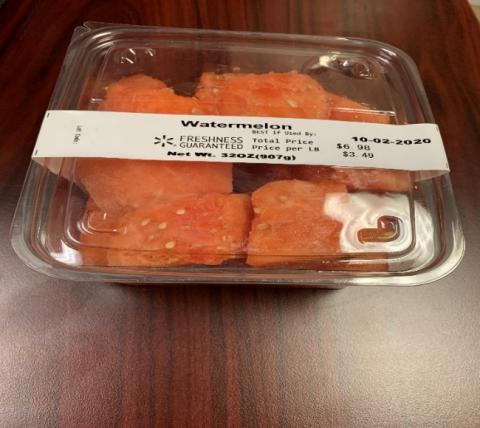
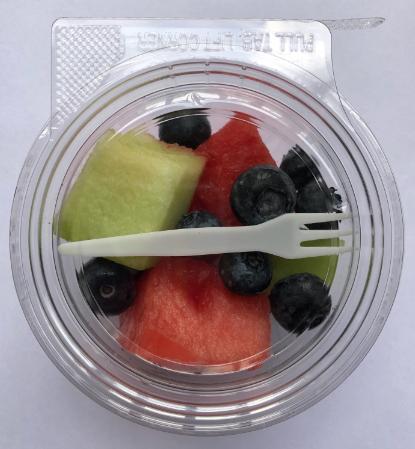
The recall affects product codes of watermelon items shipped directly to Walmart and RaceTrac’s retail distribution centers stores in select stores located in Arkansas, Missouri, Illinois, Oklahoma, and Texas. The product was packaged in a variety of clam shell containers (see photos). The best-if-used by dates of October 2, 3, and 4, 2020 and the SKUs are as follows:

Walmart – Freshness Guaranteed
Watermelon 4 x 10 oz – UPC Code: 681131180672
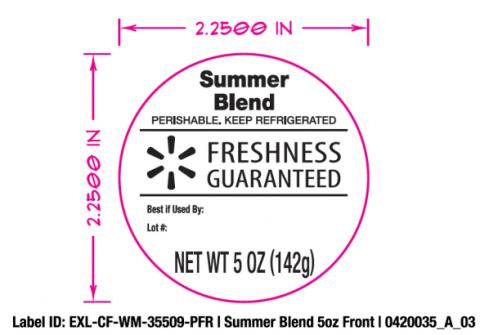
Watermelon 2 x 32 oz – UPC Code: 681131180672 Watermelon Chunks 2 x 42 oz – UPC Code: 681131180658 Watermelon Spears 4 x 16 oz – UPC Code: 681131180665 Summer Blend FTC 4 x 5 oz – UPC Code: 681131355094

RaceTrac
Watermelon 5.5oz – UPC Code: 74641000644 Melon Trio 5.5oz – UPC Code: 74641031945

Country Fresh has not received any reports of illnesses to date associated with these recalled items. The recalled products were distributed from 9/23/2020 – 9/25/2020. RaceTrac and Walmart retail stores are removing the recalled product from store shelves and inventories immediately. Customers with recalled watermelon should discard it immediately and not consume it.

This recall is being undertaken with the knowledge of the U.S. Food and Drug Administration.

Country Fresh takes food safety matters very seriously, stringently follows all mandated regulations and implements preventive measures designed to minimize potential risks. Country Fresh is working in close coordination with FDA in its continuing investigation to resolve the matter promptly and deeply regrets the inconvenience to our consumers and customers. If you have any questions, please contact Customer Service at: 1-877-251-8300 Monday – Friday, 8-5pm CST

Watermelon 32oz, Lot URR0103, Use By 10/2/20
Watermelon 32oz, Lot URE0103, Use By 10/3/20
Watermelon 42oz, Lot URR0103, Use By 10/2/20
Watermelon 42oz, Lot URE0103, Use By 10/3/20
Watermelon 16oz, Lot URR0103, Use By 10/2/20
Watermelon 16oz, Lot URS0103, Use By 10/4/20
Watermelon 10oz, Lot URR0103, Use By 10/2/20
Watermelon 10oz, Lot URE0103, Use By 10/3/20
Watermelon 10oz, Lot URS0103, Use By 10/4/2
Watermelon 5.5oz, Lot URE0103, Use By 10/4/20
Summer Blend 5oz, Lot URR0103, Use By 10/2/20
Summer Blend 5oz, Lot URE0103, Use By 10/3/20
Summer Blend 5oz, Lot URS0103, Use By 10/4/20
Melon Trio 5.5oz, Lot URE0103, Use By 10/4/20

Expanded Press Release


Company Contact Information

Consumers:
Country Fresh Customer Service
 1-877-251-8300

Product Photos

Germany – Manner Powidl buttons 180g -Mould

LMB

Warning type:

Food

Date of first publication:

02.10.2020

Product name:

Manner Powidl buttons 180g

Manufacturer (distributor):

Josef Manner & Comp. AG

Reason for warning:

Possibility of mold growth

Packaging Unit:

180g

Durability:

s. attached press release

Lot identification:

s. attached press release

Additional Information:

Reference is made to the attached press release from the food business operator.

Contact to the responsible authorities:

Baden-Württemberg:

poststelle@mlr.bwl.de

Bavaria:

poststelle@lgl.bayern.de

Press releases and information
title Attachment or web link
Press release

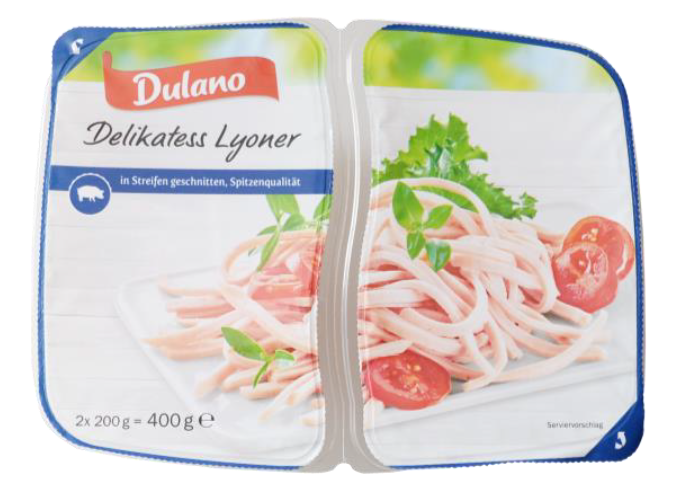
Germany – Dulano Delikatess Lyoner, cut into strips 2 x 200 g – Listeria monocytogenes

LMB

Warning type:

Food

Date of first publication:

02.10.2020

Product name:

Dulano Delikatess Lyoner, cut into strips 2 x 200 g

Product pictures:

Image Filialplakat.PNG

Branch poster

Manufacturer (distributor):

Manufacturer Hans Adler OHG Distributed by Lidl in the federal states of Bavaria, Baden-Württemberg, Rhineland-Palatinate and Saarland

Reason for warning:

Listeria monocytogenes was detected in the affected product. Listeria monocytogenes can cause severe gastrointestinal diseases and symptoms similar to flu-like infections. In certain groups of people (infants, young children, pregnant women, as well as old and sick people) the disease can develop seriously.

Packaging Unit:

2 x 200 g

Durability:

09/23/20 (already expired)

Production date:

Packing period 08:40:00 to 13:00:00

Lot identification:

Lot number 230920LYG M: 2 246; Identity label DE EV 143 EG

Additional Information:

Reference is made to the company’s customer information sheet attached.

Contact to the responsible authorities:

Baden-Württemberg:

poststelle@mlr.bwl.de

Bavaria:

poststelle@lgl.bayern.de

Rhineland-Palatinate:

Poststelle.Referat22@lua.rlp.de

Saarland:

poststelle-luv@lav.saarland.de

Press releases and information
title Attachment or web link
Branch poster

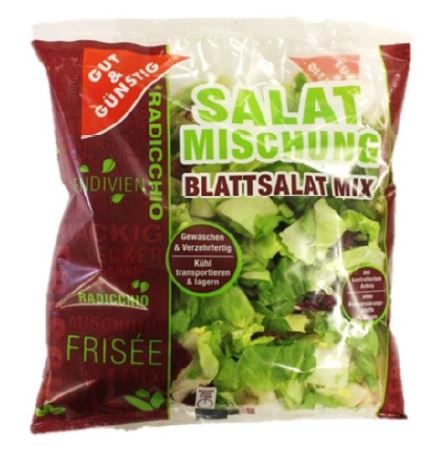
Germany – Good & cheap salad mix leaf salad mix – STEC E.coli

Warning type:

Food

Date of first publication:

02.10.2020

Product name:

Good & cheap salad mix leaf salad mix

Product pictures:

Product photo.jpg
Manufacturer (distributor):

GARTENFRISCH Jung GmbH

Reason for warning:

E. Coli producing shiga toxin

Packaging Unit:

150 g pack

Durability:

05/10/2020

Additional Information:

Reference is made to the attached press release from the food business operator.

Contact to the responsible authorities:

Baden-Württemberg:

poststelle@mlr.bwl.de

Bavaria:

poststelle@lgl.bayern.de

Hesse:

Schnellwarnung@rpda.hessen.de

Lower Saxony:

poststelle@ml.niedersachsen.de

Saxony:

poststelle@sms.sachsen.de

Thuringia:

LM-Ueberektiven@tlv.thueringen.de

Press releases and information
title Attachment or web link
Press release

Research – Antimicrobial effect of UVC light-emitting diodes against Saccharomyces cerevisiae and its application in orange juice decontamination

Journal of Food Protection

UVC light-emitting diodes (UVC-LEDs) is a novel eco-friendly alternative source of UV light. This study evaluated inactivation and membrane damage of spoilage yeast Saccharomyces cerevisiae by UVC-LEDs and its application in orange juice pasteurization. The results demonstrated that the antimicrobial effect of UVC-LED treatment against S. cerevisiae enhanced with the increase of radiation dose. When the dose of UVC-LED radiation was up to 1420 mJ/cm 2 , the population of S. cerevisiae in YPD broth was reduced by 4.86 log 10 CFU/mL. Through scanning electron microscope and fluorescent staining approaches, the structure and function of plasma membrane was observed severely damaged by UVC-LED treatment. The inactivation efficacy of UVC-LEDs against S. cerevisiae in orange juice also increased with increasing radiation dose. Radiation at dose of 1420 mJ/cm 2 highly reduced the number of S. cerevisiae in orange juice by 4.44 log 10 CFU/mL and did not induce remarkable changes in pH, total soluble solids, titratable acidity, and color parameters. However, total phenolic content in orange juice was found significantly decreased by UVC-LEDs. These findings contribute to a better comprehension of UVC-LED inactivation and provide theoretical support for its potential application in fruit and vegetable juices processing.

Research – Animal Health – Mycotoxin – Beauvericin a Fusarium Mycotoxin

All About Feed

Beauvericin is a Fusarium mycotoxin known for its antiviral, antibacterial, anti-inflammatory, and anticancer properties, but it also causes oxidative stress and cell death.

Although these biological activities are mainly interesting for drug development, chronic animal exposure to such a chemical via feed will certainly influence performance and health status. Even though this mycotoxin is still ‘emerging’, its presence in feed materials has been known for many years.

Beauvericin (BEA) is commonly found as a co-contaminant in grains where other Fusarium mycotoxins such as Deoxynivalenol (DON) and Zearalenone (ZEA) are present. From the feedstuffs we evaluate at Schothorst Feed Research (SFR), BEA is often detected in corn and soy hulls at levels varying from 10 to 500 µg/kg. However, much higher contamination levels have been reported by others. As was published by All About Feed in 2010, a study performed in South Korea showed that 27% of feed ingredients were then contaminated with BEA at levels up to 1.8 mg/kg (almost 4 times higher than our findings). These levels can be extremely high, reaching circa 500 mg/kg in corn as was reported by Logrieco and others in the 1990s. Although these are extreme levels and they only occur occasionally, the constant presence of this mycotoxin is feedstuffs should be of concern to nutritionists and veterinarians.