Category Archives: Microbiology

India – 15 kids suffer ‘food poisoning’ in Andhra, adulterated food at Anganwadi

New Indian Express

NELLORE: At least 15 children fell sick after they reportedly ate adulterated food at an Anganwadi in Podalakuru town of Nellore district. According to reports, the children were suffering from diarrhoea since Wednesday evening. Parents staged a demonstration at the Anganwadi and blamed the negligent attitude of the staff for delaying treatment to their children.

They alleged that the children began vomiting and fell sick after eating food provided at the Anganwadi. They said the children were admitted to a local hospital for treatment where doctors confirmed that they fell sick due to the adulterated food they ate. The children are getting treated at various hospitals in Podalakuru and Nellore city. Sources said their condition is stable now.

USA – Kick off your Super Bowl gathering with critical food safety precautions

Food Safety News

Sport football.svg

Here are some food safety tips for Super Bowl Sunday from the USDA:

#1 Remember Your Four Steps to Food Safety

  • Clean: Wash hands for 20 seconds before and after handling food, especially raw meat and poultry. Clean hands, surfaces and utensils with soap and warm water before cooking, during preparation and serving. After cleaning surfaces that raw meat and poultry have touched, apply a commercial or homemade sanitizing solution (1 tablespoon of liquid chlorine bleach per gallon of water). Use hand sanitizer that contains at least 60 percent alcohol.
  • Separate: Use separate cutting boards, plates and utensils to avoid cross-contamination between raw meat or poultry and foods that are ready-to-eat, such as raw vegetables and fruits.
  • Cook: Confirm foods are cooked to a safe internal temperature by using a food thermometer.
  • Chill: Chill foods promptly if not consuming immediately after cooking. Don’t leave food at room temperature for longer than two hours. Set out portions of foods and refill serving dishes instead of setting out all of the food at the beginning of the game.

#2 Cook Your Food to a Safe Internal Temperature

  • Using a food thermometer, ensure you reach a safe internal temperature when cooking: meat (whole beef, pork and lamb) 145 degrees F with a 3-minute resting time after removing from heat; ground meats 160 degrees F; poultry (ground and whole) 165 degrees F; eggs 160 degrees F; fish and shellfish 145 degrees F; and leftovers and casseroles 165 degrees F.
  • If chicken wings are on the menu, use a food thermometer on several wings to gauge the doneness of the entire batch. If one is under 165 F, continue cooking all wings until they reach that safe internal temperature.

#3 Avoid the Danger Zone

  • Bacteria multiply rapidly between 40 degrees F and 140 degrees F. This temperature range is called the Danger Zone.
  • Perishable foods, such as chicken wings, deli wraps and meatball appetizers, should be discarded if left out for longer than two hours. To prevent food waste, refrigerate or freeze perishable items within two hours.
    • Keep cold foods at a temperature of 40 degrees F or below by keeping food nestled in ice bowls or refrigerated until ready to serve.
    • Keep hot foods at a temperature of 140 degrees F or above by placing food in a preheated oven, warming trays, chafing dishes or slow cookers.
  • Divide leftovers into small portions and refrigerate or freeze them in shallow containers, which helps leftovers cool quicker than storing them in large containers.

#4 Keep Takeout Food Safe

  • If you order food and it’s delivered or picked up in advance of the big game, divide the food into smaller portions or pieces, place in shallow containers and refrigerate until ready to reheat and serve. You can also keep the food warm (above 140 degrees F) in a preheated oven, warming tray, chafing dish or slow cooker.
  • When reheating food containing meat or poultry, make sure the internal temperature reaches 165 degrees F as measured by a food thermometer.
  • If heating food in the microwave, ensure that contents are evenly dispersed. Because microwaved food can have cold spots, be sure to stir food evenly until the food has reached a safe internal temperature throughout.

A special word on salsa and guacamole:

“The reason that salsa and guacamole are so susceptible to contamination is that they are made with multiple raw, uncooked vegetables and are often stored at room temperature,” according to the Food and Drug Administration.

In addition to being left out for long periods of time, salsa and guacamole often contain diced raw produce including hot peppers, tomatoes and cilantro, increasing their chance of carrying harmful bacteria.

Anyone preparing fresh salsa and guacamole at home should be aware that these foods contain raw ingredients and that they should be carefully prepared and refrigerated to help prevent illness.

To prevent bacteria growth, these side dishes should be refrigerated within two hours. Those serving these foods should be aware of the length of time they have been out at room temperature.

Research – Denmark – New Methods to Reduce Campylobacter on Chicken Meat

Food DTU

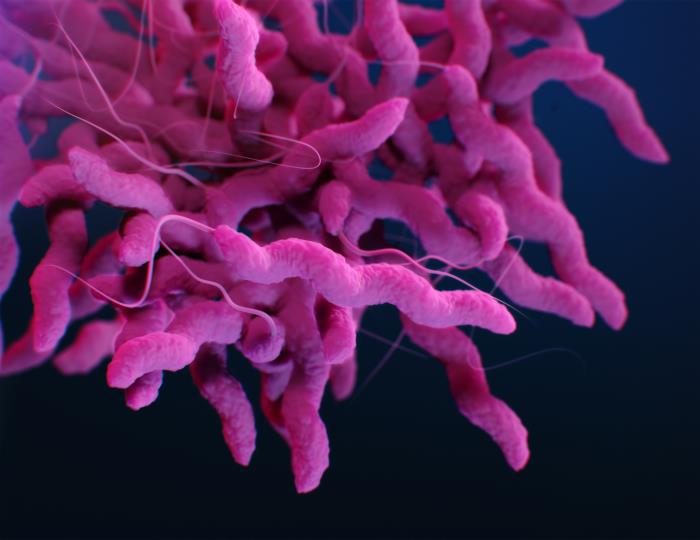
Campylobacter kswfoodworld

Researchers and businesses will use a GUDP grant to develop new ways to prevent campylobacter bacteria from ending up on chicken meat and to ensure that fewer consumers get sick.

The greater focus on more sustainable diets may increase demand for chicken, which is the meat with the lowest carbon footprint. However, chicken is also the food source that most frequently gives Danes and Europeans campylobacter infections, which is a major challenge for the food industry.

Because chicken may become an even more popular food in future, it is important to gain more knowledge about and develop more solutions for reducing the presence of campylobacter bacteria in broiler chickens. By 2025, chicken producers will also have to comply with stricter EU rules on preventing campylobacter in chicken meat.

Moreover, free-range flocks of broiler chickens are far more often campylobacter-positive than conventional flocks. This is because they roam outside, where the bacterium occurs naturally. Existing measures used for conventional broilers such as increased biosecurity and fly nets are therefore not practical for free-range and organic broiler chickens.

Promising methods to be tested on a larger scale

In the SafeChicken project, researchers from DTU National Food Institute and DTU’s Department of Chemical Engineering will work with the Danish chicken producer Danpo and the Icelandic company Thor Ice Chilling Solutions to develop and test ways of producing chicken meat containing fewer campylobacter bacteria.

The project will test methods in different parts of the food chain in the production of both organic and conventional broiler chickens by: adding selected substances to the chickens’ feed and water which have the potential to prevent the growth of campylobacter bacteria in the chickens; reducing the prevalence of the bacteria in the environment with a new decontamination technology; and reducing bacteria on the carcasses by using a special cooling technology.

Some of the methods have already been tested and have shown promising results on a small scale under controlled conditions. To ensure that they are applicable in practice, also for free range and organic chicken production, the project partners will investigate and document the methods’ effectiveness under normal production conditions. They will also assess the extent to which each measure can help lower the risk of humans becoming infected and sick from campylobacter bacteria.

Combatting campylobacter from a ‘green’ perspective

The fewer bacteria chicken meat contains, the longer the meat can stay fresh. This will also result in fewer withdrawals of goods that have to be destroyed due to unacceptable levels of campylobacter. This will help to achieve the UN Sustainable Goal no. 12 concerning responsible consumption and production.

As part of the Green Development and Demonstration Programme (GUDP), the Danish Ministry of Food, Agriculture, and Fisheries has allocated DKK 7.4 million for the three-year project, which is led by DTU National Food Institute.

About campylobacter

Campylobacter infection is the most frequently occurring foodborne disease in the EU and Denmark. According to the official statistics, the bacterium makes approximately 4,500 Danes ill each year. However, many cases are never reported, and researchers believe the real number is about ten times higher.

The more campylobacter bacteria a food contains, the greater the risk that it will make people ill when they ingest it. Therefore, Danish authorities have initiated national action plans with the aim of reducing the risk of contracting campylobacter infection. The target for 2018-21 was a 50% reduction compared to 2013—and this goal has not yet been reached.


RASFF Alert – Animal Feed – Enterobacteriaceae

RASFF

Enterobacteriaceae in dog chews from Poland in France and Belgium

RASFF Alerts – Animal Feed -Salmonella – Sunflower Seed Cake – Rapeseed Meal – Rabbit Meal

RASFF

Salmonella Senftenberg in sunflower seed cake from Croatia in Poland, Belgium and the Netherlands

RASFF

Salmonella Livingstone in rapeseed meal from Germany in Switzerland

RASFF

Salmonella in rabbit meal from the Netherlands in the Czech Republic and Austria

Research – Characterization of Microbiological Quality of Whole and Gutted Baltic Herring

MDPI

There is growing interest in Baltic herring (Clupea harengus membras) and other undervalued, small-sized fish species for human consumption. Gutting or filleting of small-sized fish is impractical; hence, the aim of this study was to explore the suitability of the whole (ungutted) herring for food use. The microbiological quality of commercially fished whole and gutted herring was analysed with culture-dependent methods combined with identification of bacterial isolates with MALDI-TOF Mass Spectrometry and culture-independent 16S rRNA gene amplicon sequencing. Whole and gutted herring had between 2.8 and 5.3 log10 CFU g−1 aerobic mesophilic and psychrotrophic bacteria and between 2.2 and 5.6 log10 CFU g−1 H₂S-producing bacteria. Enterobacteria counts remained low in all the analysed herring batches. The herring microbiota largely comprised the phyla Proteobacteria, Firmicutes, and Actinobacteria (71.7% to 95.0%). ShewanellaPseudomonas, and Aeromonas were the most frequently isolated genera among the viable population; however, with the culture-independent approach, Shewanella followed by Psychrobacter were the most abundant genera. In some samples, a high relative abundance of the phylum Epsilonbacteraeota, represented by the genus Arcobacter, was detected. This study reports the bacterial diversity present in Baltic herring and shows that the microbiological quality was acceptable in all the analysed fish batches. View Full-Text

USA – FDA Core Outbreak Table Update – New Listeria monocytogenes Outbreak

FDA

Date
Posted

Ref

Pathogen
 

Product(s)
Linked to
Illnesses

(if any)

Investigation
Status

2/9/

2022

1040

Listeria
monocytogenes

Not Yet Identified

Active

2/2/

2022

1054

Enteroinvasive E. coli
O143:H26

Not Yet Identified

Active

1/10/

2022

1050

E. coli
O121:H19

Romaine

Closed

12/29/

2021

1052

E. coli
O157:H7

Packaged Salad

Active

12/20/

2021

1039

Listeria
monocytogenes

Packaged Salad

Active

12/15/

2021

1048

Listeria
monocytogenes

Packaged Salad

Active

Research – Salmonellosis in Australia in 2020: possible impacts of COVID-19 related public health measures

1 Health

kswfoodworld salmonella

Abstract

Background

More than seventy per cent of salmonellosis in Australia is thought to be due to contaminated food. Rates of salmonellosis vary across the Australian states and territories, with the highest rates in the Northern Territory. In 2020, to control coronavirus disease 2019 (COVID-19), Australia implemented public health measures including border closures, physical distancing and hygiene advice. This study analyses salmonellosis notification rates in 2020 and considers possible impacts of COVID-19 measures.

Methods

Monthly and annual salmonellosis notifications per 100,000 population, for each of Australia’s eight states and territories for the years 2015 to 2020, were extracted from Australia’s publicly accessible National Notifiable Diseases Surveillance System. For each jurisdiction, the salmonellosis rate each month in 2020 was compared with the previous 5-year median rate for that calendar month. The possible impacts of COVID-19 public health measures on salmonellosis notifications in the respec-tive states and territories were examined.

Results

The annual Australian salmonellosis notification rate was 27% lower in 2020 than the previous 5-year median. The reduction in salmonellosis rate varied throughout Australia. States and territories with more stringent, more frequent or longer COVID-19 public health measures had generally greater salmonellosis rate reductions. However, Tasmania had a 50% deeper reduction in salmonellosis rate than did the Northern Territory, despite similar restriction levels.

Conclusions

Salmonellosis notifications decreased in Australia during the global COVID-19 pandemic. The reduction in notifications corresponded with the implementation of public health measures. Persistence of high rates in the Northern Territory could indicate the overarching importance of demographic and environmental factors.

Research – Illuminating Human Norovirus: A Perspective on Disinfection of Water and Surfaces Using UVC, Norovirus Model Organisms, and Radiation Safety Considerations

MDPI

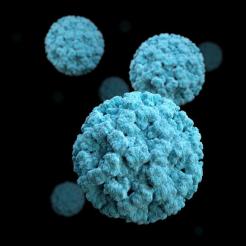
Food Borne Illness - Norovirus -CDC Photo

Human noroviruses (HuNoVs) are a major cause of gastroenteritis and are associated with high morbidity because of their ability to survive in the environment and small inoculum size required for infection. Norovirus is transmitted through water, food, high touch-surfaces, and human-to-human contact. Ultraviolet Subtype C (UVC) light-emitting diodes (LEDs) can disrupt the norovirus transmission chain for water, food, and surfaces. Here, we illuminate considerations to be adhered to when picking norovirus surrogates for disinfection studies and shine light on effective use of UVC for norovirus infection control in water and air and validation for such systems and explore the blind spot of radiation safety considerations when using UVC disinfection strategies. This perspective also discusses the promise of UVC for norovirus mitigation to save and ease life.

EU – Multi-country outbreak of Salmonella Enteritidis sequence type (ST)11 infections linked to eggs and egg products

EFSA

Abstract

On 2 September 2021, France reported an increase in Salmonella Enteritidis ST11 infections. By 11 January 2022, 272 confirmed cases had been reported in five European Union/European Economic Area (EU/EEA) countries and the United Kingdom (UK): Denmark (n=3), France (n=216), the Netherlands (n=12), Norway (n=7), Spain (n=22), and the UK (n=12) in 2021. Two deaths were recorded in adult men. Twenty-five cases were hospitalised. Sixty cases reported consumption of eggs/egg products.

Some cases reported in France in 2021 had visited restaurants serving eggs distributed by a common supplier, Spanish Packing Centre A. The eggs originated from three Spanish farms, one testing positive for the outbreak strain. Fresh table eggs from the farms linked to the outbreak were withdrawn and redirected for use in heat-treated egg products. No other countries received eggs from the same farms via Packing Centre A during summer 2021. Therefore, the source of infection for cases in late 2021 and in countries other than Spain and France could not be established.

This 2021 outbreak is linked microbiologically to a historical cross-border outbreak reported by the Netherlands in 2019. Eggs consumed by cases in the Dutch outbreak were traced back to a Spanish farm, but it was not possible to identify an epidemiological link with the 2021 outbreak. This suggests a wide distribution of the outbreak strain that could affect the food supply chain and/or earlier steps in the production chain. There may be multiple heterogeneous sources of S. Enteritidis ST11, and the outbreak strain could also be circulating at other farms, inside or outside Spain.

The risk of new infections caused by the outbreak strain and contaminated eggs remains high in the EU/EEA. It is therefore important to foster cross-sectoral investigations of contaminations in the egg supply chain in countries where S. Enteritidis ST11 has been detected.

PDF