Category Archives: Microbiology

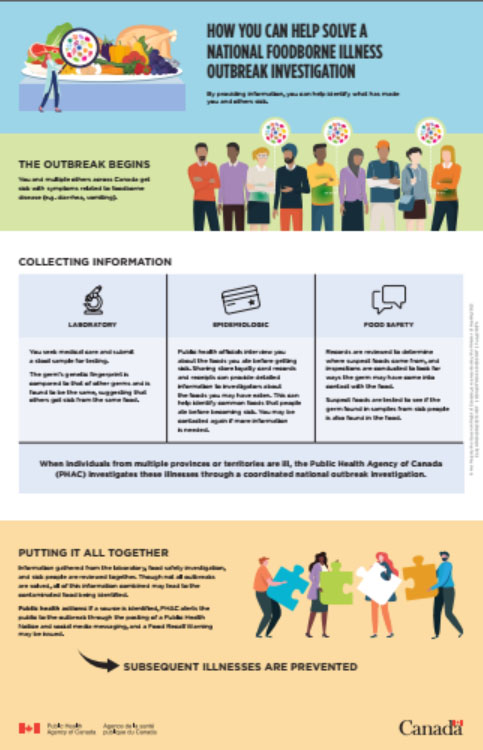
Canada – How you can help solve a national foodborne illness outbreak investigation

PHAC

PDF

By providing information, you can help identify what has made you and others sick

The outbreak begins

You and multiple others across Canada get sick with symptoms related to foodborne disease (e.g. diarrhea, vomiting).

Collecting information

Laboratory:

You seek medical care and submit a stool sample for testing.

The germ’s genetic fingerprint is compared to that of other germs and is found to be the same, suggesting that others got sick from the same food.

Epidemiologic:

Public health officials interview you about the foods you ate before getting sick. Sharing store loyalty card records and receipts can provide detailed information to investigators about the foods you may have eaten. This can help identify common foods that people ate before becoming sick. You may be contacted again if more information is needed.

Food safety:

Records are reviewed to determine where suspect foods came from, and inspections are conducted to look for ways the germ may have come into contact with the food. Suspect foods are tested to see if the germ found in samples from sick people is also found in the food.

When individuals from multiple provinces or territories are ill, the Public Health Agency of Canada (PHAC) investigates these illnesses through a coordinated national outbreak investigation.

Putting it all together

Information gathered from the laboratory, food safety investigation, and sick people are reviewed together. Though not all outbreaks are solved, all of this information combined may lead to the contaminated food being identified.

Public health actions: If a source is identified, PHAC alerts the public to the outbreak through the posting of a Public Health Notice and social media messaging, and a Food Recall Warning may be issued.

Subsequent illnesses are prevented.
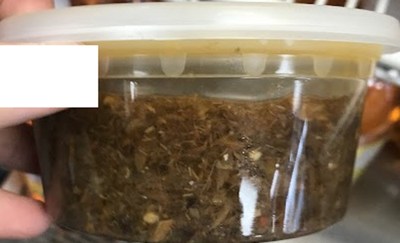
Quebec – Notice not to consume chiktay (smoked herring seasoned in oil) sold by the company La Fraîcheur Tropicale

MAPAQ

WARNING TO THE POPULATION

QUEBEC CITY, Feb. 8, 2022 /CNW Telbec/ – The Ministry of Agriculture, Fisheries and Food (MAPAQ), in collaboration with the Food Inspection Division of the City of Montreal and the company La Fraîcheur Tropicale, located in 6700, boulevard Joseph-Renaud, in Montreal, warns the public not to consume the product indicated in the table below, because it has not been packaged in such a way as to ensure its harmlessness.

Product name

Format

Affected batch

“CHIKTAY”

Unitary

Units sold until February 3, 2022

The product that is the subject of this warning was offered for sale until February 3, 2022, and only at the establishment mentioned above. The product was packaged in transparent plastic jars and was offered refrigerated. The product does not have a label.

The operator is voluntarily recalling the product in question. It has agreed with MAPAQ and the Food Inspection Division of the City of Montreal to distribute this warning as a precautionary measure. In addition, people who have this product in their possession are advised not to consume it. They must return it to the establishment where they bought it or throw it away. Even if the affected product shows no signs of tampering or suspicious odors, its consumption may represent a health risk. It should be noted that no case of illness associated with the consumption of this food has been reported to MAPAQ to date.

Additional information

The Ministry publishes various information documents concerning food safety. Interested persons can consult them in the “Food Consumption” section of the MAPAQ website: www.mapaq.gouv.qc.ca/consommation . They also have the possibility of registering online by visiting www.mapaq.gouv.qc.ca/rappelsfoods to receive, by e-mail, the food recall press releases published by the Ministry. Finally, it is possible to follow “MAPAQfoods” on Twitter at the following address: www.twitter.com/MAPAQfoods .

Chiktay (CNW Group/Ministry of Agriculture, Fisheries and Food) 

Hazard Classification:  Class 1
Reference Number:  4496

Source:
Media relations
Direction des communications
Ministry of Agriculture, Fisheries
and Food
Tel. : 418 380-2100, extension 3512
www.mapaq.gouv.qc.ca

QuoteView original content to download multimedia: http://www.newswire.ca/en/releases/archive/February2022/07/c6852.html

Argentina – So far in January, Salta registers about 500 cases of Salmonellosis

Salta

The highest percentage was located in the Capital department. 52% of affected individuals are children up to 9 years of age. Prevention lies in the safe handling of food.

In the first 25 days of January, 571 suspected cases of salmonella infection were reported in the province, of which 482 were confirmed, which represents 84% ​​positivity.

Of this amount, the largest proportion of affected individuals corresponds to the age range of 5 to 9 years, with a total of 130. In second place, with 122 cases, are children aged 0 to 4 years. These data show that 52% of the cases correspond to children between 0 and 9 years of age.

Regarding the location of cases, the department with the highest number is Capital, with 366, which means 76% of the total.

Of 23 departments in which the province of Salta is divided, in the period from January 1 to 25, cases of salmonellosis were registered in 19 of them. There were no cases in La Candelaria, Rosario de la Frontera, San Carlos and Los Andes.

According to records of the Epidemiological Surveillance program of the Ministry of Public Health, in 2021 there were 1,930 suspected cases, with 1,748 confirmed (91% positivity).

Prevention Guidelines

The Ministry of Public Health recommends taking precautions when handling food, since salmonellosis occurs through the ingestion of food contaminated with bacteria of the salmonella genus.

Research – Boy, 4, Paralyzed Over a Matter of Hours Diagnosed With Rare Disorder – Campylobacter

Newsweek

4-year-old boy from Sydney who went to bed happy and healthy woke up unable to move his legs, telling his mom: “Mummy I can’t feel my legs.”

Oliver Davis’ mother, Bel, took her son to a local doctor who called him an ambulance, beginning the search for the cause of the boy’s sudden and mysterious paralysis, Australia’s 7News reported.

As the next 48 hours progressed, Oliver Davis’ condition worsened, leaving him unable to move from the shoulders down. Five days later he lost his ability to speak and swallow, lost control of his bladder, and had to begin being fed via a feeding tube.

Following a barrage of tests, including an MRI and a lumbar puncture, the 4-year-old was diagnosed with Guillain-Barré syndrome (GBS), a rare autoimmune disorder that occurs when a person’s own immune system damages their nerves, causing muscle weakness and sometimes paralysis.

The CDC says that several things are known to trigger GBS, two-thirds of people who suffer from the condition have had diarrhea caused by a bacteria called Campylobacter jejuni several weeks before developing symptoms. Infection with this bacteria seems to be one of the most common risk factors of GBS.

ALS Microbiology Training Course

Hi All

I am delivering a Microbiology Course (3 Parts) later in February.

Basic Microbiology Awareness
Series of Webinars delivering technical and practical
information on the main microbiological issues affecting the
food industry.

Course Objectives:
» Develop a greater understanding of Food Microbiology
» Being confident with Environmental Monitoring processes and requirements
and how to assess the microbial risks in food products.
» How the laboratory undertakes testing and interpreting the results.
Who Should Attend:
This course can be used as a refresher for those with some previous training in
Microbiology and / or as an introduction for those working within Technical and
Quality roles in food manufacturing / handling environment.

Part 1 – Introduction to Micro-organisms – 17th February 2022
This part will first of all introduce micro-organisms, their growth and
development requirements before establishing the main micro-organisms that
can affect food production and the difference between foodborne illness and
food poisoning, which could affect the decision-making process within the
production environment.

Part 2 – Factory Testing for Micro-organisms – 24th February 2022
This second part will focus on the best practice in food production environment
to identify and control micro-organisms and how a product microbial risk
assessment approach should be considered.

Part 3 – The Microbiology Laboratory – 3rd March 2022
The third part will cover microbiology laboratory testing, how to interpret the
testing results and the new technologies that will enhance current traditional
microbiology testing.

Flyer and Booking Form

Research – Death by duck paste: Centenary of the Loch Maree botulism tragedy

Press and Journal

kswfoodworld

There were 13 fishermen, two wives, 17 ghillies and three mountain climbers in the party, and they set out that morning with packed lunches prepared by the hotel staff.

The picnic included duck paste sandwiches, the paste coming from the firm of Lazenby & Sons of London.

Little did the diners know that they were carrying a ticking time bomb between slices of bread in their hampers, and that eight of their number would be dead within days.

Read the story at the Link Above

Research – Binational outbreak of Guillain–Barré syndrome associated with Campylobacter jejuni infection, Mexico and USA, 2011

Cambridge Org

In June 2011, a cluster of suspected cases of Guillain–Barré syndrome (GBS), which can follow Campylobacter jejuni infection, was identified in San Luis Río Colorado (SLRC), Sonora, Mexico and Yuma County, Arizona, USA. An outbreak investigation identified 26 patients (18 from Sonora, eight from Arizona) with onset of GBS 4 May–21 July 2011, exceeding the expected number of cases (n = 1–2). Twenty-one (81%) patients reported antecedent diarrhoea, and 61% of 18 patients tested were seropositive for C. jejuni IgM antibodies. In a case-control study matched on age group, sex, ethnicity, and neighbourhood of residence, all Arizona GBS patients travelled to SLRC during the exposure period vs. 45% of matched controls (matched odds ratio 8·1, 95% confidence interval 1·5–∞). Exposure information and an environmental assessment suggested that GBS cases resulted from a large outbreak of C. jejuni infection from inadequately disinfected tap water in SLRC. Binational collaboration was essential in investigating this cross-border GBS outbreak, the first in mainland North America since 1976.

Taiwan – South Taiwan restaurant patrons report food poisoning from LNY take-out meals

Taiwan News

TAIPEI (Taiwan News) — After a family ordered a take-out Lunar New Year (LNY) meal from a Yunlin County restaurant on Wednesday (Feb. 2), 15 out of 30 people suffered from food poisoning, triggering an inspection by the Public Health Bureau.

A man surnamed Wang (王) told CNA that 30 people in his family had gathered to celebrate LNY together, and ordered food including lobster, fish, and soup from a restaurant in Huwei Township. As the restaurant offered take-out only, some dishes had to be re-heated.

Later that night, a few family members began to suffer from stomachaches and diarrhea, and by Friday (Feb. 4), 15 people had had to visit a hospital or clinic to get treated; three were hospitalized. Wang lamented that his family’s LNY holiday was “ruined” by the incident.

According to the Yunlin County Public Health Bureau, as the Wang family had ordered food from other restaurants on Wednesday, and inspectors were unable to get a sample for testing, the exact reason behind the incident remains to be determined. The bureau has not yet issued penalties to the restaurant and will conduct inspections first.

When the restaurant posted about the incident on Facebook, patrons who ordered food on the same day responded with reports of more cases of vomiting and diarrhea, CNA reported. The restaurant apologized, said it had contacted the public health bureau about the issue and promised to cooperate with the public health bureau for inspection as well as to actively investigate the source of food poisoning.

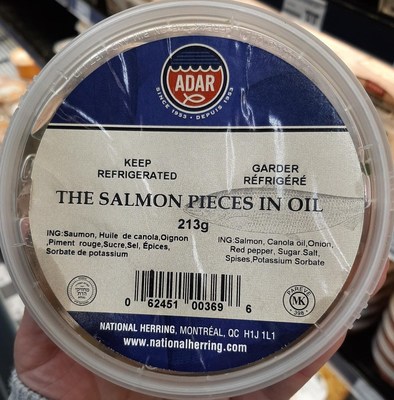
Quebec – Do not consume pieces of salmon in oil made by the National Herring Company

MAPAQ

WARNING TO THE POPULATION

QUEBEC CITY, Feb. 28, 2022 /CNW Telbec/ – The Ministry of Agriculture, Fisheries and Food (MAPAQ), in collaboration with the Food Inspection Division of the City of Montreal and National Herring, located in Montreal , warns the population not to consume the product indicated in the table below, because it has not been packaged in such a way as to ensure its harmlessness.

Product name

Format

Affected lot

“THE SALMON PIECES IN OIL”

213g

Units sold until February 4, 2022

The product that is the subject of this warning was offered for sale until February 4, 2022 in several establishments in the province of Quebec. The product was packaged in plastic jars and sold chilled. The product label includes, in addition to its name, the mention “ADAR – National Herring”.

The operator is voluntarily recalling the product in question. It has agreed with MAPAQ and the Food Inspection Division of the City of Montreal to distribute this warning as a precautionary measure. In addition, people who have this product in their possession are advised not to consume it. They must return it to the establishment where they bought it or throw it away. Even if the affected product shows no signs of tampering or suspicious odors, its consumption may represent a health risk. It should be noted that no case of illness associated with the consumption of this food has been reported to MAPAQ to date.

Additional information

The Ministry publishes various information documents concerning food safety. Interested persons can consult them in the “Food Consumption” section of the MAPAQ website: www.mapaq.gouv.qc.ca/consommation . They also have the possibility of registering online by visiting www.mapaq.gouv.qc.ca/rappelsfoods to receive, by e-mail, the food recall press releases published by the Ministry. Finally, it is possible to follow “MAPAQfoods” on Twitter at the following address: www.twitter.com/MAPAQfoods .

The salmon pieces in oil (CNW Group/Ministry of Agriculture, Fisheries and Food) This link will open in a new window.

Hazard Classification:  Class 1
Reference Number:  4492

Source:
Media relations
Direction des communications
Ministry of Agriculture, Fisheries
and Food
Tel. : 418 380-2100, extension 3512
www.mapaq.gouv.qc.ca

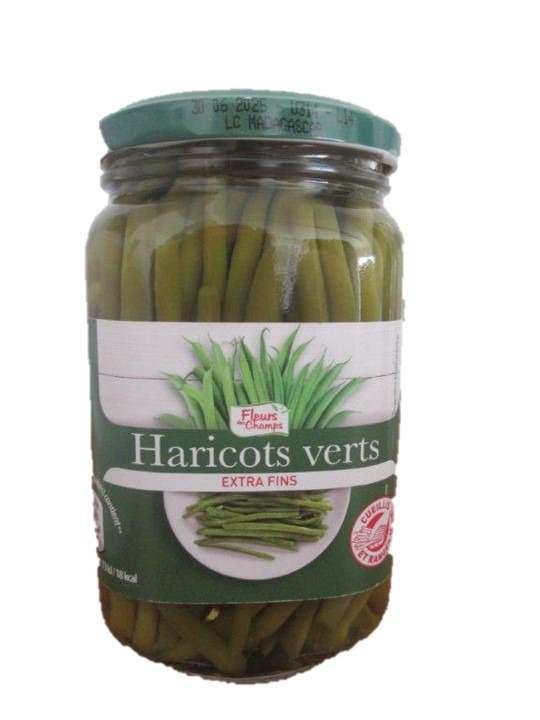
France – HAND PICKED EXTRA FINE GREEN BEANS 180G – Microbial Contamination

Gov france

Identification information of the recalled product

  • Product category Food
  • Product subcategory Fruits and vegetables
  • Product brand name WILDFLOWERS
  • Model names or references HAND PICKED EXTRA FINE GREEN BEANS 180G
  • Identification of products
    GTIN Lot Dated
    26044132 U117 L02; U140 L02; U155 L02 Date of minimum durability 31/12/2024
  • Marketing start/end date From 06/15/2021 to 02/04/2022
  • Storage temperature Product to be stored at room temperature
  • Geographic area of ​​sale Whole France
  • Distributors ALDI

Practical information regarding the recall

  • Reason for recall Potential microbiological problem
  • Risks incurred by the consumer Manufacturing defect, sealing defect (eg: micro leaks, defective heat sealing) or packaging anomalies