Category Archives: Microbiological Risk Assessment

BFR

Flour is a natural product and a valuable foodstuff.

However, Shiga toxin-producing Escherichia coli (STEC) were detected in multiple flour samples (wheat, spelt and rye) during routine food monitoring in Germany in 2018. Escherichia (E.) coli are bacteria that occur naturally in the intestines of animals and humans and the detection of E. coli in food is a strong indicator of a faecal contamination.

Bacteria from the faeces or stool can be shed into the environment and subsequently contaminate various animal- and plant-based foods. Direct transmission between animals and humans and from humans to humans are also possible. Certain toxin producing variants of E. coli can cause serious diseases in animals and humans.

E. coli variants that can form Shiga toxins are of particular importance for humans. These are abbreviated as STEC. STEC, which cause diseases in humans, are referred to as entero-hemorrhagic E. coli (EHEC). The symptoms of an infection with STEC are initially gastrointestinal.

The possible severity of the disease ranges from watery to bloody diarrhea. In adults, the course of the disease can also proceed without symptoms. A particularly severe complication is the hemolytic-uremic syndrome (HUS). HUS is a disease that manifests in acute kidney failure, blood coagulation disorders and destruction of the red blood cells and can lead to death in individual cases. This form of the disease affects particularly sensitive groups of people, such as young chil-dren.

Spain – New regulations on food safety applied to retail trade

ACSA

Published in the BOE Royal Decree 1021/2022, of December 13, which regulates certain hygiene requirements for the production and marketing of food products in retail establishments.

This royal decree establishes measures for the correct application throughout the State of the EU regulations on food safety, with the aim that its implementation is homogeneous throughout the territory and also makes use of flexibility provisions to favor the sustainability of the food system.

The new text compiles in a single regulation the requirements for meat and derivatives, for fishery products, raw milk, foods made with eggs, prepared meals, thus repealing the specific regulations for these food groups and that were prior to the hygiene pack.

In addition, it incorporates in its articles the regulation of the preparation of meals in private homes, the requirements in the tasting areas, vending machines, the access of pets to these establishments and establishes measures against food waste and the use of reusable containers. .

The bill regulates, among others, hygiene requirements such as temperature and establishes guidelines for freezing, thawing and refreezing operations and specific requirements for prepared meals.

In the case of large pieces of fruit, such as watermelon, melon, pineapple, cut into halves or quarters, it will be allowed to keep them for a while at room temperature.

Table 1. Temperature requirements of food products

Food refrigeration temperature

1. Meat of domesticated ungulates and of wild or farmed large game, except rats.

Equal to or less than 7 °C.
2. Carcasses of domestic ungulates, farmed and wild game, poultry and lagomorphs. Equal to or less than 3 °C.
3. Meat of poultry, lagomorphs, small wild game and rats. Equal to or less than 4 °C.
4. Meat preparations. Equal to or less than 4 °C.
5. Minced meat. Equal to or less than 2 °C.
6. Live bivalve molluscs and fishery products that are kept alive. Temperature that does not negatively affect its safety and viability.
7. Fresh fishery products, unprocessed thawed fishery products, cooked and refrigerated crustaceans and molluscs. Temperature close to that of melting ice (0-4 °C).
8. Raw milk. 1-4°C
9. Filled pastry products (unless stable at room temperature). Equal to or less than 4 °C.
10. Cut or peeled fruits, cut or peeled vegetables and unpasteurized juices ready for consumption and made in the retail trade. Equal to or less than 4 °C.
11. Frozen or deep-frozen foods. Equal to or less than –18 °C.

USA – CDC Update – Multistate Norovirus Outbreak Linked to Raw Oysters from Texas

CDC

Food Borne Illness - Norovirus -CDC Photo

The Centers for Disease Control and Prevention (CDC), the U.S. Food and Drug Administration (FDA), the Texas Department of State Health Services, and other public health partners, are investigating a multistate outbreak of norovirus illnesses linked to raw oysters from Texas.

FDA Advises Restaurants, Retailers and Consumers to Avoid Potentially Contaminated Oysters from Harvest Area TX 1, Texas | FDA

Fast Facts

Illnesses: 298 illnesses* have been reported as of December 20, 2022.

States affected: Alabama (AL), Florida (FL), Georgia (GA), Louisiana (LA), Mississippi (MS) North Carolina (NC), Tennessee (TN), Texas (TX)

Recall: Yes DSHS Recalls Oysters Harvested in Area of Southeastern Galveston Bay | Texas DSHS

Investigation Status: Active

*This number is an estimate based on the information we have at this time. CDC is working with state and local partners and will update this number as more information is gathered.

Raw Oysters and Norovirus

If eaten raw, oysters and other filter-feeding shellfish can contain viruses and bacteria that can cause illness or death. Anyone who consumes raw shellfish is at risk of contracting norovirus. Children younger than five years old, the elderly, and those people with weakened immune systems are more likely to have severe infections. Food contaminated with norovirus may look, smell, or taste normal. To avoid food poisoning from oysters, cook them well to a temperature of at least 145 degrees F.

USA -FDA Core Investigation Table -Investigations of Foodborne Illness Outbreaks

FDA

Active Investigations

Date
Posted
Ref Pathogen
or
Cause of
Illness
Product(s)
Linked to
Illnesses

(if any)
Total
Case
Count

Status
Outbreak/
Event
Status
11/16/22 1113 Salmonella

Typhimurium

Not Yet
Identified
274 Active Ended
See Advice
11/9/22 1127 Listeria
monocytogenes
Enoki Mushrooms See
CDC’s
Investigation
Notice
Active Ongoing
See
CDC’s
Investigation
Notice

Research – Microbiological Quality of Ready-to-Eat Salad Products Collected from Retail and Catering Settings in England during 2020 to 2021

Journal of Food Protection

ABSTRACT

Salad and other fresh produce were collected in England from retail and catering businesses during 2020 to 2021 and were tested for Salmonella, Shiga toxin–producing Escherichia coli (STEC), Listeria, Bacillus cereus, and E. coli. Of the 604 samples collected, 57% were from retail settings and 43% were from catering settings; 61% were either salad leaves or salad leaves mixed with other products.

Equal numbers of samples were prepacked or loose, and 50% were refrigerated at the time of sampling. Combining results for all microbiological parameters, 84% were interpreted as satisfactory, 12% were interpreted as borderline, and 4% were interpreted as unsatisfactory. One sample (prepacked leaves, cucumber, and tomato from a caterer) was categorized as unacceptable and potentially injurious because of detection of STEC O76; no STEC from human infections in the United Kingdom matched this isolate.

No Salmonella enterica was detected, but Listeria monocytogenes was recovered from 11 samples: 1 at 20 CFU/g and the remainder at <20 CFU/g. B. cereus was detected at borderline levels (103 to ≤105 CFU/g) in 9% of samples and at an unsatisfactory level (>105 CFU/g) in one sample. E. coli was detected in 3% of samples at borderline levels (20 to ≤102 CFU/g) and in 4% at unsatisfactory levels (>102 CFU/g).

There was a significant association between detection of L. monocytogenes and borderline or unsatisfactory levels of E. coli. There were no specific risk profiles associated with products with the higher levels of B. cereus, STEC, or Listeria, but elevated levels of E. coli were predominantly confined to loose products from the United Kingdom collected from caterers in summer or autumn 2021 and may have resulted from relaxation of COVID-19 restrictions. Among the L. monocytogenes isolates, only one matched those from human cases and was recovered from a prepacked mixed salad from a catering business in 2021. This isolate was the same strain as that responsible for a multicountry outbreak (2015 to 2018) associated with Hungarian-produced frozen sweet corn; no link to the outbreak food chain was established.

New Zealand – The 12 food safety myths of Kirihimete – How to Avoid Food Poisoning

MPI

Ho! Ho! Uh-oh! New Zealand Food Safety deputy director-general Vincent Arbuckle busts some food safety myths to help you avoid giving your whānau and friends food poisoning over the festive season (and beyond).

1. You can reheat leftovers as many times as you like

One of the joys of the holiday season is having a mountain of leftovers. Reheating them once, to piping-hot temperature, shouldn’t be a problem (unless you’ve left them out too long before refrigerating or freezing). But every time you cool your food and reheat it, you give germs the opportunity to multiply, so doing this more than once raises the risk of foodborne illness. If you have a big batch of leftovers in the fridge, reheat only what you need, or divide it into meal-sized potions before freezing. Bin any unfinished reheated food. And, if your leftovers aren’t frozen, eat them within 2 days. While we’re at it, let’s bust the myth that leftovers are safe to eat if they look and smell okay. Although many nasties cause spoilage that will quicky make itself known in looks, texture, smell and (if you regrettably get that far) taste, there are many that are undetectable in the usual way. If in doubt, throw it out!

More information about food poisoning symptoms and causes

2. Hot leftovers should be left out to cool completely before refrigerating

Although it’s true that putting hot food in the fridge can drop its overall temperature slightly, it’s not as potentially detrimental to your health as waiting for your leftovers to cool completely. So, to decrease the risk of giving bacteria more time to grow on hot food, cool it for up to 30 minutes at room temperature (or wait till it’s stopped steaming), put it in a shallow dish (to help the food cool faster), cover, and pop it in the fridge, making sure there’s room for the air to circulate. Hot tip: most harmful bacteria can’t grow at low temperatures, so set your fridge to between 2°C and 5°C

More information about chilling your food

3. Freezing food kills bacteria and viruses

Given how much frozen berries and Hepatitis A have been talked about over the past few months, this myth is fortunately losing a bit of traction. But to be clear, freezing doesn’t necessarily kill the germs that can contaminate food. The recent frozen berry recall is a good reminder that viruses, such as Hepatitis A, can survive freezing, freeze-drying, and heat of less than 85°C. Washing frozen berries also doesn’t get rid of the problem. When the berries start defrosting, the warmer conditions allow the bacteria to wake up and start multiplying. If you want to be sure your berries are safe to eat, boil them or cook them for at least a minute at more than 85°C. Then refreeze them in an ice tray to have handy as needed.

Media release: frozen berries recall

More information about making frozen berries safe to eat

4. The best way to defrost food is to leave it out on the kitchen bench

Leaving your defrosting food on the bench is, in reality, the best way to give bacteria time to grow in a nice, warm environment. Bacteria thrive in temperatures between 5°C and 60°C, so, to decrease the likelihood of bacteria multiplying, and your food spoiling and making you sick, defrost it in the fridge, or in the microwave. Fun fact: bacteria are some of the fastest-reproducing organisms on Earth – they can double in number every 4 to 20 minutes!

More information about preparing and storing food safely at home

5. It’s okay to eat shellfish that you have gathered raw, as long as it’s fresh

Kiwis love their seafood –  and many people have traditionally gathered and eaten shellfish like mussels, kina, and pipi raw. But times have unfortunately changed. Vibrio is a type of bacteria naturally living in the sea, and some strains can cause gastroenteritis when consumed. Thanks in part to warmer sea temperatures, there’s more Vibrio around, so eating raw or undercooked shellfish, even fresh, can make you and your whānau very ill. Cases of Vibrio parahaemolyticus illness and hospitalisations have been increasing every year over summer. So, to help prevent illness, keep your gathered shellfish alive and cool, cook it thoroughly before eating, and keep raw shellfish away from other cooked or ready-to-eat food (so Vibrio can’t transfer to uncontaminated food).

More information about how to collect, store and cook shellfish – including recipes

6. You need to wash raw chicken before cooking it

Chicken in New Zealand has already been washed, so you don’t need to do it again. Although Campylobacter, Salmonella and other illness-causing bacteria live on raw chicken, it’s not a good idea to wash it again at home. Rinsing or washing it allows these bacteria to spread to other areas of your kitchen. If you’re worried about chicken juices, just pat it dry with a clean paper towel and then throw the paper towel away. While we’re on the topic of chicken, it’s also not okay to use the same chopping board, utensils, or plate for both your raw and cooked chicken. Anything that’s touched raw chicken needs to be washed in hot, soapy water before being used for any other food – and that includes your hands.

More information about handling chicken safely

7. Eating foods after the ‘use by’ date is fine

We know times are tough and few can afford to throw away food, but if the ‘use by’ date on a packaged product in your fridge or pantry has come and gone, bin it. It is not safe to eat. In fact, it’s illegal to sell food past its ‘use by’ date. However, food should still be safe to eat after the ‘best before’ date, but it’s likely to have lost some quality. Stores can sell food beyond a ‘best before’ date, as long as it’s still fit for human consumption. Make sure to check the date on your food labels, so you can make a good call on whether to chow down or chuck out.

More information about food labels

8. Plastic chopping boards are more hygienic than wooden ones

The key to a chopping board being hygienic is to thoroughly clean it after every use with hot, soapy water – particularly if you’ve been using it for raw meat, fish or shellfish. But, to bust the myth, research by food microbiology and toxicology expert Dr Dean O. Cliver showed wooden chopping boards retain less bacteria than plastic boards, particularly if the plastic has been damaged by knives, providing convenient spots for bacteria to hide before transferring onto other food. He found that wood, because it’s porous, absorbs the bacteria – and although the bacteria doesn’t die immediately, neither does it return to the surface of the board. So wood is the better option. As for glass and stainless-steel cutting boards, they’re not porous like wood and don’t scratch easily like plastic, so keep them clean, and happy chopping!

More information about food safety at home

9. It’s okay to eat a little bit of raw cookie dough or cake batter

Unfortunately, it’s not okay. Raw flour – and raw whatever-else-you’ve-popped-in-your-dough – can carry illness-inducing bacteria. Baking will kill that bacteria. Although there are clear food standards and food safety guidelines in New Zealand, raw flour can be contaminated with Salmonella, so, remember the rhyme: ‘Just a lick can make you sick!’

More information about safe cooking tips

10. You don’t need to wash bagged greens or salads

Any bagged lettuce, salad, or other manner of greens you buy, still need to be washed first before using. Under running water in a clean colander in the sink will do. This will reduce any food safety risks due to bacteria or chemical residues.

More information about other cleaning tips

11. If you drop food on the floor and pick it up within 5 seconds, it’s safe to eat

Sorry, the ‘5-second rule’ is a myth. Whether it’s 1 second or 10, all bacteria and viruses need to get onto your food – and into your gut – is any contact at all. Although the moisture and stickiness of the food will affect the number of germs that will attach to the food, to be safe, if you’ve dropped it on the way to your mouth, best to bin it – and wash your hands. If you’ve dropped it during food preparation – and it can be salvaged (we’re not talking spilt milk and broken eggs) – and if you really can’t bear to throw it away, rinse it and make sure it’s cooked thoroughly to kill unwanted nasties.

More information about food poisoning

12. Mouldy food is okay to eat, as long as I cut off the mouldy bit

That spot of mould you scrape of your bread, or the one you cut off your cheese, is the tip of the iceberg. Mould have spores and roots going into the food, which you often can’t see. They can also produce toxic chemicals called mycotoxins that can make you really ill. Not all moulds are bad – some make life-saving medicine (penicillin) and delicious cheeses. Fun fact: the mould used in the production of camembert and brie is named Penicillium camemberti, after the cheese first made in the late 18th century in Camembert, France.

More information about food poisoning

Research – Yersiniosis – Annual Epidemiological Report for 2021

ECDC

For 2021, 6 876 confirmed cases of yersiniosis (caused by Yersinia enterocolitica and Y. pseudotuberculosis) were reported by 28 EU/EEA countries with an overall rate of 1.9 cases per 100 000 population. This represented an increase of 11.8% on 2020 and the pre-pandemic period (2017−2019). As in previous years, Germany accounted for the highest number of cases, followed by France. These two countries accounted for 49% of all confirmed yersiniosis cases in the EU/EEA. Denmark had the highest notification rate of 7.8 cases per 100 000 population, followed by Finland, Lithuania and Czechia (Table 1, Figure 1).
Thirty-three percent of 1 649 yersiniosis cases with known information were hospitalised. No deaths were reported among the 3 659 cases with known outcome.

Click to access AER%20yersiniosis%20-%202021.pdf

Research – Strategies for Controlling the Sporulation in Fusarium spp

MDPI

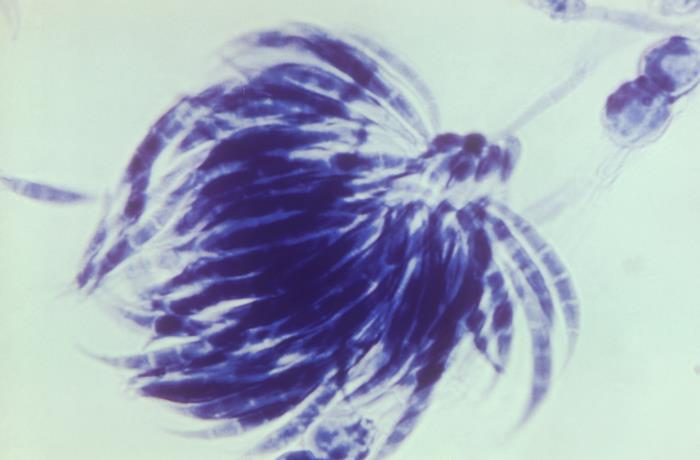
Fusarium species are the most destructive phytopathogenic and toxin-producing fungi, causing serious diseases in almost all economically important plants. Sporulation is an essential part of the life cycle of FusariumFusarium most frequently produces three different types of asexual spores, i.e., macroconidia, chlamydospores, and microconidia. It also produces meiotic spores, but fewer than 20% of Fusaria have a known sexual cycle. Therefore, the asexual spores of the Fusarium species play an important role in their propagation and infection. This review places special emphasis on current developments in artificial anti-sporulation techniques as well as features of Fusarium’s asexual sporulation regulation, such as temperature, light, pH, host tissue, and nutrients. This description of sporulation regulation aspects and artificial anti-sporulation strategies will help to shed light on the ways to effectively control Fusarium diseases by inhibiting the production of spores, which eventually improves the production of food plants.

Research – Control measures for Shiga toxin-producing Escherichia coli (‎STEC)‎ associated with meat and dairy products: meeting report

WHO

Overview

Although Shiga toxin-producing Escherichia coli (STEC) have been isolated from a variety of food production animals, they are most commonly associated with ruminants from which we derive meat and milk. Because of the widespread and diverse nature of ruminant-derived food production, coupled with the near ubiquity of STEC worldwide, there is no single definitive solution for controlling STEC that will work alone or in all situations. Instead, the introduction of multiple interventions applied in sequence, as a “multiple-hurdle scheme” at several points throughout the food chain (including processing, transport and handling) will be most effective.

This report summarizes the review and evaluation of interventions applied for the control of STEC in cattle, raw beef and raw milk and raw milk cheese manufactured from cows’ milk, and also evaluates available evidence for other small ruminants, swine and other animals. The information is presented from primary production, to the end of processing, providing the reader with information on the currently available interventions based on the latest scientific evidence.

This work was undertaken to support the development of guidelines for the control of STEC in beef, raw milk and cheese produced from raw milk by the Codex Committee on Food Hygiene (CCFH).

Report


Research – Salmonellosis – Annual Epidemiological Report for 2021

ECDC

In 2021, 30 EU/EEA countries reported data on salmonellosis. Twenty-six countries reported data using either the 2008, 2012 or 2018 EU case definitions for salmonellosis. Compared with the 2008 and 2012 EU case definitions, the 2018 EU case definition allows nucleic acid determination for laboratory confirmation, and includes a requirement for antimicrobial susceptibility testing and reporting of results. Four countries used another case definition, which was not specified.

Click to access SALM_AER_2021.pdf