Category Archives: Microbiological Risk Assessment

Research – Human Norovirus strains differ in sensitivity to the body’s first line of defense

Science Daily

Interferon (IFN) responses are one of the first defenses the body mounts against viral infections, and research has shown that it plays a role controlling viral replication. But when researchers at Baylor College of Medicine investigated whether IFN restricted human norovirus (HuNoV) infection in human intestinal enteroids (HIEs), a cultivation system that recapitulates many of the characteristics of the human infection, they unexpectedly discovered that endogenous IFN responses by HIEs restricted growth of HuNoV strain GII.3, but not of GII.4, the most common strain worldwide.

RASFF Alert – Animal Feed – Complementary Feed – Dogs and Cats

European Food Alerts

RASFF

Salmonella (in 1 out of 5 samples /25g) in complementary feed for dogs and cats from Germany in Germany

Hong Kong – Test results of seasonal food surveillance project on mooncakes (first phase) all satisfactory

CFS

The Centre for Food Safety (CFS) of the Food and Environmental Hygiene Department (FEHD) today (September 2) announced the results of a seasonal food surveillance project on mooncakes (first phase). The results of 137 samples tested were all satisfactory.

A spokesman for the CFS said that samples covering traditional, snowy, ice-cream and other types of mooncakes had been collected from various retailers (including online retailers) and food factories for chemical and microbiological tests and nutrition content analysis.

The chemical tests covered colouring matters, preservatives, aflatoxins and metallic contaminants. Microbiological tests covered different pathogens. For nutrition content analysis, the contents of sodium and total fat of the samples were tested to see if they were consistent with the declared values on the nutrition labels.

Netherlands – AH Gouda cheese young matured 48+ cubes Recall- Samonella

NVWA

Albert Heijn has decided to bring back AH Gouda cheese aged 48+ cubes from the shops. Salmonella has been found in this product. It only concerns cheese cubes with an expiration date 2-11-2020.

Consuming the cheese cubes with this expiration date can potentially pose a health hazard, especially for young children, the elderly, people with a weakened immune system and pregnant women. Consult your doctor or general practitioner if you have any questions about health problems.

Customers are requested not to eat the cheese cubes and to return them to an Albert Heijn store, where they will be reimbursed the purchase price upon return of the product.

See also the Albert Heijn website

Research – Outbreaks, Germination, and Inactivation of Bacillus cereus in Food Products: A Review

JFP

ABSTRACT

Bacillus cereus has been reported as a foodborne pathogen worldwide. Although food processing technologies to inactivate the pathogen have been developed for decades, foodborne outbreaks related to B. cereus have occurred. In the present review, foodborne outbreaks, germination, inactivation, and detection of B. cereus are discussed, along with inactivation mechanisms. B. cereus outbreaks from 2003 to 2016 are reported based on food commodity, number of cases, and consequent illnesses. Germination before sporicidal treatments is highlighted as an effective way to inactivate B. cereus, because the resistance of the pathogen increases significantly following sporulation. Several germinants used for B. cereus are listed, and their efficacies are compared. Finally, recently used interventions with sporicidal mechanisms are identified, and rapid detection methods that have been developed are discussed. Combining two or more interventions, known as the hurdle technology concept, is suggested to maximize the sporicidal effect. Further study is needed to ensure food safety and to understand germination mechanisms and sporicidal resistance of B. cereus.

HIGHLIGHTS
  • Bacillus cereus has been associated with several foodborne outbreaks.
  • Several germinants have been used to induce Bacillus cereus germination.
  • Resistance of Bacillus cereus may depend on the germination method.
  • Sporicidal effect of interventions can be maximized by hurdle technology.

Australia – Milk Lab Almond Milk 1L

FSANZ

Product information

Rio Coffee Pty Ltd is conducting a recall of Milk Lab Almond Milk 1L. The product has been available for sale at select supermarkets, cafes and restaurants in SA.

Date markings

Best Before 6 AUG 2021

Problem

The recall is due to potential microbial contamination.

Food safety hazard

Food products with microbial contamination may cause illness if consumed.

Country of origin

Australia

What to do​

Any consumers concerned about their health should seek medical advice and should return the product to the place of purchase for a full refund.

For further information please contact:

Rio Coffee Pty Ltd

​(08) 8362 3376

www.riocoffee.com.au

Related links:

Iceland – Salmonella in an energy bar

Mast

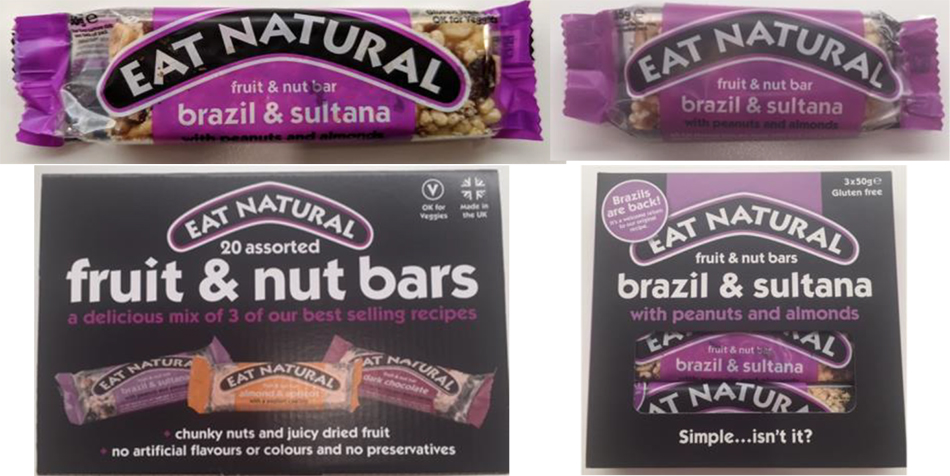
Matvælastofnun warns against consuming Eat Natural energy bars from the British company Hand2mouth, which Costco imports and sells in its store due to the risk of salmonella. Costco in Iceland has contacted its customers who have purchased the product and recalled it, in consultation with the Health Inspectorate of the Hafnarfjörður and Kópavogur areas.

The recall only applies to the following cycles:

  • Product: Brazil & sultana with peanuts and almonds 
  • Brand: Eat Natural 
  • Size and bar code: 
    35g pcs. 96003787 
    4x 35g package 5013803666712 
    50g pcs. 50676262 
    3x 50g package 5013803666149
    12x 50g box 50138803621247
    20x 50g various types 5013803666385
  • Best for: AUGUST 2020, SEP 2020, OCT 2020, NOV 2020, DEC 2020, JAN 2021, FEB 2021, MAR 2021, APR 2021, MAY 2021, JUNE 2021, JUL 2021
  • Distribution: Costco and Heimkaup store

Energy bar - salmonella

Customers can get their product refunded according to the instructions in Costco’s press release below. 

Related material

Updated 27.08.20 at 13:18

Research – Predicting Cholera Risk in Yemen

Earth Observatory

CDC Vibrio

Image CDC

This story is adapted from our recent feature, Of Mosquitoes and Models: Tracking Disease by Satellite.

In 2017, Yemen experienced one of its worst cholera outbreaks on record. Following heavy rains, flooding, and mass movement of the population due to civil unrest, more than one million people were suspected of contracting cholera and at least 2,000 died. A few scientists saw it coming, and they are now working to make sure people are prepared for future cholera outbreaks in Yemen and around the world.

Cholera is a waterborne bacterial infection that can spread quickly through a population. The disease is primarily contracted by consuming water or food contaminated with the cholera bacteria, Vibrio cholerae. It causes uncontrollable diarrhea that, if left untreated, can result in dehydration or death.

A team of NASA-funded researchers has been using satellite and ground-based data to forecast the risk of cholera in Yemen and other countries. The map above shows the forecasted risk of cholera in Yemen from August 10 to September 6, 2020. It was created with the Cholera Prediction Modeling System, which incorporates NASA precipitation data, air temperature data from NASA’s MERRA-2 reanalysis product, and population data. The number of cholera cases could increase in coming weeks, influenced by heavy rains that usually fall in August, though researchers predict the outbreaks should be limited to a few hotspots unless there is a large population displacement.

Research – Escape artists: How vibrio bacteria break out of cells

Science Daily

Food Illness

Image CDC

As soon as the foodborne pathogen Vibrio parahaemolyticus infects a human intestinal cell, the bacteria are already planning their escape. After all, once it is in and multiplies, the bacterium must find a way out to infect new cells.

Now, UT Southwestern scientists have discovered the surprising route that V. parahaemolyticus takes during this exit — or egress — from cells. The bacteria, they report in the journal eLife, gradually modify cholesterol found in a cell’s plasma membrane, eventually weakening the membrane enough so that it can break through.

“The more we understand how bacteria are manipulating host cells at a molecular level, the more we understand how they cause disease,” says study leader Kim Orth, Ph.D., professor of molecular biology and biochemistry at UTSW and a Howard Hughes Medical Institute investigator. “Bacteria have many different mechanisms to escape, but this stood out because it’s an especially novel one.”


Research – Variation of antibiotic resistance in Salmonella Enteritidis, Escherichia coli O157 :H7 , and Listeria monocytogenes after exposure to acid, salt, and cold stress

Wiley Online

Abstract

Bacteria with antibiotic‐resistant could seriously threaten to human health, increasing the treatment cost for infections and negatively affecting treatment outcomes. Stress adaptation is one possible mechanism for the acquisition or enhancement of antibiotic resistance in bacteria as a result of cross‐protection. In this study, the effects of acid, salt, and cold stress on the antibiotic resistance of Salmonella Enteritidis, Listeria monocytogenes , and Escherichia coli O157:H7 were investigated using the disc diffusion method. For S. Enteritidis, acidic growth conditions increased resistance to ciprofloxacin and erythromycin ( < .05), and addition of 4% NaCl to growth media decreased resistance to chloramphenicol ( < .05). Irrespective of pH and the NaCl concentration of the growth medium, refrigerated E. coli O157:H7 showed increased resistance to amoxycillin, ciprofloxacin, gentamicin, streptomycin, and erythromycin ( < .05). Acid‐adapted L. monocytogenes showed decreased the resistance to amoxycillin, ampicillin, chloramphenicol, ciprofloxacin, erythromycin, gentamicin, streptomycin, and tetracycline ( < .05). In conclusion, prolonged exposure of foodborne pathogens to acid, salt, and cold stress alters their antibiotic resistance. However, the effect of acid, salt, and cold stress on bacterial antibiotic resistance depend on both the bacterial species and the specific antibiotic. Therefore, multiple factors need to be considered for a foodborne antimicrobial resistant risk assessment.