Category Archives: Microbiological Risk Assessment

New Zealand – Shellfish Biotoxin Alerts

MPI

ALL WARNINGS ARE UP TO DATE

Warnings are reviewed weekly following sampling results. Information on this page is then updated if needed.

If you have questions, email info@mpi.govt.nz

Current warnings

Hawke’s Bay – North Island

West Coast – South Head to Tauratahi Point – North Island

Previous changes
  • 19 August: Hawke Bay Warning extended to Young Nicks Head.
  • 12 August: NI West Coast – South Head to Tauratahi Point warning issued
  • 12 August: Port Levy warning removed.
  • 10 July 2020: Hawke’s Bay warning extended.
  • 2 July 2020: Hawke Bay warning issued

France – Withdrawal and recall of foodstuffs likely to be injurious to health – Microbiology

MAF

The Ministry of Agriculture and Food is withdrawing and recalling all products, mainly beef, poultry and smoked fish, manufactured without the required sanitary approval, under the trade name “DJEN FOODS “. In fact, an inspection carried out by the Departmental Directorate for the Protection of Populations (DDPP) of Seine-et-Marne revealed that the production and marketing of these products were not carried out under conditions meeting the food safety requirements.

Considering these serious shortcomings, likely to make food detrimental to the health of consumers, the services of the Ministry of Agriculture and Food today order the withdrawal from sale and the recall of all products marketed by the establishment “DJEN-FOODS” or bearing a “DJEN-FOODS label: meat and fish, fresh or smoked, or other cooked dishes, in bulk or vacuum-packed, kept at room temperature, refrigerated or frozen, etc … and this regardless of the use-by date (BBD) or the minimum durability date (MDD) indicated on these foods.

These products are marketed mainly in Ile de France, probably in establishments specializing in the marketing of “exotic” preparations. They can be identified by the labels affixed indicating: “made in France by DJEN-FOODS”.

The Prefect of Seine-et-Marne on August 13 ordered the cessation of all production at this establishment until further notice. The services of the Directorate-General for Food are continuing their investigations, in particular on product traceability.

Research – Restaurant towels can carry pathogenic bacteria for weeks in simulated lab conditions

Healio

Commercial restaurant workers often use sponges and microfiber towels to clean food contact surfaces, but these types of absorbent materials were found to harbour potentially pathogenic organisms for more than 2 weeks, researchers said.

“The hypothesis of our study was that cleaning tools such as sponges and wiping cloths may become contaminated with bacterial pathogens and cross-contaminate other surfaces over time,” Sujata A. Sirsat, PhDan assistant professor at the Conrad N. Hilton College of Hotel and Restaurant Management at the University of Houston, told Healio. “There is some literature about this in the domestic kitchen context; however, there is a paucity of literature in food service settings.”

Research – Effects of smoke produced from smoldering plants on the Aspergillus flavus growth and production of aflatoxin in pistachio

Wiley Online

Aflatoxin (AF) contamination of the Iranian exporting pistachio has become a major problem in the last decades. In this study, the antifungal effects of smoke produced from the smoldering of several herbal plants were investigated. Four different ratios of plant weight/exposure time (5/5, 10/15, 15/30, and 20 g/45 min) were used from each plant material to smoke two isolates of Aspergillus flavus (A47 and A3), grown in potato dextrose agar (PDA). The results showed that the 20 g/45 min treatment using smoldering cinnamon bark, neem leaves, and clove flowers had efficient inhibitions of 100, 85, and 75%, respectively. Furthermore, the smoking of pistachio inoculated with a spore concentration of 1 × 106 / ml using 30 g of cinnamon bark, neem leaves, and clove flowers for 75 min was capable of preventing the production of different types of AF, that is, B1, B2, G1, and G2 in the treated products. There is a good potential to smoke pistachio with these three herbal plants and prevent the production of AF in pistachio during the handling, storage, and transportation.

USA – CDC Closes Atlanta Buildings After Finding Legionella

Outbreak News Today

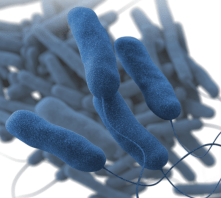
CDC legionella

Image CDC

The CDC closed several buildings it leases in Atlanta after finding legionella bacteria in the plumbing. “During the recent closures at our leased space in Atlanta, working through the General Services Administration (GSA), CDC directed the landlord to take protective actions,” CDC told CNN.

“Despite their best efforts, CDC has been notified that Legionella, which can cause Legionnaires’ Disease, is present in a cooling tower as well as in some water sources in the buildings. Out of an abundance of caution, we have closed these buildings until successful remediation is complete.”

USA – Cyclospora Outbreak in Texas

Outbreak News Today

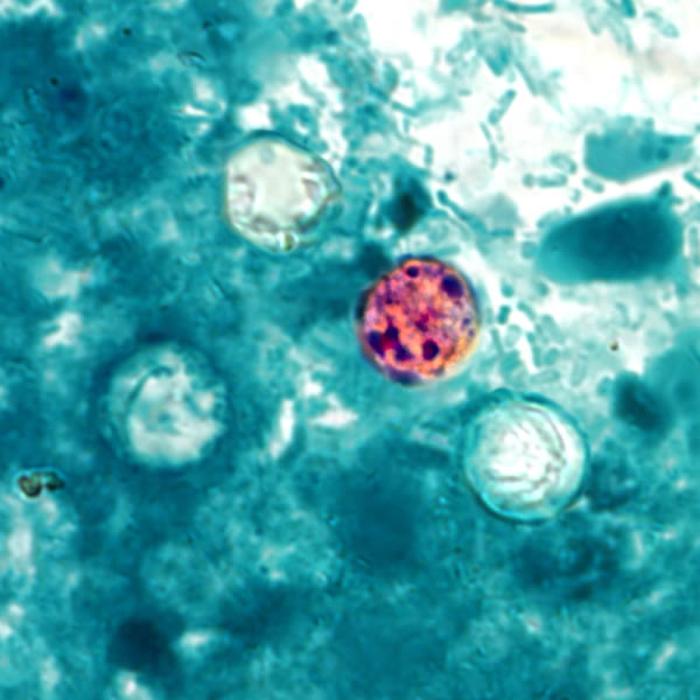
Austin Public Health (APH) announced it was investigating an outbreak of Cyclospora, an intestinal illness caused by a parasite, after at least 82 cases have been reported since June 1, 2020. This Austin-Travis County Cyclospora Outbreak does not yet have an identified source.

According to  APH Epidemiologist Janet Pichette, “While we may be in COVID-19 season, we cannot forget the other diseases and infections that are commonly present in our community. And as we have said time and time again, there are ways to prevent many of these diseases and infections, including cyclosporiasis – thoroughly wash fresh produce, wash your hands after handling fruits and vegetables, and separate produce from raw meat and seafood.”

Until a source is found, the APH reminds all Texas residents to wash their hands and their produce.

UK – Sainsbury’s recalls by Sainsbury’s semi-skimmed UHT milk because of possible microbiological contamination

FSA

Sainsbury’s has taken the precautionary step of recalling by Sainsbury’s semi-skimmed less than 2% fat 1 litre UHT milk because of possible microbiological contamination that could lead to spoilage. This may make the product unsafe to consume.

Product details

by Sainsbury’s semi-skimmed less than 2% fat UHT milk
Pack size 1 litre
Best before 28 December 2020 and 29 December 2020

Risk statement

Possible microbiological contamination may make the product unsafe to consume.

Action taken by the company

Sainsbury’s is recalling the above product. Point of sale notices will be displayed in all retail stores that are selling this product. These notices explain to customers why the product is being recalled and tell them what to do if they have bought the product. Please see the attached notice.

Our advice to consumers

If you have bought any of the above product do not consume it. Instead, return it to the store from where it was bought for a full refund when next visiting for groceries and other essentials. Alternatively contact Sainsbury’s careline on 0800 636262.

Legionella – What Landlords Need to Know About Legionella

Legionella Control 

This article provides a compilation of the most frequently asked questions we receive from landlords about the control of legionella in their properties and what they need to do to comply with the law. It covers a range of popular questions with comprehensive answers from our experts, along with a number of free downloads (full versions) for key guides produced by the Health and Safety Executive dealing with the control of legionella including their ACOP L8 and HSG274 Parts 1, 2 and 3.

Hong Kong – CFS announces results of targeted surveillance on Bacillus cereus and Clostridium perfringens in ready-to-eat food

CFS

The Centre for Food Safety (CFS) of the Food and Environmental Hygiene Department today (July 17) announced the results of a recently completed targeted food surveillance project on Bacillus cereus and Clostridium perfringens in ready-to-eat food. None of the samples taken were found to be unsatisfactory, according to the Microbiological Guidelines for Food.

“A total of 300 samples of ready-to-eat food were collected from different retail outlets including online retailers and food factories for testing of Bacillus cereus and Clostridium perfringens this year. The samples included dim sum, rice, noodles, pastries, soya products, stewed meat and meat sauce,” a spokesman for the CFS said.

Bacillus cereus is commonly found in the environment. It can form spores which are able to resist heat and survive cooking temperatures. Bacillus cereus can produce different toxins causing two types of food poisoning, with emetic intoxication (causing vomiting) being caused by heat-stable toxins in food, and diarrhoeal being caused by ingestion of a large amount of Bacillus cereus that can produce toxins in the intestine. As the production of preserved bean curd requires fermentation, Bacillus cereus will multiply when production is not hygienic or storage is not proper.

Cooking heat can activate the germination of Clostridium perfringens spores, which survive in anaerobic conditions like inside internal cavities, rolls of meat, stuffed poultry, or gravies. The organism can then multiply in the area where the oxygen level is low. Cooling of food at ambient temperature for a long period also allows rapid multiplication of the bacterium. Hence, foods prepared in bulk, especially cooked meat, poultry dishes and juices, which are stored at ambient temperatures with a long cooling period after cooking are at high risk. In food poisoning caused by Clostridium perfringens, common symptoms include sudden abdominal pain, nausea and diarrhoea.

The spokesman reminded the trade and the public not to take the risk lightly. They should always maintain good personal and food hygiene to ensure food safety. When handling food that is not to be consumed immediately, keep it at a safe temperature (above 60 degrees Celsius or at 4 degrees C or below). Consume perishable prepackaged food and beverages promptly after opening or reheating and avoid prolonged storage at ambient temperatures. Reheat food thoroughly with the core temperature at 75 degrees C or above. If cooked foods are to be cooled, the trade should adopt measures to shorten the required cooling time to restrict the growth of Bacillus cereus and Clostridium perfringens in heat treated food. For example, install specific rapid chilling equipment, divide food into smaller portions and place it in shallow containers and in an ice bath. They should also closely monitor the refrigerator temperature and maintain a temperature log. Cross-contamination of food during cooling and storage should be prevented. The trade should also observe the Good Hygienic Practices in each stage of production to ensure safe and proper processing of the food and to comply with the limits stipulated in the Microbiological Guidelines for Food.

Ends/Friday, July 17, 2020


Research – Framework for action on food safety in the WHO South-East Asia Region

WHO

Framework for action on food safety in the WHO South-East Asia Region

Food safety is a major public health concern and is closely related to Sustainable Development Goals such as good health and well-being, elimination of poverty, gender equality, water and sanitation, sustainable production and consumption, and climate change. Food safety is a shared responsibility and demands multisectoral and multidimensional collaboration of all stakeholders – governments, food business operators, consumers and academics across the food chain – to make it a longterm investment to meet the Sustainable Development Goals. Various global initiatives have brought together key stakeholders, including representatives from ministries of agriculture, health and trade, food industries, consumer societies and international partners, to achieve high-level political commitment to scale up the food safety agenda for sustainable development. This Framework for Action for Food Safety identifies key activities prioritized for delivery in 2020–2025. It is based on a situation analysis of the food control system in Member States of the WHO South-East Asia Region, of progress made through implementation of the Regional Food Safety Strategy, including through the WHO Thirteenth General Programme of Work, Codex Strategic Plan and recommendations of WHO/FAO/AU Global Food Safety Conference. This Framework provides guidance to food safety authorities across the food chain, as well as those involved in food safety emergencies, preparedness and response