Category Archives: foodborne outbreak

Research – Sachet water consumption as a risk factor for cholera in urban settings: Findings from a case control study in Kinshasa, Democratic Republic of the Congo during the 2017–2018 outbreak

PLOS One

Food Illness

Cholera is a diarrheal disease caused by ingestion of the Vibrio cholerae bacterium. Outbreaks in urban areas are becoming increasingly frequent in Sub-Saharan Africa. Risk factors for cholera have been studied in rural settings but not sufficiently in urban areas. Understanding context-specific risk factors is key for successful outbreak response. During a cholera outbreak in Kinshasa, the Democratic Republic of the Congo we were able to identify a previously unknown behavioural risk factor of particular relevance in urban settings–the consumption of drinking water from plastic sachets. Water sachets are sold on the streets of all major cities in Sub-Saharan Africa. It requires biting off an edge and sucking out the water, and we think that external contamination of these sachets was an important transmission route in the Kinshasa outbreak. Water sachets are predominantly consumed by socio-economically disadvantaged groups who lack piped water supply in their homes and have poor access to sanitary infrastructure. This makes our findings particularly relevant because these are the very populations who are at increased risk of getting and transmitting cholera. Health messaging and response measures should include consumption of water sachets as a potential risk factor during future cholera outbreaks in urban low-resource settings.

Wales – North Wales playgroup, breakfast and afterschool clubs closed after child struck down with E.coli

Daily Post

Public health chiefs have confirmed that as a result Cylch Meithrin and Clwb Y Morfa, Breakfast Club and Afterschool Club have all closed for a deep clean.

A parent at Ysgol Glan Morfa, who asked not to be named, said: “There are a number of kids in my child’s class who have been off all week.”

Public Health Wales, Conwy County Borough Council and Betsi Cadwaladr University Health Board are now investigating

Richard Firth, consultant in health protection at Public Health Wales confirmed a single case of a Shiga toxin-producing E.coli (STEC) has been identified in a pupil at the Cylch Meithrin, Abergele.

Research -Evidence of on-going transmission of Shiga toxin-producing Escherichia coli O157:H7 following a foodborne outbreak

Cambridge Org

In August 2019, public health surveillance systems in Scotland and England identified seven, geographically dispersed cases infected with the same strain (defined as isolates that fell within the same five single nucleotide polymorphism single linage cluster) of Shiga toxin-producing Escherichia coli O157:H7. Epidemiological analysis of enhanced surveillance questionnaire data identified handling raw beef and shopping from the same national retailer (retailer A) as the common exposure. Concurrently, a microbiological survey of minced beef at retail identified the same strain in a sample of minced beef sold by retailer A, providing microbiological evidence of the link. Between September and November 2019, a further four primary and two secondary cases infected with the same strain were identified; two cases developed haemolytic uraemic syndrome. None of the four primary cases reported consumption of beef from retailer A and the transmission route of these subsequent cases was not identified, although all four primary cases visited the same petting farm. Generally, outbreaks of STEC O157:H7 in the UK appear to be distinct, short-lived events; however, on-going transmission linked to contaminated food, animals or environmental exposures and person-to-person contact do occur. Although outbreaks of STEC caused by contaminated fresh produce are increasingly common, undercooked meat products remain a risk of infection.

RASFF Alert – Foodborne outbreak -Suspected Histamine -Frozen Yellowfin Tuna Loins

RASFF

Foodborne outbreak suspected (histamine poisoning) to be caused by frozen yellowfin tuna loins from Spain in Italy

USA – Outbreak Investigation of Salmonella: Jule’s Cashew Brie (April 2021) – Outbreak Over

FDA

he FDA, along with CDC, state and local partners, investigated a multistate outbreak of Salmonella infections linked to the consumption of Jule’s Cashew Brie, a vegan, or plant-based cheese alternative. On April 23, 2021, Jule’s Foods of Carlsbad, California, conducted a voluntary recall of all varieties of Jule’s Foods products.

As of July 7, 2021, CDC announced that the outbreak is over. There are a total of 20 illnesses in four states. Two additional strains of SalmonellaSalmonella Typhimurium and Salmonella Chester, have been linked to this outbreak. The illnesses of Salmonella Chester have the same genetic fingerprint as Salmonella found in a sample of Jule’s Cashew Brie collected by the California Department of Public Health (CDPH).

Illnesses of Salmonella Duisburg and Salmonella Urbana have been previously reported and are linked to this outbreak. Other strains of Salmonella have been identified in raw and finished product samples and environmental samples but have not been linked to illnesses.

Based on FDA traceback investigation and sample results, the cashews used by Jule’s Foods have been identified as the likely source of contamination in the Jule’s Cashew Brie products. The FDA worked with the cashew supplier to ensure that potentially contaminated product was removed from the market and that the supplier implemented corrective actions.

Recommendation

CDC announced that the outbreak is over. There are no recommendations for consumers, restaurants, or retailers.


Product Images

Outbreak Investigation of Salmonella Duisburg Jule's Brie

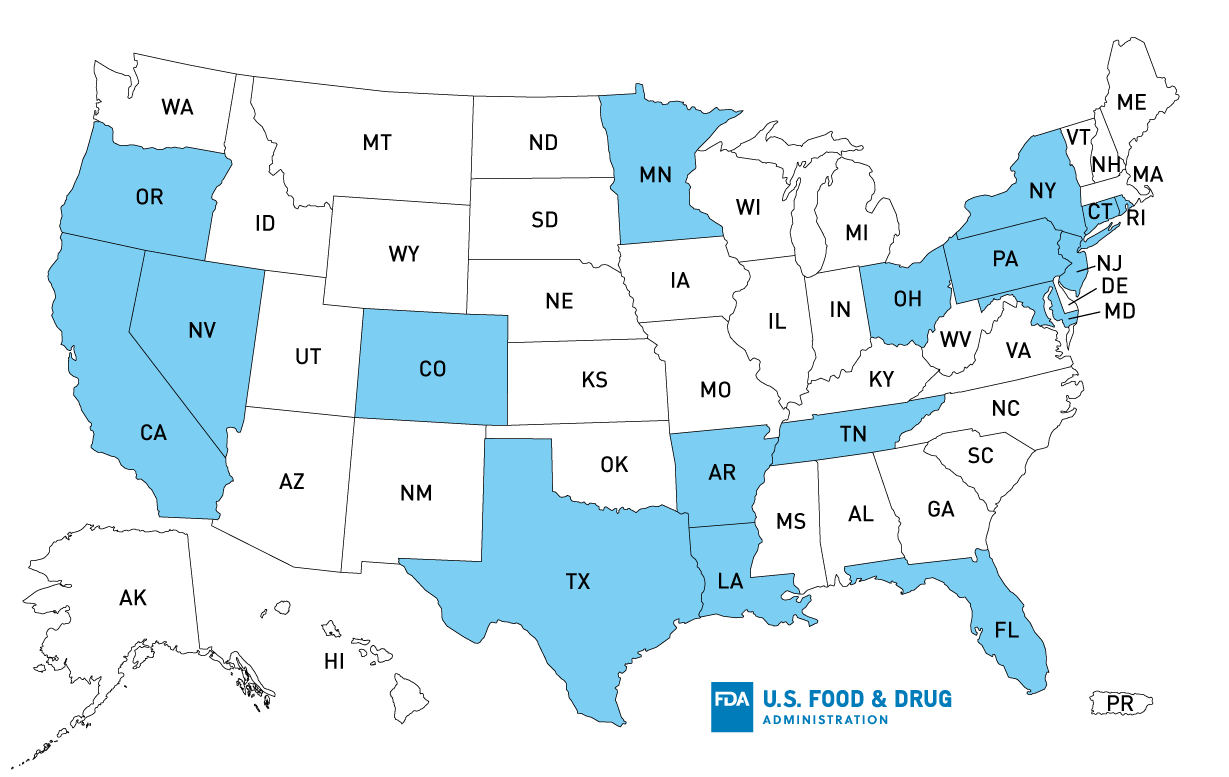
Map of U.S. Distribution of Recalled Jule’s Foods Products

Outbreak Investigation of Salmonella Duisburg - Cashew Brie Products - Map of U.S. Distribution (04-23-2021)

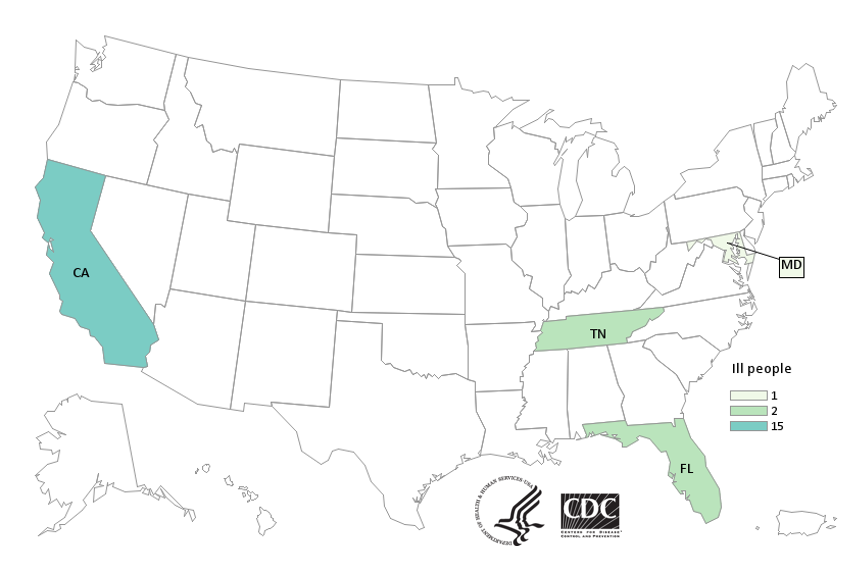
Case Count Map Provided by CDC

Outbreak Investigation of Salmonella in Cashew Brie Products - CDC Case Count Map (July 7, 2021)

Case Counts

Total Illnesses: 20
Hospitalizations: 5
Deaths: 0
Last Illness Onset: May 9, 2021
States with Cases: CA (15), FL (2), MD (1), TN (2)
Product Distribution*: Arkansas, California, Colorado, Connecticut, Florida, Louisiana, Maryland, Minnesota, Nevada, New York, New Jersey, Ohio, Oregon, Pennsylvania, Rhode Island, Tennessee, Texas
*Distribution has been confirmed for states listed, but product could have been distributed further, reaching additional states

Spain – Salmonella sickens six in Spain; outbreaks decline in Andalucía

Food Safety News

Public health officials in a Spanish region have reported six confirmed Salmonella infections.

Surveys and epidemiological work by Castilla y León Public Health have shown the outbreak could have been caused by the consumption of tortillas in two establishments in Soria. A Spanish tortilla also called a Spanish omelet can contain herbs, spices, potatoes, and eggs.

The product was cooked at one of these sites and part of it was transferred, once prepared, to the second.

Two children and four adults are affected. The two young people went to the Santa Bárbara Hospital and were then transferred to Burgos University Hospital, where they were admitted to the pediatric Intensive Care Unit (ICU).

Finland – Salmonella outbreak affects 450 in Jyväskylä, Linked to imported lettuce

Outbreak News Today

In a follow-up on the salmonella outbreak in the Jyväskylä region of Finland, the City of Jyväskylä said imported lettuce served in day care centres has been confirmed as the source of an outbreak of salmonella bacterial infections that affected about 450 children and day care centre staff.

The salad contained domestic cucumber, peas and foreign iceberg lettuce. Domestically-produced cucumbers and peas were also suspected to be the cause of the outbreak, but the city said tests had revealed no connection between these products and the salmonella infections.

The most likely source of Salmonella is iceberg lettuce, which came to Finland from Germany via Sweden.

Ireland – A Foodborne Outbreak of Cryptosporidiosis Likely Linked to Salad Leaves

IMJ

Click to access A-Foodborne-Outbreak-of-Cryptosporidiosis-Likely-Linked-to-Salad-Leaves.pdf

Research – A Review of Significant European Foodborne Outbreaks in the Last Decade

Journal of Food Protection

Vegetable Bacteria Danger

Foodborne diseases remain a global public health challenge worldwide. The European surveillance system on multistate foodborne outbreaks integrates elements from public and animal health, and the food chain for the early detection, assessment, and control. This review aims to describe the significant outbreaks that occurred in Europe in the last decade. Their significance and relevance in public health laid in the changes, improvements, and novelties that derived and that pushed towards the building of a safer food system in the European Union, certainly driven by the One Health approach. In 2011, a point source monoclonal outbreak of infections caused by Escherichia coli serotype O104:H4 contaminating sprouted seeds recorded hundreds of cases of haemolytic-uremic syndrome and several fatalities. In 2015, a prolonged outbreak of Listeria monocytogenes infections caused by the contamination of frozen corn affected Europe with 47 cases and nine deaths. In 2016, a persistent polyclonal outbreak of Salmonella Enteritidis was linked to the consumption of eggs and was associated with hundreds of cases. These outbreaks commonly highlighted the importance of sharing data (e.g. sequencing and tracing data) with rapidity and the need for harmonizing bioinformatics outputs and computational approaches to facilitate foodborne detection and investigation. Also, they led to the setting of the legal framework for the development of a European collaboration platform to share whole genome sequences data. These outbreaks enabled the enforcement of the existing hygiene and food safety provisions and led the development of new hygiene guidelines and best practises. This paper also briefly touches upon the new trends in information technologies that are being explored in the field of food traceability and safety. Their application aims to enhance the traceability of food throughout the supply chain to redirect the conventional tracing system towards a digitized supply chain.

USA – Listeria Outbreak Linked to Fully Cooked Chicken

FDA

Fast Facts
  • Illnesses: 3
  • Hospitalizations: 3
  • Deaths: 1
  • States: 2
  • Recall: Yes
  • Investigation status: Active
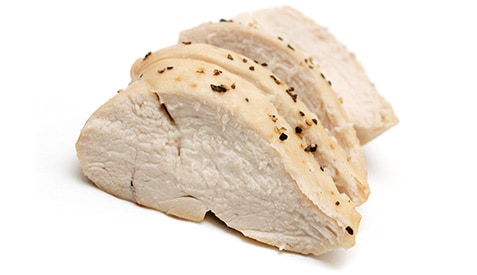
Precooked chicken

Recalled Food

Frozen, fully cooked chicken products, such as chicken strips and diced chicken, and products made with fully cooked chicken, supplied by Tyson Foods Inc.external icon

  • Shipped nationwide to retailers and institutions including hospitals, nursing facilities, restaurants, schools and Department of Defense locations
  • Products include frozen, fully cooked chicken strips, diced chicken, chicken wing sections, and fully cooked pizza with chicken
  • Products were sold under many brands including Tyson, Jet’s Pizza, Casey’s General Store, Marco’s Pizza, and Little Caesars
  • The products subject to recall bear establishment number “EST. P-7089” on the product bag or inside the USDA mark of inspection
  • See the complete list of recalled productsexternal icon, including product and date codes, on the USDA-FSIS website
What Businesses Should Do
  • Do not serve or sell recalled products.
  • Long-term care facilities, hospitals, and other facilities that serve people at higher risk for severe Listeria illness should take extra precautions.
    • Listeria is particularly harmful to people who are 65 years or older, pregnant, or have a weakened immune system.
    • All of the sick people in this outbreak ate foods served at a long-term care facility or hospital.
  • Follow USDA-FSIS’s guidanceexternal icon to prevent the spread and growth of Listeria.
What You Should Do
  • Do not eat any recalled products. Throw them away or return them to where you bought them.
  • Follow these five steps to clean your refrigerator, containers, and surfaces that may have touched the recalled products. Listeria can survive in the refrigerator and can easily spread to other foods and surfaces.
  • Call your healthcare provider right away if you have these symptoms after eating recalled products:
    • If you are pregnant: Fever and muscle aches. Your illness may be mild, but Listeria can cause pregnancy loss or premature birth. It can also cause serious illness or death in newborns.
    • If you are not pregnant: Headache, stiff neck, confusion, loss of balance, and convulsions, in addition to fever and muscle aches.
Symptoms of Listeria Illness
  • Listeria can cause severe illness (known as invasive listeriosis) when the bacteria spread beyond the gut to other parts of the body.
    • Pregnant people, adults 65 years or older, and people with weakened immune systems are at higher risk for severe illness.
  • Symptoms of severe illness usually start 1 to 4 weeks after eating contaminated food. However, symptoms can start as late as 10 weeks after.
    • Pregnant people usually experience only fever, fatigue, and muscle aches. However, Listeria can cause pregnancy loss or premature birth. It can also cause serious illness or death in newborns.
    • People who are not pregnant may experience headache, stiff neck, confusion, loss of balance, and convulsions, in addition to fever and muscle aches.
  • Listeria can also cause common food poisoning symptoms, like diarrhea and fever. People who experience these symptoms usually recover without treatment.
  • For more information about Listeria, see the Listeria Questions and Answers page.
file alt solid icon
Investigation Details
usa map icon
Map
chart icon
Timeline