Category Archives: Food Toxin

Research – Modeling for Survival of Clostridium perfringens in Saeng-sik, a Powdered Ready-to-Eat Food with Low Water Activity

Journal of Food Protection

ABSTRACT

Saeng-sik is a powdered ready-to-eat food with very low moisture that contains dried raw materials such as grains, fruits, mushrooms, and seaweeds. This product is consumed as a convenient and nutritious meal replacement. The objective of this study was to develop a mathematical model for predicting the survival of Clostridium perfringens vegetative cells and spores in saeng-sik as a function of temperature and to validate the model using saeng-sik samples with different microbial communities analyzed by matrix-assisted laser desorption–ionization time-of-flight mass spectrometry. Kinetic data for C. perfringenssurvival in saeng-sik fit well to the Weibull model with high goodness of fit (R2 = 0.92 to 0.98). The obtained δ values (required time for first decimal reduction) for each temperature were 19.62 to 864.86 h, and concave curves (p < 1) were observed under all experimental conditions (5 to 40°C). Kinetic parameters were further described in a secondary model as a function of temperature using a Davey model (R2 = 0.99). The developed model was validated by the bias factor, accuracy factor, and root mean square error, and the values were within acceptable ranges for predictive models, even for saeng-sik samples with different microbial communities. When saeng-sik was rehydrated according to the manufacturer’s recommendations, germination and outgrowth of C. perfringens was observed when the sample was subjected to unusual temperatures during storage, such as at 30°C for 15 h. C. perfringens spores survived in saeng-sik with very low water activity. Because C. perfringens could germinate and grow under such conditions, care must be taken to avoid initial contamination of C. perfringens during the manufacturing process. Our model developed with samples with different microbial communities provides useful information for next-generation microbiological risk assessment taking into consideration the ecology of the food-associated microbial community.

HIGHLIGHTS
  • We developed a mathematical model to predict the survival of C. perfringens in food.

  • C. perfringens vegetative cells and spores were inoculated into dried powder food.

  • The aw of saeng-sik was below 0.1.

  • Weibull and Davey models can successfully describe the survival of C. perfringens.

  • The developed model can be applied to samples with different microbial communities.

Research – Prevalence and Diversity of the Thermotolerant Bacterium Bacillus cytotoxicus among Dried Food Products

Journal of Food Protection

ABSTRACT

Bacillus cytotoxicus, a member of the Bacillus cereus group, is a thermotolerant species originally reported from a lethal foodborne infection in France in 1998. The strain NVH391-98, isolated from this outbreak, produces cytotoxin K1, a potential cytotoxic enterotoxin. However, the habitat and diversity of B. cytotoxicus isolates so far have been poorly explored. The objective of this study was to assess the prevalence of this bacterium in different food products (mainly dried) and to estimate its diversity. Among the 210 samples analyzed, all potato flakes contained the bacterium at low concentrations (≤102 CFU/g). However, prepared and kept at room temperature for 2 days, the puree contained ca. 105 CFU/g B. cytotoxicus. Besides potato flakes, some samples of millet flour, salted potato chips, and soups also contained B. cytotoxicus. From these samples, 55 thermotolerant B. cytotoxicus isolates were obtained. When classified into six distinct random amplified polymorphism DNA patterns, they showed the existence of 11 distinct plasmid profiles. Although most isolates (including the reference strains NVH391-98 and NVH883-00) contained no detectable plasmid, some displayed one to three plasmids with sizes from ca. 8 to 90 kb. It also emerged from this study that a single food sample could contain B. cytotoxicus isolates with different genetic profiles.

HIGHLIGHTS
  • Bacillus cytotoxicus was found in all tested potato flakes but at loads lower than 102 CFU/g.

  • B. cytotoxicus was observed in other potato-containing products and in millet flour.

  • B. cytotoxicus isolates (n = 57) fell into six RAPD patterns and 11 plasmid profiles.

  • A large proportion of B. cytotoxicus isolates contained small and/or large plasmids.

RASFF Alerts – Aflatoxin – Blanched Groundnut Kernels – Peanuts in Shell – Mixed Nuts – Crushed Red Hot Paprika – Shelled Almonds -Groundnuts – Whole Red Chillies -Ground Nutmeg – Hazlenuts – Pistachios – Blanched Almonds – Roasted Salted Pistchios

RASFF-Logo

RASFF – aflatoxins (B1 = 6.7; Tot. = 14 µg/kg – ppb) in blanched groundnut kernels from Argentina in the Netherlands

RASFF – aflatoxins (B1 = 29.2 µg/kg – ppb) in peanuts in shell for wildlife feed from the United States in the UK

RASFF – aflatoxins (B1 = 9.4; Tot. = 10.2 µg/kg – ppb) in mixed nuts from Turkey in Germany

RASFF – aflatoxins (B1 = 20.6; Tot. = 21.7 µg/kg – ppb) in crushed red hot paprika from Kosovo in Germany

RASFF – aflatoxins (B1 = 25; Tot. = 32 µg/kg – ppb) in shelled almonds from the United States in Spain

RASFF – aflatoxins (B1 = 99.7; Tot. = 106 µg/kg – ppb) in groundnuts in shell from China in the UK

RASFF – aflatoxins (B1 = 5.9 µg/kg – ppb) in groundnuts kernels from India in the Netherlands

RASFF – aflatoxins (B1 = 7.4 µg/kg – ppb) in whole red chillies from India in Greece

RASFF – aflatoxins (B1 = 7.5; Tot. = 28.4 µg/kg – ppb) in groundnut kernels from Argentina in the Czech Republic

RASFF – aflatoxins (B1 = 14.65; Tot. = 21.82 µg/kg – ppb) in ground nutmeg from China in Romania

RASFF – aflatoxins (B1 = 3.8; Tot. = 4.5 µg/kg – ppb) in groundnuts in shell from Egypt in Germany

RASFF – aflatoxins (B1 = 11.7 µg/kg – ppb) in hazelnut kernels from Turkey in Sweden

RASFF – aflatoxins (B1 = 15.7; Tot. = 17.1 µg/kg – ppb) in roasted pistachios in shell from Turkey in Belgium

RASFF – aflatoxins (B1 = 23.4; Tot. = 25.4 µg/kg – ppb) in salted, roasted pistachios roasted from Turkey in Germany

RASFF – aflatoxins (B1 = 37.1; Tot. = 40.3 µg/kg – ppb) in groundnuts from China in Spain

RASFF – aflatoxins (B1 = 14; Tot. = 15 µg/kg – ppb) in groundnuts from the United States in the Netherlands

RASFF – aflatoxins (B1 = 4.5; Tot. = 5.3 µg/kg – ppb) in groundnuts in shell from China in Spain

RASFF – aflatoxins (B1 = 9.07 µg/kg – ppb) in pistachios without shell from Iran in Italy

RASFF – aflatoxins (B1 = 24; Tot. = 25.8 µg/kg – ppb) in blanched almonds from Israel in Italy

RASFF – aflatoxins (B1 = 43; Tot. = 87 µg/kg – ppb) in groundnut kernels from Senegal in the Netherlands


RASFF Alerts – Ochratoxin A – Instant Rye Flakes – Raisins

RASFF-Logo

RASFF – ochratoxin A (6.7 µg/kg – ppb) in instant rye flakes from Poland in Poland

RASFF – ochratoxin A (34 µg/kg – ppb) in raisins from Turkey in the Netherlands

RASFF Alert – Mycotoxin – Rye Ergot – Rye Flour

RASFF-Logo

RASFF – rye ergot (Claviceps purpurea) (755 µg/kg – ppb) in rye flour from Austria in Slovenia

RASFF Alert – STEC E.coli 026- Frozen Meat for Minced Meat –

RASFF-Logo

RASFF – shigatoxin-producing Escherichia coli (stx1+ stx2+ eae+ O26:H11 /25g) in frozen meat for minced meat from Ireland in France

RASFF Alert – Mycotoxin T-2/HT-2 – Wheat Flour

RASFF-Logo

RASFF – T-2 toxin (106.7 µg/kg – ppb) and HT-2 toxin (346 µg/kg – ppb) in wheat flour from Belgium in Belgium

Abstract

T-2 toxin (T2) and HT-2 (HT2) toxin are trichothecenes, which form part of the group of Fusarium mycotoxins. Food and feed samples used to estimate human dietary and animal exposure were reported either as the individual results for T2 and/or, HT2, and/or as the sum of the two. The highest concentrations were reported in oats and oat-containing commodities. Very high levels were reported in a small number of data on specific plant- and herb-based dietary supplements. In humans, the mean chronic dietary exposure to the sum of T2 and HT2 was highest in‘Toddlers’and‘Infants’, with maximum upper bound (UB) estimates of 64.8 and 62.9 ng/kg body weight (bw) per day, respectively.The 95th percentile dietary exposure was highest in‘Infants’with a maximum UB estimate of 146 ng/kgbw per day. UB estimations were on average four fold higher than lower bound (LB) estimations. Average acute exposure ranged from a minimum of 13.4 ng/kg bw per day, estimated in‘Elderly’,up to a maximum of 64.7 ng/kg bw per day estimated in‘Toddlers’. The highest 95th percentile acute dietary exposure was estimated for a dietary survey within the age class‘Infants’(170 ng/kg bw per day).Overall, among processed foods the main contributors were cereal flakes,fine bakery wares and, for acute exposure, also bread and rolls. In the elderly and very elderly, dietary supplements made an important contribution. Exposure to the sum of T2 and HT2 in farm and companion animals varied according to the animal species. Exposures considering mean concentration scenarios varied between 0.03–0.08 (LB–UB)lg/kg bw per day in beef cattle and 1.13–1.47lg/kg bw per day in milking goats. Forhigh concentration scenarios, exposures varied between 0.12–0.16lg/kg bw per day and 2.37–2.58lg/kg bw per day in the same species. In the absence of data, potential modified form were not included.

©2017 European Food Safety Authority.EFSA Journal published by John Wiley and Sons Ltd on behalf of European Food Safety Authority


USA -Missouri Department of Health and Senior Services and Grant’s Farm in St. Louis Looking into Recent Illnesses Among Visitors – STEC E.coli

DHSS 19243

JEFFERSON CITY, MO — The Missouri Department of Health and Senior Services (DHSS), in collaboration with the Missouri Department of Agriculture (MDA), the United States Department of Agriculture (USDA) and local health agencies in the St. Louis metro area, is investigating five Shiga toxin-producing E. coli (STEC) cases that have visited Grant’s Farm since late May 2019. The investigation is ongoing and is focused on determining the specific risk that may have led to the illnesses.

MDA and DHSS have provided preliminary recommendations to Grant’s Farm to help remind patrons of the importance of handwashing after direct contact with animals. Grant’s Farm also is actively participating in the investigation by allowing animal specimens to be collected by investigators. This is in addition to routine visits from state inspectors to help supervise the health of the animals at the park.

USA – Multistate Outbreak of Gastrointestinal Illnesses Linked to Oysters Imported from Mexico is Over

CDC

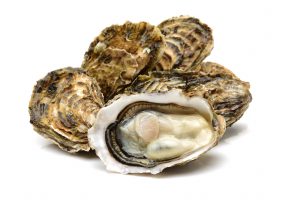
Photo of oysters.

Image CDC

This outbreak appears to be over. Consumers, restaurants, and retailers should always handle and cook oysters properly. Get CDC’s tips for preventing foodborne illness from oysters and other shellfish.

Final Outbreak Information
Illustration of a megaphone.
  • As of June 21, 2019, this outbreak appears to be over.
  • Sixteen ill people were reported from five states.
    • Illnesses started on dates ranging from December 16, 2018, through April 17, 2019.
    • Two people were hospitalized. No deaths were reported.
  • Laboratory testing on samples from patients identified multiple pathogens causing infections. Some people were infected with more than one pathogen.
  • Case counts by pathogen or illness:
    • Four cases of Shigella flexneri infection
    • Two cases of Vibrio parahaemolyticus infection
    • One case of Vibrio parahaemolyticus and Shiga toxin-producing Escherichia coli (STEC) non-O157 coinfection
    • One case of Vibrio parahaemolyticus and Shigella flexneri coinfection
    • One case of Shigella flexneri and Campylobacter lari coinfection
    • One case of Vibrio albensis infection
    • One case of norovirus genogroup 1 infection
    • One case of infection with Vibrio of unknown species
    • Four cases of illness without a pathogen identified
  • Epidemiologic and traceback evidence indicated that raw oysters harvested from Estero El Cardon in Baja California Sur, Mexico, were the likely source of this outbreak.
  • On May 6, 2019, one U.S. distributor of oysters harvested from Estero El Cardon issued a voluntary recallexternal icon.
  • At the request of Mexico’s public health authorities, all raw oysters distributed from Estero El Cardon from the last week of April 2019 through the first week of May 2019 were recalled pdf icon[PDF – 474 KB]external icon.


USA – Raw Oysters link in Shigella Outbreak

Food Poison Journal


Audience

  • Consumers who recently experienced symptoms of foodborne illness after eating raw oysters
  • Restaurants that sell raw oysters in California, Nevada, New York, and Arizona

Product

  • Oysters harvested from Estero El Cardon, Baja California Sur, Mexico
  • Oysters were distributed primarily to California, Nevada, New York, and Arizona
  • Oysters were sold to wholesale distributors with direct sales to restaurants and not to grocery retail outlets.

Purpose

Consumers should not purchase oysters marketed as being harvested from Estero El Cardon, in Baja California Sur, Mexico from restaurants. Consumers who have recently experienced symptoms of foodborne illness should contact their healthcare provider and report their symptoms and receive care.

Restaurants and retailers should not serve oysters from the Estero El Cardon harvest area in Baja California Sur, Mexico. Restaurants and retailers should dispose of any products with harvest tags that indicate a growing area of Estero El Cardon by throwing them away.