Category Archives: Food Toxin

RASFF Alert – Histamine – Chilled Sardine Fillets

RASFF-Logo

RASFF – histamine (1700 mg/kg – ppm) in chilled sardine fillets from France in Belgium

RASFF Alerts – Aflatoxin – Pistachios – Peanuts – Groundnut Kernels -Crushed Chillies – Shelled Almonds – Caramel Candies with Peanuts – Sunflower Seeds – Chia Seeds – Dried Chillies

RASFF-Logo

RASFF – aflatoxins (B1 = 65.05; Tot. = 71.47 µg/kg – ppb) in pistachio in shell from the United States in Italy

RASFF – aflatoxins (B1 = 8.6; Tot. = 9.7 µg/kg – ppb) in groundnuts kernels from India in the Netherlands

RASFF – aflatoxins (B1 = 8.15; Tot. = 18.18 µg/kg – ppb) in pistachio kernels from Iran in Slovakia

RASFF – aflatoxins (B1 = 11.6 µg/kg – ppb) in crushed chillies from Sri Lanka in the UK

RASFF – aflatoxins (B1 = 25.63 µg/kg – ppb) in shelled almonds from the United States in Italy

RASFF – aflatoxins (B1 = 29.6; Tot. = 36.5 µg/kg – ppb) in caramel candies with peanuts from Ukraine in Lithuania

RASFF – aflatoxins (B1 = 42.1; Tot. = 46.8 mg/kg – ppm) in groundnuts in shell from Egypt in Italy

RASFF – aflatoxins (Tot. = 9.1 µg/kg – ppb) in raw peanuts from Argentina in the Netherlands

RASFF – aflatoxins (B1 = 23; Tot. = 28 µg/kg – ppb) in groundnuts from Argentina in the Netherlands

RASFF – aflatoxins (B1 = 15; Tot. = 17 µg/kg – ppb) in groundnut kernels from India in the Netherlands

RASFF – aflatoxins (B1 = 21; Tot. = 23 µg/kg – ppb) in sunflower seeds from Serbia in Slovenia

RASFF – aflatoxins (B1 = 15.6; Tot. = 15.9 µg/kg – ppb) in dried chillies from India in the UK

RASFF – aflatoxins (B1 = 3.3; Tot. = 7.4 µg/kg – ppb) in chia seeds from Uganda, via Germany in the Netherlands

RASFF – aflatoxins (B1 = 781; Tot. = 975 µg/kg – ppb) in groundnuts from Sudan in Belgium

Information – Keeping Your Backyard Barbeque Safe

USDA Staph

Millions of Americans celebrate the Fourth of July with favorite foods grilled in secret barbecue sauces and side dishes made from traditional family recipes. But nothing puts a damper on a celebration like foodborne illness.

Even when food safety rules are followed, foodborne bacteria can sometimes sneak into dishes made by hand that require no additional cooking such as potato and egg salads, cream pies, and sandwiches as well as meats. Food poisoning can cause nausea, vomiting, diarrhea, severe abdominal cramps, and mild fever.

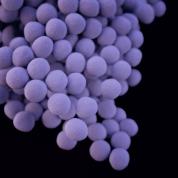
One of the most common causes of food poisoning is the bacterium Staphylococcus aureus, which produces a wide range of toxins, including staphylococcal enterotoxin type E—associated with outbreaks in the United States and other countries.

According to the Centers for Disease Control and Prevention, an estimated 1 in 6 Americans—48 million—get sick, 128,000 are hospitalized and 3,000 die of foodborne diseases each year. Of that group, staphylococcal food poisoning causes an estimated 240,000 illnesses, 1,000 hospitalizations, and 6 deaths annually.

A USDA scientist developed a test that specifically detects Staphylococcus aureus in foods. The new test is faster, more sensitive and less expensive than standard tests.

“The current test detects active toxin only 50 percent of the time compared to the test, which detects it 99 percent of the time,” says Reuven Rasooly, a chemist with the USDA’s Agricultural Research Service (ARS). “The new test also detects toxins within 5 hours compared to 48 to 72 hours for other tests.”

In addition, Rasooly said the new test can distinguish between active toxin, which poses a threat to public health, and inactive toxin, which does not. It can be used by food makers to help keep products safer before they’re sold and by public health officials to trace the source of foodborne outbreaks.

The test, which specifically targets Staphylococcus aureus, is not commercially available. ARS has applied for a patent for this technology and plans to use it to develop additional tests that detect other foodborne toxins that make people sick.

For food consumer resources on keeping your Fourth of July celebrations safe, visit USDA’s Food Safety and Inspection Service for a variety of tips.

Research – Survival and growth of Listeria monocytogenes and Staphylococcus aureus on conventional and low‐sodium bacon—A short communication

Wiley Online

Abstract

This study was focused on determining survival and growth characteristics of Listeria monocytogenes and Staphylococcus aureus on conventional (16.7 mg of sodium/g) and low‐sodium (10.7 mg of sodium/g) bacon. The two types of bacon were inoculated with the either L. monocytogenes or S. aureus stored at 4, 12, or 25°C for up to 7 days. Populations of L. monocytogenes and S. aureus did not change significantly on bacon stored at 4 and 12°C, regardless of sodium content. L. monocytogenes remained at 1.0–1.5 log cfu/g of conventional bacon stored at 25°C for 7 days but increased to 3.5 log cfu/g on low‐sodium bacon stored for 4 days. Within 1 and 3 days at 25°C, S. aureus increased, respectively, to 4.5 log cfu/g and 7.3 log cfu/g of low‐sodium bacon. Within 7 days at 25°C, populations increased to 8.1 log cfu/g of low‐sodium bacon and 3.7 log cfu/g of conventional bacon. This study shows that L. monocytogenes can grow on low‐sodium bacon stored at 25°C. S. aureus can grow on bacon stored at 25°C, regardless of sodium content, but the presence of 16.7 mg of sodium/g, compared to 10.7 mg/g, retards the rate of growth.

Practical applications

At 25°C, L. monocytogenes and S. aureus grew more rapidly on low‐sodium bacon than on conventional bacon. Low‐sodium bacons increase concern for microbiological safety.

  • Storage of conventional and low‐sodium bacon at 25°C enables growth of both pathogens.
  • Appropriate temperature for storage is more critical to enhance the microbiological safety of bacons rather than amount of sodium added.

Iceland – 4 STEC infections in Árnessýsla county children

Outbreak News Today

kswfoodworld E.coli O157

Image CDC


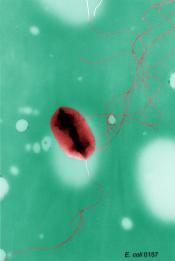
Iceland health officials have reported four pediatric Shiga-toxin-producing E. Coli (STEC) cases. Officials say all the children are from the capital of Reykjavik; however, all have probably been infected in Árnessýsla county or, more specifically, in Bláskógabyggð.

The source of the infection is unknown at this time. The Icelandic Food and Veterinary Authority and the South Iceland Health Inspectorate are now working to analyze the origin of the infections and stop further spread.

RASFF Alerts – E.coli – Live Oysters – Spiny Dye Murex Sea Snails – Live Clams

RASFF-Logo

RASFF – too high count of Escherichia coli (1400 MPN/100g) in live oysters from France in France

RASFF – too high count of Escherichia coli (8900 CFU/100g) in spiny dye-murex sea snails from Italy in Spain

RASFF – too high count of Escherichia coli (330 MPN/100g) in live clams (Chamelea gallina) from Italy in Italy

RASFF Alerts – STEC E.coli – Chilled Beef

RASFF-Logo

RASFF – shigatoxin-producing Escherichia coli (O104:H4 stx1+, stx2+) in chilled beef from Uruguay in Spain

RASFF – shigatoxin-producing Escherichia coli (O26 /25g) in chilled beef (tapa de cuadril) from Uruguay in Spain

RASFF Alert – Ochratoxin A – Raisins

RASFF-Logo

RASFF – ochratoxin A (21.5 µg/kg – ppb) in raisins from Uzbekistan, via Lithuania in he Czech Republic

RASFF Alerts – Aflatoxin – Groundnuts – Organic Maize -Pistachios – Tiger Nuts

RASFF-Logo

RASFF – aflatoxins (B1 = 6.0 µg/kg – ppb) in groundnuts with shell from Egypt in Germany

RASFF – aflatoxins (Tot. = 8.9 µg/kg – ppb) in groundnuts from Argentina in the Netherlands

RASFF – aflatoxins (B1 = 15.8; Tot. = 16.6 µg/kg – ppb) in organic maize for pop corn from Italy in Italy

RASFF – aflatoxins (B1 = 16.2 µg/kg – ppb) in roasted pistachios from Turkey in Germany

RASFF – aflatoxins (B1 = 186; Tot. = 326 µg/kg – ppb) in dried tiger nuts from Burkina Faso in Spain

RASFF – aflatoxins (B1 = 90.6; Tot. = 181.3 / B1 = 19.4; Tot. = 27.8 µg/kg – ppb) in pistachio nuts from Turkey in Italy

RASFF – aflatoxins (B1 = 17; Tot. = 25 µg/kg – ppb) in groundnuts from Argentina in the Netherlands

RASFF Alert – Animal Feed – Aflatoxin – Groundnuts

RASFF-Logo

RASFF – aflatoxins (B1 = 140; Tot. = 160 µg/kg – ppb) in groundnuts from Sudan in the Netherlands