Category Archives: Food Toxin

Denmark – Patulin in applesauce

DVFA

Rynkeby Foods A/S is recalling a batch of Brämhults Pressed Æblemost due to an excessively high content of the toxin patulin in the product.

Recalled Foods , Published: September 9, 2022

​Which food:
Brämhults Pressed Cider (see picture here )
Net content: 850 mL
Best before date: 14.10.2022

Sold in:
Kvickly in Holte and Taastrup, SuperBrugsen in Trekoner and Ullerød, Min Købmand in Frederiksberg and in Meny stores in Zealand .

Company that is recalling:
Rynkeby Foods A/S, Vestergade 30, 5750 Ringe

Reason:
The company has established that there is an excessively high content of the toxin patulin in the product.

Risk:
A health risk cannot be ruled out. If you have questions about illness and symptoms or if you feel unwell, you can contact your own doctor or the doctor on call.

Advice for consumers:
The Danish Veterinary and Food Administration advises consumers to return the product to the store where it was purchased, or to discard it.
Luxembourg – REMINDER: TELLINES – BULK SALE ON FISH STALL- DSP

SAP

Presence of lipophilic toxins (DSP) exceeding the regulatory health threshold

Auchan is recalling the following product

Last name Tellines (medium and large)
Mark Unbranded – Bulk Sale
Sale period from September 7 to 9, 2022

Danger  : Presence of lipophilic toxins (DSP) exceeding the regulatory health threshold

DSP toxins cause intoxication in the consumer, the effects of which appear within 2 to 18 hours after ingestion of the contaminated shellfish. The main symptoms are gastrointestinal: diarrhea, nausea, vomiting, abdominal pain, and chills.

Sale in Luxembourg by: Auchan on a fish stall

A sale by other operators cannot be excluded.

Source of information: Auchan recall notification

Communicated by: Government Commission for Quality, Fraud and Food Safety .

USA – FSIS Issues Public Health Alert For Specific Ground Beef In HelloFresh Meal Kits Due to Possible E. Coli O157:H7 Contamination

FSIS USDA

The U.S. Department of Agriculture’s Food Safety and Inspection Service (FSIS) is issuing a public health alert due to concerns that ground beef products in HelloFresh meal kits may be associated with Escherichia coli (E. coli) O157:H7 illness. A recall was not requested because the products are no longer available for purchase.

The meal kits containing ground beef for this public health alert were shipped to consumers from July 2-21, 2022. The following products are subject to the public health alert [view label]:

  • 10-oz. plastic vacuum-packed packages containing “GROUND BEEF 85% LEAN/15% FAT” with codes “EST#46481 L1 22 155” or “EST#46481 L5 22 155” on the side of the packaging.

The ground beef packages bear “EST.46841” inside the USDA mark of inspection and on the plastic ground beef package.

FSIS, the Centers for Disease Control and Prevention, and state public health partners are investigating an outbreak of E. coli O157:H7 and raw ground beef is the probable source of the reported illnesses. Traceback information identified that multiple case-patients received ground beef produced at establishment M46841 and distributed by HelloFresh in meal kits from July 2-21, 2022. Traceback of materials used to produce the ground beef is ongoing and FSIS continues to work with suppliers and public health partners on the investigation.

FSIS is concerned that some product may be in consumers’ freezers. Consumers who have purchased these products are urged not to consume them. These products should be thrown away.

FSIS advises all consumers to safely prepare their raw meat products, including fresh and frozen, and only consume ground beef that has been cooked to a temperature of 160 F. The only way to confirm that ground beef is cooked to a temperature high enough to kill harmful bacteria is to use a food thermometer that measures internal temperature, https://www.fsis.usda.gov/safetempchart.

Media and consumers with questions regarding the public health alert can contact hello@hellofresh.com or by live chat.

Consumers with food safety questions can call the toll-free USDA Meat and Poultry Hotline at 888-MPHotline (888-674-6854) or live chat via Ask USDA from 10 a.m. to 6 p.m. (Eastern Time) Monday through Friday. Consumers can also browse food safety messages at Ask USDA or send a question via email to MPHotline@usda.gov. For consumers that need to report a problem with a meat, poultry, or egg product, the online Electronic Consumer Complaint Monitoring System can be accessed 24 hours a day at https://foodcomplaint.fsis.usda.gov/eCCF/.

Product Images

Company Contact Information

COMPANY MEDIA CONTACT
Company Media Contact

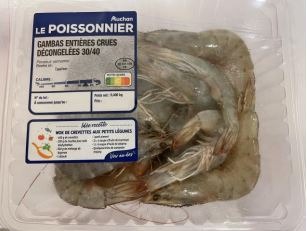
FranceWhole raw thawed king prawns Auchan Le Poissonnier – vibrio vulnificus

Gov france

Identification information of the recalled product

  • Product category Feed
  • Product subcategory Fishery and aquaculture products
  • Product brand name Auchan Le Poissonnier
  • Model names or references400g trays
  • Identification of products
    GTIN Batch Date
    3254562419603 Lot 36890 Use-by date 08/09/2022
    3254562419603 Lot 37169 Use-by date 09/14/2022
  • Products ListPoster_crev_floes.pdfAttachment
  • Packaging400g tray
  • Marketing start/end date From 30/08/2022 to 08/09/2022
  • Storage temperature Product to be stored in the refrigerator
  • Health mark FR 56 121 179 EC
  • Geographic area of ​​sale Whole France
  • Distributors Auchan hypermarket

Practical information regarding the recall

  • Reason for recall Vibrio vulnificus
  • Risks incurred by the consumer Vibrio vulnificus

Research – Underreported Human Exposure to Mycotoxins: The Case of South Africa

MDPI

South Africa (SA) is a leading exporter of maize in Africa. The commercial maize farming sector contributes to about 85% of the overall maize produced. More than 33% of South Africa’s population live in rural settlements, and their livelihoods depend entirely on subsistence farming. The subsistence farming system promotes fungal growth and mycotoxin production. This review aims to investigate the exposure levels of the rural population of South Africa to dietary mycotoxins contrary to several reports issued concerning the safety of South African maize. A systematic search was conducted using Google Scholar. Maize is a staple food in South Africa and consumption rates in rural and urban communities are different, for instance, intake may be 1–2 kg/person/day and 400 g/person/day, respectively. Commercial and subsistence maize farming techniques are different. There exist differences influencing the composition of mycotoxins in food commodities from both sectors. Depending on the levels of contamination, dietary exposure of South Africans to mycotoxins is evident in the high levels of fumonisins (FBs) that have been detected in SA home-grown maize. Other potential sources of exposure to mycotoxins, such as carryover effects from animal products and processed foods, were reviewed. The combined effects between FBs and aflatoxins (AFs) have been reported in humans/animals and should not be ignored, as sporadic breakouts of aflatoxicosis have been reported in South Africa. These reports are not a true representation of the entire country as reports from the subsistence-farming rural communities show high incidence of maize contaminated with both AFs and FBs. While commercial farmers and exporters have all the resources needed to perform laboratory analyses of maize products, the greater challenge in combatting mycotoxin exposure is encountered in rural communities with predominantly subsistence farming systems, where conventional food surveillance is lacking.

Research – Aflatoxins Contamination in Raw and Roasted Cashew nuts in Mtwara, Tanzania

AJMR

The aim of this work was to determine the contamination levels of raw and roasted cashew nuts sold in Masasi and Newala districts of Mtwara region in Tanzania. A total of 60 samples including 40 roasted (24 samples from Newala and 16 from Masasi) and 20 raw samples (12 from Newala and 8 from Masasi) were collected. Determination of total aflatoxins levels in raw and roasted cashew nuts samples was carried out by immune affinity high performance liquid chromatography (HPLC). The levels of contamination ranged from not detected (less than Limit of Quantification) to 3.29 µg/kg for both aflatoxin B1 and total aflatoxin in the cashew nuts samples. None of the samples had total aflatoxins contamination greater than the recommended maximum residues of 4 µg/kg set by European Commission (2010) or 10 µg/kg set by FAO and WHO (1995). About a quarter (38%) of the samples had total aflatoxins less than limit of quantification. All roasted cashew nut samples were found to have total aflatoxins less than 3 µg/kg while about 86% of raw cashew nut samples had total aflatoxins less than 3 µg/kg.

Canada – Bonvallis brand Nevat (cheese) recalled due to generic E. coli

CFIA

Summary

Product
Nevat (cheese)
Issue
Food – Microbial Contamination – E. Coli – non-pathogenic
What to do

Do not use, sell, serve or distribute the affected product.

Audience
Retail

Affected products

Bonvallis brand Nevat (cheese) recalled due to generic E. coli.

The recalled product was sold in Quebec.

RASFF Alerts – E.coli – Mussels

RASFF

High count of Escherichia coli in mussels from France in Spain

RASFF Alert – Shellfish Toxins – Oysters

RASFF

Azaspiracid toxins above the regulatory limit in oysters from Ireland in France

RASFF Alert – Histamine- Frozen Indian Mackerel

RASFF

Histamine in frozen Indian mackerel from Vietnam in Sweden and Denmark