Ochratoxin A in chillies seasoning via Germany in Switzerland
Ochratoxin A in organic raisins from Uzbekistan in Austria and Germany

Ochratoxin A in chillies seasoning via Germany in Switzerland
Ochratoxin A in organic raisins from Uzbekistan in Austria and Germany
Posted in food contamination, Food Hazard, Food Hygiene, Food Inspections, Food Micro Blog, Food Microbiology, Food Microbiology Blog, Food Microbiology Testing, Food Poisoning, food recall, Food Safety, Food Safety Alert, Food Testing, Food Toxin, Mold Toxin, Mould Toxin, Mycotoxin, Ochratoxin, RASFF
Escherichia coli shiga toxin-producing in Reblochon cheese from France in Austria and Germany
E.coli STEC (Stx+) in veal meat from Belgium, Czech Republic, Germany, Greece, Hungary, Italy, Portugal, Slovenia and Spain.
Escherichia coli (STEC) in frozen lamb loins from New Zealand in Italy
Posted in E.coli, escherichia coli, food contamination, Food Hazard, Food Hygiene, Food Inspections, Food Micro Blog, Food Microbiology, Food Microbiology Blog, Food Microbiology Testing, Food Pathogen, Food Poisoning, food recall, Food Safety, Food Safety Alert, Food Testing, Food Toxin, STEC, STEC E.coli, STX 1, STX 2
Aflatoxins in Indian Groundnut Kernels in the Netherlands
Aflatoxins in shelled pistachios from the USA in Italy
Aflatoxins in nutmeg from Indonesia in the Netherlands
Aflatoxins in groundnuts from Argentina in the Netherlands
Too much Aflatoxin B1 in peanut butter from United States in Finland
Aflatoxins in Brazil nuts from Peru in the Netherlands
Aflatoxins in Organic Nicaraguan Peanuts in the Netherlands
Aflatoxins in peanuts from USA in Bulgaria
Aflatoxins in organic Paraguay peanuts in the Netherlands
Posted in Aflatoxin, food contamination, Food Hazard, Food Hygiene, Food Inspections, Food Micro Blog, Food Microbiology, Food Microbiology Blog, Food Microbiology Testing, Food Poisoning, food recall, Food Safety, Food Safety Alert, Food Testing, Food Toxin, Mold Toxin, Mould Toxin, Mycotoxin, RASFF
Presumptive Bacillus cereus in ground ginger from Niger in France
Histamine in mackerel from Netherlands in Austria, Belgium, Czech Republic, Estonia, Germany, Lithuania, Netherlands and USA
Smoked salmon – Listeria monocytogenes from Lithuania in France and Belgium
Listeria monocytogenes in ready-to-eat smoked roast beef from Poland in Germany
Listeria monocytogenes in bacon pizza topping and cooked sliced ham from Ireland in Northern Ireland

| GTIN | Lot | Dated |
|---|---|---|
| 3330180039536 | T21221 | Use-by date 09/08/2021 |

| GTIN | Lot | Dated |
|---|---|---|
| 3000014760201 | 200312F – 150 gr vacuum tray | Date of minimum durability 03/15/2022 |
| 200312F – Vacuum bag of 500 gr | Date of minimum durability 03/15/2022 | |
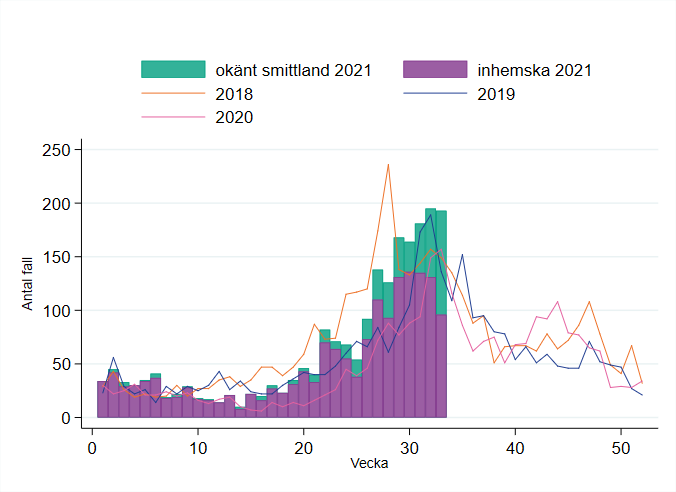
In recent weeks, the number of people who have contracted campylobacter infection has been higher than in previous weeks. The increase has been seen throughout the country and in all age groups. The period has been preceded by an increased proportion of broiler flocks carried on campylobacter (Swedish Veterinary Institute (SVA). Previous studies have shown that cases of disease are often linked to raw chicken meat, which makes it likely that increased prevalence of campylobacter in chicken flocks is the cause. In the next few weeks, the Swedish Public Health Agency will collect samples from the disease cases for analysis and typing as part of the microbiological monitoring program in order to identify the presence of common sources of infection.
Figure. The number of reported cases of campylobacter infection per week during 2021 to week 33 (until 2021-08-23, week 33 is incomplete) and for the years 2018-2020, for cases infected in Sweden and cases with unknown country of infection.
Posted in Campylobacter, food bourne outbreak, food contamination, Food Hazard, Food Hygiene, Food Inspections, Food Micro Blog, Food Microbiology, Food Microbiology Blog, Food Microbiology Research, Food Microbiology Testing, Food Pathogen, food recall, Food Safety, Food Safety Alert, Food Testing, foodborne outbreak, foodbourne outbreak, outbreak
Matvælastofnun warns against consuming one batch of chicken marked Ali, Bónus or FK from Matfugl due to suspicion of salmonella. For security reasons, the company has decided to recall the batch and issue a press release.
Matvælastofnun received information about the recall from the company and notified the health inspectorate.
The recall only applies to the following batch:
Consumers who have bought chicken with this traceability number are asked to return it to the relevant store or directly to Matfugl in Mosfellsbær.


