Category Archives: Food Safety Alert

USA – Whatcom County Beaches Closed Due to Paralytic Shellfish Poisoning

Food Poisoning Bulletin

According to a press release from the Whatcom County Health Department, Whatcom County beaches have been closed to recreational shellfish harvest because the paralytic shellfish poisoning (PSP) biotoxin has reached unsafe levels in molluscan shellfish in Drayton Harbor.

USA – Ravioli with E. coli recalled

Food Poison Journal

The U.S. Department of Agriculture’s Food Safety and Inspection Service (FSIS) is issuing a public health alert because approximately 70 pounds of raw beef ravioli products, produced by P&S Ravioli Company, a Philadelphia, Pa. establishment, may be contaminated with E. coli O157:H7. A recall was not requested because the affected product is no longer available for purchase.


USA – Wild Harvest® Basil Recalled for Cyclospora Parasite Contamination

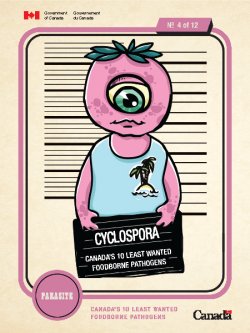
Daily Hornet cardcyclosporasme

United Natural Foods, Inc. (UNFI) recalled Wild Harvest® Organic Basil that was distributed from a facility in Hopkins, Minnesota, because it may be contaminated with Cyclospora parasites.

No illnesses or allergic reactions involving this product have been reported. It was distributed by SuperValu Inc., a subsidiary of UNFI.

The recall involves Wild Harvest® Organic Fresh Basil products sold in .25oz, .75oz, 2oz, and 4oz plastic clam shell containers (UPCs: 0071153550450, 0071153550322, 0071153550762, 0071153550323).

The product can be identified by a white sticker with black ink on the back of the container stating: “Product of Colombia” and “112.”

UNFI issued the recall voluntarily after the Cyclospora cayetanensis parasite was detected during routine sampling.

Infections with this parasite can cause a gastrointestinal illness called cyclosporoasis that is not usually life-threatening, according to the U.S. Centers for Disease Control and Prevention (CDC).

The symptoms may include watery diarrhea, loss of appetite, weight loss, cramping, bloating, increased gas, nausea or fatigue. Less common symptoms include vomiting and a low-grade fever.


Switzerland – Hospital Listeria cases linked to cheese in Switzerland; one death reported

Food Safety News

Four patients have been infected by Listeria and one has died after eating potentially contaminated cheese at a hospital in Switzerland.

During an internal check, Käserei Vogel AG, based in Steinerberg, found Listeria in semi-hard cheese and at its production site. The company issued a recall and informed its buyers to remove the products from shelves.

One of the buyers is a supplier to the Center Hospitalier du Valais Romand (CHVR). This supplier told the CHVR purchasing manager on April 30 about the problem. He instructed the immediate withdrawal of implicated cheeses. The last delivery was April 8, but it has not been ruled out that previous lots were also contaminated.

Australia – Juicy Isle Pty Ltd — Organic Pure Tassie – Apple and Blackcurrant 350mL and 1.5L, Apple 350mL and 1.5L, Apple and Ginger 1.5L, Apple and Raspberry 350mL and 1.5L

FSANZ

Photograph of Organic Pure Tassie Juice Range

What are the defects?

The recall is due to microbial (mycotoxin patulin) contamination

What are the hazards?

Food products containing mycotoxin (patulin) may cause illness if consumed.

What should consumers do?

Consumers should not drink this product and should return the products to the place of purchase for a full refund.

For further information, please contact Juicy Isle Pty Ltd by phone on 03 6274 5999 or via www.Juicyisle.com.au

New Zealand – Shellfish biotoxin alert – Nydia Bay in the Pelorus Sound

MPI

The Ministry for Primary Industries (MPI) today issued a public health warning advising the public not to collect or consume shellfish harvested from all of Nydia Bay in the Pelorus Sound.

Routine tests on shellfish samples taken from this region have shown levels of Paralytic Shellfish Poisoning (PSP) toxins above the safe limit of 0.8 mg/kg set by MPI. Anyone eating shellfish from this area is potentially at risk of illness.

Pāua, crab and crayfish may still be eaten if the gut has been completely removed prior to cooking, as toxins accumulate in the gut. If the gut is not removed its contents could contaminate the meat during the cooking process.

Symptoms typically appear between 10 minutes and 3 hours after ingestion and may include:

  • numbness and a tingling (prickly feeling) around the mouth, face, and extremities (hands and feet)
  • difficulty swallowing or breathing
  • dizziness
  • headache
  • nausea
  • vomiting
  • diarrhoea
  • paralysis and respiratory failure and in severe cases, death.

If anyone becomes ill after eating shellfish from an area where a public health warning has been issued, phone Healthline for advice on 0800 61 11 16, or seek medical attention immediately. You are also advised to contact your nearest public health unit and keep any leftover shellfish in case it can be tested.

Monitoring of toxin levels will continue and any changes will be communicated accordingly. Commercially harvested shellfish – sold in shops and supermarkets, or exported – is subject to strict water and flesh monitoring programmes by MPI to ensure they are safe to eat.

Belgium – Salmonella – Euro Ei BV recalled Product: Ovyta brand liquid egg white

AFSCA

During an internal control, the presence of Salmonella was noted in the liquid white egg product bearing the expiry date of 21/09/2020 .

In consultation with the AFSCA, the manufacturer therefore decided to withdraw the product concerned from sale and to recall it to consumers.

Customers who bought this product are advised not to consume it and bring it back to the store, where it will be refunded. In the meantime, all stores have removed the affected products from the shelves.

PRODUCT DESCRIPTION

  • Name: Ovyta liquid egg white (500ml)
  • Use by date (DLC): 09/21/2020
  • Sales period: from 7/05/2020 to 11/05/2020 included
  • Item number: 18961
  • Lot number: 20183
  • Barcode: 05412671117904

This product was offered for sale via the following stores: Colruyt, Okay and Okay Compact.


Research – Study reveals foodborne illness burden in Taiwan

Food Safety News

One in six Taiwanese people suffered from foodborne illness annually during a four year period studied by researchers.

From 2012 to 2015, almost 3.9 million foodborne illnesses and 50 deaths occurred annually in the country.

Scientists said the study, published in the Journal of the Formosan Medical Association, provided the first national estimates on the disease burden from foodborne illnesses in Taiwan.

Among just more than half of foodborne illnesses cases with identifiable causal microorganisms, non-typhoid Salmonella, norovirus, and Vibrio parahaemolyticus were leading pathogens.

Foodborne illnesses caused a substantial financial disease burden, with a medical cost up to NT $1.3 billion (U.S. $43,400) annually.

India -Three truckers stranded for 50 days die of ‘food poisoning’ in Odisha

The Hindu

Three truck drivers, stranded on the road for 50 days owing to the lockdown, died allegedly of food poisoning in Odisha’s Dhenkanal district, 70 km from here on Friday.

On March 18, the three, hailing from Bihar, had come to collect spirit from the Dhenkanal-based Shakti Sugars Limited for a liquor manufacturing factory in Khordha district of Odisha.


Canada -Raw Beef and Veal Recall For E. coli O157:H7 in Canada Updated

Food Poisoning Bulletin

The food recall warning for raw beef and veal for E. coli O157:H7 in Canada that was issued on October 17, 2020 and many other dates has been updated with more information. This information was discovered during the Canadian Food InspectionAgency’s food safety investigation. The investigation has been closed.

You can see the long list of recalled products at the CFIA web site. The products include beef bone-in hind shank, beef back ribs, fresh beef, choice grain-fed veal scallopine (frozen), ground beef, boneless veal shank, flat iron, rump roast, beef liver, beef top sirloin, and boneless beef brisket, among others.