Category Archives: Food Poisoning

Germany – Semi-hard cheese: “House brand dill”, “House brand cumin”, “House brand black cumin”, “House brand pumpkin seeds”, “House brand caraway”, “House brand chives”, “House brand garlic” – STEC E.coli

LMW

Alert type:

Groceries

Date of first publication:

September 26, 2023

Product name:

Semi-hard cheese: “House brand dill”, “House brand cumin”, “House brand black cumin”, “House brand pumpkin seeds”, “House brand caraway”, “House brand chives”, “House brand garlic”

Manufacturer (distributor):

Achim Uhl Mobile cheese dairy Hartensteiner Straße 105 OT Oberdorf 09366 Stollberg DE SN 10682 EG

Reason for warning:

The above-mentioned products are classified as harmful to health due to the detection of verotoxin-producing Escherichia coli in the brine and lubricating water used for production.

Packaging Unit:

1.7 – 2 kg/piece, 5 – 6 kg/piece (large)

Durability:

House brand Dill: October 1st, 2023, October 12th, 2023, October 19th, 2023, October 22nd, 2023; House brand with dill (large): October 12, 2023; House brand cumin: October 19, 2023; House brand black cumin: October 5th, 2023/ October 12th, 2023; House brand pumpkin seeds: October 12, 2023; House brand Kümmel: October 12, 2023; House brand chives: October 12, 2023; House brand garlic: October 14, 2023.

Additional Information:

An illness with verotoxin-producing Escherichia coli usually manifests itself within a week of infection with diarrhea and abdominal cramps. In particular, infants, small children, seniors and people with weakened immune systems can develop more severe illnesses with bloody diarrhea. Rarely, especially in small children, acute kidney failure can occur in a second attack a few days after the onset of diarrhea. People who have eaten this food and develop severe or persistent symptoms should seek medical attention and report a possible EHEC infection.

The above-mentioned cheeses may also have been sold differently from the manufacturer by other distributors (possibly partly direct marketers) and possibly also with different cheese names, so that identification should be carried out in particular using the identification mark (DE SN 10682 EG), or this can be done by the be asked from sellers.

Customers should definitely pay attention to the recall and not consume the affected products.
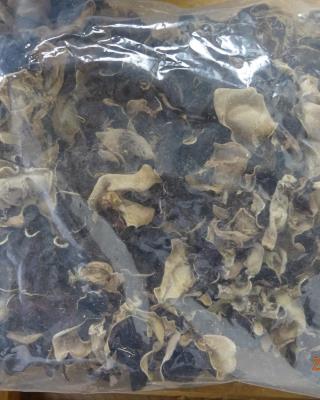
Czech Republic – Judas’ ear – Bacillus cereus

Potravinynapranyri

Illustrative photo #2

Place of inspection:
Prague (building no. XB2b/4) ( Libušská 319/126, 142 00 Prague (building no. XB2b/4) )
ID: 04936035
Invalid parameter:

Bacillus Cereus

The presence of the pathogenic bacterium Bacillus Cereus was detected in the food  . The food was assessed as unfit for human consumption. 

Best before date: HSD 01 04 25
Packaging: PE + weld
Quantity of the product in the package: 1 kg
Distributor: Vihafood s.r.o., Novodvorská 95/42, Lhotka 142 00 Prague
Country of origin:  Vietnam
Date of sample collection: 24. 7. 2023
Reference number: 23-000610-SZPI-CZ
The sample was detected by the official control of the State Agricultural and Food Inspection.

Japanese boxed meal maker banned from operations over food poisoning

English News

TOKYO, Sept. 25 (Xinhua) — A boxed meal maker in northeastern Japan has been banned by public health authorities from operating due to hundreds of food poisoning cases caused by its products, local media reported.

Yoshidaya, a local maker of boxed meals, commonly known as “bento” in Japanese, voluntarily suspended operations starting Sunday, after being banned from operations on Saturday by public health authorities in Aomori Prefecture.

Nearly 300 people from 24 prefectures in the country, more than half the number of prefectures across Japan, reported symptoms such as diarrhea and vomiting after eating bento meals supplied by the company based in Hachinohe city, Aomori Prefecture.

The number of patients might further increase, a public health official in Hachinohe said.

Staphylococcus aureus and Bacillus cereus, which cause food poisoning, were detected in the feces of the patients who ate bento meals as well as unopened products made by the company, Japan’s Jiji Press reported, citing Hachinohe public health officials.

Denmark – Bacillus cereus in cheese dip

Foedevarestyrelsen

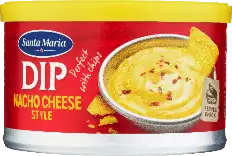
Paulig Denmark A/S is recalling Santa Maria Dip Nacho Cheese Style, as Bacillus cereus bacteria have been found in the product. The product should be discarded or returned to the store where it was purchased.

Image of the product

Which food is recalled

Santa Maria Dip Nacho Cheese Style
Net content: 250g
Best before dates: From 01.06.2025 to 31.08.2025

Where is the product sold

The product is sold in grocery stores throughout the country.

Why is the product being recalled?

The bacterium Bacillus cereus has been detected in the product. The symptoms of infection with the bacteria are typically vomiting or diarrhea.

What should you do as a consumer?

The Danish Veterinary and Food Administration advises consumers to return the product to the store where it was purchased, or discard it.

If you experience symptoms in connection with consuming the product, you should contact your own doctor.

Who recalls the product

Paulig Denmark A/S
Ringager 2A
2605 Brøndby

Norway – Santa Maria recalls Cheddar Cheese Sauce and Dip Nacho Cheese Style after discovery of food poisoning bacteria – Bacillus cereus

Matportalen

Santa Maria is recalling Cheddar Cheese Sauce and Dip Nacho Cheese Style due to the discovery of the food poisoning bacteria Bacillus Cereus. The recall includes Cheddar Sauce with best before dates from 01/06/24 to 08/31/2024, and Dip Nacho Cheese Style with best before before dates from 01/06/2025 to 31/08/2025.

Cheddar Cheese Sauce is sold to the large household market, while Dip Nacho Cheese Style is sold to Coop Norge, NorgesGruppen and Rema 1000 stores.

Santa Maria Norway asks consumers who have purchased the product to throw it away, or return it to the store where it was purchased for a refund.

Food poisoning caused by Bacillus cereus can cause both vomiting and diarrhoea. Bacillus cereus is a commonly occurring bacterium in soil. The bacterium is most often found in foods where the raw materials are eggs, milk, meat, rice or cereal products. The bacteria can survive cooking because it forms spores.

Vomiting is caused by a toxin produced by the bacteria in the food, while diarrhea is caused by toxins produced in the intestine after the bacterium has established itself there.

Contact:
Santa Maria Norway: Press contact Stian Hvaal Møller, tel.: 91 55 69 69

RASFF Alert- Ochratoxin A – Sultanas

RASFF

Ochratoxin A in sultanas from Türkiye in Slovenia and Italy

RASFF Alerts- Aflatoxin – Peanuts- Hazelnuts – Almonds

RASFF

Aflatoxins in U.S.A. peanuts in the Netherlands

RASFF

AFLATOXINS IN SHELLED HAZELNUTS FROM GEORGIA in Italy

RASFF

High count of moulds and aflatoxins in shelled almonds from the United States in Italy

RASFF Alert- Histamine – Tuna

RASFF

Histamine in tuna, from Sri Lanka in the Netherlands

RASFF Alert – Staphylococcal Enterotoxin in Raw milk Cheese

RASFF

Staphylococcal enterotoxin in raw milk cheese from Switzerland in Germany

RASFF Alert- Lipophilic Toxin – Mussels

RASFF

Presence of lipophilic toxin detected in mussels from France in Switzerland