Category Archives: Food Poisoning

Switzerland – Pathogenic bacteria in food

BLV

The main pathogenic bacteria in food are Campylobacter and Salmonella. But Listeria in cheese and enterohemorrhagic Escherichia coli (ECEH) bacteria in young shoots have also made headlines in recent years.

Räucherfisch

Current

Smoked fish, what are the health risks?

04/16/2021 – Smoked fish are popular specialties in Switzerland. Consumed without cooking, they can become a food safety concern if hygiene rules are not respected during processing.

An assessment of the dietary risks associated with smoked fish was carried out as part of a pilot study in collaboration with the Office for Consumer Affairs of the canton of Vaud.

The study did not reveal any major risk, but follow-up should be ensured in order to maintain a high level of food safety and quality. The cantonal authorities concerned will keep this topic in their monitoring program and the FSVO plans to carry out a more detailed assessment.
Eingefärbtes rasterelektronisches Bild von Campylobacter jejuni

The prevention of infections with food germs of bacterial origin requires careful observance of simple hygiene rules in the kitchen .

Likewise, it is very important to wash your hands after coming into contact with animal products, as Campylobacter, Salmonella, Listeria and EHEC are transmitted from animals to humans. These diseases are called zoonoses.

Campylobacter

Infection with Campylobacter bacteria is the most common zoonosis in Switzerland, as in other European countries. It is the cause of gastrointestinal diseases in humans. The illness can last for about a week and in some circumstances may require hospitalization.

Campylobacter infection is characterized by abdominal pain, watery or bloody diarrhea, and an increase in temperature. Vomiting and high fever can also occur.

Infection is caused by contaminated food that has not been sufficiently cooked before consumption or that has come into direct contact with animals. In southern countries, contaminated water sources also represent a significant risk. The main source of infection, however, remains poultry meat.

According to data from the Federal Office of Public Health (OFSP), there are around 1,000 cases of Campylobacter infections each year. All patients do not consult their doctor, this figure is actually much higher. Overall, the number of cases has grown steadily over the past few years to reach around 7,500 during the year 2014.

Prevent Campylobacter infections

Campylobacter bacteria can survive in food, but cannot multiply there. Since contamination by Campylobacter does not affect foodstuffs, it is not possible to identify their presence by smell or appearance.

Campylobacter can be safely eliminated by thoroughly cooking the food at 70 ° C for at least 2 minutes by roasting, cooking or pasteurization. Freezing the food reduces the number of Campylobacter, without eliminating them completely.

Salmonella

Salmonella infection is most often manifested by inflammatory bowel disease with sudden onset of diarrhea, nausea, vomiting, fever, headache and abdominal pain. Salmonella infections are subject to notification .

They usually occur by ingesting contaminated food. The danger comes mainly from poultry, eggs, egg preparations, unpasteurized milk and meat products. Contamination through other animal products, utensils used, water, humans, etc. can occur throughout the food manufacturing process.

Prevent salmonellosis  

Salmonella infections are fought on two levels:

  1. the number of infected domestic animals should be reduced; 
  2. contamination of food with salmonella must be avoided and their multiplication stopped.

Listeria

In people without weakened immune systems, a Listeria infection is usually accompanied by mild symptoms or even no symptoms at all. People who are immunocompromised can experience a variety of serious symptoms, the outcome of which can be fatal. During pregnancy, a Listeria infection can lead to miscarriage or cause a child to have sepsis or meningitis when it is born.

Listeria transmission is caused by the ingestion of contaminated raw food, mainly of animal origin: meat, smoked fish, cold cuts, soft cheese. Transmission through contact with infected animals is rarer.

Prevent listeriosis  

In the first place, the general rules of hygiene should be observed when in contact with food and animals. Pregnant women and people with weakened immune systems should in particular avoid raw vegetables, raw or undercooked meat as well as raw fish and seafood, soft cheese and cheese made from unpasteurized milk. .

Enterohemorrhagic Escherichia coli (EHEC)

The majority of people infected with EHEC have abdominal pain accompanied by cramping, a short-term fever followed by intestinal colic which becomes violent, and slightly bloody hemorrhagic diarrhea. In a minority of people, only watery diarrhea is observed. Cases of EHEC infections are very rare in Switzerland. The mortality rate reaches 3 to 5%.

Escherichia coli bacteria naturally belong to our intestinal flora. EHECs are a pathogenic line of these generally harmless bacteria. Infection occurs first by consuming contaminated animal foods, mainly undercooked ground beef and unpasteurized dairy products. Contaminated drinking water, young shoots, potatoes and unpasteurized apple juice can, for example, also contain EHEC. More rarely, cases of transmission of EHEC are observed through contact with animals or animal faeces.

Prevent EHEC infections

Since a very small number of infectious agents is enough to get sick, it is important to follow the general rules of hygiene. It is therefore strongly recommended to wash your hands thoroughly after having been in contact with animals and to cook the meat thoroughly when preparing meals. Raw food should always be stored in the refrigerator.

Further information

Sweden – Leksand’s crispbread recalls a limited batch of bread due to mold toxins – Ochratoxin A

Livsmedelsverket

Leksands Knäckebröd recalls a limited batch of breads Brown-baked Crispy Round, Brown-saved Crackle Triangle, Mini-square Brown-baked, Round-shaped Normal-baked and Round-browned. Sampling has shown a content of the mold toxin ochratoxin that exceeds the limit value. 

Leksands Knäckebröd recalls a limited batch of Brown-saved Crack Round, Brown-saved Crack Triangle, Minirut Brown-saved, Round-Normal-baked and Round-brown-saved.

Leksands Knäckebröd encourages all customers who have bought the mentioned products with expiration dates 2022-01-09 and 2022-01-10 to throw away the crispbread and contact customer service on the website for compensation. Other best-before dates or other products from Leksands Knäckebröd are not affected.

The recall concerns the products:

Leksand’s Crispbread Brown-baked Crispy Round
Leksand’s Crispbread Brown-baked Crispy Triangle
Leksand’s Crispbread Mini square Brown-baked
Leksand’s Crispbread Round square Normal-baked
Leksand’s Crispbread Round-brown Browned

Best-before date: 2022-01-09 and 2022-01-10

Leksands Knäckebröd apologizes and takes what happened seriously.

Product safety and consumer confidence are of the highest priority and measurements are made continuously. Leksands Knäckebröd cooperates with the National Food Administration to ensure that precautionary measures are followed. Similar cases have not been detected before. Leksands Knäckebröd has taken further measures to ensure that we continue to have a high level of product safety.

Contact:
Customer service https://www.leksands.se/kontakt/reklamationer/
Mail: lb@leksandsbrod.se
Phone number: 0247- 448 00

USA – JBS USA Food Company Recalls Imported Boneless Beef Products Due to Possible E. coli O157:H7 Contamination

USDA

JBS USA Food Company, a Greeley, Colo. firm and Importer of Record, is recalling approximately 4,860 pounds of imported boneless beef products that may be contaminated with E. coli O157:H7, the U.S. Department of Agriculture’s Food Safety and Inspection Service (FSIS) announced today.

The raw, frozen, boneless beef products were imported on or around Nov. 10, 2020 and distributed for further processing. The following products are subject to recall [View Label (PDF Only)]:

  • 60-lb. cardboard boxes containing “95CL BONELESS BEEF PRODUCT OF AUSTRALIA” with “PACKED ON: 02-SEP-20” and Australian “EST. 4” on the packaging label.

The products were shipped to distributors and further processors in New York and Pennsylvania.

The problem was discovered when FSIS collected a routine product sample that confirmed positive for the presence of E. coli O157:H7. There have been no confirmed reports of adverse reactions due to consumption of these products.

Anyone concerned about an illness should contact a healthcare provider. E. coli O157:H7 is a potentially deadly bacterium that can cause dehydration, bloody diarrhea and abdominal cramps 2–8 days (3–4 days, on average) after exposure the organism. While most people recover within a week, some develop a type of kidney failure called hemolytic uremic syndrome (HUS). This condition can occur among persons of any age but is most common in children under 5-years old and older adults. It is marked by easy bruising, pallor, and decreased urine output. Persons who experience these symptoms should seek emergency medical care immediately.

FSIS is concerned that some product may be frozen and in cold storage at distributor or further processor locations. Distributors and further processors who received these products are urged not to utilize them.

FSIS routinely conducts recall effectiveness checks to verify recalling firms notify their customers of the recall and that steps are taken to make certain that the product is no longer available to consumers. When available, the retail distribution list(s) will be posted on the FSIS website at www.fsis.usda.gov/recalls.

FSIS advises all consumers to safely prepare their raw meat products, including fresh and frozen, and only consume whole cuts of beef that have been cooked to a temperature of 145 °F with a 3-minute rest time and ground beef to 160 °F. The only way to confirm that beef is cooked to a temperature high enough to kill harmful bacteria is to use a food thermometer that measures internal temperature, https://www.fsis.usda.gov/safetempchart.

Consumers with questions about the recall can contact Mr. Kim Holzner, Head of JBS Imports, at Kim.Holzner@jbssa.com. Members of the media with questions about the recall can contact Ms. Nikki Richardson, Director of Communications for JBS USA Food Company, at Nikki.Richardson@jbssa.com.

Research – An Overview of Traceback Investigations and Three Case Studies of Recent Outbreaks of Escherichia coli O157:H7 Infections Linked to Romaine Lettuce

Journal of Food Protection

Eurofins Food Testing UK

Leafy greens contaminated with Shiga toxin-producing Escherichia coli (STEC) have continued to cause foodborne illness outbreaks in recent years and present a threat to public health. An important component of foodborne illness outbreak investigations is determining the source of the outbreak vehicle through traceback investigations. The Food and Drug Administration is home to traceback investigation experts that employ a standardized process to initiate, execute, and interpret the results of traceback investigations in collaboration with the Centers for Disease Control and Prevention and state and local partners. Traceback investigations of three outbreaks of STEC infections linked to romaine lettuce in 2018 and 2019 were examined to demonstrate challenges, limitations, and opportunities for improvement. The three outbreaks resulted in a total of 474 illnesses, 215 hospitalizations, and five deaths. These illnesses were linked to the consumption of romaine lettuce from three distinct growing regions in Arizona and California. Some of the challenges encountered included the time it took to initiate a traceback, limited product-identifying information throughout the supply chain, lack of interoperability in record keeping systems, and co-mingling of product from multiple suppliers. These challenges led to time delays in the identification of the farm source of the leafy greens and the inability to identify the root cause of contamination. Implementation of technology enabled traceability systems, testing of these systems, and future regulations to incentivize adoption of traceability systems are some of the initiatives that will help address these challenges by improving traceback investigations and ultimately preventing foodborne illnesses and future outbreaks from occurring.

RASFF Alert – STEC E.coli – Chilled Bovine Meat

European Food Alerts

RASFF

shigatoxin-producing Escherichia coli (eae+, Stx1-, Stx2+ /25g) in chilled bovine meat from Slovenia in Sloveniafood

RASFF Alerts – Aflatoxin – Pistachio Kernels – Pistachios – Groundnuts – Peanuts – Dried Melon Seeds

European Food Alerts

RASFF

aflatoxins (B1 = 36.2; Tot. = 42 µg/kg – ppb) in pistachio kernels from Iran in Poland

RASFF

aflatoxins (B1 = 40.0; Tot. = 43.4 µg/kg – ppb) in pistachios from the United States in Germany

RASFF

aflatoxins (B1 = 19; Tot. = 22 µg/kg – ppb) in groundnuts from India in the Netherlands

RASFF

aflatoxins (B1 = 7.1; Tot. = 8.1 µg/kg – ppb) in peanuts from Argentina in the Netherlands

RASFF

aflatoxins (B1 = 37; Tot. = 45 µg/kg – ppb) in pistachios from the United States in the Netherlands

RASFF

aflatoxins (B1 = 30.8; Tot. = 35.5 µg/kg – ppb) in dried melon seeds from Iran in Germany

Denmark – 33 sick, 19 hospitalized and 3 dead: REMEMBER herbal medicine linked to severe Salmonella outbreak in Denmark

SSI

Salmonella has been found in HUSK Psyllium seed husks, “capsules herbal medicine”. Orkla Care A / S has recalled several products and the authorities are now strongly encouraging people to check whether they have any of the affected HUSK products.

The salmonella outbreak, which the Statens Serum Institut sent out a news item about last week , is becoming increasingly extensive. In the meantime, the type of salmonella in question has been detected in a number of other people.

A total of 33 people aged 2-92 years have been diagnosed with the same type of salmonella. Several are seriously affected. 19 people have so far been hospitalized, and 3 people where the salmonella in question has been detected have died.

“It is a serious and large outbreak with many sick and both hospitalized and deaths. Therefore, we would like to encourage everyone who has HUSK products at home to check if they have any of the affected products “, says epidemiologist Luise Müller from the Statens Serum Institut (SSI)

Found salmonella in herbal medicine

SSI, together with the Danish Medicines Agency, the Danish Veterinary and Food Administration and the DTU Food Institute, has investigated the salmonella outbreak.

Common to the patients was that they had eaten HUSK Psyllium seed husks, herbal medicine, capsules ”. A comparison with healthy controls showed that the sick had eaten HUSK products to a much greater extent than the controls.

The Danish Veterinary and Food Administration therefore obtained the product from two patients’ homes and was able to prove that there was salmonella in it. Several HUSK products were subsequently recalled.

“This is the first time that we have been able to identify an herbal medicine as the cause of a salmonella outbreak. Those who take this product are often people who already have stomach problems. I am therefore concerned that the salmonella infection will not be detected because the individuals or their doctor believe that the symptoms of the salmonella infection stem from their existing stomach problems, ”says Luise Müller.

What to check?

You must check whether you have:

• Herbal remedy Psyllium husks, capsules

• The dietary supplement REMEMBER Psyllium Stomach Balance Basic, capsules

Find photos and batch numbers on the recalled products here

If you have the product at home, check whether it originates from one of the batches that Orkla Care A / S has withdrawn. The batch number is always printed on the outside of the plastic container.

If you have products from those batches, you should either throw them out or. deliver them back to the store where they were purchased.

What should you do if you have eaten one of the products?

Even if you should have eaten the HUSK Psyllium seed pods, herbal medicine, capsules or HUSK Psyllium Stomach Balance supplements, capsules, the risk of being infected with salmonella is considered too small.

Most often, the symptoms of salmonella are mild and go away on their own. If you get persistent symptoms or have doubts, you can consult your own doctor.

Read more

Read more about the outbreak on SSI’s outbreak page .

Read more about salmonella infection .

Read more about Orkla’s recall of REMEMBER .

Read more about the Danish Veterinary and Food Administration’s news about the recall of HUSK Psyllium Stomach Balance Basic capsules.

Research – What lives inside the chicken gut?

Phys Org

In a recently published study, investigators from Norwich and Surrey have more than doubled the number of microbial species known to live in the chicken gut. As the health and wealth of humans is tied to the health and productivity of chickens, this lays down a key resource for all future studies on the gut microbiome of this important food animal.

With three times as many chickens as people on our planet, this ubiquitous food animal underpins human nutrition and health across the globe—whether through subsistence farming or intensive production, chickens supply more of our food than any other animal. Chicken meat is surging in popularity as a lower-carbon alternative to meat from other livestock, whilst eggs remain an important and affordable source of nutrition worldwide. However, poultry are also a source of antimicrobial resistance and of pathogens such as Campylobacter, Salmonella and E. coli that threaten human health.

Research – Climate change emerges as another culprit in leafy green food poisoning outbreaks

The Counter

The last decade has been particularly rough on the leafy greens industry. If you’ve followed lettuce news, you’re certainly aware of the multiple outbreaks of foodborne pathogens like E. coli, which have killed hundreds and sickened thousands more. Cattle feedlots have emerged as a major source of contamination for leafy green contamination but over at Eater, Jenny Zhang homes in on another culprit: climate change. Though it’s an emergent field of study and many unknowns remain, some early observations include: Rising temperatures can help E. coli and salmonella proliferate; those same hot temps provoke cattle into shedding pathogens more readily; and climate change-related flooding can rapidly spread contamination into water supplies used in irrigation. “Think of climate change as both an amplification of existing hazards, as well as a potential trigger for things we can’t foresee,” writes Zhang.

Research – Staphylococcal (Staph) Food Poisoning

CDC

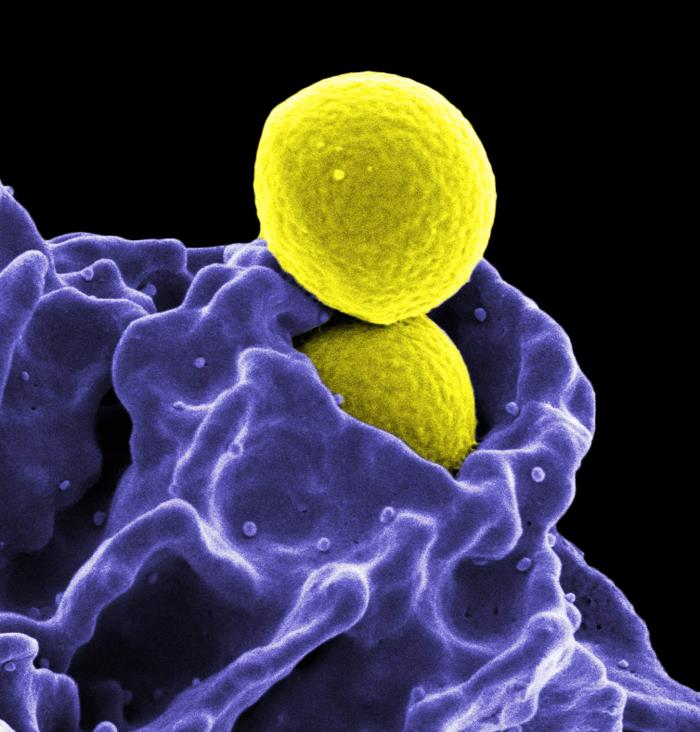
MRSA Staphylococcus KSW Food World

Staph food poisoning is a gastrointestinal illness caused by eating foods contaminated with toxins produced by the bacterium Staphylococcus aureus (Staph) bacteria.

About 25% of people and animals have Staph on their skin and in their nose. It usually does not cause illness in healthy people, but Staph has the ability to make toxins that can cause food poisoning.

People who carry Staph can contaminate food if they don’t wash their hands before touching it. If food is contaminated with Staph, the bacteria can multiply in the food and produce toxins that can make people ill. Staph bacteria are killed by cooking, but the toxins are not destroyed and will still be able to cause illness.

Foods that are not cooked after handling, such as sliced meats, puddings, pastries, and sandwiches, are especially risky if contaminated with Staph.

Food contaminated with Staph toxin may not smell bad or look spoiled.

What are the symptoms of Staph food poisoning?

  • Staph food poisoning is characterized by a sudden start of nausea, vomiting, and stomach cramps. Most people also have diarrhea.
  • Symptoms usually develop within 30 minutes to 8 hours after eating or drinking an item containing Staph toxin, and last no longer than 1 day. Severe illness is rare.
  • The illness cannot be passed from one person to another.

How do I know if I have Staph food poisoning?

You can suspect Staph food poisoning based on the type of symptoms and their fast resolution. Although laboratory tests can detect toxin-producing Staph in stool, vomit, and foods, these tests are usually not ordered except during an outbreak. If you think you might have Staph food poisoning and are experiencing severe symptoms, contact your health care provider.