| 06/17/2022 |
|
KSWFoodWorld

| 06/17/2022 |
|
Posted in Aflatoxin, Aspergillus Toxin, food contamination, food handler, Food Hazard, Food Hygiene, Food Inspections, Food Micro Blog, Food Microbiology, Food Microbiology Blog, Food Microbiology Testing, Food Poisoning, food recall, Food Safety, Food Safety Alert, Food Testing, Food Toxin, Mold Toxin, Mould Toxin, Mycotoxin
Brand : NATUR AKTIVE – BIOLAB SRL GORIZIA
Name : BIO TOFU MEDALLIONS MIT SPINAT
Reason for reporting : Recall due to microbiological risk
Publication date : 17 June 2022

Bacillus cereus in Tofu Medallions with spinach from Italy via Austria in Slovenia
Posted in Bacillus, Bacillus cereus, food contamination, food handler, Food Hazard, Food Hygiene, Food Inspections, Food Micro Blog, Food Microbiology, Food Microbiology Blog, Food Microbiology Testing, Food Pathogen, Food Poisoning, food recall, Food Safety, Food Safety Alert, Food Safety Management, Food Testing, Food Toxin, RASFF
Ochratoxin A in dried apricot pieces from Turkey in Germany
Posted in food contamination, food handler, Food Hazard, Food Hygiene, Food Inspections, Food Micro Blog, Food Microbiology, Food Microbiology Blog, Food Microbiology Testing, Food Poisoning, food recall, Food Safety, Food Safety Alert, Food Testing, Mold Toxin, Mould Toxin, Mycotoxin, Ochratoxin, Ochratoxin A, RASFF
Okadaic acid in Diarrhoetic Shellfish Poisoning from Portugal in Spain
Posted in Algal Toxin, Diarrhoeic Shellfish Poisoning, Dinoflagellates, DSP, food contamination, food handler, Food Hazard, Food Hygiene, Food Inspections, Food Micro Blog, Food Microbiology, Food Microbiology Blog, Food Microbiology Testing, Food Poisoning, food recall, Food Safety, Food Safety Alert, Food Testing, Food Toxin, okadaic acid, RASFF

MethodsData from 22 of 31 provincial-level administrative divisions (PLADs) of the National Foodborne Disease Outbreaks Surveillance System during 2004−2020 and Embase, China National Knowledge Infrastructure (CNKI), Wanfang Data, and Chinese Science and Technique Journals (CQVIP) from January 2004 to December 2020 to identify indexed publications in the Chinese literature using the following search terms “botulism,” or “botulinum toxin,” or “Clostridium botulinum.” The number and proportion of outbreaks, illnesses, and deaths by PLAD, food types, and contributing factors were calculated.
ResultsDuring 2004−2020, a total of 80 foodborne botulism outbreaks occurred in China, involving 386 illnesses and 55 deaths; most outbreaks were reported between June and August, with a sharp peak in January; 22 out of 31 PLADs reported foodborne botulism outbreaks, Xinjiang reported the largest number of outbreaks (20), followed by Qinghai (13); the most commonly implicated food was home-prepared traditional processed stinky tofu and dried beef, accounting for 51.25% events. Improper processing and improper storage in contributing factors accounted for 77.50% outbreaks. Initial misdiagnosis occurred in 27.50% of cases.
ConclusionsOutbreaks of foodborne botulism had a high case-fatality rate. Targeted food safety and popularization education to farmers and herdsmen in Xinjiang and Qinghai related to botulism prevention should be carried out, and timely outbreak investigation and hospital surge capacity should be improved.
Belgian scholars in consumers of sausages first described botulism in 1896 (1). It was confirmed that the growth and germination of toxins occurred only under particular conditions in an anaerobic low salt, low-acid environment. People who ingest food contaminated with botulinum neurotoxin (BoNT) produced by botulinum toxin can have a potentially fatal outcome (2). Outbreaks have been reported worldwide. In Canada, the first Clostridium botulinum type E outbreak in 1944 in Nanaimo, British Columbia was reported in 1947 (3); In China, Wu et al. first reported botulism in Xinjiang in 1958 due to edible semi-finished noodle sauce (4). A better understanding of the epidemiology of botulism outbreaks can help tailor local prevention and public health response strategies. Here, we reviewed surveillance data on outbreaks, illnesses, and deaths of botulism in China from 2004 to 2020.
Posted in Clostridium, Clostridium botulinum, Decontamination Microbial, food bourne outbreak, Food Illness, Food Micro Blog, Food Microbiology, Food Microbiology Blog, Food Microbiology Research, Food Microbiology Testing, Food Poisoning, Food Poisoning Death, Foodborne Illness, Foodborne Illness Death, foodborne outbreak, foodbourne outbreak, Illness, microbial contamination, Microbiological Risk Assessment, Microbiology, Microbiology Investigations, outbreak, Research

Since the beginning of the week, six people with a previous diagnosis of botulism have been hospitalized in different regions of Ukraine – Volyn, Chernihiv, Zhytomyr, Rivne, Kherson and Kyiv. Among the causes of the disease, experts from the Centers for Disease Control and Prevention call the use of fried and dried river fish of their own cooking or unknown production, home canned food.
We remind you that botulism is a food poisoning that can lead to serious consequences. In summer, when the air temperature rises, you should pay attention to the conditions of storage and cooking. Therefore, to protect against botulism, you should avoid the following products if you have doubts about their quality and storage / transportation conditions:
Symptoms of botulism:
Symptoms of botulism often appear gradually, without sharp rises in temperature, so there is an illusion of frivolity. Later there is a visual impairment – one of the first signs of botulism. At the same time there is thirst, dryness of the mucous membranes, swallowing disorders, may change the tone of voice. Patients complain of a feeling of “lump” in the throat, pain when swallowing, sore throat.
Neurological symptoms last for several days and are accompanied by a general toxic syndrome – patients complain of severe headache, dizziness, insomnia, general weakness, fever. In severe cases, patients are concerned about the feeling of shortness of breath. Respiratory failure develops, which is the cause of death in botulism.
At the slightest suspicion of botulism, see a doctor immediately!
Posted in botulism, Clostridium, Clostridium botulinum, food contamination, food handler, Food Hazard, Food Hygiene, Food Illness, Food Inspections, Food Micro Blog, Food Microbiology, Food Microbiology Research, Food Microbiology Testing, Food Pathogen, Food Poisoning, Food Safety, Food Safety Alert, Food Safety Management, food safety training, Food Testing, Food Toxin


Foodtrade AS is recalling Brazil nuts in 1 kg bags of the brand «The nut mixer Brazil nuts», in addition to Brazil nuts sold in bulk at fruit and vegetable stores across the country. The products are sold in the stores of Nøtteblanderen. The reason is that the nuts contain aflatoxin above the permitted limit value. Aflatoxin is a harmful toxin from molds.
About 300 bags of nuts from Foodtrade AS have been sold in Nøtteblanderen’s stores in Oslo, Bergen, Stavanger, Ålesund and Kristiansand in the period April-June 2022.
The nut mixer reports that the remaining products have been withdrawn and are no longer available in their stores.
The nut mixer asks customers who have purchased this product to return it to the store where it was purchased, or throw it in residual waste.
A total of 21 cartons of Brazil nuts from Sunrise AS have been sold in bulk in fruit and vegetable shops across the country. Consumers who have purchased the Brazil nuts after 2 May 2022 are asked to either contact the store where the product was purchased or throw it away.
The mold aflatoxin has been detected in a batch of Brazil nuts from Bolivia. Aflatoxins are carcinogenic and can damage the genetic material (DNA) after high intake over a long period of time. The amount of aflatoxin in these nuts is above the permitted limit value, and the products are therefore considered to be unsafe.
Posted in Aflatoxin, Aspergillus Toxin, food contamination, Food Hazard, Food Hygiene, Food Inspections, Food Micro Blog, Food Microbiology, Food Microbiology Blog, Food Microbiology Testing, Food Poisoning, food recall, Food Safety, Food Safety Alert, Food Testing, Food Toxin, Mold Toxin, Mould Toxin, Mycotoxin, Toxin
Reported by Mr. Kenneth Yung, Research Officer,
Risk Assessment Section, Centre for Food Safety
Fish is an important part of many types of cuisine that we savour. However, the consumption of fish and fish products containing high level of histamine may cause scombrotoxin fish poisoning (SFP), also called histamine poisoning. In Hong Kong, the Centre for Health Protection of the Department of Health recorded a total of 26 local SFP cases, affecting 45 persons from 2009 to 2018. In this article, we discuss how histamine is formed and the ways to control level of histamine in fish and fish products..
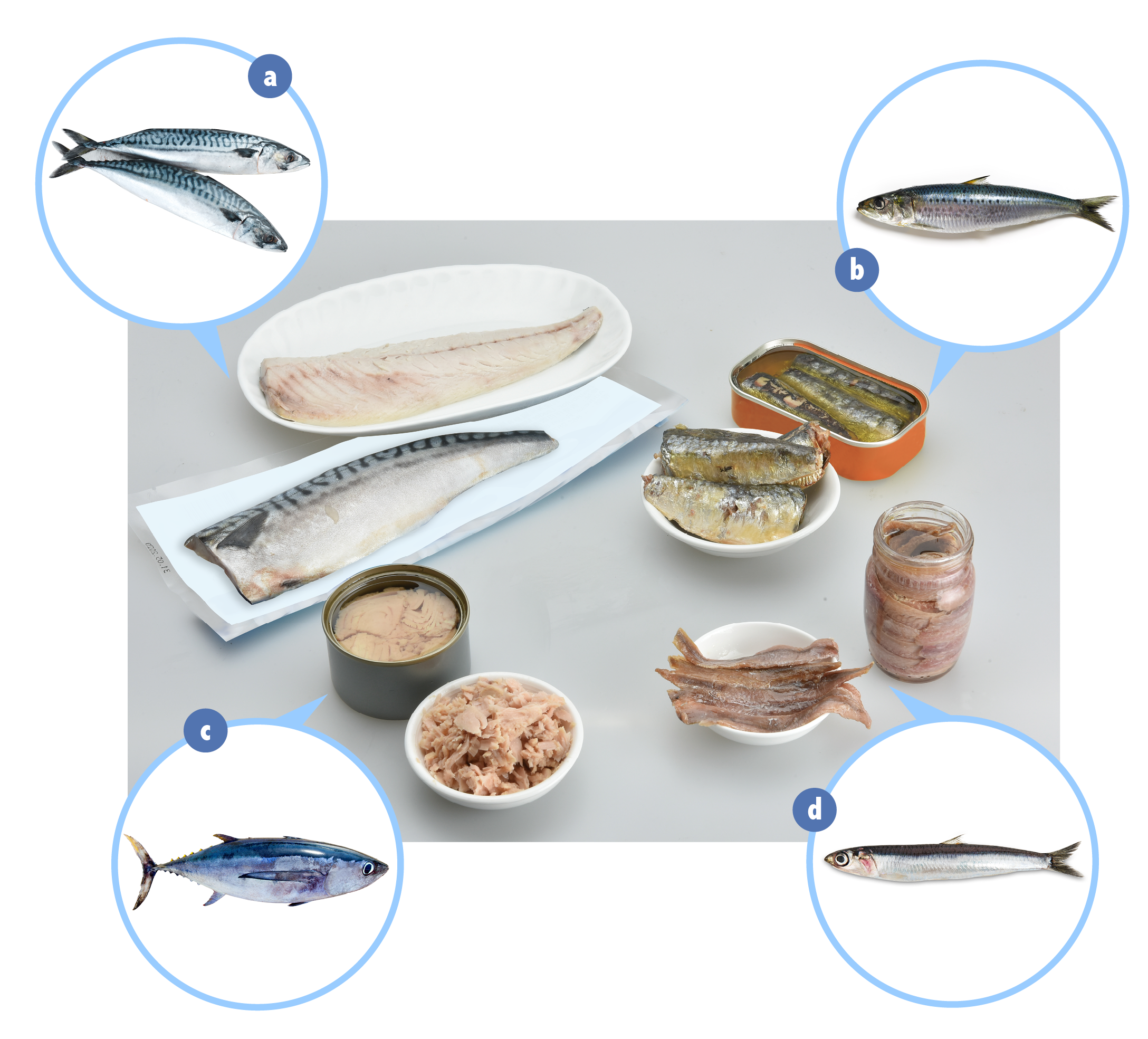
Examples of fish which contain elevated levels of naturally occurring histidine: (a) mackerel, (b) sardine, (c) tuna and (d) anchovy. Some of their respective products have also been found to contain high levels of histamine.
Histamine is a toxic metabolite produced by histamine-producing bacteria during spoilage and fermentation of fish and fish products. Many histamine-producing bacteria are part of the natural microflora of the skin, gills and gut of freshly caught fish. Histidine decarboxylase (HDC) enzymes, synthesized by histamine-producing bacteria when they multiply, convert the amino acid histidine that are naturally present in fish into histamine.
The level of histamine in fish and fish products mainly depends on species of fish and time-temperature control. Certain fishes like mackerel, sardine, tuna and anchovy naturally contain high amount of histidine and have been associated with SFP cases in Hong Kong and/or other places.
Time and temperature control is the most effective method for ensuring food safety for fish species prone to histamine production. In the absence of proper time-temperature control such as refrigeration and freezing, formation of histamine may occur at any point throughout the supply chain. Previous study conducted jointly by the Food and Environmental Hygiene Department and the Consumer Council revealed that high levels of histamine (up to 2600 mg/kg) that can cause SFP were detected in opened canned fish samples that were left at room temperature for 24 hours. However, histamine was not detected in samples that were kept at 2°C for up to 168 hours.
SFP is caused by the ingestion of food containing high levels of histamine i.e. consuming a serving size of 250g fish or fish product with histamine level exceeding 200 mg/kg may cause symptoms in healthy individuals. Symptoms of SFP include tingling and burning sensation around the mouth, facial flushing and sweating, nausea, vomiting, headache, palpitations, dizziness and rash. Exacerbation of asthma and more serious cardiac manifestations were reported in more severe cases. The onset of symptoms is within a few hours after consumption and these symptoms will normally disappear in 12 hours without long term effect.
High levels of histamine can build up in fish and fish products before any signs of spoilage (e.g. bad smell or taste) develop. Therefore, measures for control of histamine should be taken along the food chain from harvest to consumption.
Care should be taken that the cold chain is maintained at or below 4°C along the supply chain, including points of transfer such as offloading of fish from the vessel and processing procedures. Frozen fish and fish products should be kept at or below -18°C. Transport vehicles or vessels should be adequately equipped to keep fish cold and pre-chilled before loading fish where applicable. Adequate heat treatment (e.g. cooking, hot smoking) can kill histamine-producing bacteria and inactivate HDC enzymes, but cannot destroy pre-formed histamine. Recommendations in the Code of Practice for Fish and Fishery Products (CAC/RCP 52-2003), issued by Codex Alimentarius Commission, should be observed to ensure food safety.
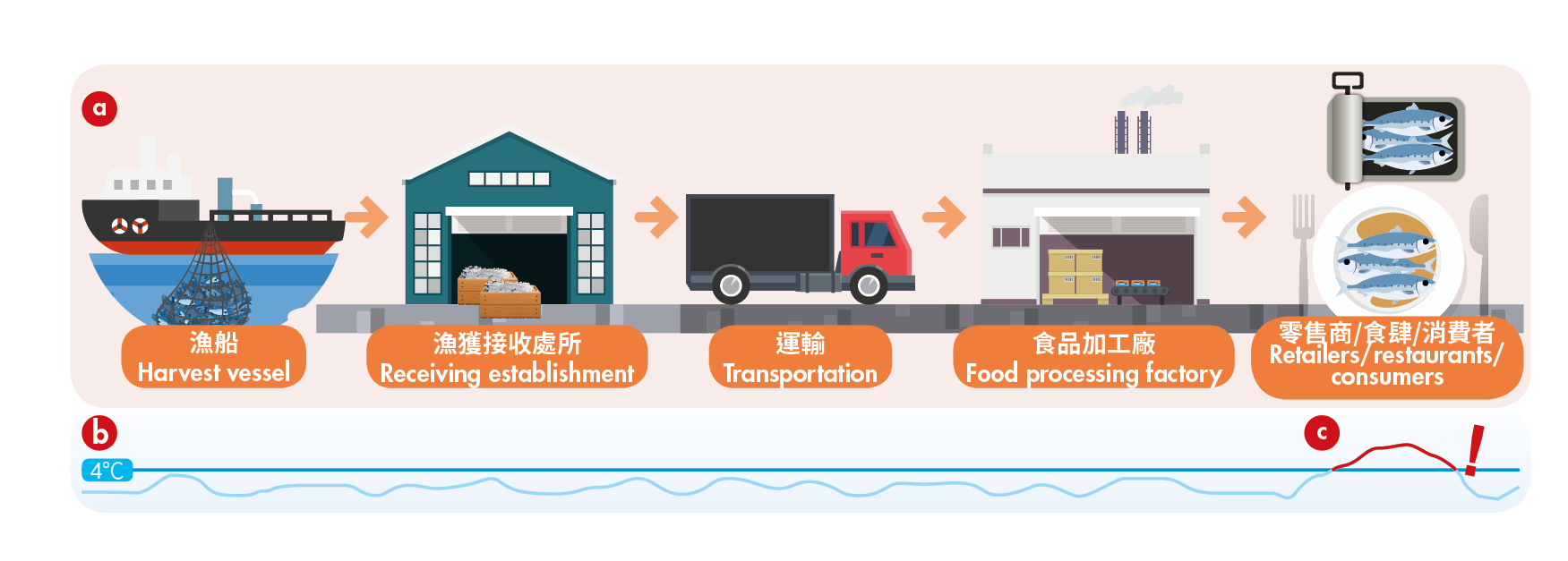
(a) Cold chain should be maintained throughout the whole supply chain. (b) Refrigerated fish and fish products should be kept at or below 4°C. (c) The time which fish products are kept under ambient temperature should be minimised.
At the consumer level, fish should be chilled rapidly after purchase. For prepackaged fish and fish products, store according to the instructions of the manufacturer (e.g. keep refrigerated). If cooked fish and ready-to-eat fish products (e.g. tuna fish sandwiches and opened canned fish) are placed at room temperature all day long, they can be re-contaminated and histamine can form. Therefore, if these foods are not being eaten immediately, they should be kept under refrigeration and be finished as soon as possible.
Posted in food contamination, food handler, Food Hazard, Food Hygiene, Food Inspections, Food Micro Blog, Food Microbiology, Food Microbiology Blog, Food Microbiology Research, Food Microbiology Testing, Food Poisoning, Food Safety, Food Safety Management, food safety training, Food Temperature Abuse, Food Testing, Food Toxin, Histamine, Research, Uncategorized
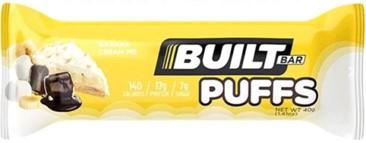
Built Brands, LLC. of American Fork, UT, is recalling 4,196 individual bars of its “Banana Cream Pie Puffs” protein bar because they have the potential to be contaminated with pathogenic Escherichia coli. Although the exact strain has yet to be determined customers must not eat this product as it may pose a serious health risk. Pathogenic Escherichia coli can cause diarrhea, severe stomach cramps and vomiting. Most people recover within a week, but some illnesses can last longer and can be more severe.
The recalled product was distributed nationwide to 1,049 potential customers through mail orders, and would have been received by customers after June 6, 2022.
The product comes in a 40 gram package marked with lot # D22151011 on the outside of the wrapper.
No illnesses have been reported to date in connection with this recall.
The potential for contamination was noted after routine testing conducted by an accredited third-party laboratory at the request of Built Brands detected the presence of Escherichia coli.
Testing results for additional products made by Built Brands indicate other similar products are not affected and the contamination was an isolated incident, likely resulting from a failure to follow GMP practices.
Consumers who have purchased the product in question are urged to contact the company at questions@built.com for a full refund or replacement. Consumers with questions may also contact the company at questions@built.com or by phone at 1-801- 845-2991 between 8:00 am – 5:00 pm, Monday-Friday, MST.


