Category Archives: Food Microbiology Research

UK – FSA shares how it is using data to monitor food risks

Food Safety News

A specialist from the Food Standards Agency (FSA) has revealed how the authority is using data science to identify emerging risks by using a variety of sources and analytics techniques.

The aim is to help develop a picture of the food system, its safety, authenticity, and risks and vulnerabilities, so issues can be better managed.

Speaking at IAFP Europe, Julie Pierce, director of openness, data and digital, said she had to persuade the FSA that putting funds and faith into data was a good idea.

“I started with a narrow question, answered it and then expanded it into other regions and commodities. We started off with the observation on the amount of aflatoxins in figs from Turkey. We noticed a seasonal variation in the number of alerts we were seeing and could determine the weather was impacting on the aflatoxin level,” she said.

“It was a relatively straightforward model that we built but it was relevant to those grappling with the real life issue. It proved to be relatively straightforward to extend the model beyond figs to other commodities like Bolivian Brazil nuts.”

Kenya – Kenya can’t regulate its way out of aflatoxin menace

Standard Media

Enforcement of food safety regulations is necessary but insufficient to solve this problem. Aflatoxin contamination must be addressed at its root, during production and on-farm storage.

Research by International Food Policy Research Institute and others points to some solutions including education, incentivising farmers and removing the middleman. Educating farmers about how to prevent aflatoxin leads to better practices, which can also improve the quality of grain.

Kenya must also make aflatoxin prevention technologies affordable. Most farmers dry their maize on old woven sisal bags, through which mold spores can permeate. Upgrading to impermeable tarps or drying sheets is a highly cost-effective approach to aflatoxin control, but still costs farmers more than used bags. The new KEBS standard for tarps used in agriculture, which is expected to increase the availability of lower-cost tarps, is an important step forward.

USA – E. coli Outbreak likely linked to fresh produce expands to Benton, King, Snohomish and Walla Walla counties – As many as 11 sickened, some with acute kidney failure

Food Poison Journal

The Washington State Department of Health (DOH) is working with local health jurisdictions to respond to a multi-county outbreak of E. coli O157:H7 that may be linked to fresh produce.

The outbreak currently includes six confirmed cases across Benton County (1), King County (3), Snohomish County (1) and Walla Walla County (1). DOH is only reporting confirmed cases infected with bacteria that have been genetically linked, but local health officials may report higher numbers for their counties that include cases still under investigation.

There is one case in the outbreak between ages 0-9, two cases age 10-19, one case age 20-29, one age 30-39, and one case age 70-79. Three cases have been hospitalized and one case developed hemolytic uremic syndrome (HUS). HUS is a serious complication of E. coli O157:H7 infection that can damage the kidneys and other organs. The earliest case in the outbreak started having symptoms March 9, and the most recent case had symptoms starting April 21.

Research – Case–Control Study of Risk Factors for Acquired Hepatitis E Virus Infections in Blood Donors, United Kingdom, 2018–2019

CDC

Hepatitis E virus (HEV) is the most common cause of acute viral hepatitis in England. Substantial yearly increases of autochthonous infections were observed during 2003–2016 and again during 2017–2019. Previous studies associated acute HEV cases with consumption of processed pork products, we investigated risk factors for autochthonous HEV infections in the blood donor population in England. Study participants were 117 HEV RNA–positive blood donors and 564 HEV RNA–negative blood donors. No persons with positive results were vegetarian; 97.4% of persons with positive results reported eating pork products. Consuming bacon (OR 3.0, 95% CI 1.7–5.5; p<0.0001), cured pork meats (OR 3.5, 95% CI 2.2–5.4; p<0.0001), and pigs’ liver (OR 2.9, 95% CI 1.0–8.3; p = 0.04) were significantly associated with HEV infection. Our findings confirm previous links to pork products and suggest that appropriate animal husbandry is essential to reduce the risk for HEV infection.

USA – FDA to Implement Sampling Effort for Lettuce Grown in Salinas Valley, California

FDA

The U.S. Food and Drug Administration will be collecting and testing samples of lettuce grown in California’s Salinas Valley from local commercial coolers from May through November 2021. The agency will test the samples for Shiga toxin-producing Escherichia coli (STEC), including E. coli O157:H7, and Salmonella spp. as part of ongoing surveillance efforts following reoccurring outbreaks linked to this region, including most recently in the fall of 2020.

The FDA assignment will direct sampling to be conducted at commercial cooling and cold storage facilities where field heat is removed from harvested lettuce and where product is cold-stored before processing. Sampling may include pre-cooled product (preferred) or post-cooled product. Sample collection at commercial coolers helps the FDA efficiently obtain samples from multiple farms at centralized locations and facilitates prompt traceback and follow-up if contamination is detected.

The agency plans to collect and test a total of approximately 500 post-harvest samples of iceberg, leaf and romaine lettuce. Each sample will consist of 10 subsamples, each made up of one head of lettuce (trimmed, cored and possibly wrapped), or in the case of romaine lettuce, loose leaves or one package of hearts.  FDA laboratories will conduct all testing.

During this sampling assignment, the FDA will take extra precautions to help ensure the safety of agency investigators and firm employees during the COVID-19 pandemic. FDA investigators will preannounce their visits to firms per the Agency’s COVID-19 safety practices. They will be outfitted with personal protective equipment (PPE) and will carry out their work while adhering to local, state and applicable CDC guidance.

Helping to ensure the safety of leafy greens remains a high priority of the FDA. This assignment adds to other work underway in collaboration with stakeholders in the California Central Coast growing region to identify where the recurring strain of pathogenic E. coli is persisting and the likely routes of leafy green contamination with STECs.  This includes continued implementation of actions identified in the recently updated Leafy Greens Action Plan, including a multi-year longitudinal  study to assess the environmental factors impacting the presence of foodborne pathogens in this region. Consistent with the action plan, if the FDA detects a pathogen such as E. coli O157:H7, the agency will conduct a follow-up investigation to identify potential sources and routes of contamination. Such investigations are designed to inform what additional preventive measures may be needed to help prevent outbreaks of foodborne illness.

Research – ANSES sets value to protect people from emerging toxin in shellfish

Food Safety News

A French agency has proposed a guideline value to protect consumers of shellfish from a group of marine biotoxins.

The French Agency for Food, Environmental and Occupational Health and Safety (ANSES) said brevetoxins (BTX) were first detected in mussels in Corsica in 2018. If ingested by humans, these toxins can cause neurological, gastrointestinal or cardiovascular symptoms.

After this finding a few years ago, ANSES was asked by the Directorate General for Food (DGAL) and Directorate General for Health (DGS) to propose a guideline value to protect the health of people who eat shellfish. The agency has published an opinion and report on the subject in French.

Based on reports of food poisoning in other countries, ANSES has set a guideline value to protect consumers of products such as oysters and mussels. This value is 180 µg/kg of shellfish flesh, expressed in BTX-3 equivalents, with BTX-3 being the form of brevetoxin used as the reference.

France – Product recall: Rolled head with tongue, TRADITION ET TERROIR DU SUD OUEST brand vinaigrette – Salmonella

Oulah

Product recall: Rolled head with tongue, TRADITION ET TERROIR DU SUD OUEST brand vinaigrette

ENCOUNTERED PROBLEM

Presence of salmonella

PROPOSED SOLUTION

People who may have this product are asked not to consume it and to return it to the point of sale where it was purchased.

Foodborne illnesses caused by salmonella result in gastrointestinal disturbances, diarrhea, vomiting and abdominal pain, often accompanied by fever; these symptoms may be more severe in young children, immunocompromised individuals and the elderly. The incubation period can range from 6 to 72 hours.
People who have consumed the products mentioned below and who have these symptoms are invited to consult their doctor, notifying him of this consumption.

FURTHER INFORMATION

▸ Barcode
Beginning with 2428133


▸ Lot
• 211169013
• 211239010


▸ DLC
• 05/21/2021
• 05/28/2021


▸ Packaging
250 G TRAY


▸ Start date / End of marketing
From 04/28/2021 to 05/28/2021


▸ Health mark
FR33550010CE


New Aquitaine geographic sales area


▸ Distributors
• AUCHAN
• CARREFOUR
• CASINO
• INTERMARCHE
• LECLERC
• SYSTEME U


▸ Source
TRADITION AND SOUTH WEST TERROIR

USA – New Mexico reports increase in Norovirus outbreaks

Outbreak News Today

norovirus-1080x655

The New Mexico Department of Health (NMDOH) is investigating multiple outbreaks of norovirus around the state. The Department is recommending precautions be taken, especially around the very young, the elderly and those at any age with weakened immune systems. They are at risk for more serious illness due to norovirus infection.

Sweden – An outbreak of Salmonella Braenderup is being investigated.

Folkhalsomyndigheten

kswfoodworld salmonella

6 May 2021

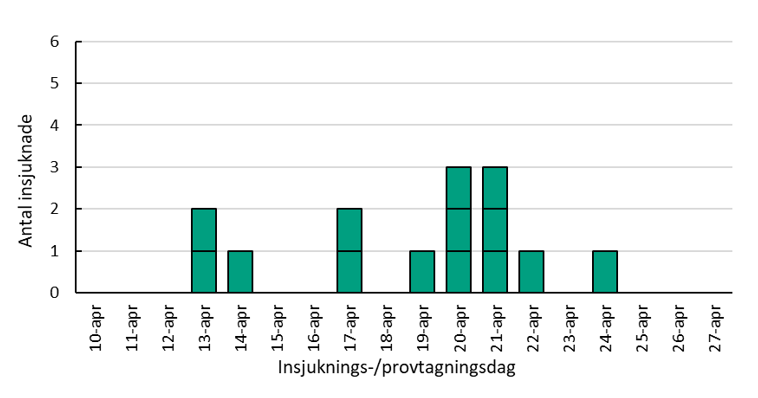
During the period 13 April to 24 April, 14 cases fell ill in Salmonella Braenderup in 10 different regions in Sweden. The cases have been linked using whole genome sequencing (analysis of the bacterium’s genome). The ages vary from 0 to 91 years and ten of the cases are women. Affected infection control units, municipalities, the National Food Administration and the Swedish Public Health Agency are jointly investigating the outbreak to identify the source of infection that is suspected to be a food that has been widely distributed in Sweden. The investigation interviews the cases of what they ate the week before falling ill, with the aim of identifying common suspicious foods.

Figure. Inhalation curve for Salmonella Braenderup (n = 14), 2021-05-06.

The bar chart shows that the fourteen outbreak cases have fallen ill between 13-24 April 2021.

USA – Fresh, organic produce common source of E. coli O157 infections in 7 children

Food Poison Journal

Public Health is investigating a new cluster of seven children infected with Shiga toxin-producing E. coli (also known as STEC) in King County. All cases are currently under 15 years of age, and three are under 5 years of age. Cases have been reported during April 22–May 1, 2021.

Our investigation is ongoing. We have identified multiple types of fresh produce, mostly organic, in common among the majority of cases but cannot yet rule out other possibilities. We are still uncertain if these cases share the same source of their infection or not. Updates will continue to be posted when more information is available.