Category Archives: Food Microbiology Research

Denmark – Legionnaires’ disease in Denmark in 2020

SSI

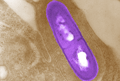
Legionella_Plate_01    CDC legionella

278 cases of legionnaires’ disease were detected in Denmark in 2020. Of these, 94.6% had been infected in Denmark. That is the highest number ever.

The Statens Serum Institut (SSI) has issued the annual report on how many cases of Legionnaires’ disease (LS) were found in Denmark in 2020.

A total of 278 cases of LS, also known as legionella pneumonia, were detected. Of these, 165 were men (59.4%) and 113 women (40.6%).

Out of these, 39 patients died within 30 days after the disease had broken out or they had been hospitalized. It gives a mortality rate of 14%.

Almost 95% infected in Denmark

Out of the 278, 263 people were infected in Denmark. This corresponds to 94.6%. This is an increase of 25% compared to the average for the last three years, and thus the highest number ever.

“The increase in the number of infected in Denmark may be related to a higher test activity in 2020. It may be due to the fact that many hospitalized patients with suspected covid-19 have also been examined for legionella infection,” says head of department Søren Anker Uldum from SSI.

15 infected on travel

There are only 15 cases (5.4%) where people in 2020 were infected with LS when traveling abroad. In 9 cases, it was while traveling in Europe. 5 were infected while traveling in Asia and 1 traveling to the American continent.

The proportion of travel-related LS cases is usually 20-25%

“Due to the extensive travel restrictions in 2020 due to the Covid-19 pandemic, there has been very limited travel activity. This is probably the reason for the few travel-associated legionella cases in 2020 ”, says Søren Anker Uldum.

Read more

You can read more about Legionnaires’ disease here.

You can also see the annual statement for legionnaires’ disease in Denmark in 2020 here .
Research – Identification of Microorganisms from Several Surfaces by MALDI-TOF MS: P. aeruginosa Is Leading in Biofilm Formation

MDPI

New ecological trends and changes in consumer behavior are known to favor biofilm formation in household appliances, increasing the need for new antimicrobial materials and surfaces. Their development requires laboratory-cultivated biofilms, or biofilm model systems (BMS), which allow for accelerated growth and offer better understanding of the underlying formation mechanisms. Here, we identified bacterial strains in wildtype biofilms from a variety of materials from domestic appliances using matrix-assisted laser desorption/ionization-time of flight mass spectroscopy (MALDI-TOF-MS). Staphylococci and pseudomonads were identified by MALDI-TOF-MS as the main genera in the habitats and were analyzed for biofilm formation using various in vitro methods. Standard quantitative biofilm assays were combined with scanning electron microscopy (SEM) to characterize biofilm formation. While Pseudomonas putida, a published lead germ, was not identified in any of the collected samples, Pseudomonas aeruginosa was found to be the most dominant biofilm producer. Water-born Pseudomonads were dominantly found in compartments with water contact only, such as in detergent compartment and detergent enemata. Furthermore, materials in contact with the washing load are predominantly colonized with bacteria from the human. View Full-Text

Research – In-Plant Validation of Novel On-Site Ozone Generation Technology (Bio-Safe) Compared to Lactic Acid Beef Carcasses and Trim Using Natural Microbiota and Salmonella and E. coli O157:H7 Surrogate Enumeration

MDPI

The purpose of this study was to evaluate the antimicrobial efficacy of an aqueous ozone (Bio-Safe) treatment andtech lactic acid solutions on natural microbiota and E. coli O157:H7 and Salmonella surrogates on beef carcasses and trim in a commercial beef processing plant. For every repetition, 40 carcass and 40 trim swabs (500 cm2) were collected. Samples were taken using EZ-ReachTM swabs, and plated into aerobic plate count (APC), coliform, and E. coli PetrifilmTM for enumeration. In addition, a five-strain cocktail (MP-26) of E. coli surrogates was inoculated onto trim. For every trim surrogate repetition, 30 trim pieces were sampled after attachment and after ozone intervention. Samples were diluted and counts were determined using the TEMPO® system for E. coli enumeration. Ozone and lactic acid interventions significantly reduced (p < 0.003) bacterial counts in carcasses and trim samples. Moreover, lactic acid further reduced APC and coliforms in trim samples compared to ozone intervention (p < 0.009). In the surrogate trials, ozone significantly reduced (p < 0.001) surrogate concentration. Historical data from the plant revealed a reduction (p < 0.001) of presumptive E. coli O157:H7 in trim after a full year of ozone intervention implementation. The novel technology for ozone generation and application as an antimicrobial can become an alternative option that may also act synergistically with existing interventions, minimizing the risk of pathogens such as Salmonella and E. coli O157:H7. View Full-Text

Research -Genome sequencing reveals how salmonella carves out a niche in pork production

Phys Org

Salmonella kswfoodworld

Variants of concern (VOCs) and variants of interest (VOIs) have become familiar terms due to the current pandemic, but variants of familiar pathogens such as salmonella also present a threat to human and animal health.

To better understand the different threats these variants pose, a collaboration led by Professor Rob Kingsley from the Quadram Institute and Professor Mark Stevens from the Roslin Institute working with scientists from the Earlham Institute has focused on common variants of  present in  in the UK. Their findings, published recently in the journal Communications Biology, has shown that despite being extremely closely related, variants can have very different effects on the health of the pig and also on the risks they pose to .

Salmonella Typhimurium is one of the most common types of salmonella. It is a major cause of human gastroenteritis, notably from consuming undercooked pork products or as a result of cross-contamination of foods consumed raw. This bacterial pathogen is also a concern to the pork industry as it can affect the health, productivity and welfare of pigs. Salmonella Typhimurium is relatively common in pig herds globally, and processes implemented in abattoirs are designed to prevent contamination of meat destined for the food chain.

Research – A cold soak lowers the risk of salmonella growth on ‘sprouted’ foods

Phys Org

Soaking “sprouted” foods in cold water, rather than the more common practice of soaking at ambient temperature, lowers the risk of salmonella growth on these increasingly popular healthy snack foods, according to an Oregon State University study.

The study, published in Food Protection Trends, demonstrates the risk of “sprouting” practices and presents practical strategies to improve safety of these raw foods, said Joy Waite-Cusic, associate professor of food safety systems in OSU’s College of Agricultural Sciences.

“If this soaking phase happens at ambient temperature, then there is a significant food safety problem,” said Waite-Cusic, who is also OSU Extension’s statewide specialist for home food safety and food preservation in the College of Public Health and Human Sciences. “This study provides regulators with clear guidance on the risks associated with this new category of ‘sprouted’ products.”

Spain – The control of Listeria monocytogenes in the process of preparation, marketing and sale of frozen vegetables

ACSA

This document is based on the conclusions of a study carried out by experts on microbiological risks from the European Food Safety Authority (EFSA) and published in April 2020. The need to carry it out arose from an outbreak of Listeria monocytogenesST6, between the years 2015 and 2018, which affected several countries and caused 53 people sickened and 10 died. The source of infection was some frozen vegetables. Its processing included a previous bleaching in freezing. Bleaching is a procedure that is carried out with hot water or steam in order to stop the enzymatic activity that causes changes in the color, flavor and texture of the food. Environmental contamination from a freezing plant was the origin and reason for the persistence of the strain that caused the outbreak from 2015 to 2018.

EFSA already published in the summer of 2018 recommendations on sampling and microbiological methods to maximize the sensitivity of detection of L. monocytogenes in the processing water and in the environment of the premises that produce frozen fruits, vegetables or herbs. Recommendations were also made on the identification of critical sampling sites to carry out monitoring of the environment of these establishments (ME).

Hong Kong – Introduction to Centre for Food Safety

CFS

Germany – More salmonella infections in Europe: Hygiene rules help prepare poultry safely

BRF

Food Poisoning Salmonella

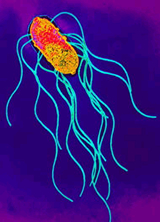
In recent months, more than three hundred cases of salmonellosis have occurred in various European countries and Canada, which are linked to each other. In the UK the cases could be partly traced back to frozen breaded poultry meat. The cause was contamination with the bacterium Salmonella Enteritidis, which causes gastrointestinal inflammation. Salmonella is not killed by deep freezing and can remain infectious at temperatures below zero degrees Celsius. The Robert Koch Institute (RKI) and the BfR are monitoring the situation together with the Federal Office of Consumer Protection and Food Safety (BVL). In Germany, the number of reported cases has currently risen to more than 20 in six federal states. In 2020, there were a total of about 10,000 reported cases of salmonellosis in Germany, most of which were caused by the consumption of contaminated food. In principle, foodborne infections can be avoided by paying particular attention to hygienic care when preparing raw poultry. Due to the measures taken to contain the COVID 19 pandemic, people are currently cooking more often at home and, in the course of this, convenience products such as frozen goods are also being used more frequently. Sometimes it is not obvious at first glance whether such products contain pre-cooked or raw meat. Sufficient heating should always be ensured during preparation, especially of products containing raw poultry meat. In addition, bacterial contamination of other dishes via the raw meat and breading is possible. “Especially for children and elderly people there is a higher risk of getting sick from salmonella,” says BfR President Prof. Dr. Dr. Andreas Hensel.

Australia and New Zealand Listeria Pregnancy Advice Updated

FSANZ

kswfoodworld Listeria monocytogenes

Listeria (Listeria monocytogenes) are bacteria that can cause serious illness and in some cases death, particularly in vulnerable people. In Australia each year around 150 people are hospitalised with listeriosis and about 15 people die.

People at greater risk from listeriosis include pregnant women, their unborn and newborn babies, the elderly and other people whose immune systems have been weakened by illness or drugs (for example: cancer patients, organ transplant recipients, and people on drugs like cortisone).

Eating foods contaminated with Listeria is the most common way of contracting the illness. Listeria is common in the environment and can contaminate different types of food. Listeria is tolerant to low temperatures so it can grow in food even if it is stored in the refrigerator.

More information at the link above.

UK – Salmonella Serotyping

New Food Magazine

Traditionally, Salmonella isolates are separated into serotypes based on structural differences on the surface of the cells (O antigens) and thread‑like portions of the flagella (H antigens), using the Kauffman-White classification scheme. In this technique, antibodies are prepared against these specific antigens in a blood serum known as antiserum. Confirmed Salmonella sp. isolates are then tested with this antisera and are observed for agglutination reactions.

Through testing unknown samples against a series of antisera, the specific serotype of an isolate can be discerned. As previously discussed, there are a great number of serological variants of Salmonella and so this process can be very long and labour intensive, requiring highly experienced staff with a vast library of antisera at their disposal. Because of this, the Kauffman-White serotyping method is often only carried out by reference laboratories, with routine microbiology laboratories only stocking a small number of antisera.

As an example, at ALS Rotherham we stock the antisera for our in-house control strain, Salmonella enterica subsp. enterica ser. Nottingham, which enables us to distinguish our strain from others using the antisera O16, Henz15 and Hd. This serotype is recommended by the health protection agency in the UK for use as a control strain, due to being a very rare serotype and thus very unlikely to be isolated as a wild type. Historically, when further analysis was required for one of our samples, the isolates would be subcontracted to a reference laboratory capable of full serological testing. For a plethora of reasons, this type of analysis all too often had a lengthy turnaround time which, while accurate, was often too little too late and unhelpful in making a practical difference to our client, the FBO (food business operator).