Category Archives: Food Microbiology Blog

France – Smoked Chicken – Listeria monocytogenes

Gov france

Identification information of the recalled product
  • Product category Feed
  • Product subcategory Meats
  • Product brand name western breeder
  • Model names or references Beech wood smoked chicken
  • Identification of products
    GTIN Batch Date
    3276724209013 5412190094 Use-by date 07/11/2022
  • Packaging Tray under film
  • Marketing start/end date From 17/10/2022 to 21/10/2022
  • Storage temperature Product to be stored in the refrigerator
  • Health mark FR 56 017 002 EC
  • Geographic area of ​​sale Whole France
  • Distributors Leclerc SCARMOR

Practical information regarding the recall

  • Reason for recall Listeria monocytogenes
  • Risks incurred by the consumer Listeria monocytogenes (causative agent of listeriosis)

Research – Bacterial Infections and Ice Cream – a Risky Mix

Food Poison Journal

Great article to read at the above link, the table below is edited there is more information in the article.

Year State Agent Brand
2014 Washington Listeria Snoqualmie Ice Cream
2010-2015 Multistate Listeria Blue Bell
2008 Vermont E. coli O157 Homemade ice cream, unpasteurized milk
2008 Minnesota Salmonella  Homemade ice cream
2008 California E. coli O157 Consumed at a restaurant; brand or pasteurization unknown
2007 California Norovirus Ice cream with berries; berries were likely the contaminated ingredient
2007 Pennsylvania Campylobacter Homemade ice cream
2007 Minnesota Hepatitis A Ice cream or yogurt at a restaurant
2007 West Virginia Salmonella Homemade ice cream
2006 Belgium E. coli O145 Ice cream at a farm
2006 California Salmonella Homemade ice cream
2005 Multistate Salmonella  Cold Stone Creamery (cake batter was the contaminated ingredient)
1994 Multistate Salmonella Schwan’s Ice Cream – the estimated # of ill cases is 224,000!
1993 Florida Salmonella  Homemade ice cream

Belgium – Barry Callebaut site back to normal after Salmonella scare

Food Safety News

A Barry Callebaut chocolate factory in Belgium is back operating at full capacity after a Salmonella contamination scare earlier this year.

Cleaning of the factory in Wieze is nearing completion so it has returned to running at normal levels after operations were stopped in late June.

“I would like to express my deepest gratitude to our customers for their understanding during this difficult period, and to all our employees who worked tirelessly for weeks to get the Wieze factory up and running again,” said Peter Boone, CEO of Barry Callebaut.

The company previously warned the incident is expected to have a significant financial impact when the full year result figures are published in November.

Mondelez was one of several companies impacted, as it is supplied by Barry Callebaut. The alert meant it had to limit the retail availability of several ranges of biscuits.

Research – France – Haemolytic-uremic syndrome surveillance data in 2021

Sante Publique

In 2021, the overall annual incidence of pediatric HUS was lower than that observed for the past four years.

Even if this decrease in annual incidence is observed in children under three years of age, the incidence in this age group remains high and much higher than that observed in older children. As every year, regional heterogeneity is observed. In 2021, the Bourgogne-France-Compté and Auvergne-Rhône-Alpes regions were particularly affected.

In 2021, serogroup O26 remains the majority, followed by serogroup O80. After several years of decrease in the share of cases due to O157, a slight increase in the number of O157 strains is observed in 2021.

Sweden – Sweden searches for the source of Crypto and Salmonella outbreaks

Food Safety News

Swedish officials are investigating a recent increase in reported cases of Cryptosporidium.

A total of 61 people have been confirmed as being infected by the same certain type of Cryptosporidium parvum. These people fell ill from Sept. 25 to Oct. 10 and live in 10 different regions of the country.

Of confirmed cases, 41 are women and 20 are men. They are aged between 11 and 86 years old with an average age of 44.

There are another 98 possible infections that have been reported within the same period and some of these may also belong to the outbreak.

The Public Health Agency of Sweden (Folkhälsomyndigheten) said the increase is under investigation but could be caused by food with wide distribution in the country.

Local infection control units, the Swedish Food Agency (Livsmedelsverket) and Folkhälsomyndigheten are investigating the outbreak to identify the source of infection.

Cryptosporidium is a parasite that, if ingested, can cause cryptosporidiosis. Transmission occurs mainly through contact with contaminated water but can be via food or exposure to infected animals or water contaminated by the feces of infected animals.

The main symptom is watery diarrhea, which can range from mild to severe. It is often accompanied by stomach pain, nausea or vomiting, fever, and sometimes dehydration and weight loss. Symptoms usually appear two to 10 days after infection and last one to two weeks.

USA – CDFA ANNOUNCES RECALL OF RAW GOAT MILK PRODUCED AT VALLEY MILK SIMPLY BOTTLED OF STANISLAUS COUNTY

CDFA

SACRAMENTO, October 21, 2022 – Raw goat milk produced and packaged by Valley Milk Simply Bottled of Stanislaus County is the subject of a statewide recall and quarantine order announced by California State Veterinarian Dr. Annette Jones.  The quarantine order came following the confirmed detection of the bacteria Campylobacter jejuni in the farm’s packaged raw whole goat milk sampled and tested by the California Department of Food and Agriculture.

The order applies to “Valley Milk Simply Bottled Raw Goat Milk” and “DESI MILK Raw Goat Milk” distributed in half-gallon (64 oz) plastic jugs with a code date marked on the container of OCT 21 2022 through OCT 31 2022.

Consumers are strongly urged to dispose of any product remaining in their refrigerators, and retailers are to pull the product immediately from their shelves. The current order does not include the farm’s raw cow milk.

CDFA found the campylobacter bacteria in a routine sample collected at the Valley Milk Simply Bottled production and packaging facility.  No illnesses have been reported.

Symptoms of campylobacteriosis include diarrhea, abdominal cramps, and fever.  Most people with camplylobacteriosis recover completely.  Illness usually occurs 2 to 5 days after exposure to campylobacter and lasts about a week.  The illness is usually mild and some people with campylobacteriosis have no symptoms at all.  However, in some persons with compromised immune systems, it can cause a serious, life-threatening infection.  A small percentage of people may have joint pain and swelling after infection.  In addition, a rare disease called Guillian-Barre syndrome that causes weakness and paralysis can occur several weeks after the initial illness.

USA – Costco recalls hummus because of mold/mould issues

Food Safety News

Costco is recalling certain Kirkland Signature brand Pine Nut Hummus because of mold issues.

“We have identified some mold issues on the pine nut topping on one code date on this item,” Costco said in a letter to its members. The recalled items were sold between Sept. 21 to Oct. 18.

Recalled products:

  • Kirkland Signature Pine Nut Hummus with the code date: Best Before NOV 26 2022.
  • The date is located on the top of the container.

Consumers who have this code date in their refrigerator should return it to Costco for a full refund.

USA – Salmonella outbreak linked to Chili’s South Indian Cuisine in Seattle

Food Poison Journal

Food Poisoning Salmonella

Summary

Public Health is investigating an outbreak of salmonellosis (caused by Salmonella bacteria) associated with Chili’s South Indian Cuisine in Seattle. The investigation is ongoing. At this time, we have not identified how Salmonella was spread within the restaurant. This is not uncommon because Salmonella can spread through contaminated food items, environmental surfaces, and from person to person.

Illnesses

Since October 6, 2022, three people from two separate meal parties reported becoming ill after consuming food from Chili’s South Indian Cuisine in Seattle on September 17, 2022 and September 23, 2022. All the people developed one or more symptoms consistent with salmonellosis, including diarrhea, abdominal cramping, nausea, and vomiting. We have not identified any ill employees.

Public Health actions

Public Health conducted interviews with the people ill with salmonellosis to identify potential common exposures and found that they all became ill after eating food from Chili’s South Indian Cuisine.

Environmental Health Investigators visited the restaurant on October 19, 2022. Investigators identified sanitizing issues, potential cross contamination, inadequate hand washing, and lack of proper access to handwashing stations. Corrective actions were taken during the inspection. Environmental Health Investigators will revisit the facility within 2 weeks to ensure proper compliance with food handling practices.

No ill employees were identified at the time of inspection. Investigators reviewed with restaurant management the requirement that ill staff are not allowed to work until they are symptom-free. Investigators provided education about preventing the spread of Salmonella – including preventing cross contamination, proper cooling methods, sanitizing procedures and handwashing.

Laboratory testing

Two of the cases have confirmatory testing indicating infections with Salmonella via culture. Both cases have the same strain of Salmonella, based on genetic fingerprinting (whole genome sequencing or WGS) at the Washington State Public Health Laboratory. The third case did not have confirmatory testing but had symptoms consistent with Salmonellosis and is epidemiologically linked.

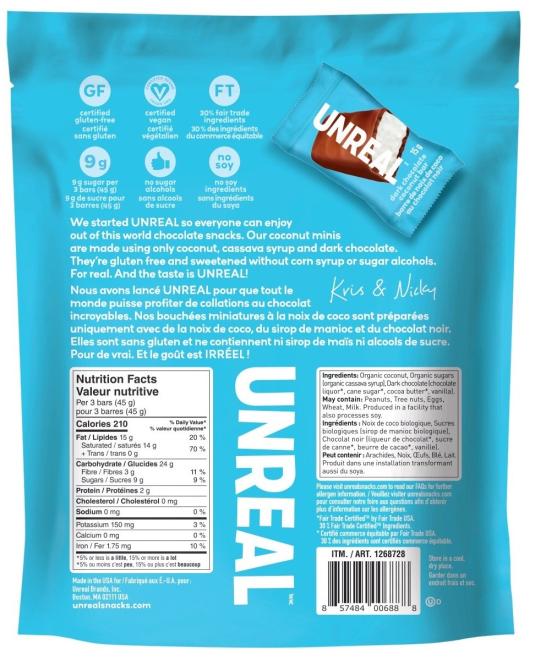
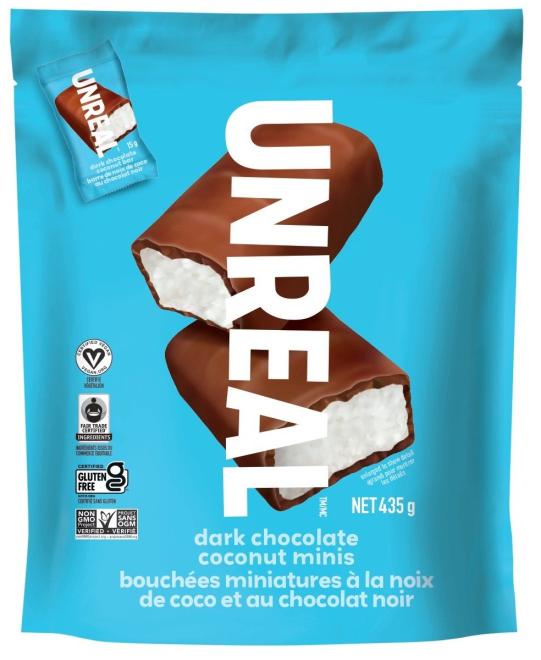
Canada – UNREAL brand dark chocolate coconut minis recalled due to Salmonella

CFIA

Summary

Product
dark chocolate coconut minis
Issue
Food – Microbial Contamination – Salmonella
What to do

Do not consume, use, sell, serve, or distribute recalled products

Affected products

Issue

The affected product is being recalled from the marketplace due to possible Salmonella contamination.

The recalled product has been sold in British Columbia, Alberta, Saskatchewan, Manitoba, Ontario, Quebec, New Brunswick, Nova Scotia, and Newfoundland and Labrador.

What you should do

  • If you think you became sick from consuming a recalled product, contact your healthcare provider
  • Check to see if you have recalled products
  • Do not consume, serve, use, sell, or distribute recalled products
  • Recalled products should be thrown out or returned to the location where they were purchased

Food contaminated with Salmonella may not look or smell spoiled but can still make you sick. Young children, pregnant women, the elderly and people with weakened immune systems may contract serious and sometimes deadly infections. Healthy people may experience short-term symptoms such as fever, headache, vomiting, nausea, abdominal cramps and diarrhea. Long-term complications may include severe arthritis.

Belgium – Organic brown rice cakes 100g from the Franprix brand- Mycotoxins

AFSCA

Recall by Franprix
Product: Organic brown rice cakes 100g from the Franprix brand.
Problem: Too high content of mycotoxins.


In agreement with the FASFC, FRANPRIX is withdrawing the product “Organic brown rice cakes” (100g) from the Franprix brand from sale and recalling it from consumers because of an excessive mycotoxin content.

FRANPRIX asks its customers not to consume this product and to return it to the point of sale where it was purchased for reimbursement.

Description of the product:

– Brand product: Organic brown rice cakes (100g) from the Franprix brand.
– Barcode: 3263850575815
– Expiry date (BDD): 25/05/2023
– Batch number: H22144J

The product was sold via Franprix stores in Belgium.

For further information, you can contact consumer service by dialing the number: 0033 9 70 17 10 00 Monday to Friday from 8:30 a.m. to 8:30 p.m.