Category Archives: E.coli O26

USA – Investigations of Foodborne Illness Outbreaks

FDA

What’s New

  • A new outbreak of Cyclospora cayetanensis (ref #1171) in a not yet identified product has been added to the table. There are currently 39 cases. FDA and state partners have initiated sample collection and testing and FDA has initiated traceback.
  • A new outbreak of E. coli O26 (ref #1165) with 13 cases linked to a not yet identified product has been added to the table. FDA has initiated traceback.
  • For the outbreak of Cyclospora cayetanensis (ref #1163), the case count has increased from 118 to 121 cases and FDA has initiated traceback.
  • For the outbreak of Salmonella Paratyphi B var. L(+) tartrate+ (ref #1157), the case count has increased from 34 to 35 cases.
  • For the outbreak of Cyclospora cayetanensis (ref #1159), the case count has increased from 43 to 68 cases.
  • For the outbreak of hepatitis A virus (ref #1143) linked to frozen strawberries, the advisory was updated on July 20, 2023 to include one additional case. FDA reminds consumers to check their freezers and not eat recalled frozen strawberries.

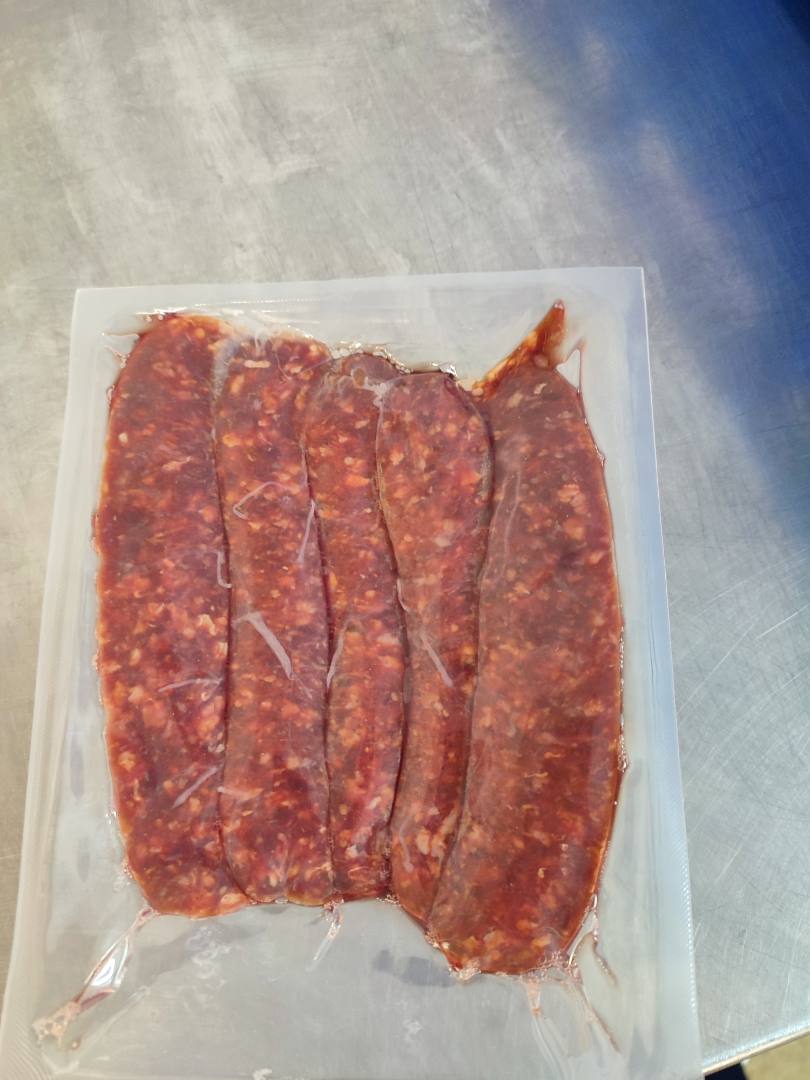
France – Beef Minced Steak -Small pure beef sausage – STEC E.coli O26: H11

Gov france

Gov france

England and Wales – Shiga toxin-producing Escherichia coli (STEC) data: 2020

Gov UK

Main points

A total of 402 confirmed cases of Shiga toxin-producing Escherichia coli (STEC) O157 were reported in England and Wales in 2020.

The lowest incidence of STEC O157 was in the London region (0.29 per 100,000 population) and the highest in the South West region (1.04 per 100,000 population).

Children aged 5 to 9 years had the highest incidence of infection (1.50 per 100,000 population, 95% confidence interval (CI) 1.12 to 1.96).

One-third of confirmed STEC O157 cases in England were hospitalised and 3% were reported to have developed Haemolytic Uraemic Syndrome (HUS).

A further 286 specimens in England and 41 in Wales were positive for Shiga toxins (Stx) genes on polymerase chain reaction (PCR) at the Gastrointestinal Bacteria Reference Unit (GBRU) but an organism was not cultured.

The most commonly isolated non-O157 STEC serogroup was STEC O26 (England: n=103 out of 553, 19%; and Wales: n=26 out of 268, 15%).

Three outbreaks of STEC involving 63 cases in England were investigated in 2020.

UK – Large rise of E. coli O26 infections noted in England

Food Safety News

An increase in a type of E. coli over the past decade has prompted scientists to warn of an emerging threat to public health in England.

While part of the rise is because of better detection of non-O157 Shiga toxin-producing E. coli (STEC) in labs, there is evidence more people are actually getting sick.

Researchers looked at STEC O26:H11 clonal complex (CC) 29 in England. Between January 2014 and December 2021, 834 human isolates from 724 patients belonging to CC29 were sequenced at the UK Health Security Agency (UKHSA).

STEC O26:H11 notifications in 2021 were eight times higher than those recorded in 2014. Diagnoses of STEC O26 in England have increased each year from 19 in 2014 to 144 in 2021. Most cases were female and the highest proportion belonged to the 0 to 5 age group, found the study in the Journal of Infection.

Hemolytic Uremic Syndrome (HUS) was diagnosed in 40 cases and three children died. HUS is a severe complication associated with E. coli infections that causes kidney failure.

Research – Six E. coli infections linked to fermented raw milk

Food Safety News

Five people are sick in France, two seriously, and one in Belgium after drinking a brand of raw fermented milk.

In France, four children and one adult have been infected by Shiga toxin-producing E. coli (STEC) O26:H11. They fell ill between the end of March and the beginning of April this year.

Santé publique France has been investigating two cases of Hemolytic Uremic Syndrome (HUS) in the Hauts-de-France and Île-de France regions. The latter was in the context of a family outbreak. The suspected food was fermented raw milk. HUS is a severe complication associated with E. coli infections that causes kidney failure.

“The sequencing of the strains isolated within these outbreaks confirmed the same genomic profile. Food investigations made it possible to identify, for the case in Hauts-de-France, the place of purchase and to sample milk on sale at the time of the inspections. It was fermented raw milk made in Belgium,” agency officials told Food Safety News.

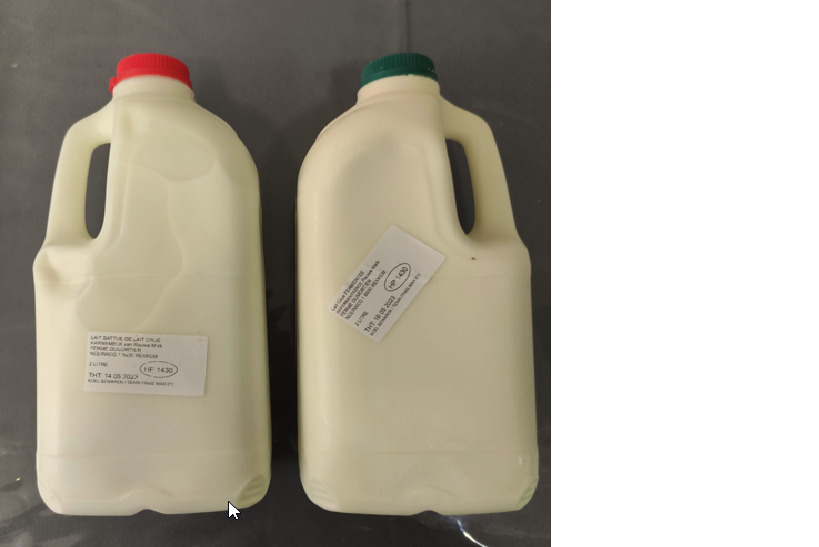
France – Dairy products: (Milk – Raw milk – Buttered milk – FERMENTED RAW MILK) – STEC E.coli O26:H11

Gov france

Identification information of the recalled product

  • Product category Feed
  • Product subcategory Milk and dairy products
  • Product brand name DUMORTIER FARM 8930 REKKEM Belgium
  • Model names or references Dairy products: (Milk – Raw milk – Buttered milk – FERMENTED RAW MILK) from FERME DUMORTIER 8930 REKKEM Belgium.
  • Identification of products
    Batch
    All batches marketed from mid-March
  • Packaging In 2 liter bottle (red or green cap)
  • Marketing start/end date From 03/15/2023 to 05/06/2023
  • Storage temperature Product to be stored in the refrigerator
  • Health mark HP 1430
  • Geographic area of ​​sale Departments: NORTH (59)
  • Distributors“The Oasis” 11 rue Jules Guesde 59000 Lille

Practical information regarding the recall

  • Reason for recall Detection of e.coli O26H11 producing shigatoxins on fermented raw milk.
  • Risks incurred by the consumer Toxigenic Shiga Escherichia coli (STEC)

USA – USDA Starts Testing Ground Beef For Big Six E. coli Strains, O157

Food Poisoning Bulletin

The USDA’s Food Safety and Inspection Service (FSIS) has started testing ground beef, bench trim, and other raw ground beef components for Shiga toxin-producing E. coli strains (STEC) that are adulterants. They include the “Big Six” O26, O45, O103, O111, O121, and O145 as well as O157. The testing started on February 1, 2023. This new program was announced in the Federal Register on June 4, 2020.

USDA Methods Update – Detection, Isolation, and Identification of Top Seven Shiga Toxin-Producing Escherichia coli (STEC) from Meat Products, Carcass, and Environmental Sponges

FSIS USDA

This method describes the laboratory procedure for analysis of raw and ready-to-eat meat products, and laboratory environmental sponge samples for the seven targeted STEC serogroups (O157, O26, O45, O103, O111, O121 and O145).

Major E. coli, and Salmonella outbreaks highlighted at a conference; investigations ongoing

Food Safety News

Two major foodborne outbreaks have recently been highlighted at a European conference on infectious diseases.

Presentations at the European Scientific Conference on Applied Infectious Disease Epidemiology (ESCAIDE) covered an E. coli outbreak from Nestlé pizzas in France and a multi-country monophasic Salmonella Typhimurium outbreak due to Ferrero chocolate.

In February 2022, Santé Publique France identified more cases of the pediatric hemolytic uremic syndrome (HUS) than usual with eight infections. Cases were positive for Shiga toxin-producing E. coli (STEC) O26:H11 or O103:H2 identified by whole genome sequencing (WGS). Only two people were sick from E. coli O103.

UK – Milk and cheese linked to English E. coli outbreaks

Food Safety News

Three E. coli outbreaks were reported in England earlier this year with two linked to dairy farms.

The Animal and Plant Health Agency (APHA) helped the UK Health Security Agency (UKHSA) investigate Shiga toxin-producing E. coli (STEC) O103, O145, and O26 outbreaks between July and September.

The E. coli O26 outbreak also involved cryptosporidium and began in the previous quarter. There were 11 cases of cryptosporidium and two people also had confirmed E. coli O26.

Cryptosporidium cases visited an open farm attraction during the incubation period of their illness. STEC cases had links to the same premises.

Health officials visited and advised on actions that would improve hygiene for visitors and reduce potential exposure to the pathogens.

APHA collected fresh faeces samples in the O103 and O145 incidents, from the yard where the cows had been prior to milking. In both cases, the outbreak strain was not detected.

The STEC O103 outbreak with 11 cases was associated with soft, raw cheese from a dairy farm in the East of England. An investigation pointed to brie-like unpasteurized soft cheese being contaminated sometime during spring.

The STEC O145 outbreak with 10 patients was linked to the consumption of milk products from a dairy farm in North West England, with illness onset from mid-July. Investigations identified an issue with pasteurization and problems with the cleaning and storage of milk crates which made external contamination of packaging plausible.