Category Archives: Clostridium

UK – Estimating deaths from foodborne disease in the UK for 11 key pathogens

NCBI

Objective

To estimate the number of deaths from foodborne disease in the UK from 11 key pathogens.

Design

Four different models were developed using data from a range of sources. These included enhanced surveillance, outbreaks, death certificates and hospital episode statistics data. For each model, median estimates were produced with 95% credible intervals (CrI). The results from the different models were compared.

Results

The estimates for foodborne deaths for each pathogen from the different models were consistent, with CrIs largely overlapping. Based on the preferred model for each pathogen, foodborne norovirus is estimated to cause 56 deaths per year (95% CrI 32 to 92), foodborne Salmonella 33 deaths (95% CrI 7 to 159), foodborne Listeria monocytogenes 26 deaths (95% CrI 24 to 28), foodborne Clostridium perfringens 25 deaths (95% CrI 1 to 163) and foodborne Campylobacter 21 deaths (95% CrI 8 to 47). The considerable overlap in the CrIs means it is not possible to make any firm conclusions on ranking. Most of these deaths occur in those aged over 75 years. Foodborne deaths from ShigellaCryptosporidiumGiardia, adenovirus, astrovirus and rotavirus are all rare.

Conclusions

We estimate that there are 180 deaths per year in the UK (95% CrI 113 to 359) caused by foodborne disease based on these 11 pathogens. While this is a small fraction of the estimated 2.4 million cases of foodborne illness per year it still illustrates the potential severity of these illnesses demonstrating the importance in continuing efforts to reduce these infections.
Keywords: infectious disease, CampylobacterSalmonella

Summary box

What is already known about this subject?

  • Foodborne disease is a common illness in the UK.

  • Previous research has estimated that there are 566 000 cases, 74 000 general practitioner presentations and 7600 hospital admissions related to foodborne disease from 13 known pathogens in UK; no estimate was made for deaths.

  • Campylobacter and norovirus are the most common foodborne pathogens in the UK.

  • Other common foodborne pathogens include Clostridium perfringens and Salmonella.

What are the new findings?

  • This study provides updated estimates of deaths for each of the 11 key foodborne pathogens considered; in total, these 11 pathogens cause 180 deaths per year in the UK (95% credible interval (CrI) 113 to 359).

  • Among them, Campylobacter, C. perfringens, Listeria monocytogenes, Salmonella and norovirus pathogens are responsible for over 98% of these deaths.

  • Ranking between these five is difficult due to overlapping CrIs.

How might it impact on clinical practice in the foreseeable future?

  • This highlights the potential severity of Salmonella, L. monocytogenesC. perfringensCampylobacter and norovirus, particularly in comparison with other infectious intestinal diseases that have a food source.

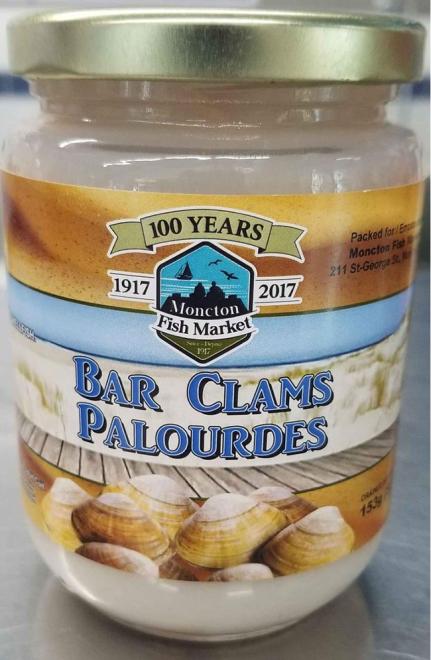
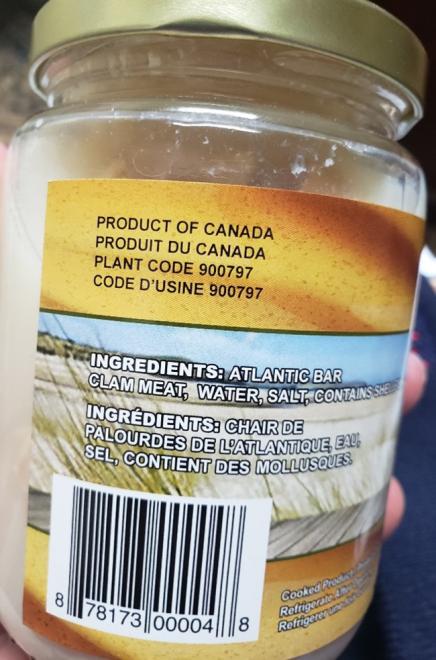
Canada – Moncton Fish Market brand Bar Clams recalled due to potential presence of dangerous bacteria – Clostridium botulinum

CFIA

Moncton Fish Market - Bar Clams: 153 g

Moncton Fish Market - Bar Clams: 153 g

Product
Bar Clams
Issue
Food » Microbial Contamination » Clostridium botulinum
What to do

Do not consume the recalled product

Affected products

Brand Product Size UPC Codes
Moncton Fish Market Bar Clams 153 g 8 78173 00004 8 All jars that were sold unrefrigerated

Issue

Moncton Fish Market Ltd. is recalling Moncton Fish Market brand Bar Clams that have been sold unrefrigerated from the marketplace because the product may permit the growth of Clostridium botulinum.

The recalled product has been sold at Moncton Fish Market, Moncton, New Brunswick.

What you should do

  • If you think you became sick from consuming a recalled product, call your doctor
  • Check to see if you have the recalled product in your home
  • Do not consume the recalled product
  • Recalled products should be thrown out or returned to the location where they were purchased

Food contaminated with Clostridium botulinum toxin may not look or smell spoiled but can still make you sick. Symptoms in adults can include facial paralysis or loss of facial expression, unreactive or fixed pupils, difficulty swallowing, drooping eyelids, blurred or double vision, difficulty speaking, including slurred speech, and a change in sound of voice, including hoarseness. Symptoms of foodborne botulism in children can include difficulty swallowing, slurred speech, generalized weakness and paralysis. In all cases, botulism does not cause a fever. In severe cases of illness, people may die.

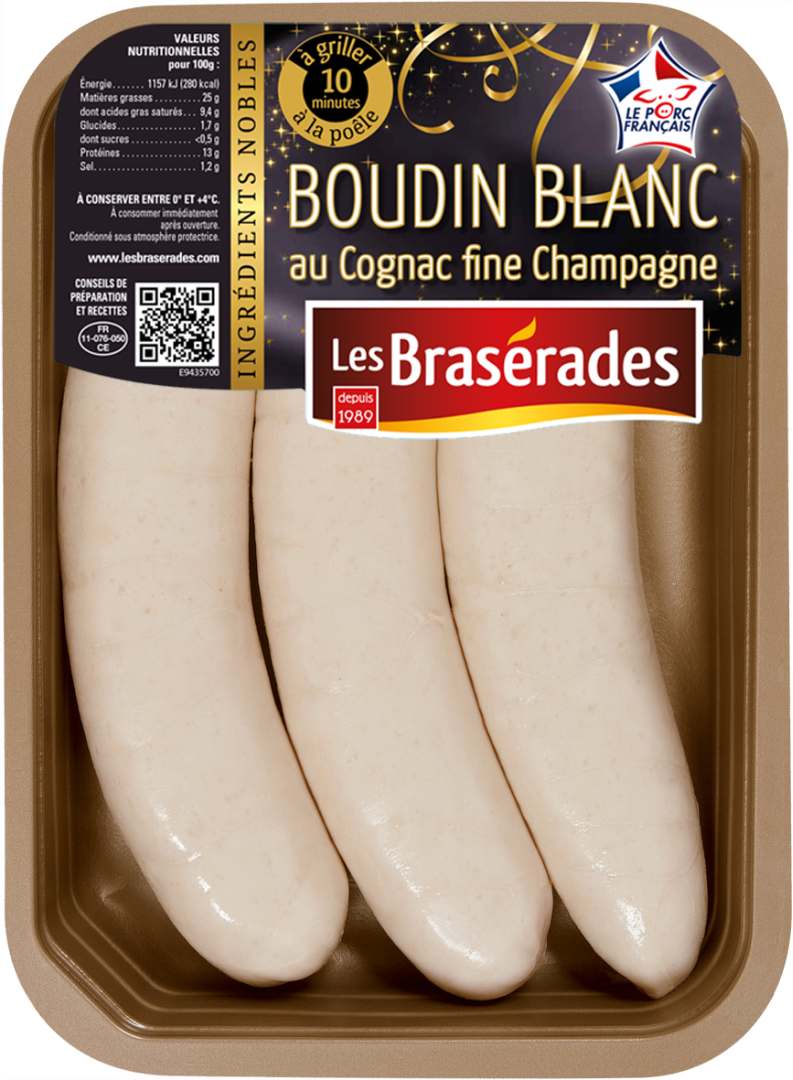
France – WHITE BOUDINS COGNAC FINE CHAMPAGNE Sausages – Clostridium perfringens

Gov france

Identifying information for the recalled product

  • Product category Food
  • Product sub-category Meats
  • Product brand name THE BRASERADES
  • Names of models or references WHITE BOUDINS COGNAC FINE CHAMPAGNE 3 * 125G WHITE BOUDINS COGNAC FINE CHAMPAGNE 7 * 125G
  • Product identification
    GTIN Lot Dated
    3387620061565 321340213 Use-by date 12/17/2021
    3387620061565 321340213 Use-by date 12/18/2021
    3387620061565 321340213 Use-by date 12/19/2021
    3387620061565 321340213 Use-by date 12/20/2021
    3387620061565 321340213 Use-by date 12/21/2021
    3387620061572 321340159 Use-by date 12/18/2021
    3387620061572 321340159 Use-by date 12/20/2021
    3387620061572 321340159 Use-by date 12/21/2021
    3387620061572 321340159 Use-by date 12/22/2021
  • Packaging MODIFIED UNDER ATMOSPHERE TRAY 3 * 125G MODIFIED UNDER ATMOSPHERE TRAY 7 * 125G
  • Start date / End of marketing From 12/06/2021 to 12/10/2021
  • Storage temperature Product to be stored in the refrigerator
  • Health mark FR 11.076.050 CE
  • Geographical sales area Whole France
  • Distributors Leclerc, Auchan, Carrefour, Atac
  • List of points of saleclients_livrés_boudins_fines_champagnes.pdf

Practical information regarding the recall

  • Reason for recall Bacteriological contamination by Clostridium perfringens
  • Risks incurred by the consumer Clostridium perfringens

USA – Clostridium Botulinum Outbreak May Be Associated With Canned Soup

Food Poisoning Bulletin

A new Clostridium botulinum outbreak on the USDA’s Core Investigation Table may be associated with canned soup. That pathogen is a risk with low acid canned foods such as canned soup or home canned vegetables.

There is no more information on the table about this outbreak. We do not know the patient case counts, if traceback or sampling is being conducted, or if any facilities are being inspected.

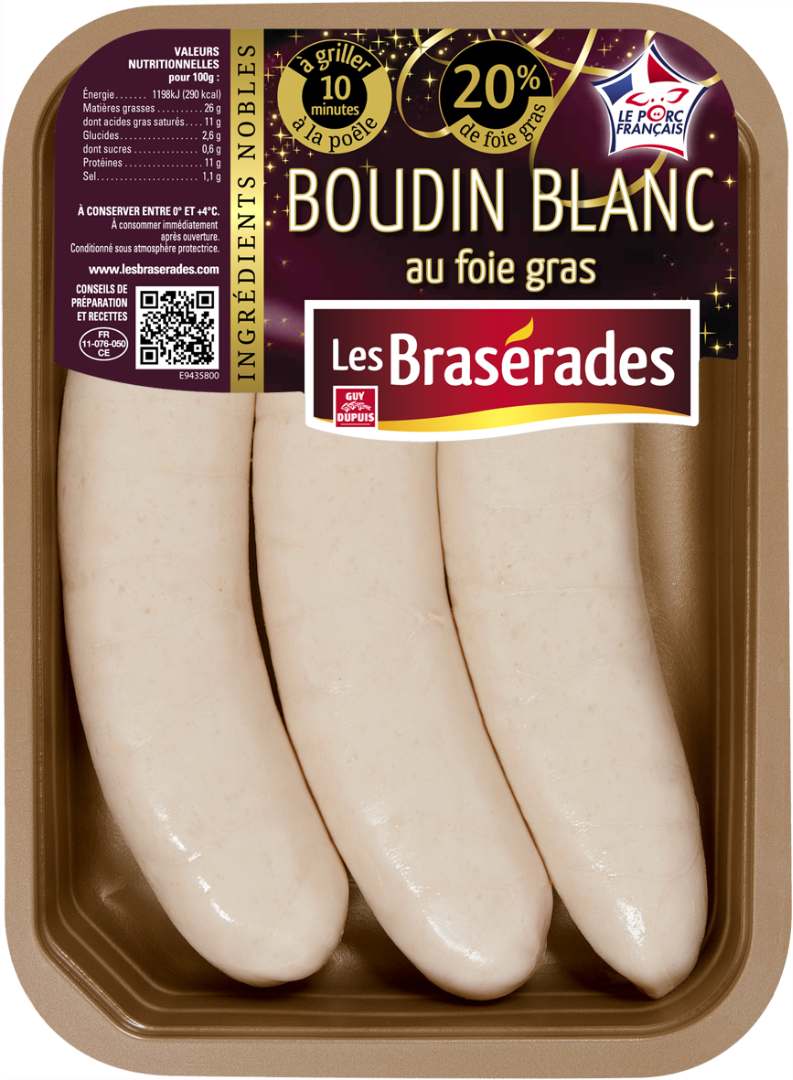
France – WHITE BOUDINS WITH FOIE GRAS – Clostridium perfringens

Gov france

Identifying information for the recalled product

  • Product category Food
  • Product sub-category Meats
  • Product brand name THE BRASERADES
  • Names of models or references WHITE BOUDINS WITH FOIE GRAS 3 * 125G WHITE BOUDINS WITH FOIE GRAS 7 * 125G
  • Product identification
    GTIN Lot Dated
    3387620061503 321340242 Use-by date 12/17/2021
    3387620061503 321340242 Use-by date 12/18/2021
    3387620061503 321340242 Use-by date 12/19/2021
    3387620061503 321340242 Use-by date 12/20/2021
    3387620061503 321340242 Use-by date 12/21/2021
    3387620061503 321340242 Use-by date 12/22/2021
    3387620061510 321340187 Use-by date 12/18/2021
    3387620061510 321340187 Use-by date 12/20/2021
    3387620061510 321340187 Use-by date 12/21/2021
    3387620061510 321340187 Use-by date 12/22/2021
  • Packaging MODIFIED UNDER ATMOSPHERE TRAY 3 * 125G MODIFIED UNIT UNIT 7 * 125G
  • Start date / End of marketing From 12/06/2021 to 12/10/2021
  • Storage temperature Product to be stored in the refrigerator
  • Health mark FR 11.076.050 EC
  • Geographical sales area Whole France
  • Distributors Leclerc, Auchan, Carrefour, System U
  • List of points of salelist_of_clients_delivered_boudins_au_foie_gras.pdf

Practical information regarding the recall

  • Reason for recall Suspicion of bacteriological contamination by Clostridium perfringens
  • Risks incurred by the consumer Clostridium perfringens

RASFF Alert- Botulism Case – Fish Soup

RASFF

Botulism case suspected to be linked to fish soup from France in Belgium

Ukraine – Four hospitalized with botulism after eating homemade canned mushrooms

Outbreak News Today

In Sumy Oblast in northeastern Ukraine, four people were hospitalized with botulism after eating homemade canned mushrooms at a dinner in the city of Lebedin.

According to the medical director of the Clinical Center for Infectious Diseases and Dermatology, Krasovitsky Irina Trotskaya, two victims were hospitalized at the center for infectious diseases in Sumy, two remained to be treated in the city hospital.

So far in 2021, Ukraine has reported 80 foodborne botulism outbreaks involving 89 patients, including three children.

In most cases, botulism in Ukraine is due to the consumption of dried and salted freshwater and sea fish (40%), meat, fish, vegetables, mushroom canned food and other meat products made at home or bought in unauthorized places.

USA – Preparing Your Holiday Turkey Safely

CDC

Are you preparing a turkey for your holiday meal? Turkey and its juice can be contaminated with germs that can make you and your family sick. For example, turkey can contain SalmonellaClostridium perfringensCampylobacter, and other germs. Whether you’re cooking a whole bird or a part of it, such as the breast, you should take special care. Follow the steps below to safely store, thaw, handle, and cook your turkey.

1. Store Turkey Properly

  • Frozen raw turkey should be stored in the freezer until you are ready to thaw it. Make sure your freezer is at 0˚F or below. Don’t store a turkey in a place where you can’t closely monitor the temperature, such as in a car trunk, a basement, the back porch, or in snow.
  • Fresh raw turkey can be stored in the refrigerator 1 to 2 days before cooking.

2. Thaw Turkey Safely

Use one of these methods to thaw your turkey.

  • Thaw your turkey in the refrigerator.
    • Keep your turkey in its original wrapping and place it in a container before putting it in the refrigerator. The container will prevent the turkey’s juice from dripping on other food.
    • Allow about 24 hours of thawing for each 4 to5 pounds of turkey.
    • A turkey thawed in the refrigerator can remain in the refrigerator for 1 to 2 days before cooking.
  • Thaw your turkey in cold water.
    • Be sure your turkey is in a leak-proof plastic bag before you place it in the sink. The bag will prevent the turkey’s juice from spreading in the kitchen. It will also prevent the turkey from absorbing water, which can make your cooked turkey runny.
    • Make sure your turkey is fully covered with the cold tap water.
    • Change the water every 30 minutes.
    • Allow about 30 minutes of thawing for each pound of turkey.
    • A turkey thawed in cold water must be cooked immediately after thawing.
  • Thaw your turkey in the microwave.
    • Follow the microwave manufacturer’s instructions for thawing turkeys.
    • A turkey thawed in the microwave must be cooked immediately after thawing.

Never thaw your turkey by leaving it out on the counter. A turkey must thaw at a safe temperature. When a turkey stays out at room temperature for more than 2 hours, its temperature becomes unsafe even if the center is still frozen. Germs can grow rapidly in the “danger zone” between 40°F and 140°F.

Get more information about thawing turkeys.external icon

3. Handle Turkey Correctly to Prevent the Spread of Germs

Raw turkey and its juice can contaminate anything they touch. Be sure to handle your turkey correctly to prevent harmful germs from spreading to your food, family, and friends.

  • Wash your hands with soap and water for 20 seconds before and after handling turkey.
  • Use a separate cutting board for raw turkey.
  • Never place cooked food or fresh produce on a plate, cutting board, or other surface that held raw turkey.
  • Wash cutting boards, utensils, dishes, and countertops with hot soapy water after preparing raw turkey and before you prepare the next item.

Learn more about the four steps to food safety: clean, separate, cook, and chill.

Do not wash or rinse raw turkey. Federal food safety advice has recommended against washing turkey or chicken since 2005, but some habits are hard to break. A 2020 survey* found that 78% of participants reported washing or rinsing turkey before cooking. Old recipes and family cooking traditions may tempt you to keep this practice going, but it can make you and your family sick. Poultry juices can spread in the kitchen and contaminate other foods, utensils, and countertops.

∗Source: 2020 Porter Novelli Consumer Stylesexternal icon Survey of 3,625 U.S. adults

4. Cook Stuffing Thoroughly

It’s safest to cook stuffingexternal icon in a casserole dish instead of inside your turkey. Cooking stuffing in a casserole dish makes it easy to be sure the stuffing is thoroughly cooked. If you do cook stuffing in the turkey, put the stuffing in the turkey just before cooking.

With either cooking method, use a food thermometer to make sure the stuffing’s center reaches 165°F. Germs can survive in stuffing that has not reached 165°F. If you cooked the stuffing in your turkey, wait 20 minutes after taking the bird out of the oven before removing the stuffing. This allows the stuffing to cook a little longer.

5. Cook Turkey Thoroughly

To roast a turkey in your oven, set the oven temperature to at least 325°F. Place the completely thawed turkey in a roasting pan that is 2 to 2-1/2 inches deep. Cooking timesexternal icon depend on the weight of the turkey and whether it is stuffed.

Use a food thermometer to make sure the turkey has reached a safe minimum cooking temperature of 165°F. Check by inserting a food thermometer into the center of the stuffing and the thickest part of the breast, thigh, and wing. Even if your turkey has a pop-up timer, you should still use a food thermometer to check that it is safely cooked. Let the turkey stand 20 minutes before removing all stuffing from the cavity and carving the meat. This will let the stuffing cook a little longer and make the turkey easier to carveexternal icon.

If you are cooking your turkey using another method, such as smoking or frying it, or roasting a turkey that is not fully thawed, follow these guidelinesexternal icon for cooking your bird safely.

Learn more about safe minimum cooking temperaturesexternal icon for other foods and how to use a food thermometerexternal icon.

6. Take Care of Leftovers

Refrigerate leftoversexternal icon at 40°F or colder within 2 hours of cooking to prevent food poisoning. Slice or divide big cuts of meat, such as a roast turkey, into small quantities for refrigeration so they can cool quickly. Reheat all leftovers to at least 165°F before serving.

Cooked turkey and dishes made with turkey, such as a casserole, can be stored in the refrigerator for 3 to 4 days or can be frozen to store longer.

Always refrigerate leftovers within 2 hours, or 1 hour if exposed to temperatures above 90°F (like a hot car or picnic).

The bacteria Clostridium perfringens grows in cooked foods left at room temperature. It is the second most common bacterial cause of food poisoning. The major symptoms are vomiting and abdominal cramps within 6 to 24 hours after eating.

  • Clostridium perfringens outbreaks occur most often in November and December.
  • Many of these outbreaks have been linked to foods commonly served during the holidays, such as turkey and roast beef.

Ukraine – Two botulism cases reported in Zaporizhzhia Oblast

Outbreak News Today

Two cases of foodborne botulism were reported in Berdyansk, Zaporizhzhia Oblast in southeastern Ukraine.

On November 17, it was reported that botulism was found in two residents of the city. An outbreak of the disease occurred among members of the same family. Homemade dried fish (roach, bream) could be a source of botulism.

The state of health of the sick is not reported.

Food borne botulism is a severe intoxication caused by eating the preformed toxin present in contaminated food.

Food borne botulism occurs when the bacterium Clostridium botulinum is allowed to grow and produce toxin in food that is later eaten without sufficient heating or cooking to inactivate the toxin. Botulinum toxin is one

Research – Clostridial Neurotoxins: Structure, Function and Implications to Other Bacterial Toxins

MDPI

Gram-positive bacteria are ancient organisms. Many bacteria, including Gram-positive bacteria, produce toxins to manipulate the host, leading to various diseases. While the targets of Gram-positive bacterial toxins are diverse, many of those toxins use a similar mechanism to invade host cells and exert their functions. Clostridial neurotoxins produced by Clostridial tetani and Clostridial botulinum provide a classical example to illustrate the structure–function relationship of bacterial toxins. Here, we critically review the recent progress of the structure–function relationship of clostridial neurotoxins, including the diversity of the clostridial neurotoxins, the mode of actions, and the flexible structures required for the activation of toxins. The mechanism clostridial neurotoxins use for triggering their activity is shared with many other Gram-positive bacterial toxins, especially molten globule-type structures. This review also summarizes the implications of the molten globule-type flexible structures to other Gram-positive bacterial toxins. Understanding these highly dynamic flexible structures in solution and their role in the function of bacterial toxins not only fills in the missing link of the high-resolution structures from X-ray crystallography but also provides vital information for better designing antidotes against those toxins. View Full-Text