Monthly Archives: February 2023

Finland – Several cases of food poisoning caused by oysters confirmed in Helsinki

Helsinki Times

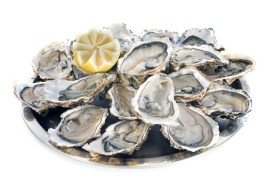
french oysters

The Environment Services of the City of Helsinki is investigating a number of suspected cases of food poisoning that are believed to be related to dining at several different restaurants and a pop-up event since the beginning of February. Currently, there are about 20 known cases of illness.

The individuals who have fallen ill all consumed oysters, and environmental services have taken food samples from the restaurants as well as patient samples from the city’s epidemiological action. Norovirus has been found in the samples.

The Food Safety Unit is requesting that anyone who has eaten oysters at Fisken på Disken, Ravintola Natura, Ravintola Gillet, The Cock, Ravintola Meripaviljonki, and the pop-up event at Ravintola Sake bar & Izakaya in February 2023 and has fallen ill after their meal, to contact the food safety unit. Illnesses may also be linked to other restaurants.

Those who have fallen ill are encouraged to contact the food safety unit primarily through an electronic food poisoning form at https://ilppa.fi. Contact can also be made by phone on weekdays from 8 am to 4 pm at +358 9 310 31527.

Norovirus is the most common cause of sudden intestinal infections in Finland.

Quebec – Notice not to consume duck and pork rillettes prepared and sold by the Chez Valère cafeteria at the Université de Montréal – Food Safety

Quebec

(MAPAQ), in collaboration with the Food Inspection Division of the City of Montreal and the Chez Valère cafeteria of the University of Montreal , located at 3200, rue Jean-Brillant, in Montreal, warns the public not to consume the product indicated in the table below, because it has not been prepared and packaged in such a way as to ensure its safety.

Product name

Format

Affected batch

“Duck and pork rillettes”

UNITARY

Units sold until February 20, 2023

The product that is the subject of this warning was offered for sale until February 20, 2023, at the establishment designated above as well as at the Bistro sur la montagne convenience store, located at 2350 , boulevard Édouard-Montpetit, in Montreal. The product was packaged in a glass jar and sold at room temperature.

The operator is voluntarily recalling the product in question. It has agreed with MAPAQ and the Food Inspection Division of the City of Montreal to distribute this warning as a precautionary measure. In addition, people who have this product in their possession are advised not to consume it. They must return it to the establishment where they bought it or throw it away. Even if the affected product shows no signs of tampering or suspicious odors, its consumption may represent a health risk.

It should be noted that no case of illness associated with the consumption of this food has been reported to MAPAQ to date.

France Saint Chabret – Listeria monocytogenes

Gov france

Identification information of the recalled product

  • Product category Feed
  • Product subcategory Milk and dairy products
  • Product brand name Unbranded
  • Model names or references Saint Chabret
  • Identification of products
    GTIN Batch Date
    3540500004506 50.31.22 Use-by date between 02/22/2023 and 05/06/2023
  • Packaging Whole piece of about 550g
  • Marketing start/end date From 09/02/2023 to 07/03/2023
  • Storage temperature Product to be stored in the refrigerator
  • Health mark FR 23 093 001 CE
  • Further information goat tome
  • Geographic area of ​​sale Whole France
  • Distributors Leclerc, creameries
  • List of points of saleList_clients_St_Chabret.pdf

Practical information regarding the recall

  • Reason for recall Presence of Listeria monocytogenes
  • Risks incurred by the consumer Listeria monocytogenes (causative agent of listeriosis)

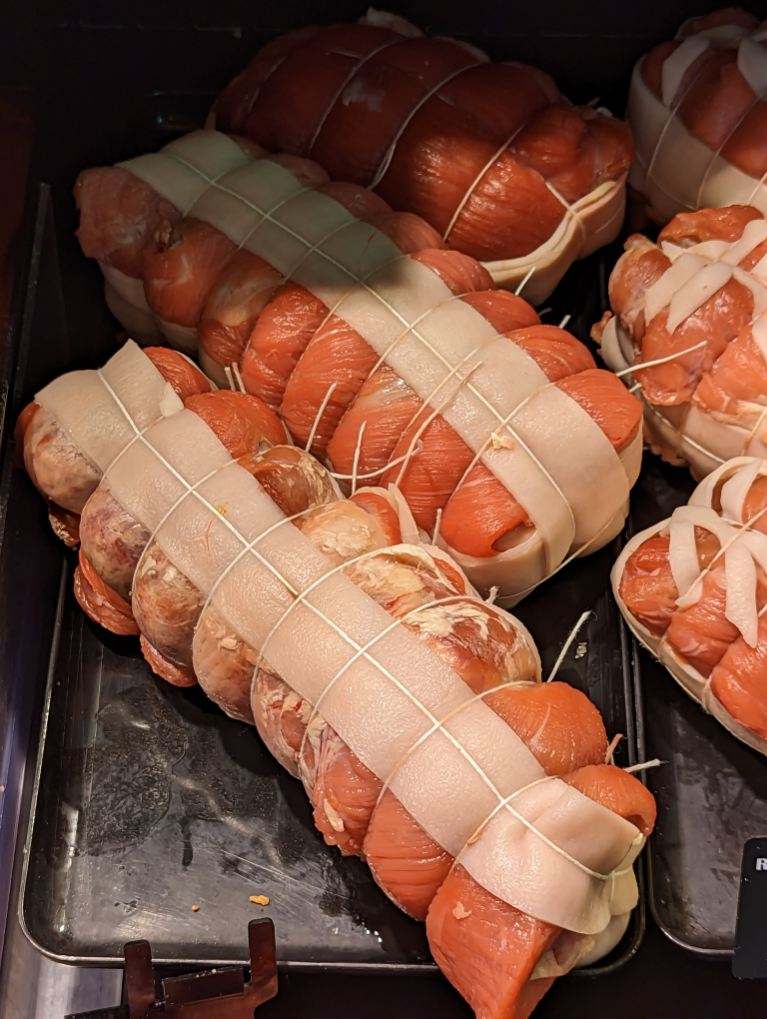
France – Stuffed roast veal – Salmonella

Gov france

Identification information of the recalled product

  • Product category Feed
  • Product subcategory Meats
  • Product brand name E.Leclerc Schiltigheim
  • Model names or references Stuffed roast veal
  • Identification of products
    Batch
    see attached product list
  • Products List Poster_roast_of_veal_stuffed.pdfAttachment
  • Packaging Sale on demand in the Traditional Butcher department
  • Marketing start/end date From 02/02/2023 to 04/02/2023
  • Storage temperature Product to be stored in the refrigerator
  • Further information Stuffed roast veal
  • Geographic area of ​​sale Center E.Leclerc Schiltigheim – SCHILDIS
  • Distributors Center E.Leclerc Schiltigheim

Practical information regarding the recall

  • Reason for recall Demonstration of the presence of salmonella
  • Risks incurred by the consumer Salmonella spp (causative agent of salmonellosis)

Germany – Koska Sade Helva – Salmonella

LMW

Alert type: Groceries
Date of first publication:

02/24/2023

Product name: Koska Sade Helva
Product images:

Koska Sade Helva.jpg
Manufacturer (distributor):

Belinay Feinkost GmbH Riedemannstr. 2 28239 Bremen

Reason for warning:

Salmonella

Packaging Unit: 200 g
Durability: 09/10/2024
Lot identification: Lot no. : 90-2535/22
Additional Information:

Salmonella disease manifests itself within a few days after infection with diarrhoea, abdominal pain and occasionally vomiting and a slight fever. The symptoms usually subside on their own after a few days. Babies, small children, senior citizens and people with a weakened immune system in particular can develop more severe illnesses. Anyone who has eaten this food and develops severe or persistent symptoms should seek medical attention and report possible salmonella infection. It makes no sense to seek preventive medical treatment without symptoms.

Germany – Pistachio nuts roasted and salted and pistachio nuts berry mix – Ochratoxin A

LMW

Alert type: Groceries
Date of first publication: 02/24/2023
Product name:

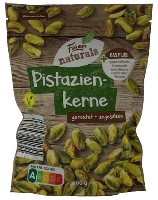
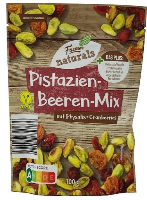
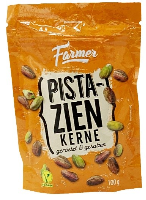
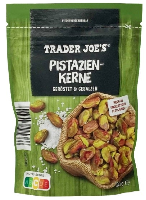
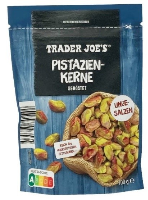
Pistachio nuts roasted and salted and pistachio nuts berry mix

Product images:
Photo Farmer naturals pistachios.jpg
Photo Farmer naturals pistachio berry mix.jpg
Photo Farmer pistachios.jpg
Photo Trader Joe Pistachios Roasted and Salted.jpg
Photo Trader Joe Roasted Pistachios.jpg
Manufacturer (distributor):

PL Food GmbH Kesselflickerstr. 10 21493 Lanken/Elmenhorst

Reason for warning:

Pistachio kernels with an increased ochratoxin A content (OTA, mold toxin) were used in the batches of the products mentioned here. OTA has a kidney-damaging and carcinogenic effect with greatly increased long-term intake.

Packaging Unit: 100 g

UK – Aldi recalls Plant Menu Organic Super Firm Tofu because of poor temperature control

FSA

Aldi is recalling Plant Menu Organic Super Firm Tofu because of a temperature control issue that could potentially spoil the product, which may be unsafe to eat. The issue only affects product sold at a limited number of Aldi stores in the Midlands.

Product details

Plant Menu Organic Super Firm Tofu
Pack size 200 g
Use by 13 April 2023 and 14 April 2023

Risk statement

Insufficient temperature control may result in spoilage of the product which may be unsafe to eat.

Action taken by the company

Aldi is recalling the above product from affected stores only. Point of sale notices will only be displayed in affected Aldi stores that are selling this product. These notices explain to customers why the product is being recalled and tells them what to do if they have bought the product. Please see the attached notice.

Our advice to consumers

If you have bought the above product do not eat it. Instead, return it to the Aldi store from where it was bought for a full refund. A full list of affected stores is available on the Aldi website at Product Notices (aldi.co.uk). For further information please visit help.aldi.co.uk or contact customer services on 08000420800

UK – APHA part of 5 UK E. coli outbreaks in 2022

Food Safety News

The Animal and Plant Health Agency (APHA) was involved in another two E. coli outbreaks in the United Kingdom in the final quarter of 2022.

In the first, APHA helped Public Health Wales investigate two human cases of Shiga toxin-producing E. coli (STEC) O145 linked to a private collection of animals on a smallholding. Multiple species were onsite including cattle, goats, deer, and pigs. Some food consumed by people was grown in the garden where cattle manure was used. Thirty environmental fecal samples were collected but a match to the outbreak strain was not found.

In the second, APHA visited an open farm at the request of an incident management team following an outbreak of E. coli O157 in people. The outbreak strain was detected in one environmental sample from a pig enclosure. The incident is ongoing so it is unclear how many people are sick. The advice was provided to reduce the risk to the public by making improvements to the supervision of animal contact, enhancing handwashing facilities, and improving some animal exhibits.

In all of 2022, APHA was part of five E. coli investigations. The agency helped the UK Health Security Agency (UKHSA) investigate E. coli O103, O145, and O26 outbreaks between July and September.

The E. coli O26 outbreak also involved cryptosporidium. There were 11 cases of cryptosporidium and two people had confirmed E. coli O26. Cryptosporidium patients had visited an open farm attraction during the incubation period of illness. The E. coli patients had links to the same premises.

The E. coli O103 outbreak with 11 cases was associated with soft, raw milk cheese from a dairy farm in the East of England. Pasteurization was put in place for the production of the soft cheese, HACCP processes were reviewed, and enhanced control measures were taken.

The E. coli O145 outbreak with 10 patients was traced to the consumption of milk products from a dairy farm in North West England, with illness onset from mid-July. Investigations identified an issue with pasteurization and problems with the cleaning and storage of milk crates.

Research – A Systematic Quantitative Determination of the Antimicrobial Efficacy of Grape Seed Extract against Foodborne Bacterial Pathogens

MDPI

Abstract

Concerns regarding the role of antimicrobial resistance (AMR) in disease outbreaks are growing due to the excessive use of antibiotics. Moreover, consumers are demanding food products that are minimally processed and produced in a sustainable way, without the use of chemical preservatives or antibiotics. Grape seed extract (GSE) is isolated from wine industry waste and is an interesting source of natural antimicrobials, especially when aiming to increase sustainable processing. The aim of this study was to obtain a systematic understanding of the microbial inactivation efficacy/potential of GSE against Listeria monocytogenes (Gram-positive), Escherichia coli and Salmonella Typhimurium (Gram-negative) in an in vitro model system. More specifically, for L. monocytogenes, the effects of the initial inoculum concentration, bacterial growth phase and absence of the environmental stress response regulon (SigB) on the GSE microbial inactivation potential were investigated. In general, GSE was found to be highly effective at inactivating L. monocytogenes, with higher inactivation achieved for higher GSE concentrations and lower initial inoculum levels. Generally, stationary phase cells were more resistant/tolerant to GSE as compared to exponential phase cells (for the same inoculum level). Additionally, SigB appears to play an important role in the resistance of L. monocytogenes to GSE. The Gram-negative bacteria under study (E. coli and S. Typhimurium) were less susceptible to GSE as compared to L. monocytogenes. Our findings provide a quantitative and mechanistic understanding of the impact of GSE on the microbial dynamics of foodborne pathogens, assisting in the more systematic design of natural antimicrobial-based strategies for sustainable food safety.

Research – Microbial Biocontrol in the Agri-Food Industry

MDPI

Abstract

In recent years there has been a growing interest in the use of natural antimicrobial compounds to limit or avoid the use of chemical antimicrobials. Natural antimicrobial compounds can come from plants (essential oils) or from microorganisms (bacteriocins, mycocines, and active peptides). Despite a wide range of possible applications, their exploitation at the industrial level is still limited and needs to be investigated. The actual and possible applications of natural antimicrobial compounds in agri-food are a growing research field. In addition to the use of antimicrobial compounds, microorganisms themselves can be used in the control of spoilage microorganisms along the entire production chain of the agri-food industry. Likewise, the papers collected in this Special Issue indicate the fast development of novelties in this research field.