Monthly Archives: March 2022

USA – TechTalk Podcast Episode 3: Artificial Intelligence in the New Era of Smarter Food Safety

FDA

On March 21, 2022, the third installment of FDA’s new podcast series on technology and food safety will focus on artificial intelligence (AI) and its potential to advance food safety.

This quarterly podcast explores the potential for novel technological approaches and solutions in each of the core elements in the New Era of Smarter Food Safety Blueprint. The second Core Element, called Smarter Tools and Approaches for Prevention and Outbreak Response, includes goals to expand predictive analytics capabilities using AI and machine learning tools.

In this third podcast, Frank Yiannas, Deputy FDA Commissioner for Food Policy and Response, and Donald Prater, Associate Commissioner for Imported Food Safety, will lead a discussion with food industry experts on subjects that include the opportunities that AI offers to help protect consumers from food safety issues, potential uses of AI that food producers could consider, and what’s on the horizon for AI in FDA’s New Era of Smarter Food Safety.

The experts:

  • Maria Velissariou, Global Corporate Research & Development Vice President and Chief Science Officer for Mars Incorporated, a global, family-owned business with a portfolio of confectionary, food and pet-care products and services;
  • Nikos Manouselis, founder and CEO of Agroknow, a food safety intelligence company that predicts food safety risks to inform prevention; and
  • Cronan McNamara – founder and CEO of Creme Global, a company providing food safety data analytics and predictive modeling software and services.

To Listen

The link to listen will be posted on Monday, March 21, 2022 on this page and on the TechTalk Podcast main page on fda.gov.

Registration is not required but questions can be emailed in advance at SmarterFoodSafety@fda.hhs.gov. Questions submitted by March 14, 2022 may be considered by the panelists.

Related Podcasts

Slovakia – Safe defrosting of food – promotional leaflet in Slovakian

MPSR

The National Contact Point EFSA (Department of Food Safety and Nutrition MPRV SR ) in cooperation with the European Food Safety Authority has prepared a leaflet on safe defrosting of food in the Slovak language.

The leaflet presents basic information on defrosting food, usable in every household. By reducing the mistakes that consumers make when handling frozen food incorrectly, the formation of harmful bacteria is eliminated. Proper thawing procedures reduce the risk of foodborne illness and reduce food waste.

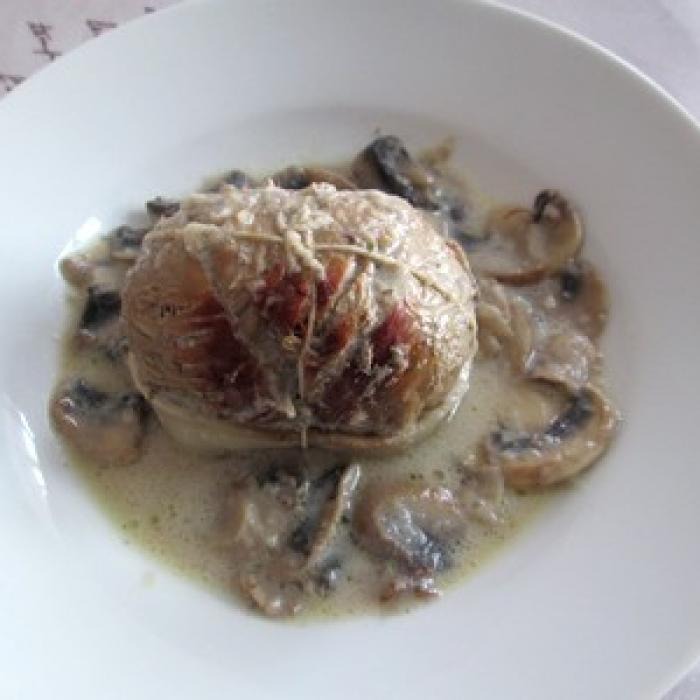
France – Veal Escalope with Chanterelle Cream – Salmonella

Gov france

Identification information of the recalled product

  • Product category Food
  • Product subcategoryMeats
  • Product brand name E. Leclerc center in Gouesnou
  • Model names or references veal escalope with chanterelle cream
  • Identification of products
    GTIN Lot
    0200293000000 All lots
  • Marketing start/end date From 04/03/2022 to 08/03/2022
  • Storage temperature Product to be stored in the refrigerator
  • Health mark nil
  • Further information Product sold at the Butcher stand
  • Geographic area of ​​sale catchment area: Brest region
  • Distributors any

Practical information regarding the recall

  • Reason for recall presence of salmonella in 1 analysis

Hungary – Hungary seeks data on consumers’ habits with frozen vegetables

Food Safety News

Link to Portal

Hungary’s food agency has launched a survey to find out more on people’s habits related to quick-frozen vegetables.

The National Food Chain Safety Office (Nébih) said it would provide the authority with a picture of the risks at the consumer level for the product category.

An online questionnaire can be completed until March 31 and covers consumer preferences for frozen vegetables and whether they follow the instructions on the label. There are also questions on Listeria monocytogenes, Salmonella and E. coli.

Past outbreak
From 2015 to 2018, an outbreak of Listeria monocytogenes caused by contamination of frozen corn produced in Hungary by Greenyard affected five countries in Europe as well as Australia with 54 confirmed patients and 10 deaths.

Despite the contamination, illnesses could have been prevented or reduced if people had been aware of the food safety risks and how to avoid them, according to Nébih.

To identify the hazards and reduce the risks, the agency is going to assess domestic consumer habits.

The questionnaire seeks answers to what Hungarian consumers think about quick-frozen products, how often they eat them and their preparation habits. The survey also looks at whether people are aware of food safety risks during purchase, transport, home storage and preparation and their knowledge about refrigerator and freezer temperatures as well as thawing and refreezing.

Based on the results, Nébih will put together a guide for consumers highlighting the most important findings. The agency will also give advice on how to minimize the food safety risks associated with quick-frozen vegetables in households.

Fagyasztott zöldségek vásárlásáról és fogyasztásáról gyűjt információkat a Nébih

Új kutatást indít a Nemzeti Élelmiszerlánc-biztonsági Hivatal (Nébih) a magyar lakosság gyorsfagyasztott zöldségekhez kapcsolódó vásárlási, felhasználási és fogyasztási szokásainak megismerése érdekében. A március 31-ig kitölthető online kérdőív többek között arra is kitér, hogy a fogyasztók mennyire kedvelik a fagyasztott zöldségeket, milyen ételekhez vásárolják őket, vagy, hogy figyelembe veszik-e a jelölésen szereplő felhasználási utasításokat. A kutatás segítségével a hatóság átfogó képet kaphat arról, milyen valós kockázatok merülnek fel fogyasztói szinten e termékkategóriával kapcsolatban.
Néhány éve az EU-ban lezajlott egy több országot is érintő, gyorsfagyasztott zöldségekhez kapcsolódó Listeria monocytogenes járvány. Az élelmiszerbiztonsági pandémiában bizonyítottan 46 személy betegedett meg és szorult kórházi kezelésre, valamint 5 haláleset is történt. Szomorú tény, hogy a szennyezés ellenére a megbetegedések megelőzhetők lettek volna, ha a fogyasztók tisztában vannak az élelmiszerbiztonsági kockázatokkal és azok elkerülésének módjával.
A veszélyforrás azonosítása és csökkentése érdekében a Nébih szeretné felmérni a hazai fogyasztói szokásokat. A hivatal https://portal.nebih.gov.hu/felmeres linken elérhető online kérdőíve többek között arra keresi a választ, hogy a magyar fogyasztók mit gondolnak a gyorsfagyasztott termékekről, miket részesítenek előnyben, vannak-e általános és speciális elkészítési szokásaik, továbbá elolvassák-e, betartják-e a jelölésen szereplő utasításokat. A felmérés arra is kitér, hogy a fogyasztók tisztában vannak-e az élelmiszerbiztonsági kockázatokkal a vásárlás, a szállítás, az otthoni tárolás és az előkészítés során.
A kérdőív segítségével a hatóság átfogó képet kaphat arról, hogy melyek a legjelentősebb kockázatok fogyasztói szinten e termékkategóriában. Az eredmények alapján a Nébih egy lakosságnak szóló tájékoztatót is összeállít a későbbiekben, kiemelve a felmérés szerinti kritikus pontokat. Az útmutatóban a hatóság azt is bemutatja majd, hogyan lehet a háztartásokban a gyorsfagyasztott zöldségekhez kapcsolódó élelmiszerbiztonsági kockázatokat a minimumra csökkenteni.
Az adatgyűjtés 2022. március 31-ig tart. A kérdőív kitöltése 10-15 percet vesz igénybe. A felmérés az alábbi linken elérhető: https://portal.nebih.gov.hu/felmeres

2022. március 4.

USA – FDA: Salmonella removed from Infant Formula Outbreak – Cronobacter sakazakii still cause of 4 illnesses with 2 deaths

Food Poison Journal

Total Adverse Events: 4
Hospitalizations: 4
Reported Deaths: 2
Illness Onset Date Range: 9/6/2021 – 1/4/2022
States with Adverse Events: MN (1), OH (2), TX (1)
Product Distribution: Nationwide and International

The FDA, along with CDC and state and local partners are investigating consumer complaints and/or reports of infant illness related to products from Abbott Nutrition’s Sturgis, MI facility. All of the ill patients are reported to have consumed powdered infant formula produced from Abbott Nutrition’s Sturgis, MI facility.

The Salmonella Newport illness previously included in this investigation of complaints and illnesses has been removed. In the early stages of this investigation, FDA included all consumer complaints of illness with exposure to products from the Sturgis, MI, facility. After further investigation, the FDA has determined that there is not enough information to definitively link this illness to powdered infant formula. CDC confirmed that this single Salmonella illness is not linked to an outbreak. The FDA and CDC are continuing to monitor for Salmonella cases and consumer complaints that may be related to this incident.

Cronobacter infection surveillance is not handled the same way as infection with more common foodborne pathogens, such as Salmonella or E. coli O157:H7. Cronobacter is not nationally notifiable and not reportable except in one state, which means doctors and labs are not required to report cases to their health department. Because Cronobacter is not a nationally notifiable pathogen, FDA relies on consumer complaints of illness sent to the Agency and on health care providers informing FDA directly about infants with Cronobacter infections. In addition, because Cronobacter is not nationally notifiable, whole genome sequencing (WGS) is rarely performed on these isolates. To date, no outbreaks of Cronobacter have been detected using WGS.

When single cases of Cronobacter are reported, the FDA conducts a thorough review of each complaint, conducts sampling of products, and initiates inspections as appropriate. FDA collaborates with CDC, which has developed a detailed questionnaire specifically for Cronobacter infections that is often used by state health departments in instances of Cronobacter sakazakii infection.

New Zealand – Gopals Paneer cheese recalled

MPI

11/03/2022

Food company Gopals Sweet & Snacks Limited is recalling its Gopala brand paneer cheese due to the possible presence of Listeria.

The pathogen was discovered through testing of product following 2 complaints of sickness.

New Zealand Food Safety deputy director general Vincent Arbuckle said the pathogens’ long incubation period made it difficult to establish a definitive link between the 2 cases and the product.

“However, because of the detection of Listeria in specific batches, we support the recall, and advise anyone who has bought paneer recently to take the precaution of checking the product date mark to see if it is affected.

“Importantly, cooking the paneer thoroughly until it is piping hot all the way through will kill the pathogen. People should not eat affected product raw.

“If you are in any doubt, please throw the product out or return it to the place it was purchased.

“Listeria poisoning (called listeriosis) can be serious in vulnerable people, including the young, the elderly, pregnant women and the immunocompromised.

“Healthy adults are likely to experience only mild infection, causing mild diarrhoea and flu-like symptoms.

Further information on Listeria

If you have consumed affected product and have any concerns about your health contact your health professional.

The affected product is all batches and dates up to and including best before 5 May 2022 of Gopala brand paneer cheese sold in packets of various weights between 300g and 1kg.

It is sold at Foodstuffs, Countdown and specific grocery stores throughout New Zealand.

This information is on our website’s recall page where we will post any updates about this recall as they come to hand.

Food recall: Gopala brand Paneer

As part of the recall process, New Zealand Food Safely will be working closely with Gopals Sweet & Snacks Limited to establish how the issue arose and what actions might be required to prevent it recurring.

USA – Nebraska: Norovirus and Rotavirus Outbreaks reported in the south central part of state

Outbreak News Today

norovirus-1080x655

The Two Rivers Public Health District in south-central Nebraska is reporting an increase of both norovirus and rotavirus cases in the district.

Norovirus and rotavirus outbreaks also frequently occur in schools, childcare centers, colleges, and universities. Both norovirus and rotavirus are spread by accidentally getting tiny particles of feces (poop) or vomit from an infected person in your mouth. Outbreaks on school and university campuses have even led to campus closures. Close quarters, shared spaces, and high-touch surfaces make it easy for norovirus and rotavirus to spread.

Health officials strongly recommends taking the following actions:
• Washing hands carefully and frequently
• Staying home when experiencing vomiting and diarrhea
• Careful cleaning of surfaces that have had contact with vomit and diarrhea using an EPA certified cleaning products

RASFF Alert – Histamine – Tuna Fillet

RASFF

Histamine in Tuna fillet center cut from the Maldives in the Netherlands and Belgium

RASFF Alert – Pseudomonas fluorescens

RASFF

Burrata – Pseudomonas fluorescens – Italie in France

RASFF Alerts – Ochratoxin A – Nutmeg – Date Syrup

RASFF

Ochratoxin A content above the limit in Nutmeg from Indonesia in Hungary and Serbia

RASFF

Ochratoxin A in date syrup from Sweden in Germany