Monthly Archives: February 2021

Ireland – Recall of Two Batches of SuperValu Yellowfin Tuna Steaks Due to Possible Presence of Histamine

FSAI

Monday, 15 February 2021

Summary
Category 2: For Information
Alert Notification: 2021.17
Product: SuperValu Signature Taste Line Caught Yellowfin Tuna Steaks; pack size: 240g
Batch Code: Use-by dates: 16/02/2021 and 17/02/2021
Country Of Origin: Unknown

Message:

As a precaution, Supervalu is recalling the above two batches of its Signature Taste Yellowfin Tuna Steaks due to the possible presence of elevated histamine levels.  In some people, elevated levels of histamine can cause symptoms which are similar to those of an allergic reaction. Point-of-sale recall notices will be displayed in stores supplied with the implicated batches.

Yelllowfin

USA – Victims of 2015 Listeria outbreak involving Blue Bell invited to follow Kruse case

Food Safety News

Victims of foodborne illness are often so numerous that the government wants to cast the wide internet in contacting them about felony prosecutions that often occur years later.

Federal prosecutors who plan to take former Blue Bell Creameries president Paul Kruse to a jury trial in July are telling the judge this is just such a case. They filed a motion on Friday, Feb. 12, asking for a court order authorizing the Department of Justice (DOJ) to comply with the Crime Victims’ Rights Act “by using reasonable alternative measures for notifying potential unknown victims” in the Kruse case where the defendant is charged with multiple counts of fraud and conspiracy in relation to a deadly Listeria outbreak

Singapore – Suspension of Hooi Kee Eating House’s Food Business Operations – Salmonella

Click to access joint-moh-sfa-media-release—suspension-of-hooi-kee-eating-house-s-food-business-operations.pdf

USA – Listeria Outbreak Linked to Hispanic-Style Fresh and Soft Cheeses

CDC

Photo of soft cheese on a cutting board

Fast Facts
  • Illnesses: 7
  • Hospitalizations: 7
  • Deaths: 0
  • States: 4
  • Recall: No
  • Investigation status: Active

You are at higher risk for severe Listeria illness if you are pregnant, aged 65 or older, or have a weakened immune system due to certain medical conditions or treatments. If you are not in these groups, you are unlikely to get very sick from Listeria.

  • Don’t eat any Hispanic-style fresh and soft cheeses (like queso fresco, queso blanco, and queso panela), until we identify a specific type or brand that is making people sick.
  • Call your healthcare provider right away if you have these symptoms after eating Hispanic-style fresh and soft cheeses:
    • Pregnant people typically experience only fever, fatigue, and muscle aches. However, Listeria infection during pregnancy can lead to miscarriage, stillbirth, premature delivery, or life-threatening infection of the newborn.
    • People who are not pregnant may experience headache, stiff neck, confusion, loss of balance, and convulsions, in addition to fever and muscle aches.

Finland – Salmonella sickens 30 in Finland

Food Safety News

kswfoodworld Salmonella

At least 30 people have fallen ill after eating at a restaurant in Finland during the end of January.

An investigation by public health officials in the town of Kokkola, also known as Karleby, found Salmonella was behind the illnesses.

The first infection was recorded on Jan. 27 and no patients have been reported since Jan. 29. The most common symptoms include diarrhea, fever and abdominal pain.

Sigrid’s restaurant carried out cleaning and extensive disinfection after the suspicion of an outbreak was raised. Operations at the eatery are continuing as normal.

Frozen product suspected
Initially, no Salmonella was found in food and surface samples. Additional samples were taken in the restaurant, from staff and of the food.

Preliminary results show the suspected source of infection is a frozen product for use in commercial kitchens. Findings will be confirmed later in February after further investigations are completed. Sales of the implicated product have been suspended in the country, according to officials.

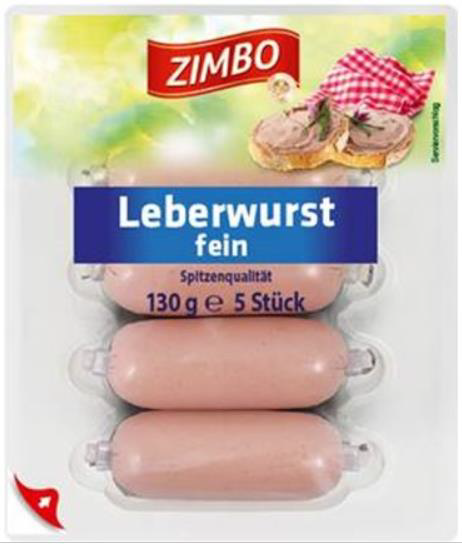
Germany – Zimbo liver sausage fine 130 g Distributed by Kaufland -Chill Chain Failure

LMW

Warning type:Food
Date of first publication:02/12/2021
Product name:Zimbo liver sausage fine 130 g Distributed by Kaufland
Product pictures:

Image.png

Press release

Manufacturer (distributor):Kaufland Service GmbH & Co. KG Neckarsulm
Reason for warning:

The cold chain of this food was interrupted for several days, so that the safety of the food is not guaranteed until the end of the best-before date.

Packaging Unit:130 g
Durability:with all best-before dates that were sold in our branches between February 5th and 10th, 2021.
Lot identification:

GTIN: 4006650017845

Further information:Reference is made to the company’s press release attached.
Contact to the responsible authorities:
Baden-Württemberg:poststelle@mlr.bwl.de
Bavaria:poststelle@lgl.bayern.de
Berlin:poststelle@senjustva.berlin.de
Brandenburg:Konsumenterschutz@Msgiv.Brandenburg.de
Bremen:Schnellwarnung@gesundheit.bremen.de
Hamburg:poststelle@justiz.hamburg.de
Hesse:Schnellwarnung@rpda.hessen.de
Mecklenburg-Western Pomerania:poststelle@lm.mv-regierung.de
Lower Saxony:poststelle@ml.niedersachsen.de
North Rhine-Westphalia:poststelle@mulnv.nrw.de
Rhineland-Palatinate:Poststelle.Referat22@lua.rlp.de
Saarland:poststelle-luv@lav.saarland.de
Saxony:poststelle@sms.sachsen.de
Saxony-Anhalt:poststelle@ms.sachsen-anhalt.de
Schleswig-Holstein:poststelle@jumi.landsh.de
Thuringia:LM-Ueberendung@tlv.thueringen.de

Uzbekistan: Botulism outbreak reported in Samarkand region, Linked to canned tomatoes

Outbreak News Today

kswfoodworld

On February 7, five people with signs of food poisoning were admitted to the infectious diseases department of the Bulungur District Medical Association in Samarkand region in southeastern Uzbekistan.

They were later diagnosed with botulism at the hospital. Despite the efforts of the doctors, one of the admitted, a 20-year-old man, died. Four more are in intensive care.

According to preliminary data, all five the day before, during lunch at the house of one of the victims, they ate canned tomatoes prepared at home.

Greece – Evidence for waterborne origin of an extended mixed gastroenteritis outbreak in a town in Northern Greece, 2019

Cambridge Core

We investigated a large gastroenteritis outbreak that occurred in Northern Greece in 2019. A case was defined as anyone presenting with diarrhoea and/or vomiting from 24/01/2019 to 04/02/2019. We conducted a case-control study (CCS) using random selection of participants >16 years of age, residents of town X, who visited the health care centre between 25-28/01/2019.

Moreover, we conducted a retrospective cohort study (CS) at the four elementary schools of the town. We collected clinical and water samples and the water supply system was inspected. In total, we recorded 638 cases (53% female; median age was 44 years (range 0-93)). Forty-eight cases and 52 controls participated in the CCS and 236 students in the CS. Both CCS and CS indicated tap water as the most likely source (OR=10, 95% CI, 2.09-93.4, explaining 95.7% of cases; RR= 2.22, 95% CI, 1.42-3.46, respectively).

More than one pathogen were detected from stool samples of 6 of the 11 cases tested (norovirus, Campylobacter jejuni, EHEC and EPEC). Water samples, collected after ad-hoc chlorination, tested negative. Technical failures of the water tanks’ status were identified. Our results suggested a waterborne outbreak. We recommended regular monitoring of the water supply system and immediate repair of technical failures.

Research – Characterization of Bacterial Communities of Cold-Smoked Salmon during Storage

MDPI

Cold-smoked salmon is a widely consumed ready-to-eat seafood product that is a fragile commodity with a long shelf-life. The microbial ecology of cold-smoked salmon during its shelf-life is well known. However, to our knowledge, no study on the microbial ecology of cold-smoked salmon using next-generation sequencing has yet been undertaken. In this study, cold-smoked salmon microbiotas were investigated using a polyphasic approach composed of cultivable methods, V3—V4 16S rRNA gene metabarcoding and chemical analyses. Forty-five cold-smoked salmon products processed in three different factories were analyzed. The metabarcoding approach highlighted 12 dominant genera previously reported as fish spoilers: Firmicutes Staphylococcus, Carnobacterium, Lactobacillus, β-Proteobacteria Photobacterium, Vibrio, Aliivibrio, Salinivibrio, Enterobacteriaceae Serratia,Pantoea, γ-Proteobacteria Psychrobacter, Shewanella and Pseudomonas. Specific operational taxonomic units were identified during the 28-day storage study period. Operational taxonomic units specific to the processing environment were also identified. Although the 45 cold-smoked salmon products shared a core microbiota, a processing plant signature was found. This suggest that the bacterial communities of cold-smoked salmon products are impacted by the processing environment, and this environment could have a negative effect on product quality. The use of a polyphasic approach for seafood products and food processing environments could provide better insights into residential bacteria dynamics and their impact on food safety and quality. View Full-Text

Research – Cross-Contamination on Atypical Surfaces and Venues in Food Service Environments

Journal of Food Protection

Cross-contamination of raw food to other surfaces, hands, and foods is a serious issue in foodservice.  With individuals eating more meals away from home, contracting a foodborne illness from a food service establishment is an increasing concern.  However, most studies have concentrated on hands or food contact surfaces and neglected atypical and unusual surfaces (surfaces that are not typically identified as a source of cross-contamination) and venues.  This review seeks to identify atypically cross-contaminated surfaces and atypical venues where cross-contamination could occur that have not been examined thoroughly in the literature.  Most surfaces that could be at risk for cross-contamination are frequently touched, rarely cleaned and sanitized, and can support the persistence and/or growth of foodborne pathogens.  These surfaces include, menus, spice and condiment containers, aprons and coveralls, mobile devices and tablets, and currency, among others.  Venues that are explored, temporary events, mobile vendors, and markets, are usually limited in space or infrastructure, have low compliance to proper handwashing, and provide the opportunity for raw and RTE foods to come into contact with one another. These factors all create an environment where cross-contamination can occur and potentially impact food safety.  A more comprehensive cleaning sanitizing regime encompassing these surfaces and venues could potentially help mitigate the cross-contamination described here.  This review highlights key surfaces and venues that have the potential to be cross-contaminated that have been underestimated in the past or are not fully explored in the literature.  These knowledge gaps demonstrate where further work is need to fully understand the role of these surfaces and venues in cross-contamination and how it can be prevented in the future.