Category Archives: Uncategorized

RASFF Alert – Food Poisoning – Live Oysters

RASFF-Logo

RASFF – food poisoning suspected to be caused by live oysters from France in the Netherlands

RASFF Alert – Norovirus – Chilled Pacific Oysters

RASFF-Logo

RASFF – norovirus (presence /2g) in chilled Pacific oysters (Crassostrea gigas) from France in Italy

RASFF Alerts – Moulds – Broken Rice

RASFF-Logo

RASFF – broken rice from Cambodia infested with moulds in Portugal

RASFF Alert – Bacillus cytotoxicus – Insect Flour

RASFF-Logo

RASFF – Bacillus cytotoxicus (1 900 000; 3 500 000; 900 000; 5 400 000; 3 200 000 CFU/g) in product containing insect flour(Acheta Domesticus) from Germany, with raw material from the Czech Republic

RASFF Alert – Enterobacteriaceae – Raw Pet Food

RASFF-Logo

RASFF – too high count of Enterobacteriaceae (5,2×10*4; 6×10*4; 6,7×10*4; 5,4×10*4; 5×10*4 CFU/g) in raw pet food from the United Kingdom in Croatia

RASFF Alerts – Animal Feed – Salmonella – Dog Chews – Chilled Chicken Necks and Livers- Organic Sunflower Cake – Rapeseed Extraction Meal – Toasted Soja

RASFF-Logo

RASFF – Salmonella enterica ser. Johannesburg (in 5 out of 5 samples /25g) in dog chews from Germany in Austria

RASFF – Salmonella enterica ser. Enteritidis in chilled chicken necks and livers from the Netherlands in the Netherlands

RASFF – Salmonella enterica ser. Senftenberg (presence /25g) in organic sunflower cake from the Netherlands, via Lithuania in Germany

RASFF – Salmonella enterica ser. London (presence /25g) in rapeseed extraction meal from Germany in Germany

RASFF – Salmonella enterica ser. Agona (presence /25g) in toasted soja from Belgium in Belgium

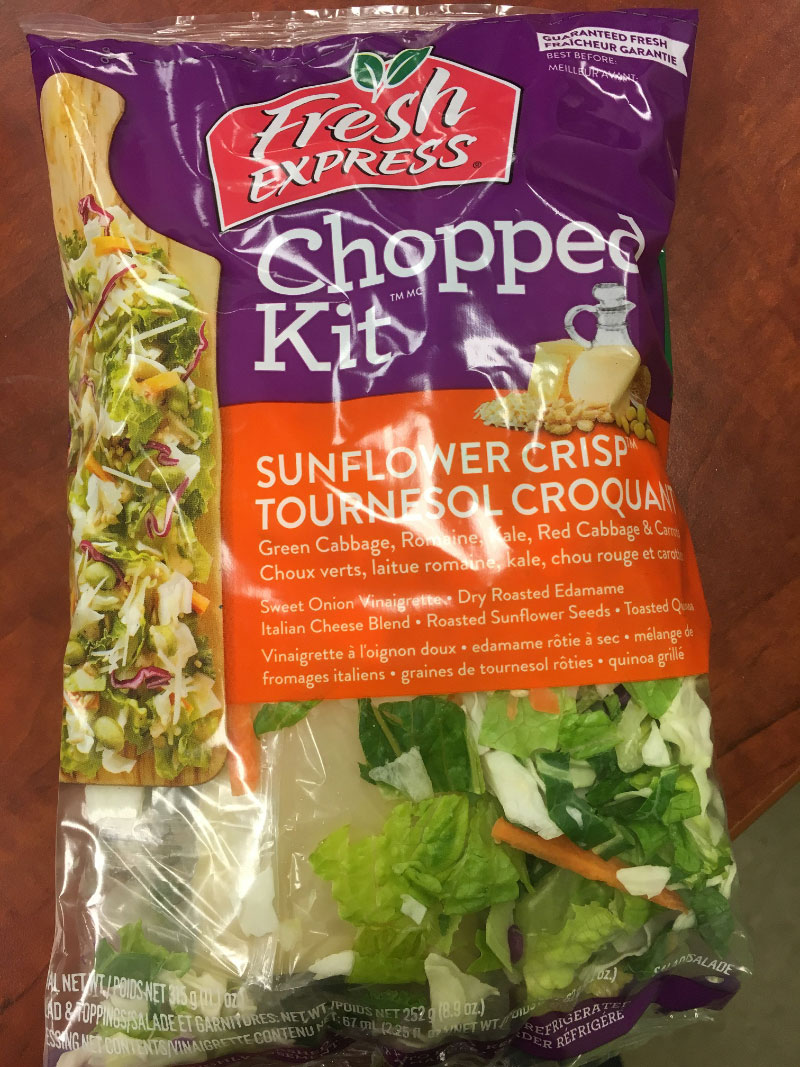
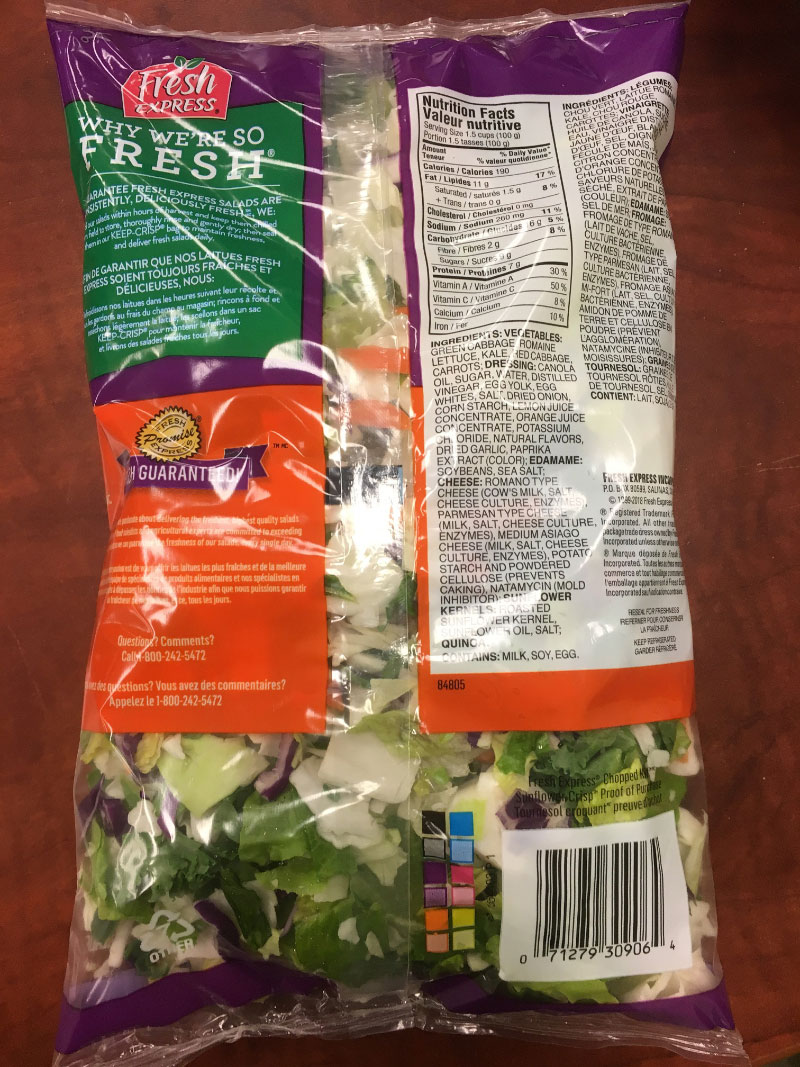
Canada – Updated Food Recall Warning – Fresh Express brand Sunflower Crisp Chopped Kit recalled due to E. coli O157:H7

CFIA

Recall details

Ottawa, December 12, 2019 – The food recall warning issued on December 8, 2019 has been updated to include additional distribution information. This additional information was identified during the Canadian Food Inspection Agency’s (CFIA) food safety investigation.

The CFIA is warning consumers not to consume the recalled product described below. This product is not likely to be available at retail stores, but may still be in consumer’s homes.

Recalled product

Brand Product Size UPC Codes
Fresh Express Sunflower Crisp
Chopped Kit
315 g 0 71279 30906 4 All packages bearing a Best Before date up to and including 07DE19, and a lot code beginning with “Z”, and indicating “Salinas” as a source of Romaine lettuce

Illnesses

The Public Health Agency of Canada is investigating an outbreak of human illness. Please refer to the Public Health Notice for further details on this active outbreak investigation.

Product photos

Printer ready version of photos

  • Sunflower Crisp Front
  • Sunflower Crisp Back

Information -Extreme Weather Leads to Silage Mycotoxin Concerns

Hoosier Ag Today

Given the extreme weather in 2019, producers and users of silage should carefully watch for molds and mycotoxins.

In a company news release, Alltech says extreme weather conditions and moisture levels can reduce yields and induce plant stress, and they can also lead to future issues for the crop, including mycotoxins and molds.

Mycotoxins are a concern for livestock producers, as they influence feed quality and animal safety. Samples of the 2019 corn silage from across the U.S. submitted to the Alltech mycotoxin analytical services laboratory include high levels of mycotoxins.

The samples have included an average of 7.13 mycotoxins, with a range of two to 14 mycotoxins per sample.

Dr. Max Hawkins, nutritionist with the Alltech Mycotoxin Management team, says, “These levels of mycotoxins found in the 2019 crop are significantly higher than the average values.”

USA -TDBBS Pig Ears Are Voluntarily Recalled For Possible Salmonella

Food Poisoning Bulletin

TDBBS is voluntarily recalling two pig ear pet treat products that were sold through Amazon.com for possible Salmonella contamination. No illnesses have been reported to date in connection with this recall of TDBBS pig ears.

Research – Preventative care: Increasing Hepatitis A vaccinations among food service workers

Food Safety News 

Thesis: Over the past three years, there has been an ongoing outbreak of Hepatitis A in the United States although it is the only foodborne disease that has a vaccination. Mandating vaccinations to food service workers is essential to reduce the spread of Hepatitis A, especially since outbreaks involving food handlers are in the public eye. 

Background & Analysis: It is estimated that in the United States alone there are 48 million cases of foodborne illness annually. Out of these 48 million, 128,000 are hospitalized and 3,000 people die. The CDC recommends to the general public that the best way to prevent Hepatitis A is through vaccination, but not have explicitly stated that food service workers should be administered the vaccination. While food service workers are not traditionally designated as having an increased risk of Hepatitis A transmission, they are not free from risk. Additionally, 24% of Hepatitis A cases are asymptomatic which means a food-handler carrying the virus can unknowingly transmit the disease to a consumer. Historically, when an outbreak occurs local health departments start administering the vaccine for free or at a reduced cost. The funding from these vaccinations is through taxpayer dollars.