Category Archives: Uncategorized

Finland – Suspicion of Salmonella in Fresh Baby Spinach

Ruokavirasto

Satotukku Oy has announced that it has withdrawn one batch of fresh baby spinach from sale. Preliminary studies have identified salmonella in the product and, as a precautionary measure, Satotukku withdraws the remaining products in the batch from the stores and also advises consumers to dispose of the product. The doubt concerns only the lot with the symbol LOT: 121 . The babypinate under the brand name Semprefresco is packed in a 70 gram box and has been on sale in 19 S Group stores during the week.

Further information: Satotukku Oy: Johanna Timonen, tel. +358 40 451 6221, johanna.timonen@satotukku.fi

The matter is handled by the Inspector General of the Finnish Food Safety Authority Paula Hietanen, tel. +358 50 596 9637,  firstname.lastname@ruokavirasto.fi .


Product image:

Baby spinach in a plastic package.

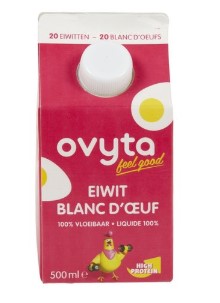
Luxembourg -OVYTA BRAND LIQUID EGG WHITE – PRESENCE OF SALMONELLA

Securite Alimetaire

Source of information: Notification by the companies Euro Ei BV and Lodewijckx NV  

Distribution in Luxembourg: offered for sale by Colruyt

The Luxembourg food safety authorities inform about the following recall:

Danger / Non-Compliance  : presence of Salmonella

Last name Liquid egg white
Mark Ovyta
Unit 500 milliliters
Barcode 05412671117904
Use by date (DLC) 09/21/2020
Lot 20183

France – Salmonella prompts recall of more than half a million eggs

Food Safety News

A number of supermarkets in France have recalled eggs sold under different brand names due to possible Salmonella contamination.

According to the French magazine 60 Millions de Consommateurs the recall covers more than 500,000 eggs but there have been no official communications from authorities and no reported illnesses.

Carrefour has issued three recalls. The first involved the company Arradoy and the other two the firm Matines.

The Arradoy recall was for packages of 20 large standard eggs with dates on the boxes of April 27 to May 18. The implicated eggs are marked with lot number 3FRMDB678 and lot 06 on the box.

The Matines recalls involve packs of 10 and 30 medium sized shell eggs with recommended use-by dates from April 26 to May 14. The code on the eggs is 3FRMDB08 and FR 32 066 020 is on the boxes.

USA – Whatcom County Beaches Closed Due to Paralytic Shellfish Poisoning

Food Poisoning Bulletin

According to a press release from the Whatcom County Health Department, Whatcom County beaches have been closed to recreational shellfish harvest because the paralytic shellfish poisoning (PSP) biotoxin has reached unsafe levels in molluscan shellfish in Drayton Harbor.

Research – Presence of Bacterial Pathogens and Levels of Indicator Bacteria Associated with Duck Carcasses in a Commercial Processing Facility

Journal of Food Protection

ABSTRACT

Little information has been published on the microbiological aspects of U.S. commercial duck processing. The objective of this study was to measure prevalence and/or levels of bacteria in duck samples representing the live bird and partially or fully processed oven-ready duck meat. At 12 monthly sampling times, samples were collected at six sites along the processing line in a commercial duck slaughter plant. Crop and cecum samples were collected at the point of evisceration. Whole carcass rinse samples were collected before and after carcass immersion chilling plus application of an antimicrobial spray. Leg quarters were collected from the cut-up line before and after application of an antimicrobial dip treatment. All samples (five from each site per monthly replication) were directly plated and/or enriched for Salmonella and Campylobacter. For the last 10 replications, carcass and leg quarter rinse samples were also evaluated for enumeration of total aerobic bacteria, Escherichia coli, and coliforms. Most cecum, crop, and prechill carcass rinse samples were positive for Campylobacter (80, 72, and 67%, respectively). Carcass chilling and chlorinated spray significantly lowered Campylobacter prevalence (P < 0.01), and even fewer leg quarters were positive for Campylobacter (P < 0.01). Passage through a chlorinated dip did not further reduce Campylobacter prevalence on leg quarters. Salmonella was infrequently found in any of the samples examined (≤10%). Total aerobic bacteria, coliforms, and E. coli levels were reduced (P < 0.01) on whole carcasses by chilling but were not different after cut-up or leg quarter dip treatment. Overall, current commercial duck processing techniques as applied in the tested plant were effective for reducing the prevalence and levels of Campylobacter on duck meat products.

HIGHLIGHTS
  • Campylobacter and Salmonella can be associated with live ducks for commercial slaughter.
  • Antimicrobial treatment reduced the prevalence of Campylobacter in duck samples.
  • Antimicrobial treatment reduced levels of aerobic bacteria, coliforms, and E. coli in duck samples.

USA – Ravioli with E. coli recalled

Food Poison Journal

The U.S. Department of Agriculture’s Food Safety and Inspection Service (FSIS) is issuing a public health alert because approximately 70 pounds of raw beef ravioli products, produced by P&S Ravioli Company, a Philadelphia, Pa. establishment, may be contaminated with E. coli O157:H7. A recall was not requested because the affected product is no longer available for purchase.


USA – Wild Harvest® Basil Recalled for Cyclospora Parasite Contamination

Daily Hornet cardcyclosporasme

United Natural Foods, Inc. (UNFI) recalled Wild Harvest® Organic Basil that was distributed from a facility in Hopkins, Minnesota, because it may be contaminated with Cyclospora parasites.

No illnesses or allergic reactions involving this product have been reported. It was distributed by SuperValu Inc., a subsidiary of UNFI.

The recall involves Wild Harvest® Organic Fresh Basil products sold in .25oz, .75oz, 2oz, and 4oz plastic clam shell containers (UPCs: 0071153550450, 0071153550322, 0071153550762, 0071153550323).

The product can be identified by a white sticker with black ink on the back of the container stating: “Product of Colombia” and “112.”

UNFI issued the recall voluntarily after the Cyclospora cayetanensis parasite was detected during routine sampling.

Infections with this parasite can cause a gastrointestinal illness called cyclosporoasis that is not usually life-threatening, according to the U.S. Centers for Disease Control and Prevention (CDC).

The symptoms may include watery diarrhea, loss of appetite, weight loss, cramping, bloating, increased gas, nausea or fatigue. Less common symptoms include vomiting and a low-grade fever.


Research – High-Pressure Inactivation of Histamine-Forming Bacteria Morganella morganii and Photobacterium phosphoreum

Journal of Food Protection

ABSTRACT

The effects of high hydrostatic pressure (HHP) treatments on histamine-forming bacteria (HFB) Morganella morganii and Photobacterium phosphoreum in phosphate buffer and tuna meat slurry were investigated using viability counting and scanning electron microscopy. The first-order model fits the destruction kinetics of high pressure on M. morganii and P. phosphoreum during the pressure hold period. The D-values of M. morganii (200 to 600 MPa) and P. phosphoreum (100 to 400 MPa) in phosphate buffer ranged from 16.4 to 0.08 min and 26.4 to 0.19 min, respectively, whereas those in tuna meat slurry ranged from 51.0 to 0.09 min and 71.6 to 0.19 min, respectively. M. morganii had higher D-values than P. phosphoreum at the same pressure, indicating it was more resistant to HHP treatment. HFB had a higher D-value in tuna meat slurry compared with that in phosphate buffer, indicating that the HFB were more resistant to pressure in tuna meat slurry. The Zp values (pressure range that results in a 10-fold change in D-value) of M. morganii and P. phosphoreum were 162 and 140 MPa in phosphate buffer and 153 and 105 MPa in tuna meat slurry, respectively. Damage to the cell wall and cell membrane by HHP treatments can be observed by scanning electron microscopy. To our knowledge, this is the first report to demonstrate that HHP can be applied to inactivate the HFB M. morganii and P. phosphoreum by inducing morphological changes in the cells.

HIGHLIGHTS
  • M. morganii with higher D-values was more resistant than P. phosphoreum at the same HHP.
  • HFB with higher D-values were more resistant in fish slurry than in phosphate buffer.
  • P. phosphoreum with lower Zp values was more sensitive to changes in HHP than M. morganii.
  • SEM shows that HHP causes cell wall and membrane damage in HFB.

Research – Effect of Peracetic Acid Solutions and Lactic Acid on Microorganisms in On-Line Reprocessing Systems for Chicken Slaughter Plants

Journal of Food Protection

ABSTRACT

During poultry slaughter and processing, microbial cross-contamination between individual chickens is possible, as well as from one slaughter animal to the next without direct contact. One option for reducing the risk of cross-contamination is to decrease the number of microorganisms on contact surfaces by using disinfectants. The aim is to decontaminate the surfaces coming into direct contact with the carcasses. In the present study, the effectiveness of different disinfectants was investigated in laboratory settings, simulating the conditions in the slaughterhouses and in a chicken slaughterhouse. For this, an artificial residue substance (consisting of yeast extract, albumin, and agar) was developed, tested, and included in the assays. Two disinfectants were tested under laboratory conditions: lactic acid (5 and 6.67%) and peracetic acid (0.33 and 0.5%). At the slaughterhouse, peracetic acid (0.021%) was used. In the laboratory tests, it was found that the peracetic acid solution had the highest disinfection potential with respect to an Escherichia coli strain (reduction >4 log CFU mL−1) at 0.5% without an artificial residue substance. The tested lactic acid solutions also showed the highest disinfection potential against a Pseudomonas aeruginosa strain, without an artificial residue substance. When applying the artificial residue substance, the reduction potential of lactic acid and peracetic acid was decreased to less than 1.4 log CFU mL−1. Application of peracetic acid in the slaughterhouse reduced the number of total aerobic bacteria by more than 4 log CFU mL−1 and the number of Enterobacteriaceae by more than 3 log CFU mL−1, depending on the place of sampling.

HIGHLIGHTS
  • Peracetic acid and lactic acid decreases E. coli and P. aeruginosa numbers in vitro.
  • Sanitation in place reduces the number of bacteria in a chicken slaughterhouse.
  • The number of total aerobic bacteria and Enterobacteriaceae was significantly reduced.

Switzerland – Hospital Listeria cases linked to cheese in Switzerland; one death reported

Food Safety News

Four patients have been infected by Listeria and one has died after eating potentially contaminated cheese at a hospital in Switzerland.

During an internal check, Käserei Vogel AG, based in Steinerberg, found Listeria in semi-hard cheese and at its production site. The company issued a recall and informed its buyers to remove the products from shelves.

One of the buyers is a supplier to the Center Hospitalier du Valais Romand (CHVR). This supplier told the CHVR purchasing manager on April 30 about the problem. He instructed the immediate withdrawal of implicated cheeses. The last delivery was April 8, but it has not been ruled out that previous lots were also contaminated.