Category Archives: Uncategorized

RASFF Alerts – Animal Feed – Salmonella – Sunflower Seedcakes – Fish Meal

RASFF-Logo

RASFF – Salmonella enterica ser. Senftenberg (presence /25g) in sunflower seedcakes from the Netherlands in Belgium

RASFF – Salmonella enterica ser. Livingstone (presence /25g) in fish meal from the United States in Greece

RASFF – Salmonella enterica ser. anatum (presence /25g) in fish meal from the United States in Greece

Switzerland – Officials report more patients in Listeria outbreak linked to cheese

Food Safety News

Listeria cdc

Image CDC

At least 11 people in Switzerland have been infected by Listeria and two have died after eating contaminated cheese.

Officials from the Federal Food Safety and Veterinary Office (FSVO) told Food Safety News that analysis is pending for a further 10 infections to see if they belong to the outbreak cluster. A total of 28 cases of listeriosis have been reported in the country since early this year.

Of the 11 confirmed outbreak cases, five are men and six are women aged 66 to 86 years old. Infections have occurred in seven cantons, or regions, of the country.

The first patient related to the outbreak cluster showed symptoms at the end of January. In the most recent related infection reported to date, symptoms began in mid-April.

Belgium – Recall of poultry meat from the Carrefour and Maître Coq brands. -Salmonella.

AFSCA

Following a notification via the RASFF system (European Food and Feed rapid alert system), the presence of Salmonella was detected in poultry meat from the Carrefour and Maître Coq brands.

The FASFC therefore ordered the withdrawal of these products and their recall to consumers.

The FASFC asks not to consume these products and to bring them back to the point of sale in which they were purchased.

Product description

Product picture Product Description Expiration date (DLC) Points of sale in Belgium
Carrefour brand turkey legs (4 pieces) 05/16/2020 CARREFOUR AND CARREFOUR MARKET SUPERMARKETS
Carrefour turkey drumsticks (4 pieces) 05/16/2020 CARREFOUR SUPERMARKETS
Maître Coq “Giant Grill” 05/14/2020 GB PARTNER VIEUX TILLEUIL BOENDAEL (1050 IXELLES)
Maître Coq poultry sausages 05/18/2020 GB PARTNER VIEUX TILLEUIL BOENDAEL (1050 IXELLES)
Maître Coq turkey cutlet 05/14/2020 BOUCHERIE DUFRAIS, SUPER GB BEN AHIN (4500 BEN AHIN)

CARREFOUR NIVELLES (Grand Place, 1400 NIVELLES)

Consumer Information:

The possible symptoms of an infection caused by salmonella are: fever, abdominal cramps and diarrhea, within 6 to 72 hours after consuming the contaminated food. The risk of infection is higher in the elderly, children, pregnant women and immunocompromised people.

People who have consumed these products and who present this type of symptoms are invited to immediately consult their doctor by reporting this consumption.

For any further information, you can contact the AFSCA contact point for consumers: 0800 / 13.550 or pointdecontact@afsca.be .

Research – Effectiveness and Functional Mechanism of a Multicomponent Sanitizer against Biofilms Formed by Escherichia coli O157:H7 and Five Salmonella Serotypes Prevalent in the Meat Industry

Journal of Food Protection

ABSTRACT

Biofilm formation by Escherichia coli O157:H7 and Salmonella enterica at meat processing plants poses a potential risk of meat product contamination. Many common sanitizers are unable to completely eradicate biofilms formed by these foodborne pathogens because of the three-dimensional biofilm structure and the presence of bacterial extracellular polymeric substances (EPSs). A novel multifaceted approach combining multiple chemical reagents with various functional mechanisms was used to enhance the effectiveness of biofilm control. We tested a multicomponent sanitizer consisting of a quaternary ammonium compound (QAC), hydrogen peroxide, and the accelerator diacetin for its effectiveness in inactivating and removing Escherichia coli O157:H7 and Salmonella enterica biofilms under meat processing conditions. E. coli O157:H7 and Salmonella biofilms on common contact surfaces were treated with 10, 20, or 100% concentrations of the multicomponent sanitizer solution for 10 min, 1 h, or 6 h, and log reductions in biofilm mass were measured. Scanning electron microscopy (SEM) was used to directly observe the effect of sanitizer treatment on biofilm removal and bacterial morphology. After treatment with the multicomponent sanitizer, viable E. coli O157:H7 and Salmonella biofilm cells were below the limit of detection, and the prevalence of both pathogens was low. After treatment with a QAC-based control sanitizer, surviving bacterial cells were countable, and pathogen prevalence was higher. SEM analysis of water-treated control samples revealed the three-dimensional biofilm structure with a strong EPS matrix connecting bacteria and the contact surface. Treatment with 20% multicomponent sanitizer for 10 min significantly reduced biofilm mass and weakened the EPS connection. The majority of the bacterial cells had altered morphology and compromised membrane integrity. Treatment with 100% multicomponent sanitizer for 10 min dissolved the EPS matrix, and no intact biofilm structure was observed; instead, scattered clusters of bacterial aggregates were detected, indicating the loss of cell viability and biofilm removal. These results indicate that the multicomponent sanitizer is effective, even after short exposure with dilute concentrations, against E. coli O157:H7 and S. enterica biofilms.

HIGHLIGHTS
  • No viable biofilm cells were detected after treatment with the multicomponent sanitizer.
  • Prevalence of both pathogens was low after treatment with the multicomponent sanitizer.
  • SEM analysis revealed that treatment dissolved the EPS matrix and destroyed the biofilm.

Research – Examination of the Culturable Microbiota from Low-Moisture Foods Imported into Canada for Antibacterial Activity against Listeria monocytogenes

Journal of Food Protection

ABSTRACT

Listeria monocytogenes, a resilient and ubiquitous foodborne pathogen, is associated with a high case-fatality rate in humans. This study investigated the culturable microbiota of low-moisture foods (LMFs) imported into Canada to see how well bacteria isolated from these foods could inhibit or inactivate the growth of L. monocytogenes. Imported LMFs were acquired from various supermarkets in the Greater Toronto Area (Ontario, Canada). The foods included dried apples, bee pollen, cumin seeds, date fruits, fennel seeds, pistachios, raisins, and seaweed. Bacterial strains were isolated from the foods using blood agar and then screened using an in-house-designed growth inhibition plate assay against L. monocytogenes. The inhibitory strains detected were then identified using 16S rRNA sequencing. Diverse bacteria were recovered from the foods; 236 isolates belonging to 122 observed phenotypes were obtained. From the inhibition plate assays, 10 of the 11 imported LMFs harbored inhibitory strains against L. monocytogenes, whereby 48 of the collected isolates (20%) were found to produce a zone of inhibition against this pathogen. The inhibitory strains belonged to six genera (Acinetobacter, Aerococcus, Bacillus, Lysinibacillus, Paenibacillus, and Sporosarcina) and 15 unique species. Among all foods tested, the date fruit microbiota displayed the greatest number and diversity of anti–L. monocytogenes inhibitory strains. Overall, it was found that the culturable microbiota of LMFs, imported into Canada, possess bacterial members that can inhibit the growth of L. monocytogenes. These results could lead to the discovery of either novel antimicrobial metabolites or beneficial anti–L. monocytogenes bacteria that could be added to foods to inactivate and/or control L. monocytogenes.

HIGHLIGHTS
  • Modification to an inhibition plate assay detects anti-Listeria bacteria more rapidly.
  • Unconventional anti-Listeria genera, such as Lysinibacillus, were discovered.
  • Date fruit microbiota warrants further investigation for anti-Listeria applications.
  • Isolated bacteria from low-moisture foods are diverse and can inhibit L. monocytogenes growth.

France – Product recall: Honey heart-shaped goat cheese from FROMACOEUR – Listeria monocytogenes

Oulah

wow, product recall, product recall, consumption, consumer, danger, health, product safety

ENCOUNTERED PROBLEM

Potential presence of listeria monocytogenes

PROPOSED SOLUTION

People who hold this product are asked not to consume it and to return it to the point of sale where it was purchased.

People who have consumed this product and who have a fever, isolated or accompanied by headaches, are invited to consult their doctor by reporting this consumption.
Pregnant women should be especially attentive to these symptoms, as well as the immunocompromised and the elderly. These symptoms may suggest listeriosis, a disease which can be serious and which can take up to eight weeks to incubate.

FURTHER INFORMATION

▸ Packaging
Tray of 18 marbles “Goat heart honey balls” 90g

▸ Lot and DLC
• Lot: S20-119 DLC: 07/06/2020
• Lot: S20-125 DLC: 13/06/2020
• Lot: S20-127 DLC: 15/06/2020
• Lot: S20-128 DLC : 16/06/2020

▸ Barcode
3760064261454

▸ Health
stamp FR 16.292.066 CE

▸ Contact customer service
For any further information, you can contact FROMACOEUR on 05 45 29 61 00 or at info@fromacoeur.com.

▸ Source
https://www.auchan.fr/

Research – Inhibitory effect of thyme and cinnamon essential oils against E. coli O157:H7 in Tahini

Scielo

Tahini is a common food product in the Mediterranean area that is used as a main ingredient in variety of ready-to-eat foods. The objective of the current study was to investigate the inhibitory effect of thyme oil (TO) or cinnamon oil (CO) on E. coli O157:H7 viability in tahini and diluted tahini at different storage temperatures. Addition of 2.0% CO to tahini reduced E. coli O157:H7 numbers by 1.38, 1.79 or 2.20 log10 CFU/mL at 10, 25 or 37 °C, respectively, by 28d. In diluted tahini at 10 °C, no viable cells of E. coli O157:H7 by 21d were detected when 1.0% CO was used. However, at 25 and 37 °C, no viable cells were detected by 14d when CO was added at 0.5% level. Addition of 2.0% TO to tahini, resulted in 1.82, 2.01 or 1.65 log10 CFU/mL reduction in E. coli O 157:H7 numbers was noted at 37, 25 or 10 °C, respectively, by 28d. In diluted tahini, TO at 0.5% or 1.0% induced complete reduction in the viability of E. coli O157:H7 by 28d storage at 37 or 25 °C. At 10 °C, a 3.02 log10 CFU/mL reduction was observed by 28d compared to the initial inoculation level in samples treated with 2.0% TO.

Thailand – Dumplings blamed for ‘poisoning’

Bangkok Post

CHACHOENGSAO: Public health officials and police in this eastern province on Monday launched a fact-finding investigation into a food outlet in Ban Pho district after several people fell sick and one died from what was suspected to be food poisoning.

The probe into the dumpling-making outlet in tambon Koh Rai came after a food vendor identified only as Mint reported to police at Ban Pho station and gave details about her supplier.

Local police said about 20 people were rushed to various hospitals with symptoms of food poisoning on May 8 with many of them saying they ate dumplings bought from a street vendor that day. A 66-year-old woman reportedly died due to complications.

Kenya – Kenya prepares to import maize in the midst of COVID-19 pandemic – Aflatoxin

Alliance for Science

Kenya is set to import 4 million bags of maize as the country loses its grain reserves to aflatoxin, a toxin caused by mold.

Agriculture Cabinet Secretary Peter Munya told the Senate Committee for Agriculture that maize in the country’s Strategic Grain Reserves is unfit for human consumption as it has been contaminated by aflatoxin, which is known to cause cancer and other health problems.

The loss comes when the country is still struggling with a locust invasion and the effects of the novel coronavirus pandemic, both of which have adversely affected the country’s food chain as markets are closed and movement remains restricted in some counties.

“The government is trying to ensure the basic commodities are available for everyone, and hence the need to import maize, which is a staple food in the country,” Munya said. “The maize in the government stores will not be sufficient for a longer period should the pandemic push further.”

In response, Kenya plans to import 2 million bags of white maize for human consumption and an additional 2 million bags of yellow maize for animal feed between end of June and mid-July.

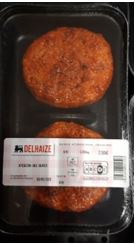
Luxembourg – AMERICAN BBQ BURGER OF THE DELHAIZE BRAND – POSSIBLE PRESENCE OF SALMONELLA

Securite Alimentaire Salmonella kswfoodworld

Source of information: Notification by the company Delhaize

Distribution in Luxembourg: Delhaize

The Luxembourg food safety authorities inform about the following recall:

Danger : possible presence of Salmonella

Last name AMERICAN BBQ BURGER
Mark Delhaize
Barcode 220569xxxxxxx
Use by date (DLC) 05/09/2020
Lot 618