Category Archives: STEC

USA – Dole Fresh Vegetables Announces Limited Recall of Organic Romaine Hearts – STEC E.coli

FDA

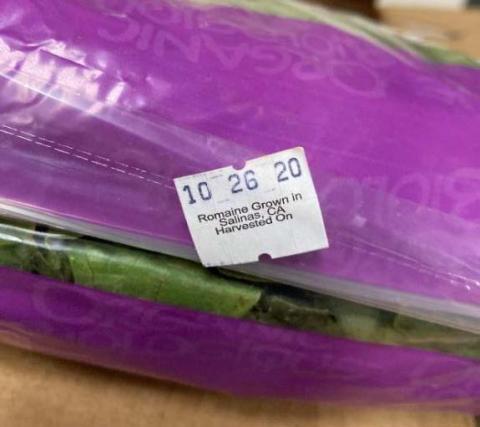
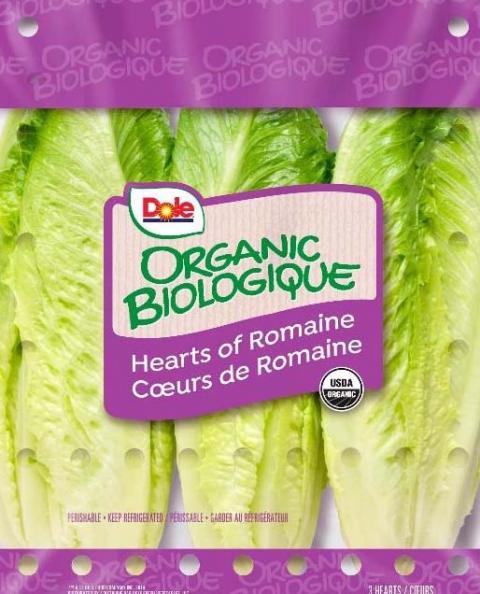
Dole Fresh Vegetables, Inc. is voluntarily recalling a limited number of cases of organic romaine hearts. The products being recalled are Dole™ Organic Romaine Hearts 3pk (UPC 0-71430-90061-1), combined English/French packaging, with Harvested-On dates of 10-23-20 and 10-26-20, and Wild Harvest Organic Romaine Hearts (UPC 7-11535-50201-2), with Harvested-On dates of 10-23-20 and 10-26-20.  The recall is being conducted due to a possible health risk from E. coli in the two products.  Dole Fresh Vegetables is coordinating closely with regulatory officials. No illnesses have been reported to date in association with the recall.

Pathogenic E. coli can cause diarrhea, severe stomach cramps and vomiting.  Most people recover within a week, but some illnesses can last longer and can be more severe.

The Harvested-On sticker is located on the upper right corner of each bag and the UPC code is located on the bottom right corner of the back of each bag. The Dole package contains three organic romaine hearts and the Wild Harvest product is packaged in a 12oz bag. The impacted products were distributed in AZ, HI, IA, IL, IN, KS, MD, MI, MN, MO, MS, MT, NC, ND and VA. These products were harvested and packed nearly 4 weeks ago and should no longer be in commerce.  Consumers are advised to check product they have in their homes and discard any product matching the production description, UPC codes and Harvested-On dates listed above.

This precautionary recall notification is being issued due to an isolated instance in which a package of Dole™ Organic Romaine Hearts – 3pk yielded a positive result for pathogenic non-O157 E.coli STEC in a routine sample collected at a retail store by the Michigan Department of Agriculture and Rural Development. There is no indication at this time that this positive result is related to any illnesses nor consumer complaints and it is not associated with the strains connected to the ongoing outbreaks currently under regulatory investigation.

No other Dole products are included in the recall. This voluntary recall does not apply to any bagged or clamshell salad romaine product. Only the specific Organic Romaine Hearts listed, with the exact UPC codes and Harvested-On dates identified above, are included in the recall. Consumers who have any remaining product with these UPC codes and Harvested-On dates should not consume it, but rather discard it. Retailers and consumers with questions may call the Dole Consumer Center at 1-800-356-3111, which is open 24 hours a day.


Company Contact Information

Consumers:
Consumer Center
 1-800-356-3111
Media:
William Goldfield
 1-818-874-4853
 William.Goldfield@Dole.com

Product Photos

Netherlands – Zwagerman Carpaccio with pine nuts – STEC E.coli

NVWA

Important safety warning Lidl: Zwagerman carpaccio

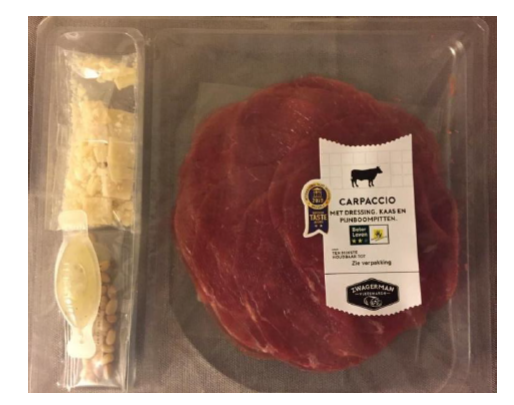
Lidl is recalling the product ‘Zwagerman Carpaccio with pine nuts’. This concerns the packaging with a best-before date of 21 November 2020. The STEC bacteria has been found in the product.

Download ‘Important safety warning Lidl: Zwagerman carpaccio’

PDF document | 1 page | 166 KB

Warning | 21-11-2020

Zwagerman carpaccio

© Lidl

Don’t eat the carpaccio!

Customers are urged not to eat this carpaccio. Eating a product with an E. coli bacteria (faeces bacteria, STEC, EHEC) can, if not thoroughly cooked, result in nausea, vomiting and (bloody) diarrhea within a week. Especially for young children, the elderly, people with low immunity and pregnant women. Consult your doctor for more information if you have health problems after eating the said product.

For more information, see the Lidl website .

Research – Investigations of Possible Multistate Outbreaks of Salmonella, Shiga Toxin–Producing Escherichia coli, and Listeria monocytogenes Infections — United States, 2016

CDC

Problem/Condition: Salmonella, Shiga toxin–producing Escherichia coli (STEC), and Listeria monocytogenes are the leading causes of multistate foodborne disease outbreaks in the United States. Responding to multistate outbreaks quickly and effectively and applying lessons learned about outbreak sources, modes of transmission, and risk factors for infection can prevent additional outbreak-associated illnesses and save lives. This report summarizes the investigations of multistate outbreaks and possible outbreaks of Salmonella, STEC, and L. monocytogenes infections coordinated by CDC during the 2016 reporting period.

Period Covered: 2016. An investigation was considered to have occurred in 2016 if it began during 2016 and ended on or before March 31, 2017, or if it began before January 1, 2016, and ended during March 31, 2016–March 31, 2017.

Description of System: CDC maintains a database of investigations of possible multistate foodborne and animal-contact outbreaks caused by Salmonella, STEC, and L. monocytogenes. Data were collected by local, state, and federal investigators during the detection, investigation and response, and control phases of the outbreak investigations. Additional data sources used for this report included PulseNet, the national molecular subtyping network based on isolates uploaded by local, state, and federal laboratories, and the Foodborne Disease Outbreak Surveillance System (FDOSS), which collects information from state, local, and territorial health departments and federal agencies about single-state and multistate foodborne disease outbreaks in the United States. Multistate outbreaks reported to FDOSS were linked using a unique outbreak identifier to obtain food category information when a confirmed or suspected food source was identified. Food categories were determined and assigned in FDOSS according to a classification scheme developed by CDC, the Food and Drug Administration (FDA), and the U.S. Department of Agriculture Food Safety and Inspection Service (FSIS) in the Interagency Food Safety Analytics Collaboration.

A possible multistate outbreak was determined by expert judgment to be an outbreak if supporting data (e.g., temporal, geographic, demographic, dietary, travel, or food history) suggested a common source. A solved outbreak was an outbreak for which a specific kind of food or animal was implicated (i.e., confirmed or suspected) as the source. Outbreak-level variables included number of illnesses, hospitalizations, cases of hemolytic uremic syndrome (HUS), and deaths; the number of states with illnesses; date of isolation for the earliest and last cases; demographic data describing patients associated with a possible outbreak (e.g., age, sex, and state of residence); the types of data collected (i.e., epidemiologic, traceback, or laboratory); the outbreak source, mode of transmission, and exposure location; the name or brand of the source; whether the source was suspected or confirmed; whether a food was imported into the United States; the types of regulatory agencies involved; whether regulatory action was taken (and what type of action); whether an outbreak was publicly announced by CDC via website posting; beginning and end date of the investigation; and general comments about the investigation. The number of illnesses, hospitalizations, cases of HUS, and deaths were characterized by transmission mode, pathogen, outcome (i.e., unsolved, solved with suspected source, or solved with confirmed source), source, and food or animal category.

Results: During the 2016 reporting period, 230 possible multistate outbreaks were detected and 174 were investigated. A median of 24 possible outbreaks was under investigation per week, and investigations were open for a median of 37 days. Of these 174 possible outbreaks investigated, 56 were excluded from this analysis because they occurred in a single state, were linked to international travel, or were pseudo-outbreaks (e.g., a group of similar isolates resulting from laboratory media contamination rather than infection in patients). Of the remaining 118 possible multistate outbreaks, 50 were determined to be outbreaks and 39 were solved (18 with a confirmed food source, 10 with a suspected food source, 10 with a confirmed animal source, and one with a suspected animal source). Sprouts were the most commonly implicated food category in solved multistate foodborne outbreaks (five). Chicken was the source of the most foodborne outbreak-related illnesses (134). Three outbreaks involved novel food–pathogen pairs: flour and STEC, frozen vegetables and L. monocytogenes, and bagged salad and L. monocytogenes. Eleven outbreaks were attributed to contact with animals (10 attributed to contact with backyard poultry and one to small turtles). Thirteen of 18 multistate foodborne disease outbreaks with confirmed sources resulted in product action, including 10 outbreaks with recalls, two with market withdrawals, and one with an FSIS public health alert. Twenty outbreaks, including 11 foodborne and nine animal-contact outbreaks, were announced to the public by CDC via its website, Facebook, and Twitter. These announcements resulted in approximately 910,000 webpage views, 55,000 likes, 66,000 shares, and 5,800 retweets.

Interpretation: During the 2016 reporting period, investigations of possible multistate outbreaks occurred frequently, were resource intensive, and required a median of 37 days of investigation. Fewer than half (42%) of the 118 possible outbreaks investigated were determined to have sufficient data to meet the definition of a multistate outbreak. Moreover, of the 50 outbreaks with sufficient data, approximately three fourths were solved.

Public Health Action: Close collaboration among CDC, FDA, FSIS and state and local health and agriculture partners is central to successful outbreak investigations. Identification of novel outbreak sources and trends in sources provides insights into gaps in food safety and safe handling of animals, which helps focus prevention strategies. Summarizing investigations of possible multistate outbreaks can provide insights into the investigative process, improve future investigations, and help prevent illnesses. Although identifying and investigating possible multistate outbreaks require substantial resources and investment in public health infrastructure, they are important in determining outbreak sources and implementing prevention and control measures.

Research – Microbiological control of pasteurized and unpasteurized dairy products, 2018 – Norway

Mattilsynet

The microbiological quality was generally good for the 189 dairy products on the Norwegian market that the Norwegian Food Safety Authority examined in 2018. Nevertheless, we see that there are microbiological challenges in connection with unpasteurized dairy products.

What did we investigate? 189 samples of unpasteurized and pasteurized cheeses and other dairy products produced in Norway and in the EU.
Period: 2018
What were we looking for? The four categories have been analyzed for various disease-causing bacteria (pathogens). These choices are made in order to get the most information for each category.

The different categories are:

PN = pasteurized milk product produced in Norway.

P EU = pasteurized milk product produced outside Norway.

UN = unpasteurized milk product produced in Norway.

U EU = unpasteurized milk product produced outside Norway.
The various disease-causing infectious agents we analyzed for:

Listeria monocytogenes (pathogen): PN, P EU, UN, U EU, number 189 pcs.

Shigatoxin-producing Escherichia coli (STEC) (pathogen): UN, U EU, number 96 pcs.

E. coli (hygiene parameter): PN, UN, U EU, 169 st.

S. aureus (hygiene parameter): UN, number 71 st.

Toxins (enterotoxin) from S. aureus (pathogen): UN, U EU, number 96 pcs.

Salmonella (pathogen): U EU, number 25 st.

What did we find? Listeria monocytogenes : No detection in 189 samples of dairy product.

Shigatoxin-producing Escherichia coli (STEC):
One finding in French red cow cheese of cow’s milk ( E. coli O-, stx2 and eae ). A total of 25 unpasteurized milk products produced outside Norway were examined. No findings in 71 unpasteurized milk products from Norway.

Escherichia coli (hygiene parameter):
In 73 pasteurized milk products from Norway, there was a detection and this was above the lower limit value (100 kde / g) but below the upper limit value (1,000 kde / g). No E. coli was detected above the detection limit of 10 colony forming units / g sample (kde / g) in the other samples.

In 61 of the 71 unpasteurized milk products produced in Norway, E. coli was not detected above the detection limit of 10 colony-forming units / g sample (kde / g). 3 st. (4.2%) was above 100 kde / g.

In unpasteurized dairy products from the EU (25), 5 (20%) of the products had more than 100 kde / g E. coli. There is no microbiological criterion for E. coli in the regulations for unpasteurized cheeses.

Staphylococcus aureus:
Of 71 samples, none exceeded the regulatory limit of 10,000 kde / g.

Of the 96 unpasteurized dairy products examined, the enterotoxins AE Toxins (enterotoxins), which some S. aureus can produce , were not detected .

Salmonella was not detected in the 25 samples of unpasteurized milk products produced outside Norway.

USA – Fresh Express recalls Romaine for E. coli O26

Food Poison Journal

Fresh Express is voluntarily recalling a limited number of cases of expired 10.5 oz. Fresh Express Kit Caesar Supreme with the Use-By Date of November 8, 2020 and Product Code S296 because it may be contaminated with Escherichia coli STEC 026 bacteria.  The recall is being executed out of an abundance of caution in the unlikely event the product, which is now 8 days past the Use-By Date, is still in stores or consumers’ homes.  The recalled product was distributed primarily in Western and Southwestern U.S. states.

Research – Microbiological Survey of Wheat Flour Sold at Retail in Canada, 2018-2019

Journal of Food Protection

Following two O121 STEC outbreaks linked to wheat flour, this study was conducted to gain baseline information on the occurrence of bacterial pathogens and levels of indicator organisms in wheat flour in Canada. A total of 347 pre-packaged wheat flour samples were analyzed for Salmonella spp., Shiga Toxin-Producing Escherichia coli (STEC), Listeria monocytogenes ( L. monocytogenes ) , aerobic colony count (ACC), total coliforms, and generic Escherichia coli ( E. coli ) . Salmonella spp. and O157 STEC were not detected in any of the samples. L. monocytogenes was identified in two samples (0.6%) at levels below the limit of detection (<0.7 log CFU/g). Non-O157 STEC were isolated from six samples (1.7%) and were characterized for the presence of STEC virulence genes: stx 1, stx 2 and subtypes, eae , hlyA, and aggR . One O103:H25 STEC isolate carried virulence genes ( stx 1 a + eae ) that are known to be capable of causing diarrhea and/or bloody diarrhea in humans. Of the five remaining non-O157 STEC isolates, four carried single stx 2a or stx 2c genes and were considered to have the potential of causing diarrhea. The remaining non-O157 STEC isolate ( stx 2 ), while not a priority non-O157 STEC was not available for sequencing and thus its potential to cause illness is unknown. ACC, total coliforms, and generic E. coli were detected   in 98.8%, 72.6% and 0.6% of the flour samples. The mean counts of ACC were greater in whole-wheat flour as compared to the other flour types tested ( p <0.001). The results of this study suggest that the occurrence of O157 STEC and Salmonella  is low, but the occurrence of non-O157 STEC in wheat flour with the potential to cause human illness of diarrhea is relatively common. Therefore, the consumption of raw flour could increase the likelihood of STEC infections. Further research is merited for potential risk mitigation strategies within the food production system and with consumers.

UK – Investigation – STEC E.coli O157- 2017 Frozen Beef Burgers

Cambridge Press

In November 2017, Public Health England identified an outbreak of Shiga toxin-producing Escherichia coli O157:H7 in England where whole genome sequencing results indicated cases were likely to be linked to a common source, and began investigations.

Hypothesis generation included a review of enhanced surveillance data, a case-case study and trawling interviews. The hypothesis of interest was tested through the administration of focussed questionnaires and review of shopping history using loyalty card data. Twelve outbreak cases were detected, eight were hospitalised and four developed haemolytic uraemic syndrome. Frozen beef burgers supplied by a national retailer were identified as the vehicle of the outbreak. Testing of two left-over burger samples obtained from the freezers of two separate (unlinked) cases and a retained sample from the production premises were tested and found to be positive for the outbreak strain. A voluntary recall of the burgers was implemented by the retailer. Investigations at the production premises identified no contraventions of food safety legislation. Cooking guidance on the product packaging was deemed to be adequate and interviews with the cases/carers who prepared the burgers revealed no deficiencies in cooking practices at home. Given the long-shelf life of frozen burgers, the product recall likely prevented more cases.

RASFF Alert – STEC E.coli – Beef Burger

European Food Alerts

RASFF

shigatoxin-producing Escherichia coli (presence /25g) in beef burger from Lithuania in Latvia

Italy – Fontina Cheese Recalls – STEC E.coli

Salute

Brand : IT 02 2 CE C280 Pre-packaged 250g ATP 08-12-2020

Name : Fontina cheese DOP RED LABEL

Reason for reporting : Recall due to microbiological risk

Publication date : 12 November 2020

Brand : Fontina DOP IPER IT 02 2 CE C280 Pre-packaged 250g ATP TMC 08-12-2020
Name : Cheese Fontina DOP
Reason for reporting : Recall due to microbiological risk
Publication date : 12 November 2020

Recall model Fontina DOP IPER IT 02 2 CE C280 Pre-packaged 250g ATP TMC 08-12-2020 – Fontina DOP cheese


Salute

Brand : Fontina DOP IPER IT 02 2 CE C280 Pre-packaged 250g ATP TMC 08-12-2020
Name : Cheese Fontina DOP
Reason for reporting : Recall due to microbiological risk
Publication date : 12 November 2020

Doumentation

Salute

Brand : Fontina DOP ITALIAMO C280 IT 02 2 CE Pre-packaged 250g ATP TMC 08-12-2020
Name : Fontina DOP cheese
Reason for reporting : Recall due to microbiological risk
Publication date : 12 November 2020

Documentation

USA – Walmart recall: Tanimura & Antle romaine lettuce recalled from more than 1,000 Walmart stores over E. coli risk

USA Today

Eurofins Food Testing UK

Walmart has released a list of the stores that carried the recalled Tanimura & Antle romaine lettuce.

Last week, Salinas, California-based Tanimura & Antle Inc. voluntarily recalled select single heads of romaine lettuce distributed across the country for possible E. coli contamination. The company posted an announcement on the Food and Drug Administration website Friday.

The affected lettuce is labeled with a “packed on date of 10/15/2020 or 10/16/2020,” the company said. The UPC number on the lettuce is 0-27918-20314-9.

According to Tanimura & Antle, no other products or pack dates are being recalled and there have been “no reported illnesses associated with the recalled product.”