Category Archives: Salmonella

Research – Hygiene indicators and Salmonella sp. on swine carcass surfaces from two slaughterhouses in northern Portugal.

Journal of Food Protection

The monitorization of carcass surfaces contamination along the slaughter lines enables the verification of the slaughter operations hygiene and the good manufacturing practices. Pork meat is a common source of human non-typhoidal salmonellosis, one of the most frequently reported foodborne illnesses worldwide. This study aimed to gather data on microbial loads in carcass surfaces in two slaughterhouses, before and after evisceration. Salmonella enterica search was made after evisceration, due to the frequent reference to pork as being a common carrier of this microorganism. The contamination of carcass surfaces was evaluated by delimitation of surface area with sterilized templates (100 cm2), and sampled by gauze swabs. Enumeration of total aerobic mesophilic microorganisms, Enterobacteriaceae, and Escherichia coli was performed. The detection of Salmonella was performed for carcass surfaces after evisceration, and from animal liver and floor drains (environmental). Significant differences (p < 0.05) were observed for mesophilic microorganisms, Enterobacteriaceae, and E. coli counts on the external surfaces, with higher counts after evisceration. The neck and abdominal area presented higher levels for mesophilic microorganisms, Enterobacteriaceae and E. coli, and a high prevalence of Salmonella. Salmonella was detected only in one of the studied slaughterhouses; 19 out of 259 analysed carcass samples were positive for Salmonella (7.3%). Salmonella was also detected in two livers and in two floor drains. A collection of 52 Salmonella isolates (44 from carcasses, 5 from livers, 3 from drains) was gathered. Three serovars of Salmonella were identified (Typhimurium 4,5:i- , Wernigerone and Derby), and 53.8% of isolates were multidrug-resistant. The results demonstrate the need for continuous improvement of slaughtering operations and good manufacturing practices, to ensure food safety of pork produced in Portugal.
Research – Using lactic acid to control Salmonella in raw dog food

Pet Food Processing

Can encapsulated and raw acidulants help to control Salmonella in raw meat-based dog foods? Samuel Kiprotich, a Ph.D. student at Kansas State University (KSU), presented his research on this topic at the American Feed Industry Association’s (AFIA) Pet Food Conference on Jan. 25, held in conjunction with International Production & Processing Expo (IPPE) in Atlanta, Ga.

Kiprotich noted that current methods of achieving kill steps for raw diets, such as high pressure pasteurization and irradiation, can be costly. The purpose of his study is to find a more inexpensive way to control foodborne pathogens, looking specifically at organic acids such as citric acid and lactic acids.

When incorporated into a raw meat-based pet food formula, organic acids can “shock” the product, causing discoloration and syneresis, Kiprotich explained. Encapsulating the organic acid, or coating it with edible vegetable oil, would allow it to be released more slowly into the product, “giving us the antimicrobial protection that we want without damaging the product,” he said.

Kiprotich’s study was conducted in two parts over a 22-day storage period: one to determine the efficacy of encapsulated and dry-plated lactic acids in controlling growth and survival of Salmonella enterica in a raw pet food, and another to monitor pH progression to measure acidity.

The experiment included two types of lactic acids — encapsulated and dry-plated — and three treatment levels for each acidulent: 1%, 2% and 3%. Two control diets formulated without acidulants were used, in which the positive control was inoculated with Salmonella, and the negative control was not inoculated.

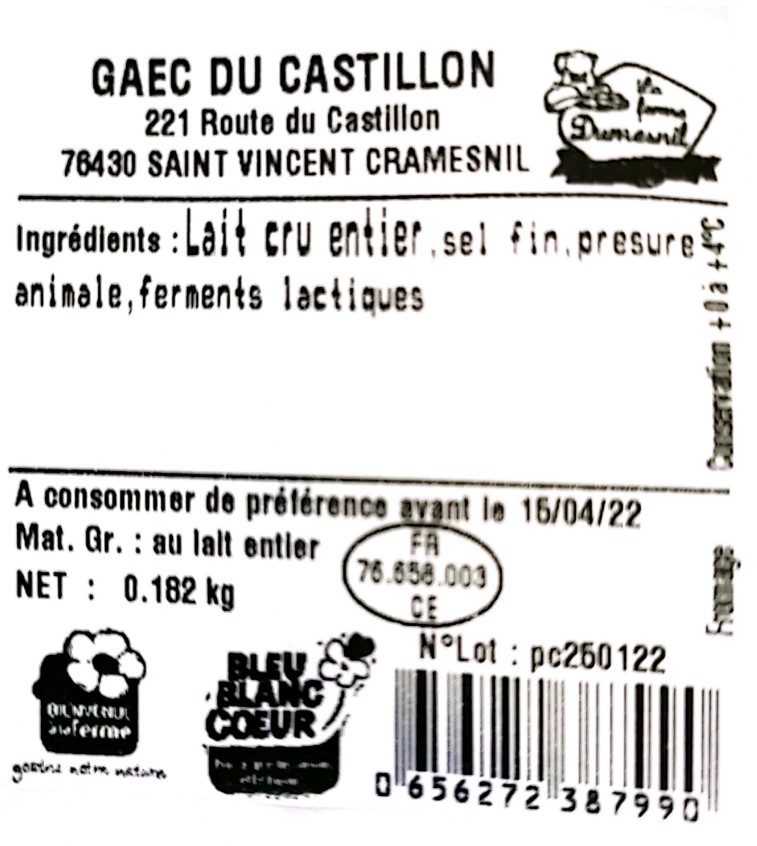
France – Little Brie Normand Cheese – Salmonella

Gov france

Identification information of the recalled product

  • Product category Food
  • Product subcategory Milk and dairy products
  • Product brand name THE FARM DUMESNIL
  • Model names or references P’tit brie normand, creamy & powerful, with whole raw milk
  • Identification of products
    GTIN Lot Date
    0656272387990 batch number: pc250122 for the whole brie Use-by date 04/15/2022
    0656272387990 batch number: pc250122 for the brie in part Use-by date 02/19/2022
    0656272387990 batch number: pc250122 for the brie in part Use-by date 02/26/2022
  • Packaging Whole Brie packed with micro-perforated packaging part of about 200g wrapped in cellophane film with DLC
  • Marketing start/end date From 07/02/2022 to 14/03/2022
  • Storage temperature Product to be stored in the refrigerator
  • Health mark FR 76,658,003 CE
  • Geographic area of ​​sale Regions: Normandy
  • Distributors See table List of points of sale below
  • List of points of saletraceability_of_brie_normand_du_25.01.22.pdf

Practical information regarding the recall

  • Reason for recall  presence of Salmonella
  • Risks incurred by the consumer Salmonella spp (causative agent of salmonellosis)

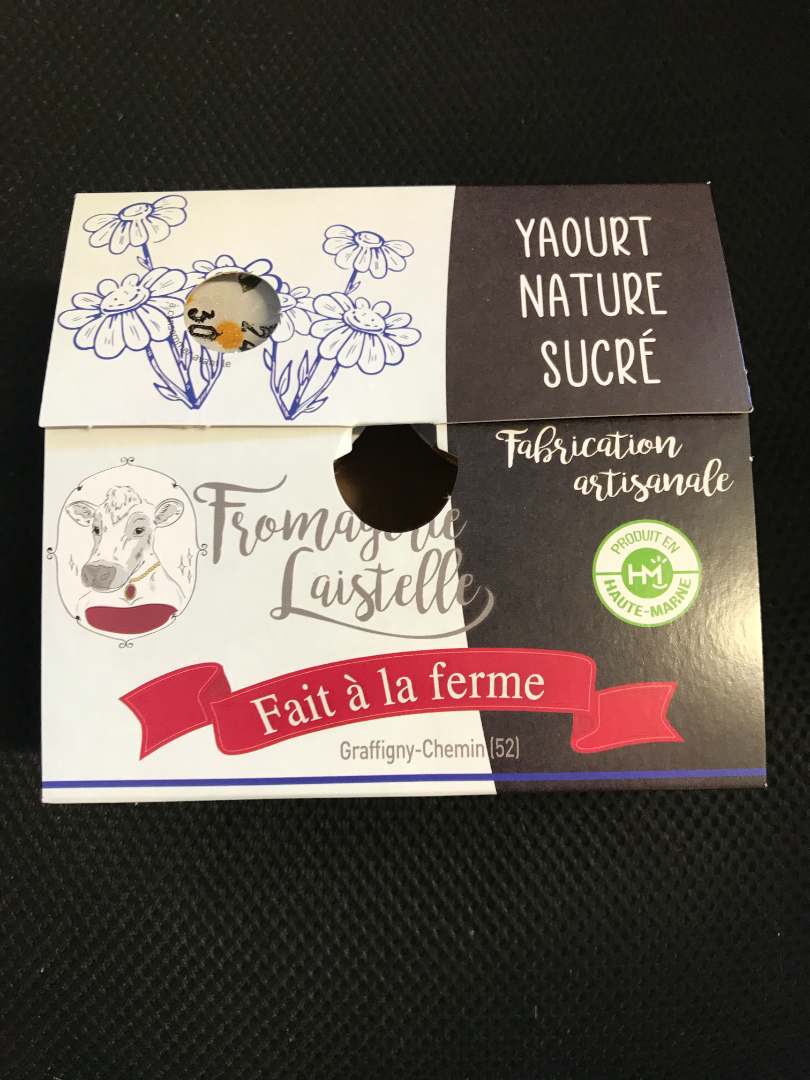
France – Plain sweetened yogurt pack*4 – Salmonella

Gov france

Identification information of the recalled product

  • Product category Food
  • Product subcategory Milk and dairy products
  • Product brand name Laistelle cheese dairy
  • Model names or references Plain sweetened yogurt pack*4
  • Identification of products
    GTIN Lot Dated
    3760260500371 3048 Use-by date 03/24/2022
  • Packaging pack of 4 yoghurts
  • Marketing start/end date From 02/22/2022 to 02/25/2022
  • Storage temperature Product to be stored in the refrigerator
  • Health marken52227001ce
  • Geographic area of ​​sale Whole France
  • Distributors Intermarché Longeau, Brin de campagne (chaumont), E.Leclerc Chaumont, E.Leclerc Troyes, E.Leclerc Langres.

Practical information regarding the recall

  • Reason for recall salmonella

RASFF Alerts – Salmonella – Polish Chicken Products

RASFF

Poultry meat – Salmonella enteritidis from Poland in Belgium

RASFF

Salmonella Infantis in chilled chicken broiler wings from Poland in Lithuania

RASFF

Salmonella Infantis in chilled minced chicken broiler meat from Poland in Lithuania

RASFF Alert – Animal Feed – Salmonella – Dried Pigs Blood – Soy Bean Meal – Fish Meal

RASFF

Salmonella Llandoff in soy bean meal from Italy in Austria and Switzerland

RASFF

Salmonella in Soy bean meal extracted from Italy in Austria

RASFF

Presence of Salmonella in fishmeal from Spain in Italy

RASFF

Salmonella in Spray dried porcine haemoglobin cells from the UK and Denmark

Research – Dietary Inclusion of a Saccharomyces cerevisiae-Derived Postbiotic Is Associated with Lower Salmonella enterica Burden in Broiler Chickens on a Commercial Farm in Honduras

MDPI

Postbiotic feed additives may aid foodborne pathogen reduction during poultry rearing. The study objective was to evaluate a postbiotic additive in parallel to an industry control diet and the subsequent associated burden of Salmonella enterica on a single, commercial broiler farm in Honduras. Twelve houses were matched and assigned the standard diet (CON) or standard diet plus postbiotic (SCFP). New litter was placed in each house and retained across flock cycles with sampling prior to each chick placement and three consecutive rearing cycles. At ~33–34 days, 25 ceca were collected on-farm from each house, treatment, and cycle. Salmonella prevalence in litter for CON (30.6%) and SCFP (27.8%) were equivalent; however, Salmonella load within positive samples was lower (p = 0.04) for SCFP (3.81 log10 MPN/swab) compared to CON (5.53 log10 MPN/swab). Cecal prevalence of Salmonella was lower (p = 0.0006) in broilers fed SCFP (3.4%) compared to CON (12.2%). Salmonella load within positive ceca were numerically reduced (p = 0.121) by 1.45 log10 MPN/g for SCFP (2.41 log10 MPN/g) over CON (3.86 log10 MPN/g). Estimated burden was lower (p = 0.003) for SCFP flocks (3.80 log10 MPN) compared to CON (7.31 log10 MPN). These data demonstrate the preharvest intervention potential of postbiotics to reduce Salmonella enterica in broiler chickens. View Full-Text

Research – Finland and Switzerland see food recalls rise

Food Safety News

Food recalls increased for the sixth year in a row in 2021, according to the Finnish Food Agency (Ruokavirasto).

The amount of alerts passed 300 for the first time and were mainly because of microbiological contamination, allergens and pesticide residues. The 309 recall total was 42 more than in 2020.

Microbiological concerns such as Salmonella, Listeria and other bacteria caused 49 recalls, which is up 9 percent compared to the previous year. Salmonella was behind 26 recalls in products including fresh herbs and eggs while Listeria in items such as cheese caused five recalls.

Switzerland has revealed the number of recalls and public warnings issued in 2020.

The Federal Food Safety and Veterinary Office (FSVO) published 28 public warnings and 49 recalls for food. Warnings were most often because of pesticide residues, pathogenic microorganisms or allergens. Recalls were mainly because of pesticide residues, foreign bodies or mycotoxins.

At the beginning of 2020, Swiss authorities were informed about norovirus in oysters and mussels from France. Eight other EU countries received mussels from affected French production sites. In Switzerland, illnesses occurred following consumption of these products.

A total of 241 RASFF notifications concerned Switzerland and 62 were issued by the country.

For the 241 notifications, almost a third related to pesticide residues and 27 were because of microbial contamination. Of notices raised by Switzerland, 15 were because of mycotoxins and pesticide residues caused eight. Fifteen products from Switzerland were the subject of a RASFF post. The most frequent hazard was microbial contamination with four notifications.

USA – FDA Core Investigation Table Update

FDA

Date
Posted
Ref
Pathogen
Product(s)
Linked to
Illnesses

(if any)
Total
Case Count

Status
2/17/2022 1056 Cronobacter
sakazakii

&
Salmonella
Newport
Powdered
Infant
Formula
See
Advisory
Active
2/9/2022 1040 Listeria
monocytogenes
Not Yet
Identified
14 Active
2/2/2022 1054 Enteroinvasive
E. coli
O143:H26
Not Yet
Identified
16 Closed
1/10/2022 1050 E. coli
O121:H19
Romaine 4 Closed
12/29/2021 1052 E. coli
O157:H7
Packaged
Salad
See Outbreak
Advisory
Closed
12/20/2021 1039 Listeria
monocytogenes
Packaged
Salad
See Outbreak
Advisory
Active
12/15/2021 1048 Listeria
monocytogenes
Packaged
Salad
See Outbreak
Advisory
Active

Nigeria – Class I Recall: Abbott Recalls Certain Powdered Infant Formula Linked To Food Borne Illness Outbreak Due To Presence Of Cronobacter Sakazakii And Salmonella Newport Bacteria

NAFDAC

In the U.S, four consumer complaints of infant illness were received from September 2021 to December 2021. This includes three reports of Cronobacter sakazakii infections and one Salmonella Newport infection. All four infants were hospitalized and Cronobacter may have contributed to one death.

Abbott’s recall of these powdered  infant formula produced at its facility in Sturgis, Michigan MI, has spread globally and now includes Croatia, Italy, Ireland, Netherlands, Slovenia, and Spain, among many other countries. Food Standards Agency (FSA) is investigating whether three infant illnesses reported recently  in the United Kingdom are connected to an outbreak in the United States from the recalled  infant formula.

Background:

Cronobacter bacteria can cause severe, life-threatening infections(sepsis) or meningitis. Symptoms of which include poor feeding, irritability, temperature changes, jaundice, grunting breaths and abnormal movement in infants. The infection can also lead to bowel damage and may spread through the blood to other parts of the body.

Salmonella bacteria causes gastrointestinal illness, fever called salmonellosis which may lead to diarrhea, fever, and abdominal cramps. A severe case of salmonella infection results in headache, lethargy, rash, blood in the urine or stool and may be fatal in some cases.

PLEASE NOTE THAT ABBOTT’S SIMILAC INFANT FORMULA POWDER REGISTERED BY NAFDAC ARE MANUFACTURED IN SOUTH AFRICA AND REPUBLIC OF IRELAND WHILE,

THE RECALLED PRODUCTS LISTED ABOVE WERE MANUFACTURED IN STURGIS, MICHIGAN- AMERICA.

Recommendation:

The Agency advises that parents of infant experiencing any of these symptoms after consumption of the recalled Abbott Infant formula, should notify your child’s healthcare provider and seek medical care for your child immediately.  Healthcare providers and health departments are encouraged to report any confirmed cases of Cronobacter sakazakii to relevant authorities.

NAFDAC implores importers, distributors, retailers and the public to exercise caution and vigilance to avoid  sale, distribution and consumption  of the recalled  products listed above or if in possession should  submit  to the nearest NAFDAC office or report to NAFDAC PRASCOR (20543 or 0800-1-623322) TOLL FREE from all networks) or via pharmacovigilance@nafdac.gov.ng or via e-Reporting platform available on the NAFDAC website http://www.nafdac,gov.ng.

NAFDAC……..Customer-focused, Agency-minded!!!