Category Archives: Salmonella

USA – LIDL Voluntarily Recalls 8.4 Oz Favorina Branded Advent Calendar (Premium Chocolate with a Creamy Filling) Due to Potential Salmonella Contamination

FDA

Summary

Front of Favorina Advent Calendar

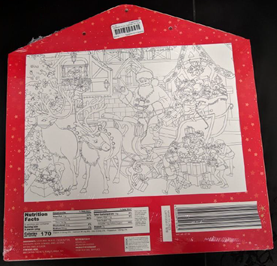
Back of Favorina Advent Calendar

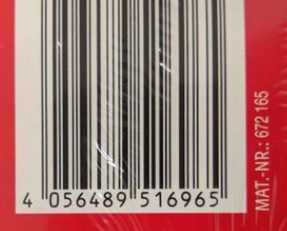
UPC Code, Favorina Advent Calendar

Company Announcement Date:
FDA Publish Date:
Product Type:
Food & Beverages
Reason for Announcement:
Potential presence of Salmonella
Company Name:
Lidl US
Brand Name:
Favorina
Product Description:
Advent Calendar (Premium Chocolate with a Creamy Filling)

Company Announcement

ARLINGTON, VA –Lidl US has announced a voluntary recall for the 8.4 oz Favorina branded Advent Calendar (Premium Chocolate with a Creamy Filling) due to potential Salmonella contamination.

This voluntary recall was issued because some items may be contaminated with Salmonella.

Units affected by this recall:

  • Were available for sale at Lidl stores between October 12, 2022 and December 5, 2022
  • Will have a BEST IF USED BY year of 2023
  • Will have a barcode number of 4056489516965

This issue was found during routine testing, which Lidl performs on an ongoing basis to help ensure safe and quality products for our customers. Lidl US has received no reports or complaints of illness related to this product to date.

Research – The European Scientific Conference on Applied Infectious Disease Epidemiology (ESCAIDE)

Escaide

Abstracts

Page 71 – An Easter Surprise: Salmonella Typhimurium outbreak linked to chocolate products in the United Kingdom, 2022; a case control study

Page 72  – International outbreak of Salmonella Typhimurium linked to a chocolate factory in 2022: Belgian findings

Page 73 – Whole Genome Sequencing identified a prolonged Salmonella Poona nursery outbreak (2016-2021) in North West England, UK

Page 74 – Climate Warming and increasing Vibrio vulnificus infections in North America

Page 106 – Timely and reliable outbreak investigation using a non-probabilistic online panel as a source of controls – two parallel case-control studies investigating a Salmonella Braenderup outbreak in Germany

Page 107 – An outbreak of Escherichia coli-associated haemolytic uremic syndrome linked to consumption of an unexpected food vehicle, France 2022

Page 108 – Outbreak investigation of cholera in a peri-urban village of Panchkula district, Haryana, India, 2021

Page 109 – Cholera Outbreak Investigation, Ballo Adda Mohalla, Lucknow District, Uttar Pradesh 2021

Page 110 – Norovirus GII.3[P12] outbreak associated with the drinking-water supply in a rural area in Galicia, Spain, 2021

Page 111 – Impact of COVID-19 restrictions on the epidemiology of Cryptosporidium spp. in England and Wales

Page 149 – Monophasic Salmonella Typhimurium outbreak linked to chocolate products, Ireland, 2022

Page 151 – Successful containment of a Listeria monocytogenes outbreak caused by shredded vegetables, Hesse/Germany, 2021-2022

Page 152 – Outbreak of monophasic Salmonella Typhimurium linked to fresh small tomatoes, Sweden, 2021

Page 194 – Cholera Outbreak Investigation, Kamarhati-Municipality, North-24-Parganas District, West Bengal, India 2021

Page 195 – Botulism outbreak and response in Dangara District Tajikistan, October 2020

Page 196 – Outbreak of suspected Clostridium perfringens associated with consumption of roast beef in a restaurant, January 2022 South West England

Page 198 – Doughnuts for weight loss? A norovirus outbreak in the Australian Capital Territory, November 2021

Page 212 – Outbreak of Legionnaires’ disease linked to unregistered cooling towers, West Midlands, England, July-September 2020




France – Andouillettes from Troyes – Salmonella

Gov france

Identification information of the recalled product

  • Product category Feed
  • Product subcategory Meats
  • Product brand nameTrue
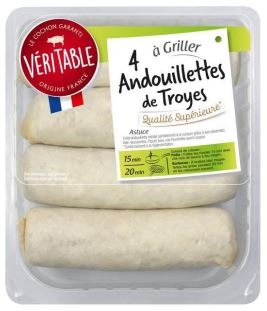
  • Model names or references Andouillettes de Troyes X4 SAT
  • Identification of products
    GTIN Batch Date
    3273625873893 53400 / 4855893 Use-by date between 22/12/2022 and 25/12/2022
  • Products List product_list.pdf Attachment
  • Packaging Tray of 4 sausages under modified atmosphere
  • Marketing start/end date From 30/11/2022 to 05/12/2022
  • Storage temperature Product to be stored in the refrigerator
  • Health mark EN 22.093.001 EC
  • Further information Tray of 4 sausages under modified atmosphere
  • Geographic area of ​​sale Whole France
  • Distributors Carrefour, Auchan, Cora and System U
  • List of points of sale List_of_sales_points.pdf

Practical information regarding the recall

  • Reason for recall Presence of salmonella

France – Pack Chorizo ​​10 slices 100gr – Salmonella

Gov france

Identification information of the recalled product

  • Product category Feed
  • Product subcategory Meats
  • Product brand name MILHAU HOUSE
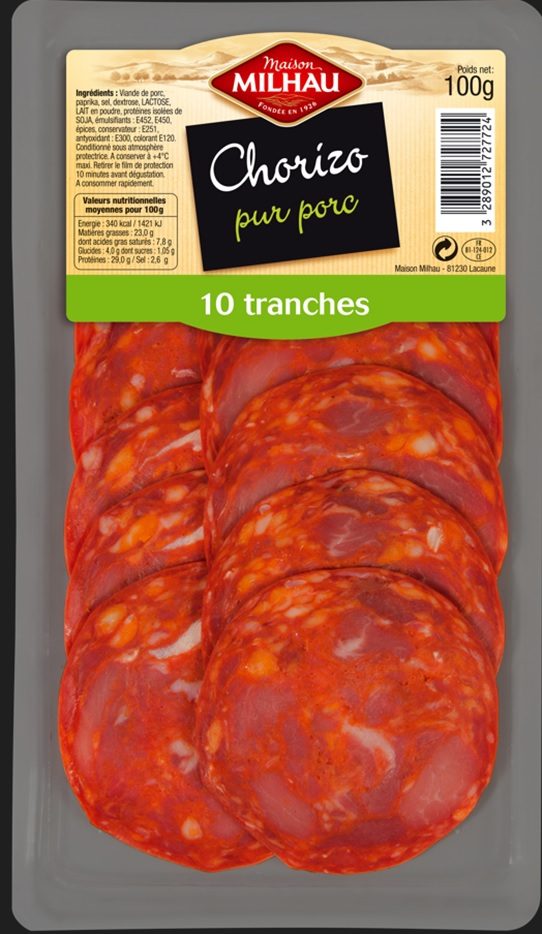
  • Model names or references Pack Chorizo ​​10 slices 100gr
  • Identification of products
    GTIN Batch Date
    3289012727724 332211 Use-by date 02/11/2023
  • Packaging under protective atmosphere
  • Marketing start/end date From 28/11/2022 to 02/12/2022
  • Storage temperature Product to be stored in the refrigerator
  • Health mark EN 81.124.012 EC
  • Geographic area of ​​sale Whole France
  • Distributors INTERMARCHE, CARREFOUR, SCALANDES, SUPER U, SOCAMIL
  • List of points of sale 2-_Traça_ventes_Lot_332211_du_28-11-22-_Pack_Chorizo_10_Tr_100g_(SALMONELLA).pdf

Practical information regarding the recall

  • Reason for recall SALMONELLA

USA – An interesting study about cooking frozen chicken and Salmonella illness.


CDC

Foodborne Pathogen

After repeat U.S. outbreaks of salmonella tied to frozen, breaded and stuffed chicken products, researchers are now pointing to microwave cooking as a key driver of illness.

Producers began implementing labelling changes in 2006 to more clearly identify these products as raw; many warn against using microwave ovens (microwaves) to prepare them and provide validated cooking instructions solely for conventional ovens (ovens)

However, outbreaks continued to occur after implementation of these labelling changes

Although ovens were the most commonly reported appliance used to cook frozen stuffed chicken products, more than one half of respondents (54.0%) reported using other appliances instead of or in addition to ovens, including microwaves (29.0%), a circumstance that historically has been reported frequently by ill persons in outbreaks associated with frozen stuffed chicken products. Respondents with lower incomes and who live in mobile types of homes reported lower oven use and higher microwave use. Persons within these groups might be at increased risk for illness related to both challenges in preparing these foods and access to appliances.

Efforts to prevent Salmonella infections linked to frozen stuffed chicken products have relied on manufacturers to develop validated cooking instructions and labelling to alert the consumer to which appliances are recommended to cook them (i.e., ovens). Studies indicate that microwaves, air fryers, and toaster ovens inconsistently heat frozen stuffed chicken or frozen raw breaded chicken

Therefore, cooking instructions often do not include information about cooking the product in air fryers or toaster ovens and might warn against using microwaves. However, previous studies have found that some consumers infrequently read package instructions (8,9), including one report that found some consumers discarded packaging when the products were brought home and never saw cooking instructions . In this survey, 30% of respondents reported using an air fryer, 29% a microwave, and 14% a toaster oven. These findings suggest that relying on labelling and cooking instructions might not be sufficient to prevent illness. Further, even when cooking these products in an oven, verifying the temperature of the finished product is important. However, food thermometer usage can be low; one study found that even among persons who owned a food thermometer, only 38% typically used them to check doneness of frozen chicken products.

Research – Multi-country outbreak of Salmonella Mbandaka ST413, possibly linked to consumption of chicken meat in the EU/EEA, Israel and the UK

EFSA

A cross-border outbreak of Salmonella Mbandaka ST413 has been ongoing in the EU/EEA, Israel, and the UK since September 2021. By 8 November 2022, 196 cases had been reported in Czechia (n=5), Estonia (n=3), Finland (n=89), France (n=10), Germany (n=2), Ireland (n=1), the Netherlands (n=1), the United Kingdom (n=81), and Israel (n=4), according to the European case definition. Nineteen cases were hospitalised and five cases had septicaemia. One case in the UK died.

Based on case interviews from Finland and the UK, ready-to-eat (RTE) chicken products and/or fresh chicken meat are the likely vehicles of infection. Fifteen cases in Finland reported consumption of six RTE products from three brands. All 15 cases had consumed at least one RTE chicken product. Two products were marketed under the same brand name, which is adopted by the Estonian Company A and the Finnish Company B. Based on additional information, such as purchase data, and consultation of the grocery chains selling the products and of the Finnish Company B, the food authority in Finland linked the products to the Estonian Company A. However, this link could not be verified by the identification of the batches nor by microbiological evidence. The Estonian Company A received processed chicken meat from different suppliers, but there is no further information in RASFF. Therefore, the role of the Estonian Company A as a source of infection could not be established.

Epidemiological data and microbiological evidence from whole genome sequencing of human isolates indicate there are several active sources through different food distribution chains, with a likely common source higher up in the chicken supply chain. New cases are likely to occur in the EU/EEA until the source has been identified and controlled.

Further investigations are needed by public health and food safety authorities to identify the source(s)/origin of contamination.

Click to access roa-7707.pdf

USA – Marijuana contaminated with potentially harmful bacteria allegedly sold at 20 unlicensed NYC stores

ABC7NY

Three trade groups for the medical marijuana industry are warning buyers about cannabis sold in New York City.

A survey conducted by the New York Medical Marijuana Cannabis Industry Association claims it found tainted marijuana at 20 unlicensed businesses in the city.

They say many of them were contaminated with E. coli, salmonella, heavy metals, and pesticides. Those contaminants can cause illness and infection in the human body.

75 percent of the businesses said their product came from California or the West Coast, the survey detailed.

The trade groups estimate that there are likely tens of thousands of illegal marijuana businesses operating in NYC.

EU – Outbreak of Salmonella Mbandaka ST413 linked to chicken meat

ECDC

Foodborne Pathogen

As of 8 November 2022, 196 cases have been reported in Czechia, Estonia, Finland, France, Germany, Ireland, the Netherlands, the United Kingdom and Israel. Nineteen cases have been hospitalised and five cases have had septicaemia; there has been one fatal case in the UK. Cases have occurred across all age groups and there is no overall difference when gender is taken into account. 

Based on case interviews from Finland and the UK, ready-to-eat (RTE) chicken products and/or fresh chicken meat, such as those used in sandwiches and wraps, are the likely vehicles of infection. 

Following investigations, the food safety authority in Finland linked the suspected RTE products to an Estonian company, however, this link could not be verified by the identification of batches nor by microbiological evidence. The Estonian company received processed chicken meat from different suppliers, and its role as a source of infection could not be established. 

Epidemiological data and microbiological evidence from whole genome sequencing of human isolates indicate there are several active sources through different food distribution chains, with a likely common source further up the supply chain. New cases are likely to occur in the EU/EEA until the source has been identified and controlled. 

ECDC encourages Member States to sequence S. Mbandaka isolates from human cases and interview cases with S. Mbandaka ST413 infection focusing on the consumption of various poultry meat and related products. Further investigations are recommended in cooperation with food safety authorities. 

Italy – SEASONED SALAMI – Salmonella

Salute

Brand : Salumificio Colli
Name : SEASONED SALAMI
Reason for reporting : Remind for microbiological risk
Publication date : 1 December 2022
Documentation

Documentation

RASFF Alerts – Salmonella – Polish Chicken Products – Pork Sausage – Black Pepper – Poultry Meat – Chicken Fillets – Fresh Duck – Sesame Paste – Tiger Nut Flakes – Organic Chicken

RASFF

Salmonella in Pork sausage from the Netherlands in Belgium

RASFF

Salmonella spp. in poultry meat from Austria in Germany

RASFF

Salmonella in chicken meat preparation from Brazil. in the Netherlands

RASFF

Salmonella enteritidis in fresh duck from Hungary in Slovenia

RASFF

Salmonella enteritidis in frozen raw chicken strips from Poland in France

RASFF

Salmonella enteritidis in frozen chicken thigh meat skinless, boneless from Poland in Estonia and Denmark

RASFF

Salmonella enteritidis in poultry meat from Poland in Belgium, Czech Republic, Germany, Hungary, Italy, Latvia and Lithuania

RASFF

Salmonella Uganda in sesame paste from Syrian Arab Republic in Germany

RASFF

Salmonella Enteritidis (in 3 out of 5 units) in chilled broiler quarters with skin from Poland in Latvia

RASFF

Salmonella C1 in chicken curry from Poland in France

RASFF

Salmonella spp. in black pepper from Brazil in Germany

RASFF

Salmonella Newport in black pepper from Brazil in Germany and Poland

RASFF

Salmonella in organic chicken fillet from Italy in the Netherlands and Germany

RASFF

Salmonella spp. in tiger nut flakes from Germany in Austria, Slovenia and Switzerland

RASFF

Salmonella in organic chicken fillet from Italy in the Netherlands and Germany