Category Archives: Salmonella

Belgium – Organic Alfalfa “Biologische Alfalfa” from the Albert Heijn brand.

AFSCA

In agreement with the FASFC, Albert Heijn withdraws from sale the organic alfalfa “Biologische Alfalfa” of the Albert Heijn brand with expiry dates (DLC) 16/12/22 and 17/12/22 and recalls it from consumers more to the possible presence of Salmonella. Consumption of this product can potentially cause food poisoning and therefore pose a health risk – especially to young children, the elderly, people with weakened immune systems and pregnant women.

Albert Heijn asks its customers not to consume this product and to return it to the point of sale where it was purchased. The product will be refunded or exchanged there. Please contact a doctor in case of any health problem.


Product Description

• Product category: raw vegetables
• Product name: AH Biologische Alfalfa
• Brand: Albert Heijn
• Date of minimum durability (DLC): 16/12/2022 and 17/12/2022
• Period of sale: until 12/12 /2022 included
• Type of packaging: plastic tray
• Weight: 40 g


For any further information , please contact Albert Heijn on 0800 777 05 .
Research – Zoonotic diseases and foodborne outbreaks on the rise, but still below pre-pandemic levels

EFSA

In 2021 there was an overall increase in reported cases of zoonotic diseases and foodborne outbreaks compared to the previous year, but levels are still well below those of the pre-pandemic years, reveals the latest annual EU One Health zoonosis report released by EFSA and ECDC.

The general drop compared to pre-pandemic years in reported cases and outbreaks is probably linked to COVID-19 control measures, which were still in place in 2021. Among the few exceptions are the number of cases for yersiniosis and those of foodborne listeriosis outbreaks, which exceeded pre-pandemic levels.

Most foodborne outbreaks (773) were caused by Salmonella, which accounted for 19.3% of the total. Foodborne outbreaks differ from overall reported disease cases in that they are events in which at least two people contract the same illness from the same contaminated food. The most common sources of salmonellosis outbreaks were eggs, egg products, and “mixed foods”, which are meals composed of various ingredients.

The number of outbreaks caused by Listeria monocytogenes (23) was the highest ever reported. This might be linked to the increased use of whole genome sequencing techniques, which allow scientists to better detect and define outbreaks.

The report also covers overall reported zoonotic disease cases, which are not necessarily linked to outbreaks. Campylobacteriosis remains the most frequently reported zoonosis, with the number of reported cases increasing to 127,840 compared to 120,946 in 2020. Meat from chicken and turkeys was the most common source. Salmonellosis was the second most reported zoonotic disease, affecting 60,050 people compared to 52,702 in 2020. The next commonly reported diseases were yersiniosis (6,789 cases), infections caused by Shigatoxin-producing E. coli (6,084 cases), and listeriosis (2,183 cases).

The report also includes data on Mycobacterium bovis/caprae,BrucellaTrichinellaEchinococcus, Toxoplasma gondii, rabies, Q fever, West Nile virus infections and tularaemia.

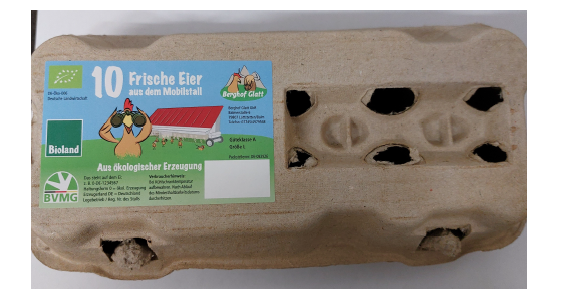
Germany – Eggs – Salmonella

LMW

Alert type: Food
Date of first publication: 12/12/2022
Product name:

Eggs with a best before date up to and including 21.12.2022

Product images:
Eggs.PNG


press release

Manufacturer (distributor):

Berghof Glatt Balmer Str.6 79807 Lottstetten Sales are limited to Baden-Württemberg

Reason for warning:

Salmonella were found in the eggs as part of regular self-monitoring.

Durability:

Best before date up to and including 21.12.2022

Further information:

Please refer to the company’s press release attached.

Click to access Salmonellen+Pressemitteilung+schwarz.pdf

Norway/Sweden – Salmonella outbreak grows and spreads to Sweden

Food Safety News

A Salmonella outbreak initially reported in Norway has grown and now is also affecting Sweden.

The Norwegian Institute of Public Health (FHI) said 58 people are sick in the Salmonella Agona outbreak and 23 had been hospitalized. This is up from 31 sick and 13 hospitalizations.

In Sweden, 26 people have been affected, according to the Public Health Agency of Sweden (Folkhälsomyndigheten).

An investigation to find the source is ongoing with FHI, local officials, the Norwegian Food Safety Authority (Mattilsynet), and the Veterinary Institute. The cause is believed to be an imported food product distributed across the country and also in Sweden.

Research – Microbiological Quality and Safety of Traditional Raw Milk Cheeses Manufactured on a Small Scale by Polish Dairy Farms

MDPI

Raw Milk Food Safety KSW Foodworld

Abstract

Polish raw milk artisanal cheese may pose a threat to consumer safety due to pathogen presence. The aim of this study was to assess the microbiological safety, quality and physicochemical composition of cow’s and goat’s milk fresh cheeses produced by farmers on a small scale. A total of 62 samples of six cheese types were analyzed for Listeria monocytogenesSalmonella spp., lactic acid bacteria and coliform presence and concentration levels. The physicochemical analysis estimated energy, water, protein, fat, carbohydrate, ash and salt content. The cheeses were also tested for heavy metal contamination. Listeria monocytogenes and Salmonella spp. were not detected in any of the samples. Coliforms were present in all the goat’s milk cheeses and only in two of the cow’s milk cheeses. Low levels of cadmium, below 0.008 ppm, were detected in three of the cows’ milk samples. The raw milk cheeses studied were free of the pathogens examined and were of high nutritional value.

Research – Salmonella found in Finnish spice controls

Food Safety News

Checks on spices as part of a food fraud project in Finland didn’t find any authenticity issues but did uncover Salmonella contamination.

Monitoring was targeted at operators whose batches were found to have been non-compliant in the past. Of 24 spices investigated, 11 received a reprimand for minor labeling and microbial issues, and five products were blocked but no prohibited dyes were found.

Curry, chili, paprika, and turmeric samples were tested for 20 banned food dyes in the lab with a focus on Sudan dyes but were all negative.

One of the rejected spices contained Salmonella and four had high levels of pesticide residues. One of the spices had incorrect labeling.

All five blocked products came from Asian countries, but three had been imported to Finland via another EU member state.

RASFF Alerts – Salmonella – Polish Chicken Products – Brazilian Black Pepper – Pork Sausages – Sliced Turkey Meat –

RASFF

Salmonella in Pork sausage from the Netherlands in Belgium

RASFF

Salmonella spp. in black pepper from Brazil in Germany

RASFF

Salmonella Typhimurium in turkey meat from Poland in the Czech Republic, Denmark, France, Germany, Poland, Romania, Slovakia, Sweden

RASFF

Salmonella Typhimurium in sliced turkey meat from Italy in Germany

RASFF

Salmonella Enteritidis in chicken meat from Poland in Germany

RASFF

Salmonella Enteritidis in chilled poultry meat from Poland in the Czech Republic

RASFF Alert – Animal Feed -Salmonella

RASFF

Salmonella spp in pet food from Belgium in Italy

Italy – SALAME FELINO IGP 500 mg – Salmonella

Salute

Brand : ” REGIONE CHE VAI “

Denomination : SALAME FELINO IGP 500 mg

Reason for reporting : Reminder for microbiological risk

Date of publication : 7 December 2022

Documentation

Documentation

Australia – Investigations into Central Coast Salmonella outbreak continue

NSW GOV AU

NSW Health and the NSW Food Authority are continuing to investigate a significant foodborne outbreak following a conference on the Central Coast last week.

At least 69 people from across NSW, the Northern Territory and Queensland are known to have become unwell with symptoms of food poisoning, of which 27 people have confirmed Salmonella infections to date.

Dr Jeremy McAnulty, NSW Health Executive Director of Public Health, said public health officials from across NSW have been working to speak to all those who have become unwell after attending or working at the conference.

“Close to 230 people attended or worked at the two-day conference, and so far at least 31 of them are known to have attended Emergency Departments,” Dr McAnulty said.

“NSW Health is working closely with the NSW Food Authority to investigate the cause of the outbreak.

“Our public health experts continue to contact people associated with the event, including attendees from the Aboriginal Languages Trust and we thank all of those who have assisted us so far.