Salmonella Spp in processed animal proteins (SOA cat.3) for petfood from Czech Republic in Italy
Salmonella Senftenberg in the post-extraction rapeseed meal from Ukraine in Poland

Salmonella Spp in processed animal proteins (SOA cat.3) for petfood from Czech Republic in Italy
Salmonella Senftenberg in the post-extraction rapeseed meal from Ukraine in Poland
Posted in Animal Feed, Animal Feed Salmonella, Animal Feed Testing, Decontamination Microbial, Food Micro Blog, Food Microbiology Blog, Food Microbiology Research, Food Microbiology Testing, microbial contamination, Microbial growth, Microbiological Risk Assessment, Microbiology, Microbiology Investigations, Microbiology Risk, Pet Food, Pet Food Salmonella, Pet Food Testing, RASFF, Salmonella
A total of 39 people infected with the outbreak strain of Salmonella Litchfield were reported from 4 states – California, Arizona, Texas and Illinois.
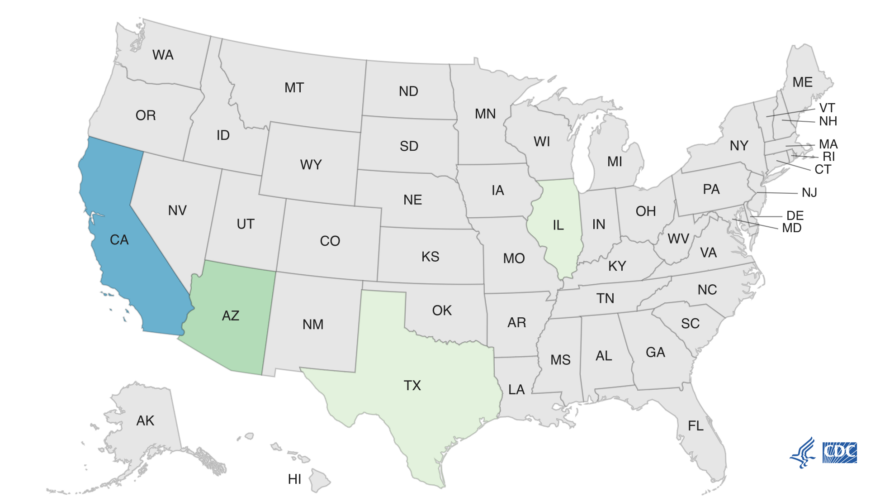
Illnesses started on dates ranging from June 14, 2022, to October 23, 2022 (see timeline). Sick people ranged in age from 1 to 80 years, with a median age of 33, and 66% were female. Of 32 people with information available, 15 were hospitalized. No deaths were reported.
Posted in Decontamination Microbial, food bourne outbreak, Food Illness, Food Micro Blog, Food Microbiology, Food Microbiology Blog, Food Microbiology Research, Food Microbiology Testing, Foodborne Illness, foodborne outbreak, foodbourne outbreak, Illness, microbial contamination, Microbial growth, Microbiological Risk Assessment, Microbiology, Microbiology Investigations, Microbiology Risk, outbreak, Salmonella
Posted in Cronobacter sakazakii, cross contamination, Decontamination Microbial, FDA, food bourne outbreak, Food Illness, Food Micro Blog, Food Microbiology, Food Microbiology Blog, Food Microbiology Research, Food Microbiology Testing, Foodborne Illness, foodborne outbreak, foodbourne outbreak, Illness, Listeria, Listeria monocytogenes, microbial contamination, Microbial growth, Microbiological Risk Assessment, Microbiology, Microbiology Investigations, Microbiology Risk, outbreak, Salmonella
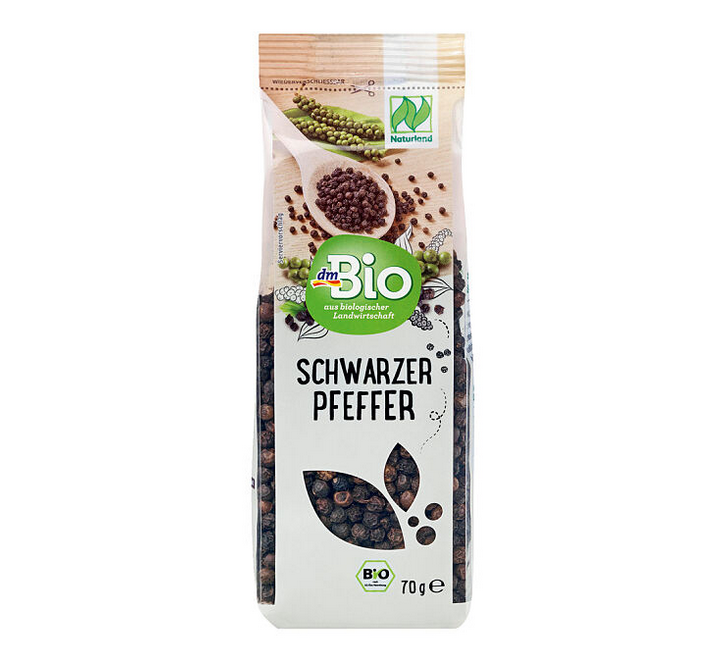
dm drogerie markt is recalling the item “dmBio pepper black, whole grains,
70 g” for reasons of preventive consumer protection. Goods with a best before date of 09/2025 and 11/2025 are affected .
Reason for the recall: It cannot be ruled out that salmonella may occur in the article mentioned above. This was determined during internal controls. Eating foods contaminated with salmonella can cause diarrhea, abdominal pain, and occasionally vomiting and a slight fever. The symptoms usually go away on their own after a few days. A doctor should be consulted if symptoms are severe or persistent.
Other products in the dmBio range are not affected. The best before date (MHD) is easy to see on the back of the packaging.
Customers are asked not to consume the product with the above-mentioned BBD and to return it to the dm branches unopened or already opened. The purchase price will of course be refunded – even without presenting the receipt.
If you have any questions, the dm customer service is available: 0800 – 365 86 33 (free of charge) Mon – Fri 07:30 – 17:30 or kundenservice@dm.at
Posted in food contamination, food handler, Food Hazard, Food Hygiene, Food Inspections, Food Micro Blog, Food Microbiology, Food Microbiology Blog, Food Microbiology Research, Food Microbiology Testing, Food Pathogen, Food Poisoning, food recall, Food Safety, Food Safety Alert, Food Safety Management, Food Testing, Salmonella, Salmonella in Black Pepper, Uncategorized
Delhaize recall
Product: Bio mix sweet germs (60g) from the Delhaize brand.
Problem: Possible presence of Salmonella.
Delhaize asks its customers who have purchased the product below at Delhaize Wezembeek not to consume it and to bring it back to a point of sale.
In collaboration with the FASFC, Delhaize has decided to withdraw this product from the market and to recall them from consumers due to the presence of Salmonella .
Product info:
Name: Bio mix sweet sprouts 60g
Brand: Delhaize
EAN code: 5400119583312
Expiry date (DLC): 16/12/2022
Marketing period: 12/12/2022
Every day, Delhaize carries out hundreds of quality checks in in order to guarantee the quality and food safety of its products at all times.
In the meantime, Delhaize has already taken all affected products off the shelves and tightened checks on the product and the supplier. Customers who have purchased this product are asked not to consume it. Customers have the option of returning the product in question to the point of sale where they purchased it. Reimbursement for each affected item is guaranteed.
Other products of the same assortment are not affected and can therefore be consumed in complete safety. Delhaize would like to apologize for the inconvenience caused.
Advice and information for consumers:
What if you have already purchased the product from Delhaize Wezembeek?
Do not consume the product and return it to your Delhaize store. The products will be refunded to you.
For further information , customers can contact our Customer Service on the free number 0800/95 713 .
The EFSA dashboard on Salmonella is a graphical user interface for searching and querying the large amount of data collected each year by EFSA from EU Member States and other reporting countries based on Zoonoses Directive 2003/99/EC. The Salmonella dashboard shows summary statistics for the monitoring results of the pathogen with regard to major food categories and animal species, Salmonella-positive official samples in the context of food safety criteria and process hygiene criteria, the occurrence of Salmonella in major food categories and the achievement of Salmonella reduction targets in poultry populations. The Salmonella data and related statistics can be displayed interactively using charts, graphs and maps in the online EFSA dashboard. The main statistics can also be viewed and downloaded in tabular format. Detailed information on the use and features of the Salmonella dashboard can be found in the present user guide that can also be downloaded from the online tool.
Posted in EFSA, Food Micro Blog, Food Microbiology, Food Microbiology Blog, Food Microbiology Research, Food Microbiology Testing, Food Pathogen, microbial contamination, Microbial growth, Microbiological Risk Assessment, Microbiology, Microbiology Investigations, Microbiology Risk, Pathogen, Salmonella
Osem UK has taken the precautionary step of recalling Yarden Tahina, Salad of Sesame Paste with Garlic and Parsley because it may contain Salmonella.
| Yarden Tahina, Salad of Sesame Paste with Garlic and Parsley | |
|---|---|
| Pack size | 250g |
| Batch code | 2306196504 |
| Best before | 01 January 2023 |
The possible presence of Salmonella in the product listed above.
Symptoms caused by Salmonella usually include fever, diarrhoea and abdominal cramps.
Posted in food contamination, food handler, Food Hazard, Food Hygiene, Food Inspections, Food Micro Blog, Food Microbiology, Food Microbiology Blog, Food Microbiology Testing, Food Pathogen, Food Poisoning, food recall, Food Safety, Food Safety Alert, Food Safety Management, Food Testing, Salmonella
Salmonella is a genus of highly diverse bacteria that live in the intestinal tract of humans and animals and are widespread in the environment thanks to their ability to survive and adapt even under extreme conditions.
The more than 2,600 Salmonella serovars are divided into typhoidal and non-typhoidal serovars and all of them are potentially harmful and can cause diseases in humans with different level of severity. Typhoidal serovars (S. Typhi and S. Paratyphi) are highly adapted to the human host, which constitutes their exclusive reservoir, so they are transmittable only through human-to-human contact, causing a potentially life-threatening syndrome known as typhoid or paratyphoid fever. Their prevalence is very low in high-income countries, and the few European cases that occur generally involve people returning from trips to low- or middle-income countries.
Non-typhoidal serovars are zoonotic agents. They are transmittable from animals and foods to humans, but also through human-to-human contact, and they can cause various syndromes, most of which are gastrointestinal. Due to its adaptability, Salmonella is widely prevalent in the environment and can infect animals and contaminate food.
The majority of circulating serovars are non-typhoidal and are the subject of this story map.
Posted in Decontamination Microbial, EFSA, Food Micro Blog, Food Microbiology, Food Microbiology Blog, Food Microbiology Research, Food Microbiology Testing, microbial contamination, Microbial growth, Microbiological Risk Assessment, Microbiology, Microbiology Investigations, Microbiology Risk, Salmonella
The number of recalls went up in 2021 but public warnings dropped in Switzerland, according to recently published figures.
The Federal Food Safety and Veterinary Office (FSVO) published 18 public warnings and 61 recalls for food in 2021 compared to 28 warnings and 49 recalls the year before. Recalls are published by companies and public warnings are made by Swiss authorities.
Most alerts this past year concerned pathogens such as Listeria nine times, Salmonella on six occasions, and Shiga toxin-producing E. coli (STEC) twice.
Posted in Decontamination Microbial, Food Micro Blog, Food Microbiology, Food Microbiology Blog, Food Microbiology Research, Food Microbiology Testing, Listeria monocytogenes, microbial contamination, Microbial growth, Microbiological Risk Assessment, Microbiology Investigations, Salmonella, STEC, STEC E.coli


