Category Archives: Research

Research – Multistate Outbreak Investigation of Salmonella Infections Linked to Kratom: A Focus on Traceback, Laboratory, and Regulatory Activities

Journal of Food Protection

kswfoodworld.com

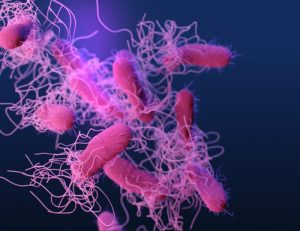
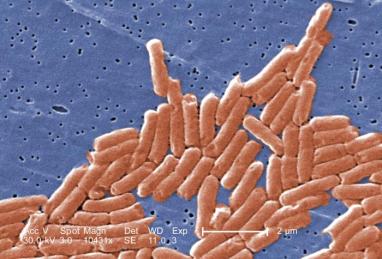
During the spring of 2018, the U.S. Food and Drug Administration (FDA), U.S. Centers for Disease Control and Prevention (CDC), states and local public health agencies responded to a multistate outbreak of gastrointestinal illnesses caused by multiple   Salmonella   serovars and associated with consumption of kratom, a product harvested from a tropical tree native to Southeast Asia. The outbreak included 199 case-patients reported by 41 U.S. states, with illness onset dates ranging from January 11, 2017 to May 8, 2018, leading to 54 hospitalizations, and no deaths. Case-patients reported purchasing kratom products from physical and online retail points of service (POS). Products distributed to 16 POS where 24 case-patients from 17 states purchased kratom were selected for traceback investigation. Traceback revealed that the kratom was imported from several countries, the most common being Indonesia. Local and state officials collected product samples from case-patients and retail POS. The FDA collected 76 product samples from POS and distributors, of which 42 (55%) tested positive for   Salmonella  . The positive samples exhibited a wide range of pulsed field gel electrophoresis (PFGE) patterns and whole genome sequence (WGS) genetic heterogeneity, and a total 25 of 42 (60%) yielded at least one isolate indistinguishable from one or more outbreak-related clinical isolates. While it does not exclude a possibility of a single contamination source, the extent of genetic diversity exhibited by the   Salmonella   isolates recovered from product samples and a lack of traceback convergence, suggested that kratom was widely contaminated across multiple sites from which it was grown, harvested, and packaged. As a result of the contamination, kratom products were recalled by numerous firms (both voluntarily and mandatory). Epidemiologic, traceback, and laboratory evidence supported the conclusion that kratom products were associated with illnesses.
Research – Escherichia coli O103 outbreak associated with minced celery among hospitalized individuals in Victoria, British Columbia, 2021

PHAC

Abstract

Background: In April 2021, a Shiga toxin-producing Escherichia coli (E. coli) (STEC) O103 outbreak was identified among patients at two hospitals in Victoria, British Columbia (BC). The objective of this study is to describe this outbreak investigation and identify issues of food safety for high-risk products prepared for vulnerable populations.

Methods: Confirmed cases of E. coli O103 were reported to the Island Health communicable disease unit. The provincial public health laboratory conducted whole genome sequencing on confirmed case isolates, as per routine practice for STEC in BC. Exposure information was obtained through case interviews and review of hospital menus. Federal and local public health authorities conducted an inspection of the processing plant for the suspect source.

Results: Six confirmed cases of E. coli O103 were identified, all related by whole genome sequencing. The majority of cases were female (67%) and the median age was 61 years (range 24–87 years). All confirmed cases were inpatients or outpatients at two hospitals and were exposed to raw minced celery within prepared sandwiches provided by hospital food services. A local processor supplied the minced celery exclusively to the two hospitals. Testing of product at the processor was infrequent, and chlorine rinse occurred before mincing. The spread of residual E. coli contamination through the mincing process, in addition to temperature abuse at the hospitals, are thought to have contributed to this outbreak.

Conclusion: Raw vegetables, such as celery, are a potential source of STEC and present a risk to vulnerable populations. Recommendations from this outbreak include more frequent testing at the processor, a review of the chlorination and mincing process and a review of hospital food services practices to mitigate temperature abuse.

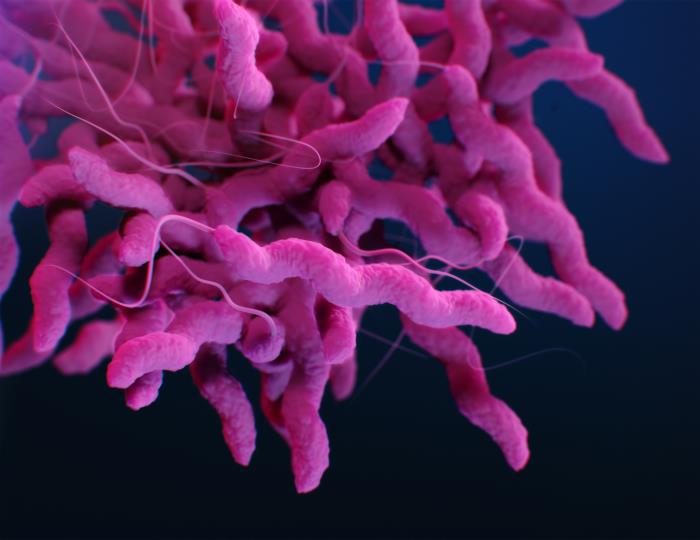
Research – Denmark – New Methods to Reduce Campylobacter on Chicken Meat

Food DTU

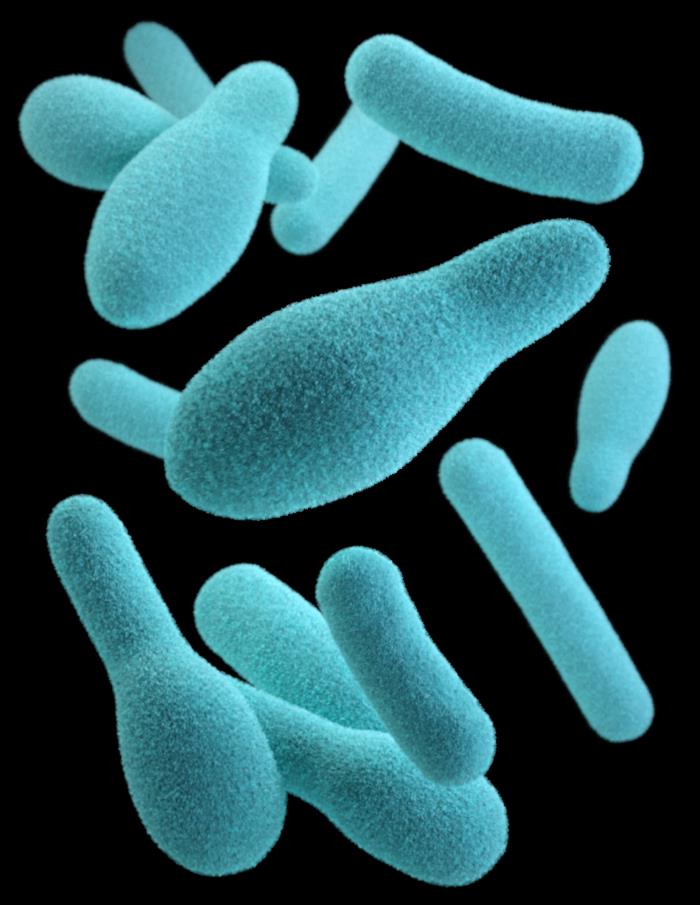
Campylobacter kswfoodworld

Researchers and businesses will use a GUDP grant to develop new ways to prevent campylobacter bacteria from ending up on chicken meat and to ensure that fewer consumers get sick.

The greater focus on more sustainable diets may increase demand for chicken, which is the meat with the lowest carbon footprint. However, chicken is also the food source that most frequently gives Danes and Europeans campylobacter infections, which is a major challenge for the food industry.

Because chicken may become an even more popular food in future, it is important to gain more knowledge about and develop more solutions for reducing the presence of campylobacter bacteria in broiler chickens. By 2025, chicken producers will also have to comply with stricter EU rules on preventing campylobacter in chicken meat.

Moreover, free-range flocks of broiler chickens are far more often campylobacter-positive than conventional flocks. This is because they roam outside, where the bacterium occurs naturally. Existing measures used for conventional broilers such as increased biosecurity and fly nets are therefore not practical for free-range and organic broiler chickens.

Promising methods to be tested on a larger scale

In the SafeChicken project, researchers from DTU National Food Institute and DTU’s Department of Chemical Engineering will work with the Danish chicken producer Danpo and the Icelandic company Thor Ice Chilling Solutions to develop and test ways of producing chicken meat containing fewer campylobacter bacteria.

The project will test methods in different parts of the food chain in the production of both organic and conventional broiler chickens by: adding selected substances to the chickens’ feed and water which have the potential to prevent the growth of campylobacter bacteria in the chickens; reducing the prevalence of the bacteria in the environment with a new decontamination technology; and reducing bacteria on the carcasses by using a special cooling technology.

Some of the methods have already been tested and have shown promising results on a small scale under controlled conditions. To ensure that they are applicable in practice, also for free range and organic chicken production, the project partners will investigate and document the methods’ effectiveness under normal production conditions. They will also assess the extent to which each measure can help lower the risk of humans becoming infected and sick from campylobacter bacteria.

Combatting campylobacter from a ‘green’ perspective

The fewer bacteria chicken meat contains, the longer the meat can stay fresh. This will also result in fewer withdrawals of goods that have to be destroyed due to unacceptable levels of campylobacter. This will help to achieve the UN Sustainable Goal no. 12 concerning responsible consumption and production.

As part of the Green Development and Demonstration Programme (GUDP), the Danish Ministry of Food, Agriculture, and Fisheries has allocated DKK 7.4 million for the three-year project, which is led by DTU National Food Institute.

About campylobacter

Campylobacter infection is the most frequently occurring foodborne disease in the EU and Denmark. According to the official statistics, the bacterium makes approximately 4,500 Danes ill each year. However, many cases are never reported, and researchers believe the real number is about ten times higher.

The more campylobacter bacteria a food contains, the greater the risk that it will make people ill when they ingest it. Therefore, Danish authorities have initiated national action plans with the aim of reducing the risk of contracting campylobacter infection. The target for 2018-21 was a 50% reduction compared to 2013—and this goal has not yet been reached.

Research – Characterization of Microbiological Quality of Whole and Gutted Baltic Herring

MDPI

There is growing interest in Baltic herring (Clupea harengus membras) and other undervalued, small-sized fish species for human consumption. Gutting or filleting of small-sized fish is impractical; hence, the aim of this study was to explore the suitability of the whole (ungutted) herring for food use. The microbiological quality of commercially fished whole and gutted herring was analysed with culture-dependent methods combined with identification of bacterial isolates with MALDI-TOF Mass Spectrometry and culture-independent 16S rRNA gene amplicon sequencing. Whole and gutted herring had between 2.8 and 5.3 log10 CFU g−1 aerobic mesophilic and psychrotrophic bacteria and between 2.2 and 5.6 log10 CFU g−1 H₂S-producing bacteria. Enterobacteria counts remained low in all the analysed herring batches. The herring microbiota largely comprised the phyla Proteobacteria, Firmicutes, and Actinobacteria (71.7% to 95.0%). ShewanellaPseudomonas, and Aeromonas were the most frequently isolated genera among the viable population; however, with the culture-independent approach, Shewanella followed by Psychrobacter were the most abundant genera. In some samples, a high relative abundance of the phylum Epsilonbacteraeota, represented by the genus Arcobacter, was detected. This study reports the bacterial diversity present in Baltic herring and shows that the microbiological quality was acceptable in all the analysed fish batches. View Full-Text

Research – Salmonellosis in Australia in 2020: possible impacts of COVID-19 related public health measures

1 Health

kswfoodworld salmonella

Abstract

Background

More than seventy per cent of salmonellosis in Australia is thought to be due to contaminated food. Rates of salmonellosis vary across the Australian states and territories, with the highest rates in the Northern Territory. In 2020, to control coronavirus disease 2019 (COVID-19), Australia implemented public health measures including border closures, physical distancing and hygiene advice. This study analyses salmonellosis notification rates in 2020 and considers possible impacts of COVID-19 measures.

Methods

Monthly and annual salmonellosis notifications per 100,000 population, for each of Australia’s eight states and territories for the years 2015 to 2020, were extracted from Australia’s publicly accessible National Notifiable Diseases Surveillance System. For each jurisdiction, the salmonellosis rate each month in 2020 was compared with the previous 5-year median rate for that calendar month. The possible impacts of COVID-19 public health measures on salmonellosis notifications in the respec-tive states and territories were examined.

Results

The annual Australian salmonellosis notification rate was 27% lower in 2020 than the previous 5-year median. The reduction in salmonellosis rate varied throughout Australia. States and territories with more stringent, more frequent or longer COVID-19 public health measures had generally greater salmonellosis rate reductions. However, Tasmania had a 50% deeper reduction in salmonellosis rate than did the Northern Territory, despite similar restriction levels.

Conclusions

Salmonellosis notifications decreased in Australia during the global COVID-19 pandemic. The reduction in notifications corresponded with the implementation of public health measures. Persistence of high rates in the Northern Territory could indicate the overarching importance of demographic and environmental factors.

Research – Illuminating Human Norovirus: A Perspective on Disinfection of Water and Surfaces Using UVC, Norovirus Model Organisms, and Radiation Safety Considerations

MDPI

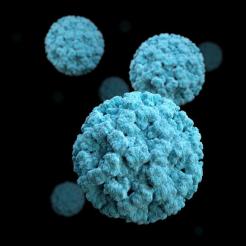
Food Borne Illness - Norovirus -CDC Photo

Human noroviruses (HuNoVs) are a major cause of gastroenteritis and are associated with high morbidity because of their ability to survive in the environment and small inoculum size required for infection. Norovirus is transmitted through water, food, high touch-surfaces, and human-to-human contact. Ultraviolet Subtype C (UVC) light-emitting diodes (LEDs) can disrupt the norovirus transmission chain for water, food, and surfaces. Here, we illuminate considerations to be adhered to when picking norovirus surrogates for disinfection studies and shine light on effective use of UVC for norovirus infection control in water and air and validation for such systems and explore the blind spot of radiation safety considerations when using UVC disinfection strategies. This perspective also discusses the promise of UVC for norovirus mitigation to save and ease life.

South Africa – Court overturns decision in Tiger Brands Listeria case

Food Safety News

How the deadly strain of listeriosis was traced to Tiger Brands' Enterprise  polony factory

A court in South Africa has overturned a previous decision to make companies divulge information in relation to a deadly Listeria outbreak in 2017 and 2018.

The Supreme Court of Appeal ruling reverses a Gauteng High Court verdict on whether subpoenas issued against third parties were relevant to the class-action. Tiger Brands is facing a class-action following an outbreak of listeriosis between January 2017 and September 2018 that sickened more than 1,050 people, killing 218.

EU – Multi-country outbreak of Salmonella Enteritidis sequence type (ST)11 infections linked to eggs and egg products

EFSA

Abstract

On 2 September 2021, France reported an increase in Salmonella Enteritidis ST11 infections. By 11 January 2022, 272 confirmed cases had been reported in five European Union/European Economic Area (EU/EEA) countries and the United Kingdom (UK): Denmark (n=3), France (n=216), the Netherlands (n=12), Norway (n=7), Spain (n=22), and the UK (n=12) in 2021. Two deaths were recorded in adult men. Twenty-five cases were hospitalised. Sixty cases reported consumption of eggs/egg products.

Some cases reported in France in 2021 had visited restaurants serving eggs distributed by a common supplier, Spanish Packing Centre A. The eggs originated from three Spanish farms, one testing positive for the outbreak strain. Fresh table eggs from the farms linked to the outbreak were withdrawn and redirected for use in heat-treated egg products. No other countries received eggs from the same farms via Packing Centre A during summer 2021. Therefore, the source of infection for cases in late 2021 and in countries other than Spain and France could not be established.

This 2021 outbreak is linked microbiologically to a historical cross-border outbreak reported by the Netherlands in 2019. Eggs consumed by cases in the Dutch outbreak were traced back to a Spanish farm, but it was not possible to identify an epidemiological link with the 2021 outbreak. This suggests a wide distribution of the outbreak strain that could affect the food supply chain and/or earlier steps in the production chain. There may be multiple heterogeneous sources of S. Enteritidis ST11, and the outbreak strain could also be circulating at other farms, inside or outside Spain.

The risk of new infections caused by the outbreak strain and contaminated eggs remains high in the EU/EEA. It is therefore important to foster cross-sectoral investigations of contaminations in the egg supply chain in countries where S. Enteritidis ST11 has been detected.

PDF

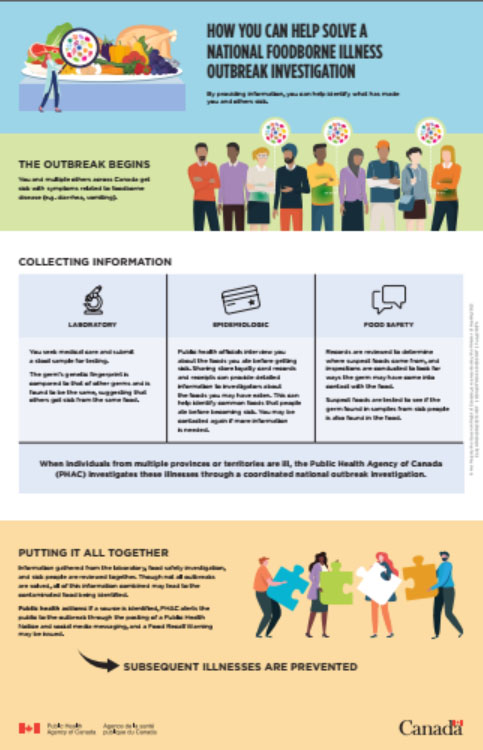
Canada – How you can help solve a national foodborne illness outbreak investigation

PHAC

PDF

By providing information, you can help identify what has made you and others sick

The outbreak begins

You and multiple others across Canada get sick with symptoms related to foodborne disease (e.g. diarrhea, vomiting).

Collecting information

Laboratory:

You seek medical care and submit a stool sample for testing.

The germ’s genetic fingerprint is compared to that of other germs and is found to be the same, suggesting that others got sick from the same food.

Epidemiologic:

Public health officials interview you about the foods you ate before getting sick. Sharing store loyalty card records and receipts can provide detailed information to investigators about the foods you may have eaten. This can help identify common foods that people ate before becoming sick. You may be contacted again if more information is needed.

Food safety:

Records are reviewed to determine where suspect foods came from, and inspections are conducted to look for ways the germ may have come into contact with the food. Suspect foods are tested to see if the germ found in samples from sick people is also found in the food.

When individuals from multiple provinces or territories are ill, the Public Health Agency of Canada (PHAC) investigates these illnesses through a coordinated national outbreak investigation.

Putting it all together

Information gathered from the laboratory, food safety investigation, and sick people are reviewed together. Though not all outbreaks are solved, all of this information combined may lead to the contaminated food being identified.

Public health actions: If a source is identified, PHAC alerts the public to the outbreak through the posting of a Public Health Notice and social media messaging, and a Food Recall Warning may be issued.

Subsequent illnesses are prevented.

Research – Death by duck paste: Centenary of the Loch Maree botulism tragedy

Press and Journal

kswfoodworld

There were 13 fishermen, two wives, 17 ghillies and three mountain climbers in the party, and they set out that morning with packed lunches prepared by the hotel staff.

The picnic included duck paste sandwiches, the paste coming from the firm of Lazenby & Sons of London.

Little did the diners know that they were carrying a ticking time bomb between slices of bread in their hampers, and that eight of their number would be dead within days.

Read the story at the Link Above