Category Archives: Research

Research – Binational outbreak of Guillain–Barré syndrome associated with Campylobacter jejuni infection, Mexico and USA, 2011

Cambridge Org

In June 2011, a cluster of suspected cases of Guillain–Barré syndrome (GBS), which can follow Campylobacter jejuni infection, was identified in San Luis Río Colorado (SLRC), Sonora, Mexico and Yuma County, Arizona, USA. An outbreak investigation identified 26 patients (18 from Sonora, eight from Arizona) with onset of GBS 4 May–21 July 2011, exceeding the expected number of cases (n = 1–2). Twenty-one (81%) patients reported antecedent diarrhoea, and 61% of 18 patients tested were seropositive for C. jejuni IgM antibodies. In a case-control study matched on age group, sex, ethnicity, and neighbourhood of residence, all Arizona GBS patients travelled to SLRC during the exposure period vs. 45% of matched controls (matched odds ratio 8·1, 95% confidence interval 1·5–∞). Exposure information and an environmental assessment suggested that GBS cases resulted from a large outbreak of C. jejuni infection from inadequately disinfected tap water in SLRC. Binational collaboration was essential in investigating this cross-border GBS outbreak, the first in mainland North America since 1976.

Research – Efficacy of a Mixed Peroxyorganic Acid Antimicrobial Wash Solution against Salmonella, Escherichia coli O157:H7 or Listeria monocytogenes on Cherry Tomatoes

Journal of Food Protection

A study was conducted to evaluate a new organic produce wash composed of a combination of organic acids and hydrogen peroxide, in the form of a mixed peroxyacid solution, against foodborne pathogens.  The mixed peroxyacid, composed of lactic acid, hydrogen peroxide and one or more fruit acids, was challenged against Salmonella enterica, E. coli O157:H7, or Listeria monocytogenes in suspension or on the surface of dip-inoculated cherry tomatoes.  Cherry tomatoes were also treated with 8 ppm of free chlorine added in the form of sodium hypochlorite (NaOCL).  When tested against planktonic cells in pure culture for 120 s, Salmonella, and E. coli O157:H7 were reduced by 7.5 and 7.1 log cycles with 0.40% of the peroxyacid solution, respectively, while L. monocytogenes decreased by 5.0 log by treatment with a 0.80% solution.  When cherry tomatoes were dip-inoculated and treated with 8 ppm free chlorine, Salmonella and E. coli O157:H7 populations decreased by 2.5 and 2.6 log, respectively, which were not significantly different than reductions incurred by sterile water rinses.  A 1.0% solution of peroxyacid solution, however, reduced the same microorganisms by 3.8 and 3.4 log per tomato, respectively, which was significantly greater ( P < 0.05) than reductions achieved by the 2 min sterile water rinse.  When dip-inoculated with L. monocytogenes, and treated, populations were reduced by 3.5 log per tomato with 1.0% peroxyacid solution which was greater ( P < 0.05) than reductions achieved by 8 ppm free Cl (2.6 log) or sterile water (1.7 log).  Results demonstrate that this peroxyacid combination antimicrobial wash may be an effective organic produce wash for preventing cross-contamination during the washing of cherry tomatoes, as well as being capable of inactivating up to 3.8, 3.4, and 3.5 log  per tomato of S. enterica, E. coli O157:H7 and L. monocytogenes , respectively.

Research – Antibacterial Effect of Oregano Essential Oil against Vibrio vulnificus and Its Mechanism

MDPI

Oregano essential oil (OEO) is an effective natural antibacterial agent, but its antibacterial activity against Vibrio vulnificus has not been widely studied. The aim of this study was to investigate the inhibitory effect and germicidal activity of OEO on V. vulnificus and its possible inhibition mechanism. The minimum inhibitory concentrations (MICs) and minimum bactericidal concentrations (MBCs) of OEO against four V. vulnificus strains (ATCC 27562 and three isolates from seafoods) were from 0.06 to 0.15 μL/mL. Compared with untreated bacteria, OEO reduced the concentration of intracellular adenosine triphosphate (ATP), hyperpolarized the cell membrane, increased the level of reactive oxygen species (ROS), and increased the concentration of intracellular malondialdehyde (MDA), but there was no obvious DNA damage at the OEO test concentration. It was indicated that OEO inactivated V. vulnificus by generating ROS which caused lipid peroxidation of cell membranes, thereby reducing the permeability and integrity of cell membranes and causing morphological changes to cells, but there was no obvious damage to DNA. In addition, OEO could effectively kill V. vulnificus in oysters at 25 °C, and the number of bacteria decreased by 48.2% after 0.09% OEO treatment for 10 h. The good inhibitory effect and bactericidal activity of OEO showed in this study, and the economy and security of OEO make it possible to apply OEO to control V. vulnificus contamination in oysters and other seafoods. View Full-Text

Research – Effect of Anolyte on S. Typhimurium and L. monocytogenes Growth in Minced Pork and Beef Cuts

MDPI

In this paper, anolyte is considered as a possible disinfectant for inhibiting the growth of bacteria in meat (beef cuts and minced pork). Meat cuts were contaminated with two concentrations of L. monocytogenes and S. Typhimurium, as these are the most common meat pathogens that are closely regulated by the EU, and treated with two different concentrations of anolyte: 20% for beef cuts and 18% for minced pork. Then, the total viable count (TVC), L. monocytogenes count and S. Typhimurium count were determined. In meat cuts and minced pork, anolyte was able to reduce TVC, S. Typhimurium and L. monocytogenes counts effectively, significantly decreasing L. monocytogenes and S. Typhimurium counts after spraying and throughout 29 days of incubation at 0–4 °C. TVC was reduced after spraying and for 10 days of incubation but later increased to be the same as before spraying with anolyte. Anolyte was effective when spraying beef cuts with a 20% solution for 60 s against pathogenic bacteria L. monocytogenes and Salmonella spp. and also when using it at a concentration of 18% from the minced meat mass. Initially, anolyte significantly decreased TVC, however during the storage period (10–29 days) TVC increased but remained significantly lower compared to control. Anolyte was effective in reducing L. monocytogenes and S. Typhimurium counts throughout the study, and after 29 days of incubation, these bacteria could not be detected in the samples treated with anolyte. View Full-Text

Research – Antifungal Preservation of Food by Lactic Acid Bacteria

MDPI

Aflatoxin

Image CDC

Fungal growth and consequent mycotoxin release in food and feed threatens human health, which might even, in acute cases, lead to death. Control and prevention of foodborne poisoning is a major task of public health that will be faced in the 21st century. Nowadays, consumers increasingly demand healthier and more natural food with minimal use of chemical preservatives, whose negative effects on human health are well known. Biopreservation is among the safest and most reliable methods for inhibiting fungi in food. Lactic acid bacteria (LAB) are of great interest as biological additives in food owing to their Generally Recognized as Safe (GRAS) classification and probiotic properties. LAB produce bioactive compounds such as reuterin, cyclic peptides, fatty acids, etc., with antifungal properties. This review highlights the great potential of LAB as biopreservatives by summarizing various reported antifungal activities/metabolites of LAB against fungal growth into foods. In the end, it provides profound insight into the possibilities and different factors to be considered in the application of LAB in different foods as well as enhancing their efficiency in biodetoxification and biopreservative activities. View Full-Text

Research – Phytic Acid against Clostridium perfringens Type A: A Food Matrix Study

MDPI

CDC Clost perf

This study evaluated the inhibitory effect of phytic acid (PA) on the spore germination and vegetative cells growth of Clostridium perfringens type A, as well as its effect in combination with maltodextrin (MD) in cooked sausages. The addition of 1% PA showed a satisfactory inhibition of spores’ germination and vegetative cells growth of C. perfringens in BHI media. The inhibitory effect of 1% PA on vegetative cells was similar to the additive sodium sorbate (SS) at 10%. Subsequently, a mixture of PA-MD (1:1; w/w) was evaluated for the inhibition of C. perfringens spores in cooked sausages. The PA-MD 1.5% and 2.5% had a similar performance to SS 10% and a similar or higher performance than 0.015% NO2 (p < 0.05). In an unprecedented way, the present study demonstrated that PA inhibited spore germination and vegetative cells growth of C. perfringens, highlighting its potential use as an alternative and natural preservative for the meat industry. View Full-Text

Research – Minimizing microbial contamination in primary production of fruits, vegetables, herbs and spices

Nestle

In the recent past, many plant-based ingredients, either processed or unprocessed, were found to be contaminated with pathogenic bacteria, viruses or parasites:–
In 2010, 272 individuals were infected with the bacterium Salmonella. This US outbreak was traced back to contaminated black pepper.–
In 2003, 640 people were sick and four died due to Hepatitis A virus in green onions. This was the most widespread Hepatitis A outbreak in the US.–
In 2015 in the US, 546 people were ill due to the parasite Cyclospora in fresh cilantro. Contamination was found to be caused by poor agricultural practices.
Where does the contamination at farm level come from?
Contamination can have several origins, these are the so-called “routes of microbial contamination”. Seven routes have been identified:
1. Growing field and adjacent land;
2. Animals;
3.Manure-based soil amendments;
4.Agricultural water;
5. Hygiene and human health;
6.Worker harvesting practices;
7.Equipment, premises and transportation.

See the full guide at the link above

Research – EU Commission notice on guidance document on addressing microbiological risks in fresh fruits and vegetables at primary production through good hygiene – 2017

EUR LEX

Norovirus Food Safety kswfoodworld

According to the 2014 Zoonosis Monitoring Report (1), the majority of verified outbreaks in the EU were associated with foodstuffs of animal origin. Fruit and vegetables were implicated in only 7,1 % of the verified outbreaks, primarily caused by frozen raspberries contaminated with Norovirus, albeit showing an increase compared to 2013 where ‘vegetables and juices’ were reported in 4,4 % of the outbreaks.

Nevertheless, the possible consequences of microbiological contamination of fresh fruits and vegetables (FFV) cannot be under­estimated as shown by the German crisis (2) linked to the contamination of sprouts by Verotoxin-producing Escherichia coli (VTEC).In the aftermath of this VTEC crisis in 2011, the Commission asked the European Food Safety Authority (EFSA) to advice on the public health risks posed by pathogens in food of non-animal origin (FNAO), addressing in particular the risk factors and the mitigation options including possible microbiological criteria.

As a result, EFSA issued six scientific opinions on the following food/pathogen combinations identified as the most important risks within FNAO:

1) VTEC in seeds and sprouted seeds

(2) Salmonella and Norovirus in food of leafy greens eaten raw as salads.

(3) Salmonella and Norovirus in berries.

(4) Salmonella and Norovirus in tomatoes.

(5) Salmonella in melons.

(6) Salmonella, Yersinia, Shigella and Norovirus in bulb and stem vegetables, and carrots.

This guideline takes account of the relevant opinions of EFSA, and consultation with Member States experts and relevant stakeholders. Though it is intended to offer practical help to growers, it may also be used by official inspectors during their audits where appropriate. EFSA confirmed that further research on possible risks and risk mitigating measures related to FFV should continue.

Research – Effect of phenolic compounds and cold shock on survival and virulence of Escherichia coli pathotypes

Wiley Online

Phenolic compounds (PC) affect many metabolic processes of microbes; however, there is no information about their effectiveness when these act in combination with low temperatures for the control of Escherichia coli pathotypes. In this study, four PC, (tannic acid [TA], gallic acid [GA], methyl gallate [MG], and epigallocatechin gallate [EG]) in combination with cold shock (CS, 10°C) were evaluated for their effect on growth, swarming motility, biofilm formation, and expression of selected virulence-related genes of E. coli pathotypes [enteropathogenic (EPEC), enterohemorrhagic (EHEC), and enterotoxigenic (ETEC)]. Sub-inhibitory concentrations of the PC were used alone (37°C) or in combination with CS. For CS assays, E. coli strains were grown at 37°C until mid-log phase and then subjected to 10°C for 4 hr. Membrane damage was determined by flow cytometry; swarming motility was measured on soft-LB agar, biofilm formation was analyzed by crystal violet staining, and gene expression of CS, biofilm, and swarming motility related-genes was determined by qPCR. Sub-inhibitory concentrations of the PC did not affect the viability of the strains. The combination of CS + TA provoked the highest (p ≤ .05) mortality in all pathotypes. CS + GA inhibited (100%) the motility of EHEC and ETEC. PC and CS + PC reduced (p ≤ .05) biofilm formation. The combination of PC and CS affected virulence factors and their gene expression of pathogenic E. coli presenting a novel alternative for its control in foods.

Research – Hepatitis E virus defies alcohol-based hand disinfectants

Science Daily

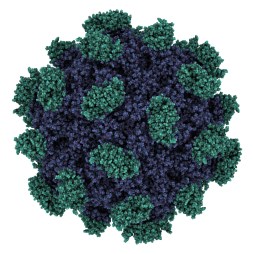
Hepatitis E virus capsid structure. HEV infection causes viral h

The hepatitis E virus (HEV) can cause serious liver inflammation and is the most common cause of acute virus-mediated hepatitis worldwide. Infection can be prevented through appropriate hygiene measures. Scientists from TWINCORE, Centre for Experimental and Clinical Infection Research, the Hannover Medical School (MHH) and the Ruhr Universität Bochum (RUB), together with partners from industry, have investigated the effectiveness of various common hand disinfectants against HEV. They were able to show that most formulations do not completely inactivate the virus.

In Germany and Europe, HEV has its natural reservoir in pigs. The infection can spread from animals to humans, which is called a zoonosis. This often happens through incompletely heated or raw meat products such as minced meat. In tropical regions of the world, infections occur via contaminated water, sometimes causing large outbreaks. “Some of these infections could possibly be prevented with the right hygiene measures,” says Dr. Patrick Behrendt, physician in the Department of Gastroenterology, Hepatology and Endocrinology at the MHH and head of the junior research group “Translational Virology” at TWINCORE. This includes, above all, correct hygienic hand disinfection in everyday clinical practice when dealing with hepatitis E patients and infected animals.

Together with the team of Professor Eike Steinmann, head of the Department of Molecular and Medical Virology at RUB, Behrendt has investigated whether common hand disinfectants can render the virus harmless. “We tested the effect of the alcohols ethanol and propanol, both individually and in the mixing ratios recommended by the WHO, and also commercial hand disinfectants,” says Steinmann. “However, only one product that contained another component was effective.”