Category Archives: outbreak

UK – Polish meat giant supplied superbug-infected chicken to UK shelves

The Bureau Investigates

A major meat supplier to UK supermarkets is sourcing chickens dosed with antibiotics linked to the spread of deadly superbugs, raising the risk of future outbreaks of life-threatening disease, the Bureau of Investigative Journalism can reveal.

The Polish meat giant SuperDrob is sourcing chicken from factory farms that use medicines classified as “critically important” to human health, despite the grave risk this poses to consumers. SuperDrob sells frozen poultry products to Lidl, Asda and Iceland.

The company was linked to a fatal salmonella outbreak in 2020 – which TBIJ can now reveal involved bacteria resistant to multiple drugs – and there were at least 15 salmonella contaminations linked to SuperDrob poultry in the 18 months that followed.

Norway searches for source of E. coli outbreak; Austrian outbreak under investigation

Food Safety News

Norwegian officials are investigating an E. coli outbreak that has affected half a dozen people.

The Norwegian Institute of Public Health (FHI) said six people, living in different parts of the country, are sick. E. coli O157:H7 with the same genetic profile has been detected in all patients.

Two people fell ill in October and November 2022, while the remaining four became sick in February, March and May this year. No-one has developed serious illness. They are between the ages of 14 and 49, and five are men.

Two patients live in Rogaland, while Viken, Trøndelag, Vestland, and Oslo all have one case each.

Meanwhile, several children have fallen ill with E. coli infections in a state of Austria beginning in late May.

In recent weeks, 11 children and young people, mostly from three childcare facilities in the Frastanz area, have contracted infections caused by Shiga toxin-producing E. coli (STEC). The serotype was not mentioned by officials.

At least two children developed HUS and another four were hospitalized, said officials in the province of Vorarlberg.

France sees a rise in outbreaks in 2021

Food Safety News

The number of outbreaks in France went up in 2021 but was still below 2018 and 2019 levels.

Figures from Santé publique France show there were 1,309 outbreaks affecting 11,056 people in 2021. A total of 512 people went to hospitals and 16 died.

Reported outbreaks rose from 1,010 in 2020 when figures were strongly impacted by the COVID-19 pandemic, according to officials.

For 327 incidents in 2021, a pathogen could be microbiologically confirmed in food or in at least one sick person per outbreak. A pathogen was suspected without microbiological confirmation for 734 outbreaks.

16 deaths in outbreaks
The most frequently microbiologically confirmed pathogen was Salmonella 147 times. It was mostly Salmonella Enteritidis, followed by monophasic Salmonella Typhimurium but the type was not known in 92 incidents. Confirmed Salmonella outbreaks were responsible for 935 patients and 166 hospitalizations.

Campylobacter caused 52 outbreaks with 178 patients and Bacillus cereus had 46 with 665 patients. Nineteen norovirus outbreaks sickened 493 and 11 histamine outbreaks affected 35 people.

Seven outbreaks were due to E. coli, six to Yersinia enterocolitica, four to Shiga toxin-producing E. coli (STEC), and one each because of Listeria monocytogenes, Clostridium botulinum, and Shigella.

The pathogen was identified in patients for 208 outbreaks, of which 143 were confirmed with Salmonella. Identification of the agent took place in food samples for 89 epidemics with 67 confirmed as Bacillus cereus, Staphylococcus aureus and Clostridium perfringens.

The top suspected pathogens based on epidemiological and clinical information, but not microbiologically confirmed, were the toxins Bacillus cereus, Staphylococcus aureus and Clostridium perfringens. For these three pathogens, 3,787 patients and 169 hospital trips were recorded.

USA – Norovirus Outbreak linked to Oyster Shooters in Hawaii

Food Poison Journal

Food Borne Illness - Norovirus -CDC Photo

The Hawai‘i Department of Health (DOH) Food Safety Branch is issuing an alert regarding raw oysters exported from Dai One Food Co., Ltd., Republic of Korea (ROK), which may be potentially contaminated with norovirus.

DOH notified the United States Food and Drug Administration (FDA) of five illnesses from individuals who consumed raw oyster shooters at a restaurant in Hawai‘i on May 10, 2023. Trace-back information revealed the source for the implicated raw oysters was from a shipment by Dai One Food Co., Ltd., ROK. Samples collected were sent to the FDA to be tested for the presence of norovirus. The FDA released its findings on June 12, 2023, confirming  that norovirus GII was detected in one of the two samples collected.

Dai One Food Co. Ltd. has voluntarily recalled Individual Quick Freezing (IQF) raw oysters, harvested between February 2 and  4, 2022 and April 13 and 14, 2022, that were shipped from the ROK and distributed to restaurants and retailers in Hawai‘i, Georgia and Minnesota. The lot numbers affected are: D021031, D021041, and D020481.

USA – Another state reports a Cyclospora outbreak

Food Safety News

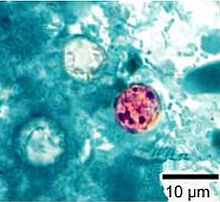
220px-Cyclospora_cayetanensis_stained

The Alabama Department of Public Health is investigating multiple reports of Cyclospora infection statewide.

The state’s health department has logged more infections from this parasite since April, and there are more than twice as many cases so far this year as were reported in Alabama in all of 2022.

Cyclosporiasis is a gastrointestinal illness caused by a microscopic parasite. People can get sick with cyclosporiasis by eating fresh produce contaminated with Cyclospora. However, Alabama officials have not yet determined a specific source of the parasites in this year’s outbreak.

In recent weeks other states, including Georgia, and the U.S. Food and Drug Administration have reported outbreaks of infections from the parasite.

USA – Listeria Leafy Green Outbreak sickened 19

Food Poison Journal

CDC, public health and regulatory officials in several states, and the U.S. Food and Drug Administration (FDA) investigated a multistate outbreak of Listeria monocytogenes infections. Epidemiologic data showed that leafy greens were a likely source of the outbreak. However, there was not enough other data to identify a specific type or producer of leafy greens.

As of June 13, 2023, a total of 19 people infected with the outbreak strain of Listeria were reported from 16 states. Sick people’s samples were collected from July 3, 2018, to March 31, 2023.

Public health officials collected many different types of information from sick people, including their age, race, ethnicity, other demographics, and the foods they ate in the month before they got sick. This information provided clues to help investigators identify the source of the outbreak.

Sick people ranged in age from less than 1 to 96 years, with a median age of 72, and 63% were female. Among 19 people with race information available, 17 people were White, 1 was African American/Black, and 1 reported “Other” race. Among 19 people with ethnicity information available, two people were Hispanic. Eighteen people were hospitalized, and no deaths were reported.

USA – Foodborne Illness Outbreaks at Retail Food Establishments — National Environmental Assessment Reporting System, 25 State and Local Health Departments, 2017–2019

CDC

Abstract

Problem/Condition: Each year, state and local public health departments report hundreds of foodborne illness outbreaks associated with retail food establishments (e.g., restaurants or caterers) to CDC. Typically, investigations involve epidemiology, laboratory, and environmental health components. Health departments voluntarily report epidemiologic and laboratory data from their foodborne illness outbreak investigations to CDC through the National Outbreak Reporting System (NORS); however, minimal environmental health data from outbreak investigations are reported to NORS. This report summarizes environmental health data collected during outbreak investigations and reported to the National Environmental Assessment Reporting System (NEARS).

Period Covered: 2017–2019.

Description of System: In 2014, CDC launched NEARS to complement NORS surveillance and to use these data to enhance prevention efforts. State and local health departments voluntarily enter data from their foodborne illness outbreak investigations of retail food establishments into NEARS. These data include characteristics of foodborne illness outbreaks (e.g., etiologic agent and factors contributing to the outbreak), characteristics of establishments with outbreaks (e.g., number of meals served daily), and food safety policies in these establishments (e.g., ill worker policy requirements). NEARS is the only available data source that collects environmental characteristics of retail establishments with foodborne illness outbreaks.

Results: During 2017–2019, a total of 800 foodborne illness outbreaks associated with 875 retail food establishments were reported to NEARS by 25 state and local health departments. Among outbreaks with a confirmed or suspected agent (555 of 800 [69.4%]), the most common pathogens were norovirus and Salmonella, accounting for 47.0% and 18.6% of outbreaks, respectively. Contributing factors were identified in 62.5% of outbreaks. Approximately 40% of outbreaks with identified contributing factors had at least one reported factor associated with food contamination by an ill or infectious food worker. Investigators conducted an interview with an establishment manager in 679 (84.9%) outbreaks. Of the 725 managers interviewed, most (91.7%) said their establishment had a policy requiring food workers to notify their manager when they were ill, and 66.0% also said these policies were written. Only 23.0% said their policy listed all five illness symptoms workers needed to notify managers about (i.e., vomiting, diarrhea, jaundice, sore throat with fever, and lesion with pus). Most (85.5%) said that their establishment had a policy restricting or excluding ill workers from working, and 62.4% said these policies were written. Only 17.8% said their policy listed all five illness symptoms that would require restriction or exclusion from work. Only 16.1% of establishments with outbreaks had policies addressing all four components relating to ill or infectious workers (i.e., policy requires workers to notify a manager when they are ill, policy specifies all five illness symptoms workers need to notify managers about, policy restricts or excludes ill workers from working, and policy specifies all five illness symptoms requiring restriction or exclusion from work).

Interpretation: Norovirus was the most commonly identified cause of outbreaks reported to NEARS, and contamination of food by ill or infectious food workers contributed to approximately 40% of outbreaks with identified contributing factors. These findings are consistent with findings from other national outbreak data sets and highlight the role of ill workers in foodborne illness outbreaks. Although a majority of managers reported their establishment had an ill worker policy, often these policies were missing components intended to reduce foodborne illness risk. Contamination of food by ill or infectious food workers is an important cause of outbreaks; therefore, the content and enforcement of existing policies might need to be re-examined and refined.

Public Health Action: Retail food establishments can reduce viral foodborne illness outbreaks by protecting food from contamination through proper hand hygiene and excluding ill or infectious workers from working. Development and implementation of policies that prevent contamination of food by workers are important to foodborne outbreak reduction. NEARS data can help identify gaps in food safety policies and practices, particularly those concerning ill workers. Future analyses of stratified data linking specific outbreak agents and foods with outbreak contributing factors can help guide the development of effective prevention approaches by describing how establishments’ characteristics and food safety policies and practices relate to foodborne illness outbreaks.

Singapore – Suspension of Nosh Cuisine Pte Ltd’s food business operations – Gastroenteritis Investigation

SFA

The Ministry of Health (MOH), the Singapore Food Agency (SFA), and the Early Childhood Development Agency (ECDA) are investigating three incidents of gastroenteritis reported at MindChamps preschools (MindChamps Preschool @ Bishan, MindChampsPreschool@ Changi Airport and MindChampsPreschool@ Tanglin).

As of 12pm, 30 May 2023, a total of 89 persons (79 children and 10 staff) reported gastroenteritis symptoms after consuming food prepared by Nosh Cuisine Pte Ltd between 17 May and 29 May 2023. Six were hospitalised and are in stable condition. The rest had either sought outpatient treatment, self-medicated, or recovered without treatment.

Netherlands – Duo receives suspended sentences for selling Salmonella contaminated eggs

Food Safety News

hazegg.jpg

Two men have been handed suspended prison sentences of six months in the Netherlands for their roles in the sale of Salmonella contaminated eggs.

The director and a manager at the implicated company were also ordered to do 200 hours of community service. Both men, aged 43 and 51, are still working in the poultry sector.

This company was fined €80,000 ($86,000), which was lower than the €140,000 ($150,400) asked for by the Public Prosecution Service (OM). The court in Zwolle said this was because of the considerable time that had passed since the incident.

The business was found guilty of placing eggs contaminated with Salmonella on the market when it knew this was harmful to health and concealing this information from customers.

USA – Now over 50 with Salmonella linked to Los Amigos Taqueria in Brighton

Food Poison Journal

According to press reports, more than 50 confirmed cases of salmonella have now been linked to Los Amigos Taqueria’s Brighton restaurant, state health officials confirmed Friday.

The chain’s Brighton outpost was one of two ordered closed last week after health inspectors flagged multiple issues at each restaurant; the West Roxbury Los Amigos Taqueria also shut its doors temporarily.

As of Friday, there were 56 lab-confirmed salmonella cases among people who had eaten at the Brighton Los Amigos Taqueria before becoming ill, the Massachusetts Department of Public Health said. Of those cases, 37 are among Boston residents.

State health officials continue to receive additional reports of lab-confirmed and undiagnosed illnesses linked to the restaurant, according to DPH.

Food contaminated with Salmonella bacteria does not usually look, smell, or taste spoiled. Anyone can become sick with a Salmonella infection. Infants, children, seniors, and people with weakened immune systems are at higher risk of serious illness because their immune systems are fragile, according to the CDC.